Three solo exhibitions opening at Emami Art on 8 August 2026 trace three very different ways of looking at the world: through the small dramas of domestic life, the slow shifts of the climate, and the remembered city.
Everyday lives, newly seen: Soma Das
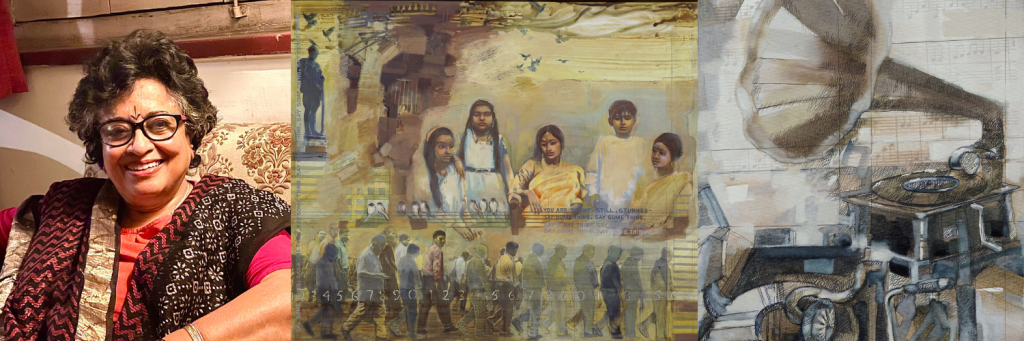
In Gallery 2, নিত্য – নূতন: The New in the Everyday presents recent paintings, sculptures, textiles and mixed-media works by Kolkata-based artist Soma Das. Centred on working and middle-class communities, her images linger on ordinary scenes of labour, leisure and domestic life, treating them as sites of humour, care and quiet resilience.
Rooted in the language of Indian miniature painting yet anchored in the present, Das’s work foregrounds women and men as equal participants in shared worlds rather than stereotyped roles. Her figures cook, commute, rest, argue, celebrate; the everyday becomes a space of subtle choreography rather than background noise. Expanding beyond gouache into wood, metal, terracotta, embroidery and appliqué, she uses material shifts to echo the layered textures of the lives she depicts.
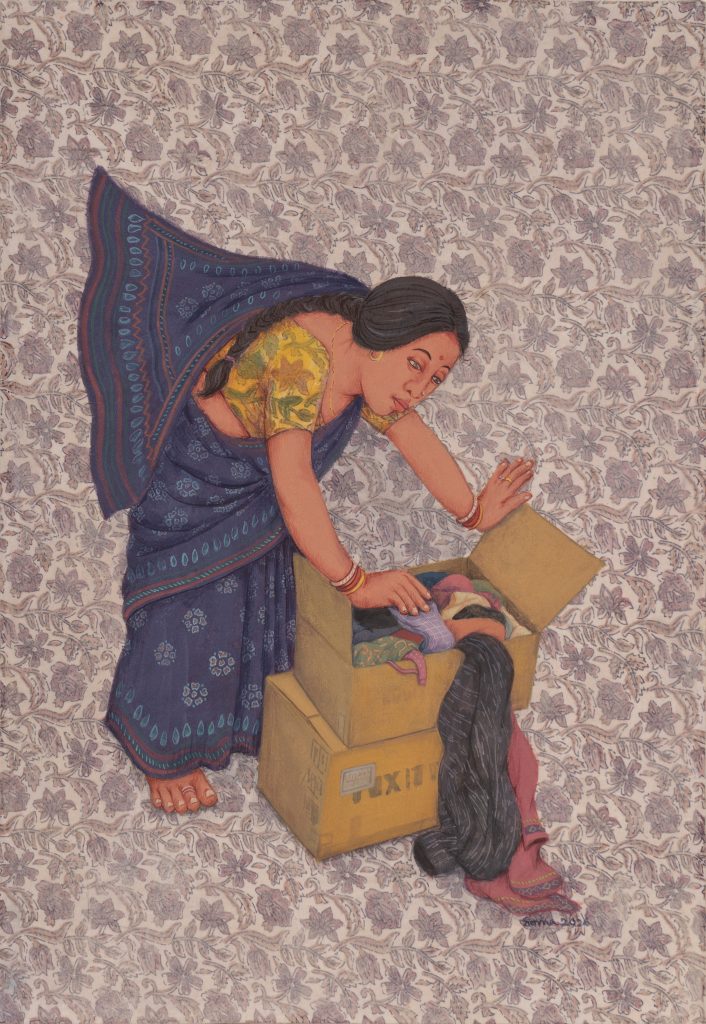
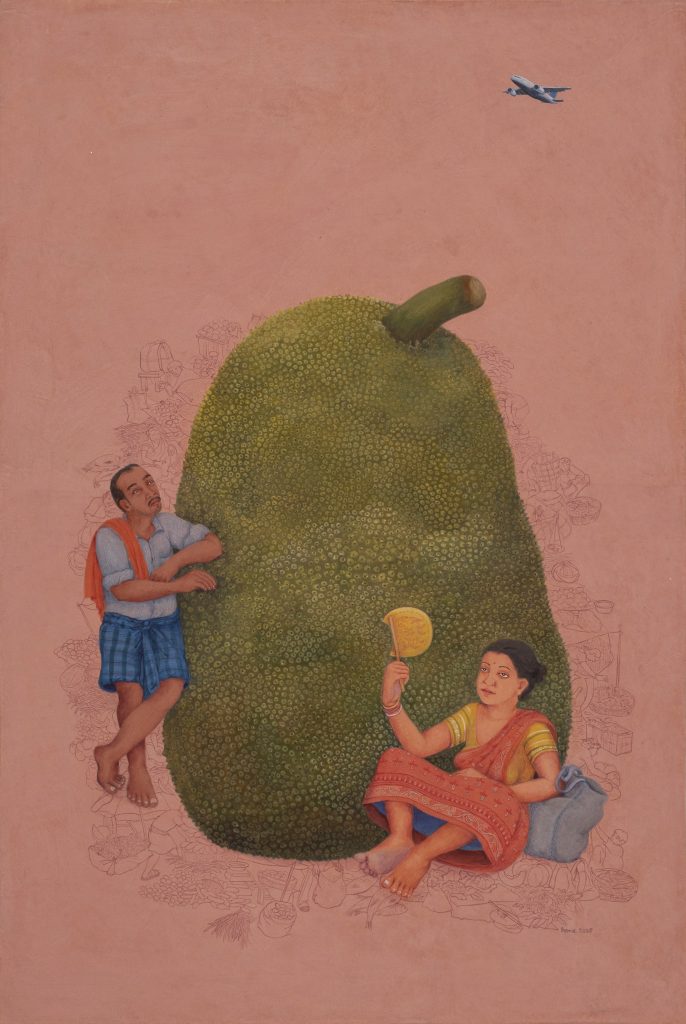
Soma Das | নতুন সংসার (A New Family) | Gouache on Lokta paper and printed cloth pasted on canvas 20 1/8 x 13 1/4 in | 2026, Kolkata & Soma Das | Made for Each Other IV | Gouache on Lokta paper pasted on canvas 35 5/8 x 24 in | 2025-2026, Kolkata
By insisting that novelty can be found in the familiar, The New in the Everyday proposes a gentle but pointed argument: that the most revealing images of contemporary India are often not spectacular scenes, but the small, recurring moments that make up most people’s days.
Paper as climate witness: Ruma Choudhury
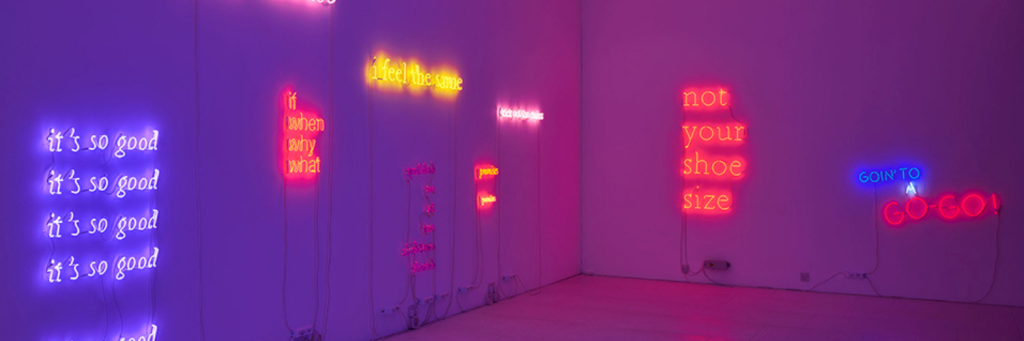
In Gallery 1, Elemental Encounters: Practice as Ecological Archive marks Ruma Choudhury’s debut solo at Emami Art. Here, handmade paper is not a passive ground for ink or pigment, but an active participant in environmental change. Working with locally sourced natural fibres, Choudhury exposes the paper to rain, sunlight, humidity, dust and wind, allowing time and weather to mark, stain, warp and transform each sheet.
The resulting works sit between sculpture, archive and ecological document. Surfaces buckle or harden, edges fray, colours shift almost imperceptibly: the material bears the trace of conditions it has lived through. Instead of representing landscape or climate through image, the paper itself becomes the record, absorbing the rhythms of monsoon and heat, air and dust.
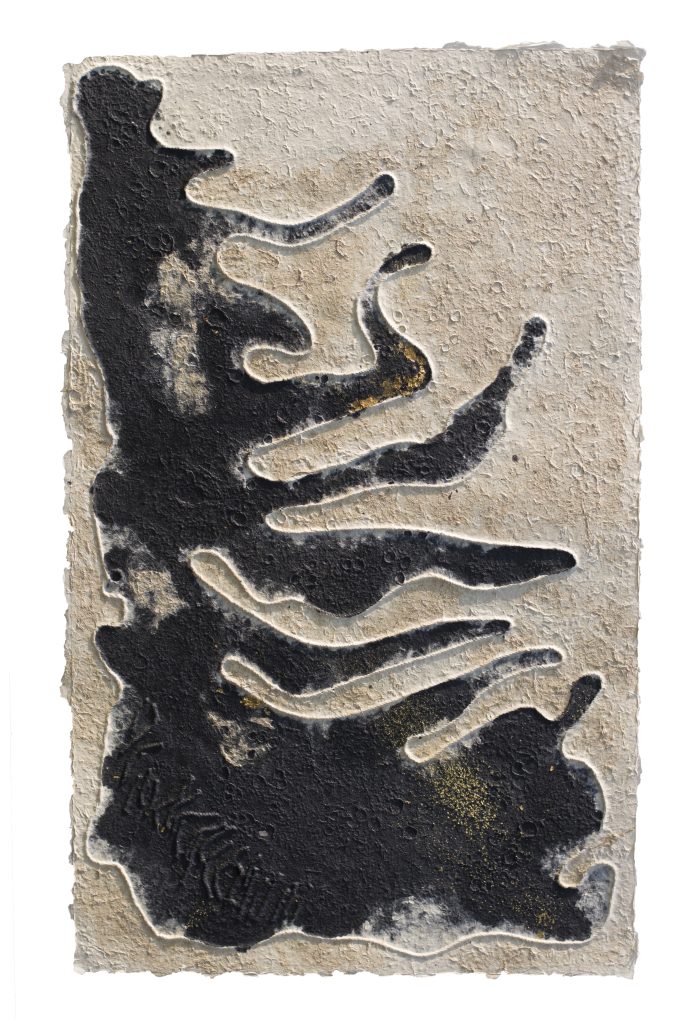
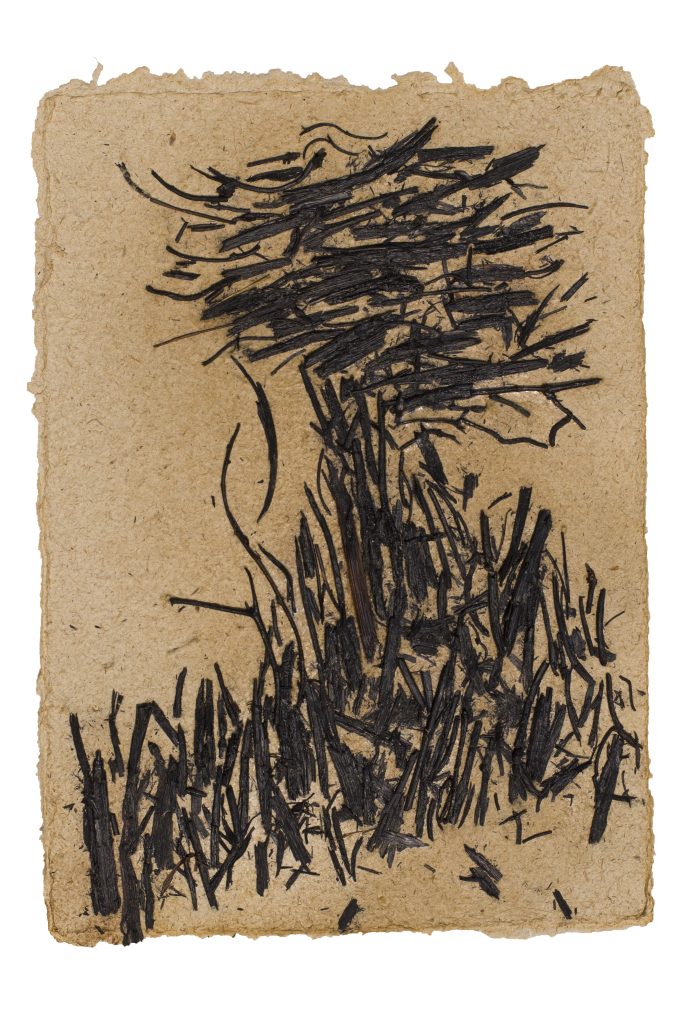
Ruma Choudhury | Absent Land | Sugarcane, lokta and banana fibres, cotton thread, charcoal dust, gold dust and gold leaf | 46 x 29 in. approx. | 2026
Ruma Choudhury | Wild Grass | Straw and burnt wild grass fibres | 8 x 6 in. approx. | 2026
By treating practice as an “ecological archive”, Choudhury reframes making as a collaboration with environment rather than control over it. The exhibition invites viewers to read these fragile forms slowly, to notice what usually goes unrecorded: changes in air, moisture, time. It is a modest but quietly radical way of asking what it means to live — and make — in a moment of accelerating ecological instability.
A city in transition: Kushal Ray
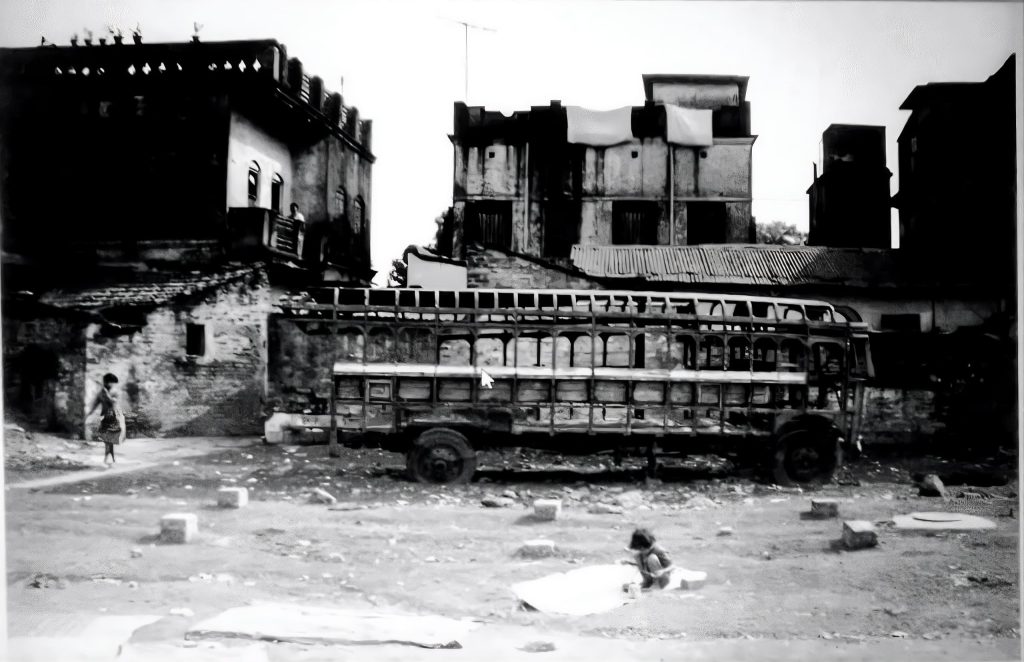
In Gallery 3, শহরনামা | Calcutta 1990–1993 turns to the photographic archive of Kushal Ray, gathering images from one of the most sustained visual studies of Kolkata in the early 1990s. Drawn from thousands of negatives made over several years, the exhibition traces streets, trams, bus stops, crossings, workplaces and public spaces with an intimacy that comes only from long-term looking.
Many of the photographs are being printed for the first time more than three decades after they were taken. Seen now, they register a city on the cusp of social and urban transformation: gestures, postures, signage, shopfronts and infrastructures that are at once familiar and already distant. Commuters, workers, passersby and children appear not as anonymous types but as specific presences inside a shared urban script.
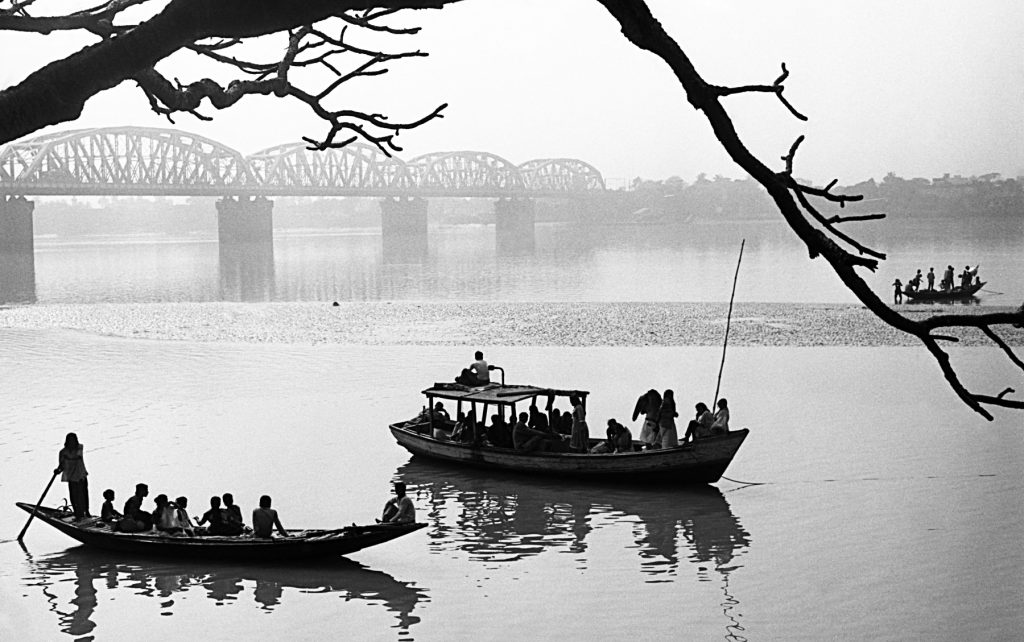
Ray’s work has long been recognised as a vital contribution to contemporary Indian photography, and Calcutta 1990–1993 underscores why. The exhibition reads like a visual chronicle of the city’s recent past, but it also raises questions about how we remember and narrate urban change: what remains, what is lost, and how images keep certain ways of living legible long after the streets themselves have changed.
Three rooms, one conversation
Taken together, these three exhibitions sketch an intriguing arc across Emami Art’s ground floor. Soma Das looks at how people inhabit the everyday; Ruma Choudhury tracks how materials register the environment; Kushal Ray returns to a city at an earlier threshold of change. All three are concerned, in different ways, with time — how it settles into bodies, objects, paper, and place.
For visitors in Kolkata, the opening on 8 August offers the chance to move between these parallel worlds in a single evening: from painted kitchens and courtyards, to weather-marked paper fields, to black-and-white streets from three decades ago. Each exhibition stands on its own, but together they offer a layered portrait of how contemporary practice in the region continues to negotiate memory, ecology and the everyday.
Exhibition details
- নিত্য – নূতন: The New in the Everyday — Soma Das
Gallery 2, Ground Floor, Emami Art, Kolkata
Preview: 8 August 2026, 5 pm onwards
On view: 9 August – 18 September 2026 - Elemental Encounters: Practice as Ecological Archive — Ruma Choudhury
Gallery 1, Ground Floor, Emami Art, Kolkata
Preview: 8 August 2026, 5 pm onwards
On view: 9 August – 19 September 2026 - শহরনামা | Calcutta 1990–1993 — Kushal Ray
Gallery 3, Ground Floor, Emami Art, Kolkata
Preview: 8 August 2026, 5 pm onwards
On view: 9 August – 18 September 2026
Cover image: Kushal Ray | Those days in Chetla. Camera: Nikon F-3 HP. Lens: Nikkor 50 mm 1.4 Year: 1990
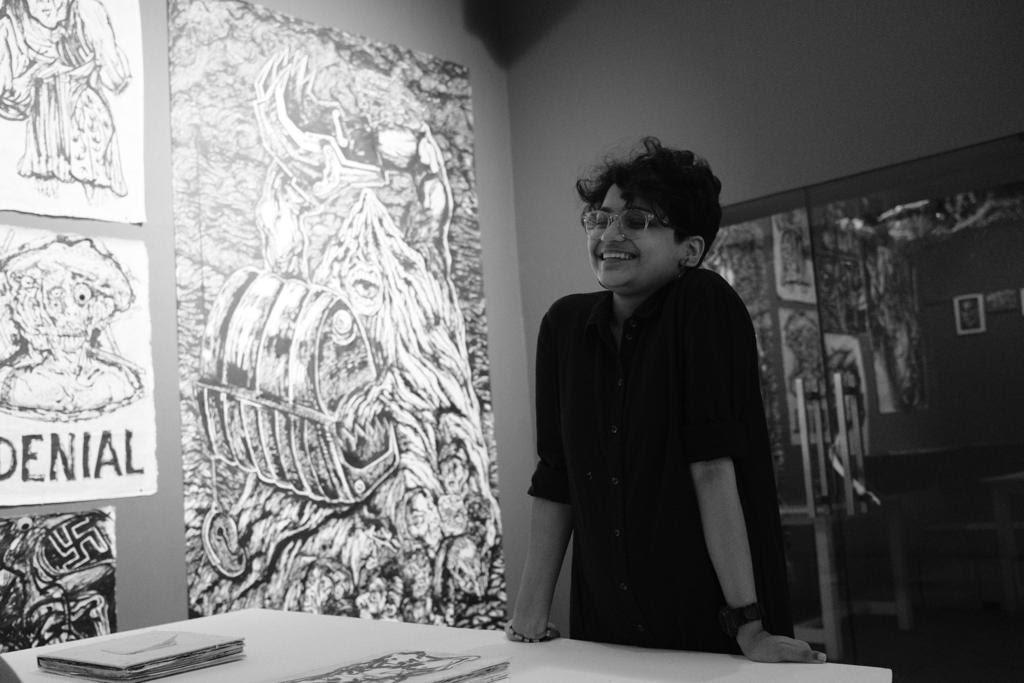
Athmaja Biju is the Editor at Abir Pothi. She is a Translator and Writer working on Visual Culture.