This week, my feed has been flooded with the never-ending celebration of the Bayeux Tapestry being on view in Britain. The New York Times published a feature on the years of behind-the-scenes diplomacy it took to bring perhaps the most famous textile in the world across the Channel, reporting that a senior British culture official had to “get on his knees and propose” to his French counterpart before Paris would agree to the loan.
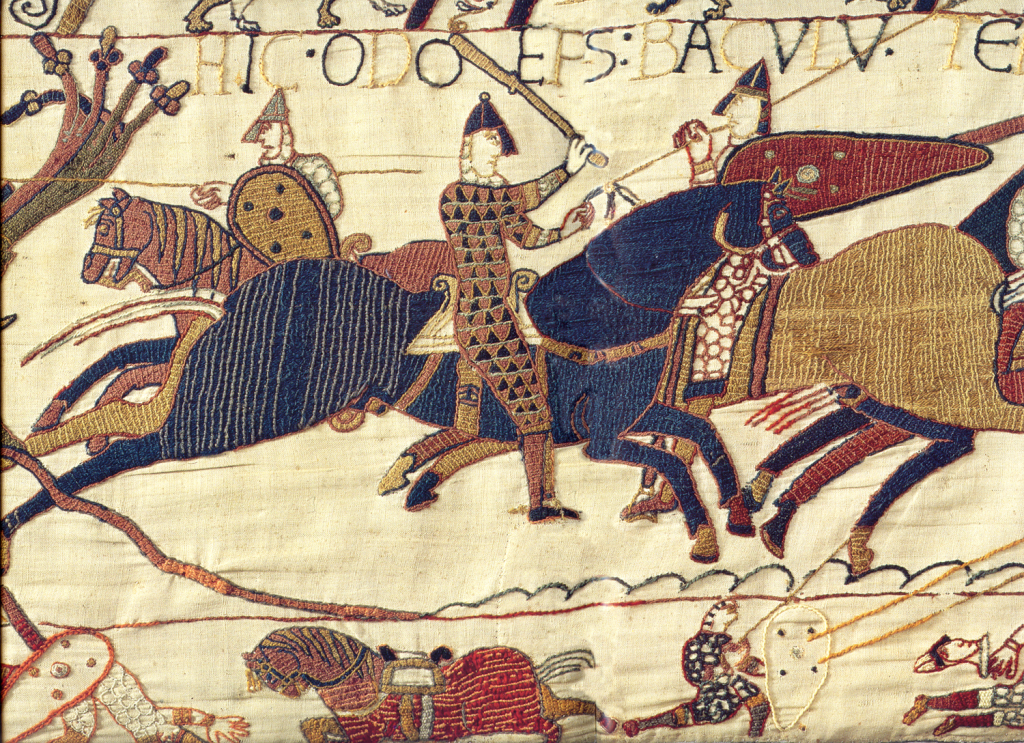
For anyone who doesn’t know it: the Bayeux Tapestry is a 70-metre embroidered wall hanging that narrates, over roughly 224 feet, the Norman conquest of England in 1066 — William the Conqueror, the Battle of Hastings, Harold with an arrow allegedly in his eye, the whole saga in wool thread and linen. It’s never left France in its known 950-year history. It arrived at the British Museum in September 2026 for a run through July 2027, and Britain has been treating it like a homecoming.
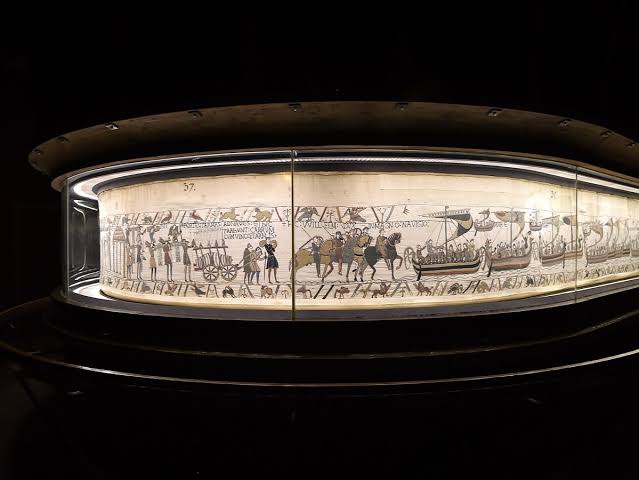
The tapestry isn’t being repatriated. It’s on loan. France still owns it; the British Museum is sending back the Sutton Hoo treasures and the Lewis Chessmen in exchange, and the whole arrangement is explicitly temporary.
I find that framing revealing, because it shows Britain is perfectly capable of talking fluently about cultural repatriation, national memory, and “what it means for a people to have their history back”, right up until the artifact in question is actually Britain’s to give back.
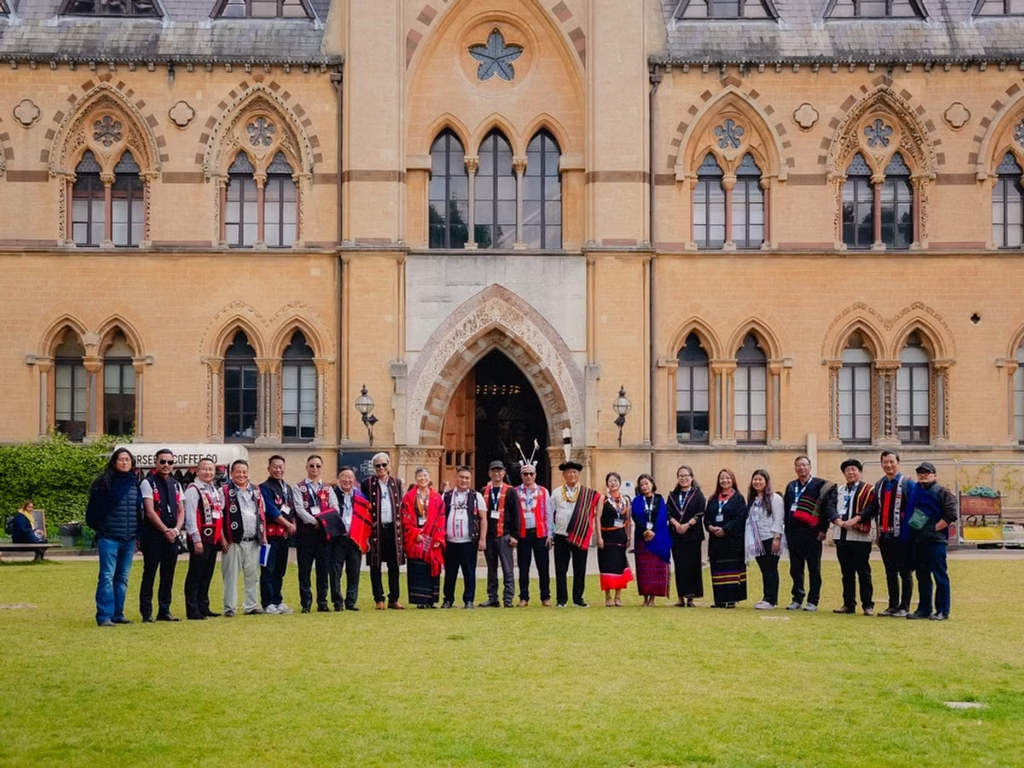
In the same week, Oxford’s Pitt Rivers Museum confirmed it will return the remains of 39 people to the Naga community of northeast India — skulls and other remains taken by colonial administrators during punitive military expeditions in the early twentieth century. It’s the museum’s largest repatriation of human remains to date, and it only happened after a six-year, community-led campaign by the Forum for Naga Reconciliation.
Then there’s the Parthenon Marbles, the case everyone actually means when they talk about British repatriation double standards. Greece has been formally requesting their return since the 1980s and the British Museum refuses to do so, claiming the artefacts belongs to them legally and is not even considering loaning it.
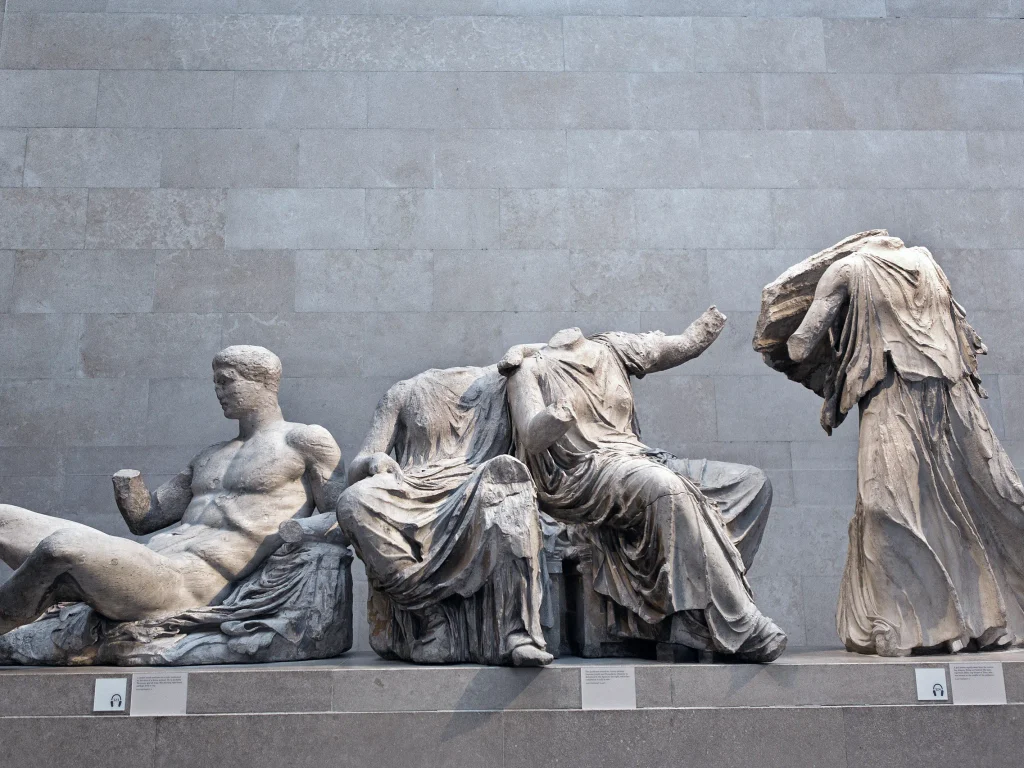
So: Britain understands repatriation. It understands that an object’s origin matters, that colonial-era acquisition carries a different moral weight than a modern loan agreement, and that returning something to where it was made or taken from can be an act of goodwill worth years of diplomatic effort. It understands all of this clearly enough to throw a nationwide celebration when it is the one receiving. The moment the conversation turns to what Britain might have to give up the Marbles, the Naga remains, the Benin Bronzes, the argument switches from “cultural ties” and “shared history” to “that’s a legal matter for the trustees,” and progress is measured in decades rather than years.
To be fair, the two situations aren’t legally identical, But it makes you realise that there are double standards still in place and colonialism is not really a thing of the past.
Further Reading
Bayeux Tapestry loan
- Harrison Jacobs, “British Official ‘Proposed’ to Secure Bayeux Tapestry Loan,” ARTnews, Aug. 13, 2026 — https://www.artnews.com/art-news/news/bayeux-tapestry-loan-british-official-plea-1234794883/
- “French Culture Minister Asked British Counterpart to Get on His Knees for Bayeux Tapestry Loan,” Artforum, Aug. 2026 — https://www.artforum.com/news/british-culture-official-proposed-for-bayeux-tapestry-loan-1234756775/
- “Bayeux tapestry returns to U.K.,” NPR, July 2025 — https://www.npr.org/2025/07/11/g-s1-77158/bayeux-tapestry-returns-to-u-k
Naga ancestral remains / Pitt Rivers Museum
- “England’s Pitt Rivers Museum announces its largest repatriation of human remains,” The Art Newspaper, Sept. 8, 2026 — https://www.theartnewspaper.com/2026/09/08/englands-pitt-rivers-museum-announces-its-largest-repatriation-of-human-remains
- “Oxford University museum to return remains of 39 people to India’s Naga community,” Euronews, Sept. 7, 2026 — https://www.euronews.com/culture/2026/09/07/oxford-university-museum-to-return-remains-of-39-people-to-indias-naga-community
- Pitt Rivers Museum, official statement on human remains — https://www.prm.ox.ac.uk/human-remains-pitt-rivers-museum
Elgin (Parthenon) Marbles
- House of Lords Library, “Elgin Marbles: UK government assessment of loaning the sculptures to Greece,” Dec. 2023 — https://lordslibrary.parliament.uk/elgin-marbles-uk-government-assessment-of-loaning-the-sculptures-to-greece/
- “Future of Elgin Marbles a matter for British Museum, says No 10,” Press Association / AOL — https://www.aol.com/future-elgin-marbles-matter-british-142415345.html
Cover Image: A scene from the Bayeux Tapestry depicting Bishop Odo rallying Duke William’s army during the Battle of Hastings in 1066. Credit: Wikipedia

Athmaja Biju is the Editor at Abir Pothi. She is a Translator and Writer working on Visual Culture.