Urban town planning plays a vital role in creating sustainable, efficient, and liveable cities. From Auroville to Brasília, these planned cities demonstrate how thoughtful design can improve everyday life.

1. Urban Town Planning in Chandigarh
Let’s start our journey by looking at our own country, everyone in India knows how well-planned the city of Chandigarh is. Chandigarh became India’s first modern planned city after Independence in 1947. Jawaharlal Nehru invited Le Corbusier to design Chandigarh’s master plan to make the master plan. He made the city on an orthogonal grid plan dividing it into sectors, Moreover, each sector is a small self-sufficient space within itself- with residential, commercial and healthcare facilities all in one space. There are fast moving car/traffic roads that is intertwined between the cities. It was earlier envisioned as a garden city which was to suit the living conditions of the city dwellers.

2. Urban Town Planning in Auroville
Another unique town planning is that of Auroville, a utopian town in Tamil Nadu, near Pondicherry. Throughout the world, people are constantly searching for the perfect city, which is harmonious in nature and existing without conflict. The Mother created Auroville in response to that global vision. It is a utopian town thought of by the Mother from Sri Aurobindo Ashram in Pondicherry. Let’s look at her history, in 1968, Mira Alfassa, also known as the Mother, articulated Auroville’s charter, proclaiming that “Auroville belongs to nobody in particular. Auroville belongs to humanity as a whole. Auroville wants to be the bridge between the past and the future.” With this vision, the town opened its doors to residents. Auroville’s layout mimics a galaxy, with a banyan tree at its centre and a gold-plated sphere housing meditation rooms, a construction that spanned 37 years.
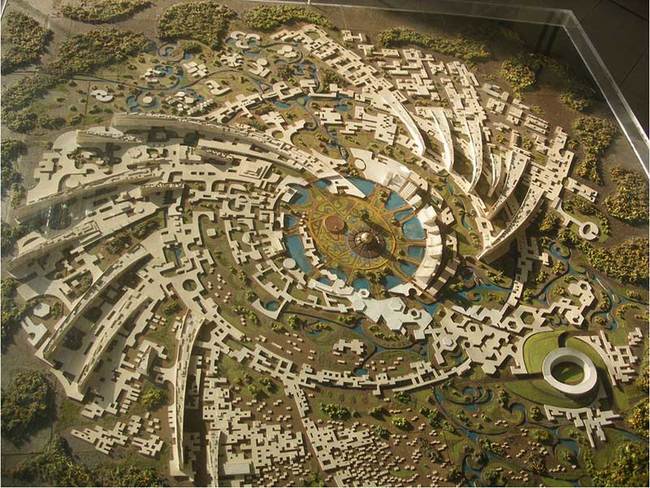
The Auroville Foundation owns all properties in the town attracting over 2,000 residents.
The town also has small enterprise Meanwhile, residents actively maintain the town.
3. Washington D.C.: The L’Enfant Plan
The L’Enfant Plan, so named in honour of Pierre Charles L’Enfant, the city’s initial urban planner, is the name given to the urban plan for Washington, D.C. Large avenues connect Washington’s east-west and north-south streets, creating rectangles for open areas and memorials inside the grid. The design created the National Mall between the Capitol and the Lincoln Memorial.
Moreover, The city exemplifies exceptional town planning, seamlessly blending historical significance with modern functionality. Moreover, its neoclassical architecture, notably evident in the National Mall, reflects meticulous design and cultural prominence. Visitors can also navigate the city easily through its grid system. The urban environment is well-balanced, with green areas such as Rock Creek Park that promote wellbeing and a sense of community. This city has a singular blend of modern living with respect for the past.

4. Urban Town Planning in Brasília
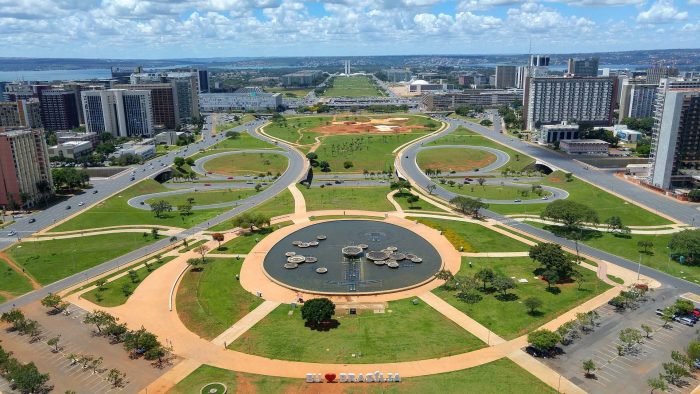
Brazil built Brasília in just 41 months and opened up in April, 1960. It is one of the most well-planned cities in the world. It apparently looks like a bird or an airplane from space. Lucio Costa’s urban plan for Brasilia is characterised by two intersecting axes, it is well-known as the “Pilot Plan.” Government officials live along the cross axis, while all of the government buildings are situated along the magnificent long axis. The superquadra contains homes, schools, hospitals and shops. But pedestrian mobility was not taken into consideration when designing Brasilia, which was primarily intended as a metropolis for cars.
5. Singapore’s Sustainable Urban Model
Singapore divides its territory into partially independent precincts under the direction of four regional centres. This region’s division contributes to the greater objectives of maintaining a good standard of living.Creating chances and space for growth for future generations, integrating green areas, improving mobility and transportation services, and maintaining a thriving economy are some of the solutions. Another is offering high-quality, reasonably priced housing.

6. Putrajaya: Malaysia’s Garden City
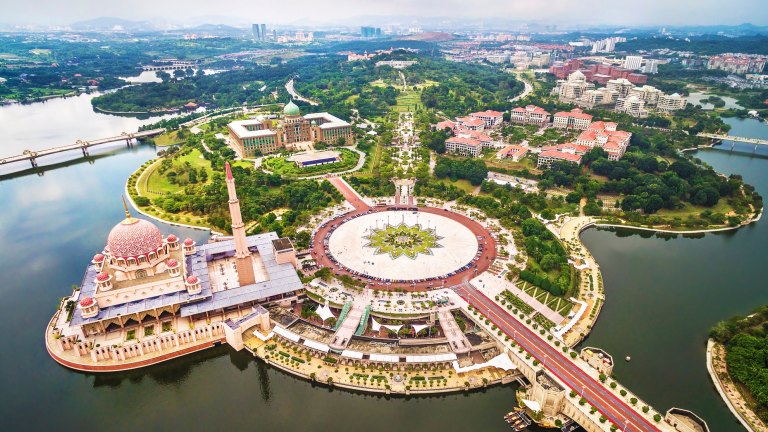
Conceived as a ‘garden city,’ Putrajaya serves as the new federal administrative centre for the Malaysian Government. The city’s intelligent and efficient planning has designated green spaces, water bodies, waterfronts, peripheral residential precincts, and a expansive central boulevard, acting as the city’s backbone. The master plan integrates commercial districts with green spaces.
A newly planned city that was earlier plagued with excessive population, pollution in 2002, has now re-vamped. New urban planners and designers came on board and suggested relocation of the population as possible solution in 2011. It is branded as the other alternative to Seoul, the capital of South Korea. Sejong has solar power buildings, smart tech transportation, automated trash collectors, electrical car charging stations, which became pertinent in attracting people in staying in self-sufficient city.
7. Amsterdam’s Canal-Based Planning
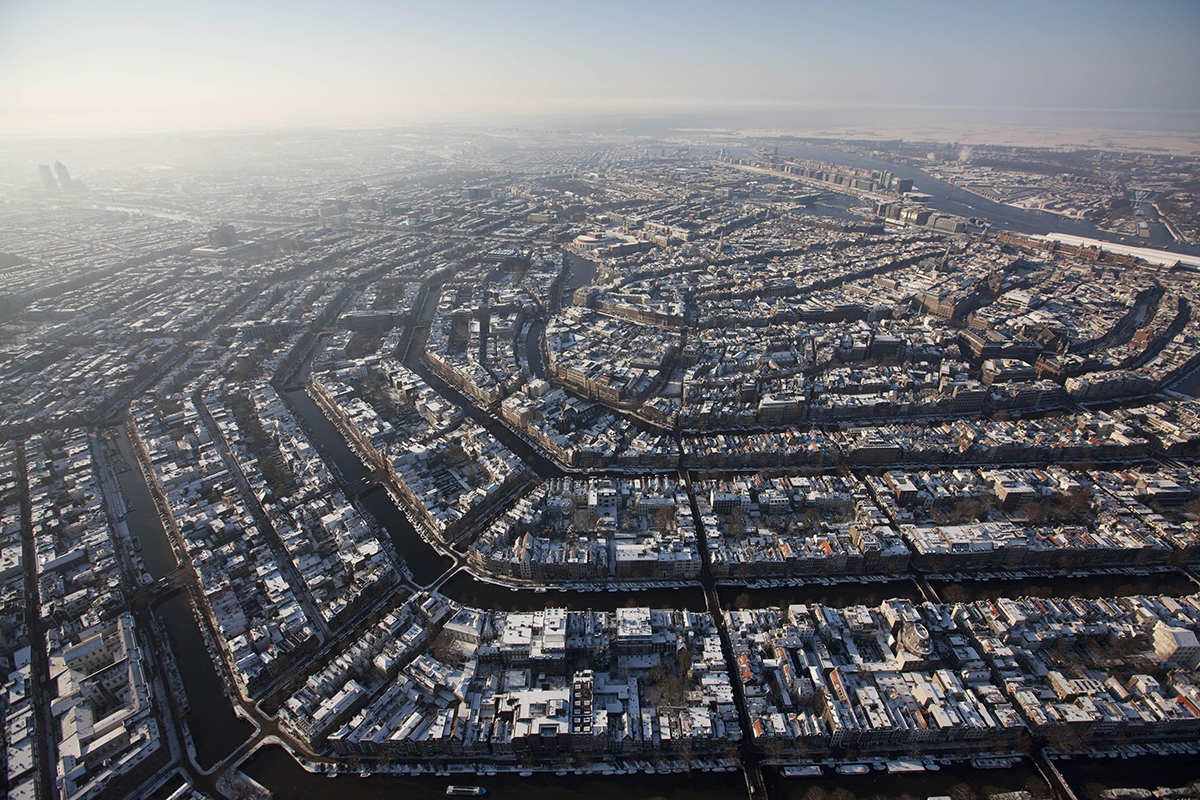
The Netherlands’ capital city, Four concentric canal rings shape Amsterdam’s layout that were started in the 17th century. The city’s distinct structure has been provided by these canals, while the housing is constructed in clusters to provide lateral support. The city’s public housing is planned to distinctly identify its urban character, with particular focus on the façade design, which has come to represent the city. The focus on connectedness and thoughtfully built public spaces for a higher standard of public life are examples of the greatness of Dutch planning.
8. Copenhagen’s Five Finger Plan
In order to provide an interconnected network of urban infrastructure, transportation, and green spaces, Copenhagen, Denmark’s urban plan, often known as Urban planners designed the Five Finger Plan to connect transport, green spaces and housing. Along these lines, the development is concentrated to promote the usage of public transportation systems. The high standard of public life, the emphasis on sustainability, and the considerate attitude to development are evidence of Copenhagen’s excellent urban planning and implementation.

9. Palmanova’s Utopian Design
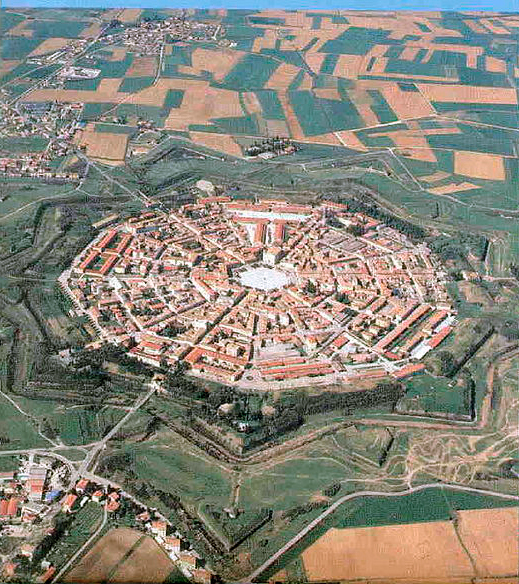
We had spoken about Auroville earlier, a utopian township that is for all people, Another utopian land is Palmanova. Which was Constructed in 1593 as a fortress, Designed by the overseers of the Republic of Venice. Conceived as a self-sustaining community where equality and purpose prevailed, this geometrically perfect city featured a unique nine-pointed star layout with three concentric rings expanding from a central hexagon.
However, the city’s strict design struggled to attract residents freedom of movement and the constant threat of war and devastation. Facing this challenge, the Venetian Empire, unable to entice inhabitants, eventually welcomed a considerable number of pardoned prisoners into government-deeded properties in 1622. However, it remains uncertain if these new residents adhered to the utopian ideals upon which the city was originally founded. Now, the population inside the walls is about 5,400. A campaign is underway to apply for Unesco designation for the city; at now, the Italian government has only granted it National Monument status.
10. Urban Town Planning in Jaipur
We end the article with another popular Indian city, Jaipur. The ancient Indian architectural science known as Vastu Shastra served as the foundation for Jaipur. Designed to serve as the state capital of Rajasthan, India, Architects built Jaipur over four years starting in 1727. It was encircled by walls and composed of enormous blocks divided by 111-foot-wide streets. The architecture and design were extremely sophisticated at the time. The city still paints its avenues pink, having been painted pink to welcome the Prince of Wales in 1853. More than 3 million people call the city home now as it has expanded beyond its boundaries.

Urban town planning is essential in today’s time, it is suggestive and improves the quality of life a person lives in that city. As we have seen in the cities given above, a well designed city is the perfect blend between architecture and its environment, all the while maintaining the essence of the space. We have in the list above seen many beautiful examples of contemporary spaces synergising with the historical ethos. These are smart cities which are well devised that can incorporate the needs of our future residents.
References
https://www.wired.com/2012/11/planned-cities-from-space/
https://www.re-thinkingthefuture.com/city-and-architecture/a3359-10-newly-planned-cities-and-their-innovative-urban-designs/
https://www.re-thinkingthefuture.com/city-and-architecture/a2181-8-cities-in-the-world-famous-for-their-urban-planning/
https://www.smithsonianmag.com/travel/see-towns-planned-be-utopias-180968814/