Shankar Kadakuntala Exhibition Brings Portraits to Life
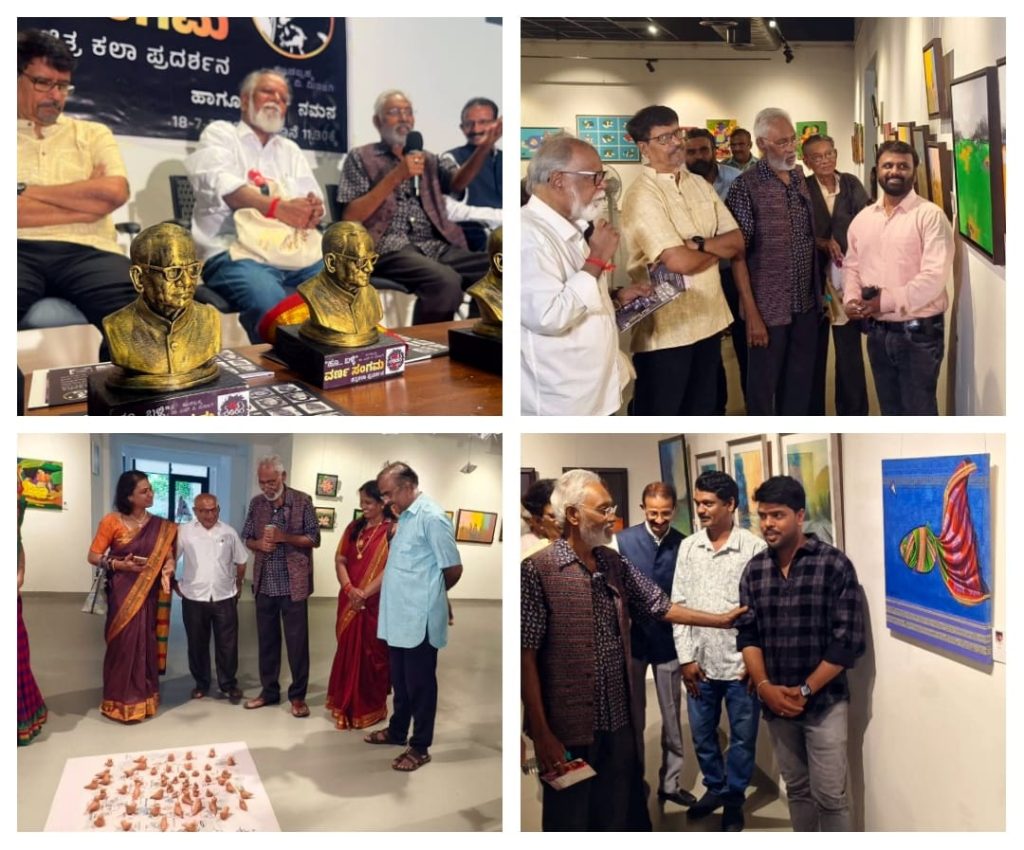
Shankar Kadakuntala Exhibition opened at Venkatappa Art Gallery, Bengaluru, from 18 to 21 July 2026. Alongside Vijay Dhongadi’s solo presentation and a Hubballi group show, the exhibition celebrated diverse artistic voices and contemporary expression.
Official venue: https://karnataka.gov.in/venkatappaartgallery
Meanwhile, with the bold brushstrokes and deeply expressive portraits by Shankar Kadakuntala, the gallery’s four walls came alive with vivacious faces, each carrying a distinct identity, each rooted in its own emotional and social landscape. Spread across canvases of varying scales, the portraits invited the viewer into a world where colour, character and emotion intertwined.
Group show
Shankar Kadakuntala Exhibition Explores Identity
As I stepped into the hall, my thoughts drifted to a blue self-portrait Shankar had painted years ago. It reminded me of Anupam Kher’s blue-painted appearance in a film. That memory stayed with me as I walked through the exhibition. Rich reds, blues, yellows and greens filled the portraits with energy.
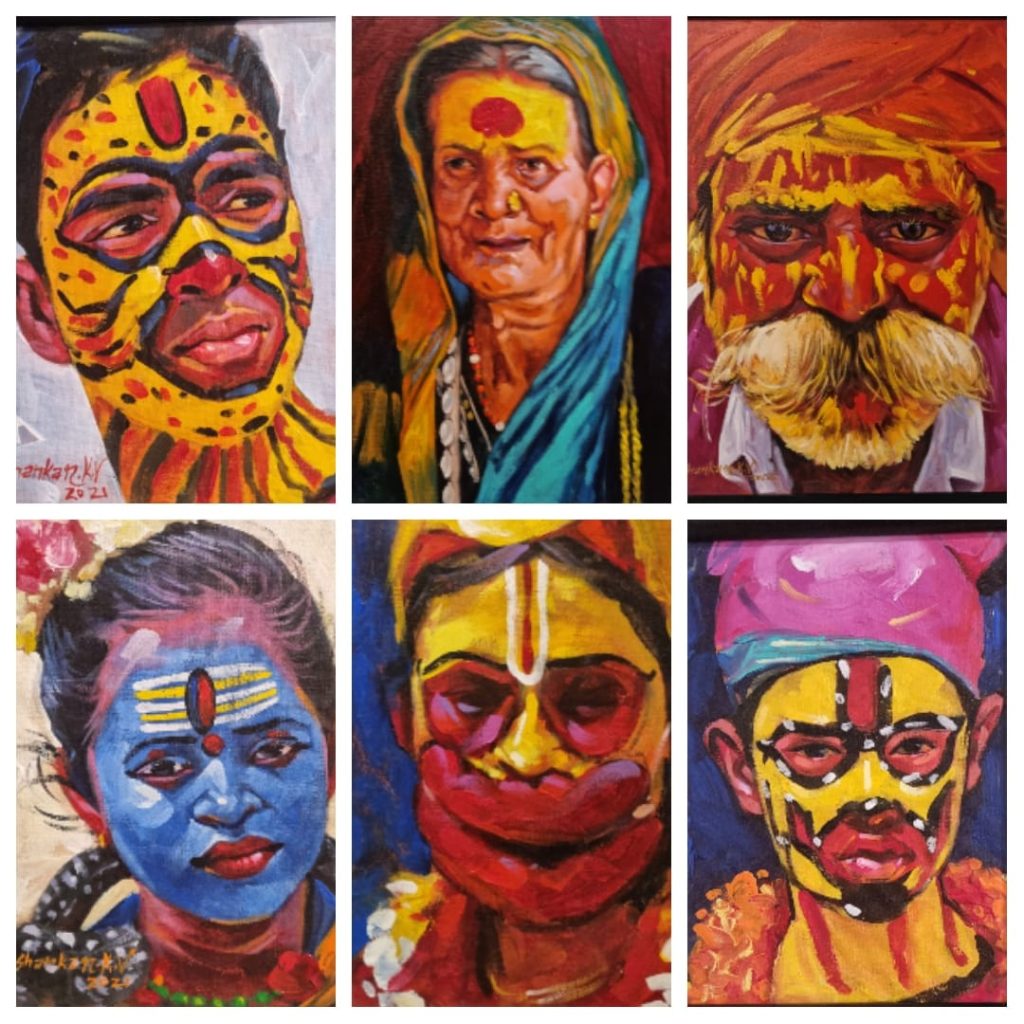
The Joker series exploded with vibrant colours and sweeping brushstrokes. The large, bold eyes resembled those of Kathakali performers. Young boys and children appeared as Joker, Krishna, Shiva and Hanuman. As a result, mythology and contemporary life merged naturally.
The painted masks never hid individual identity. Instead, they revealed the many roles people perform in society. Consequently, every portrait balanced playfulness with introspection and invited viewers to question identity itself.
Shankar Kadakuntala Exhibition Highlights Self-Portraits
Yet, all these colourful portrayals gradually dissolved as my gaze settled on the front wall, where two powerful self-representations commanded complete attention. One depicted a madaari controlling three monkeys, each bearing Shankar’s own face. The work became a metaphor for the artist’s internal struggle. It reflected the invisible strings through which society often shapes individual choices.
The second painting served as the exhibition’s emotional and conceptual climax. It brought together the presence of Picasso, symbolising the artist’s commitment to pursuing art with honesty and conviction. Alongside him appeared Shankar’s self-portrait with a barber’s chair and scissors, symbols of his ancestral profession. For years, he kept this inheritance hidden because of social stigma.
Through this painting, however, Shankar finally breaks that silence. The canvas feels like an eruption of molten lava, releasing years of inherited prejudice. It declares that there is no contradiction between being an artist and a barber. Instead, both identities coexist with equal dignity and authenticity.
Shankar Kadakuntala’s Self-Portraits
The pandemic further reaffirmed this truth. When uncertainty engulfed the world, his family’s traditional profession sustained him. Rather than distancing himself from it, Shankar embraced it with pride. As a result, he accepted both his artistic and ancestral identities.
His exhibition celebrates identity that is fluid yet deeply personal. Moreover, Shankar believes the divine can appear in any form. This belief shapes both his artistic vision and his humane outlook.
He sees no contradiction in placing a peacock feather on a wandering beggar walking with cows. Instead, he suggests that divinity exists beyond temples and icons. In his view, it also lives in ordinary people and everyday life.
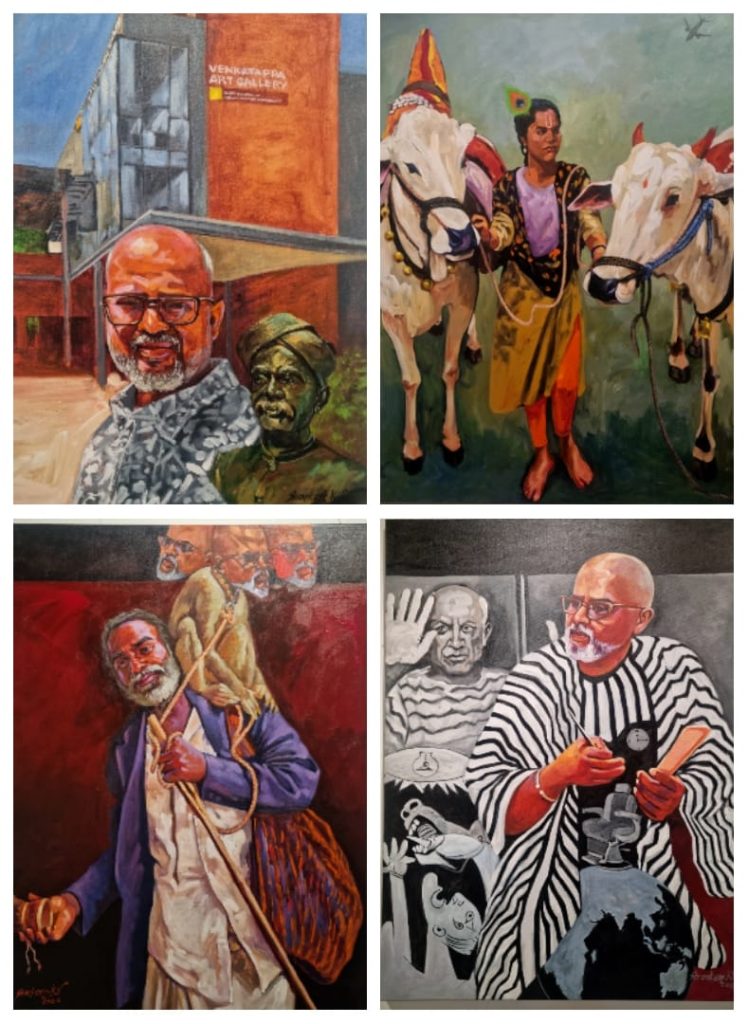
work of Shankar Kadakuntala
Vijay Dhongadi’s Figurative Abstraction
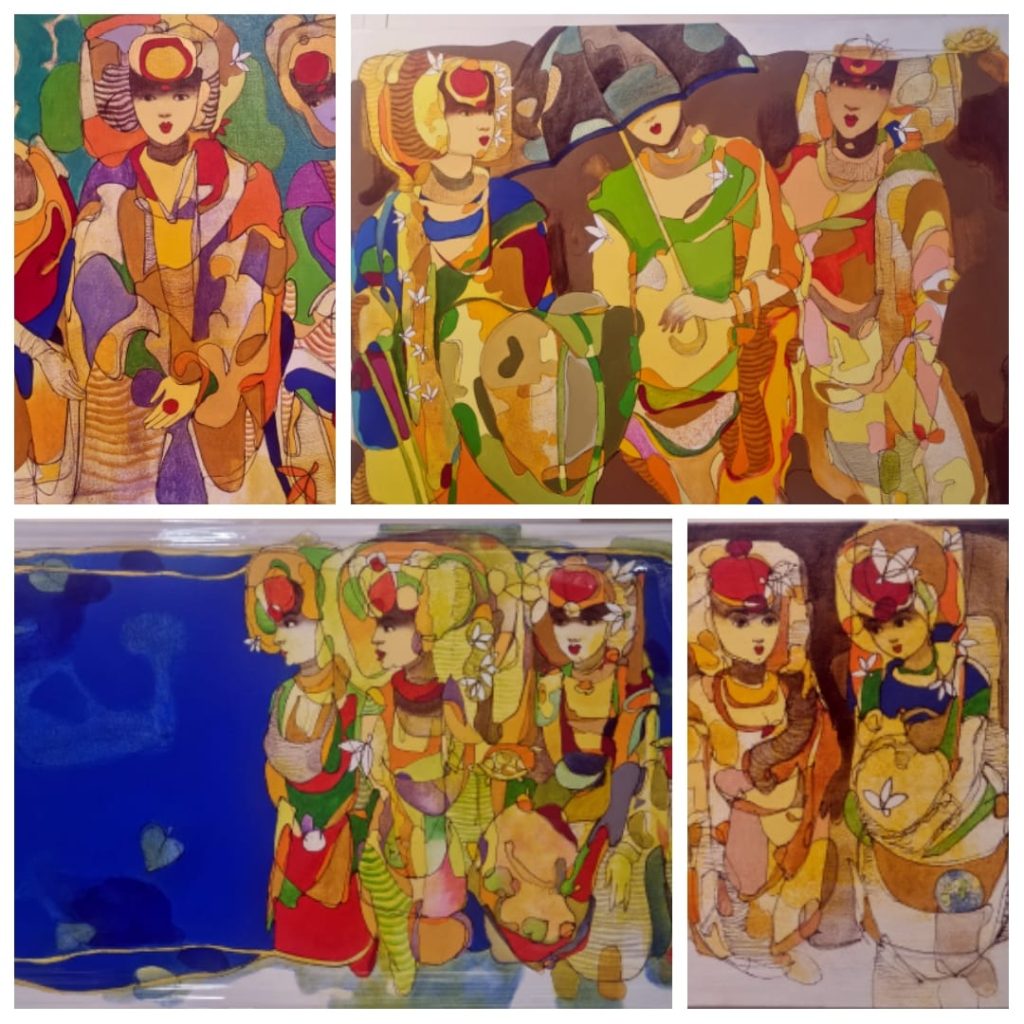
In the next solo show, Vijay Dhongadi’s figurative abstractions unfold like visual poetry. Flowing lines dissolve the boundaries between figure and imagination. At first glance, the paintings appear playful.
However, closer observation reveals miniature puppets, flowers, petals and indigenous motifs. These details enrich every composition. Moreover, his fluid line work creates movement with remarkable simplicity.
The facial features echo Chinese and Japanese artistic traditions. Yet Vijay transforms these references into his own contemporary language. Finally, fluorescent pinks, greens, yellows and blues give the paintings a vibrant, luminous energy.
Hubballi Group Show Celebrates Regional Artists
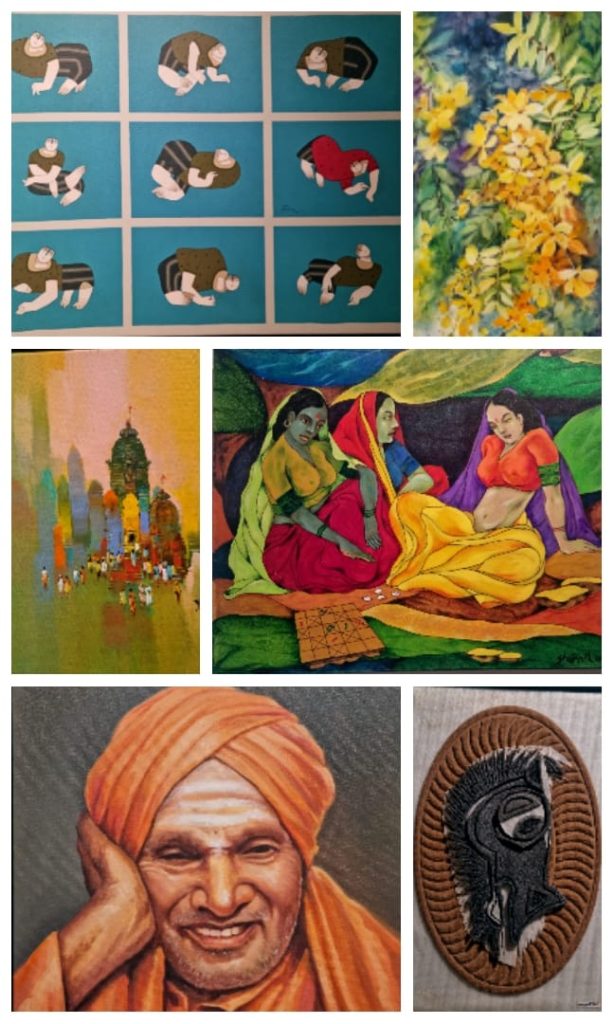
The event blossomed further into a vibrant confluence of artistic voices through an accompanying group exhibition featuring 18 established artists from Hubballi. Together, the diverse presentations created a rich chromatic dialogue, celebrating individuality, experimentation and the collective spirit of the region’s thriving art community.
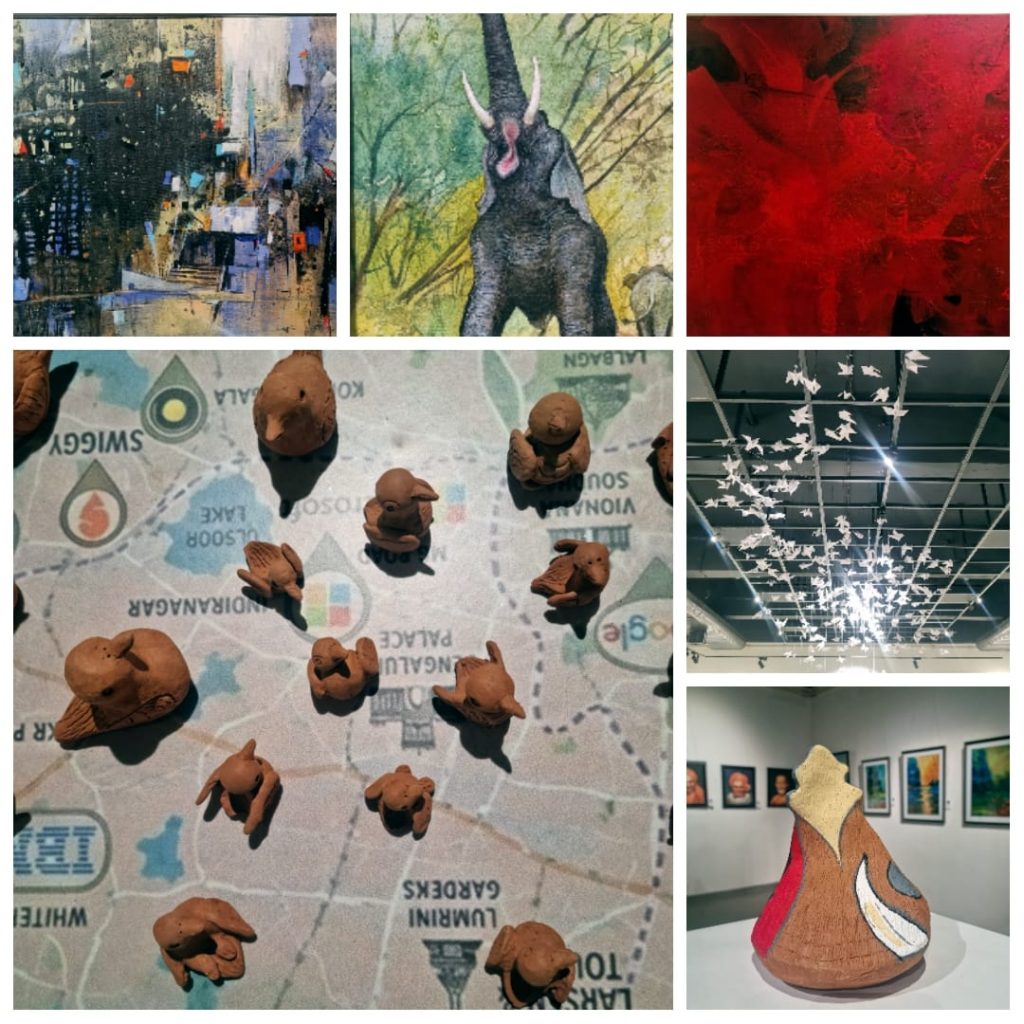
Group show
Exhibition Details
The Shankar Kadakuntala Exhibition stands out for its emotional honesty and powerful visual storytelling. Each artist brought a distinct narrative, revealing individual sensibilities through diverse media and themes. There were portraits, abstract landscapes, figurative compositions, thermofoam and coir foot mat creations, and even religious architecture.
Terracotta forms echoed the earth’s timeless memory, mixed media works layered textures and ideas into evocative compositions, acrylics burst forth with bold colour and energy, while delicate watercolours whispered fleeting moods and landscapes. An installation with origami birds, thoughtfully conceived, was a step beyond passive observation and engagement with space, material and meaning.
Together, these speckled expressions transformed the gallery into a rich tapestry of contemporary interchange, where every work contributed its own pace to the opus of creativity.
The cover image and the artworks featured in the article were provided by Dr Alka Chadha Harpalini.
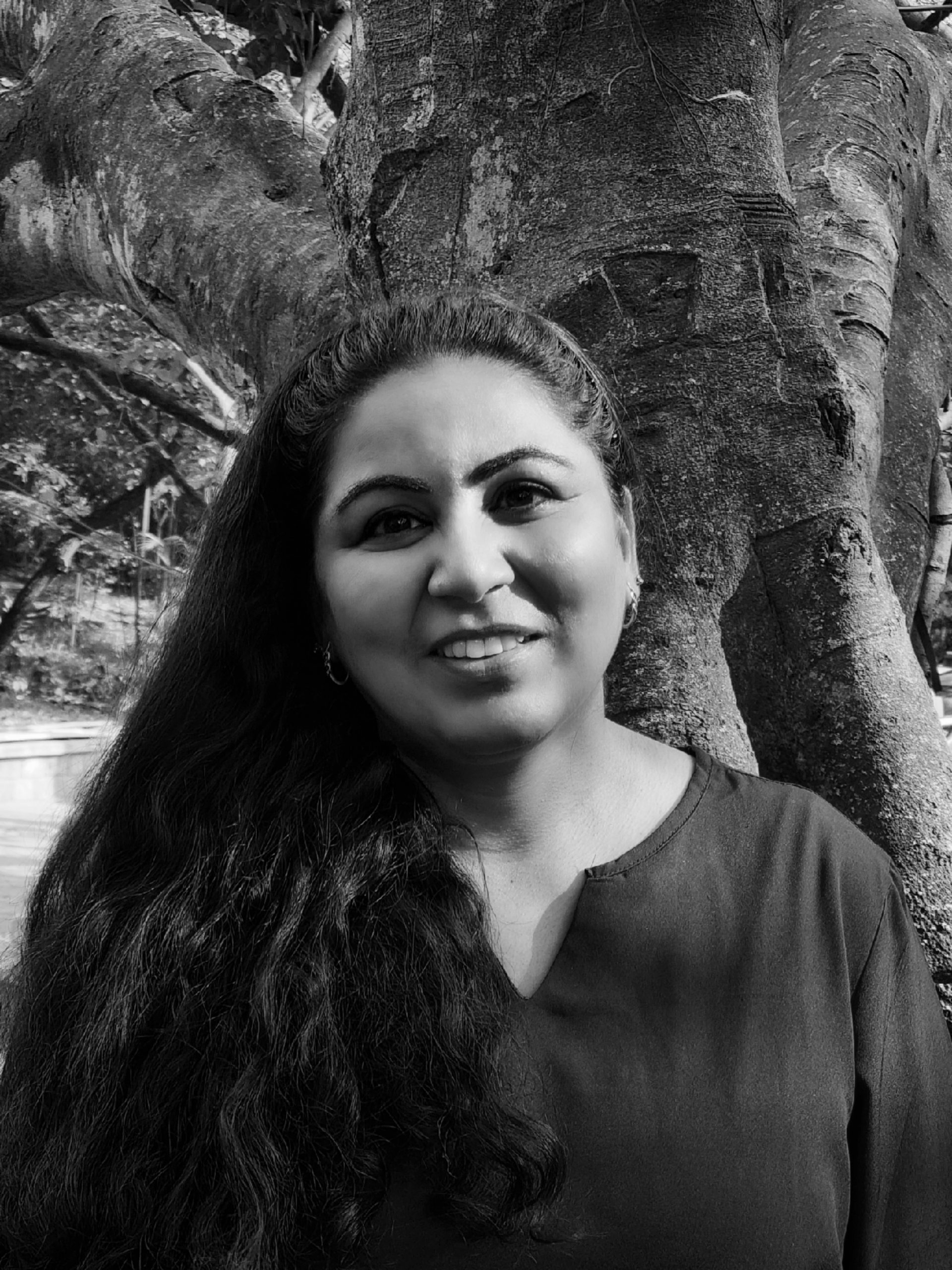
Alka is an artist and art writer with a diverse career spanning teaching, e-learning projects with the Ministry of Human Resource Development (MHRD), and editorial work. An alum of the Government College of Art, Chandigarh (BFA) and Banaras Hindu University, Varanasi (MFA, PhD), she has been recognised with numerous prestigious awards and honours.