Fields of Chamba, presented by Bridge Bharat, is an unfolding of land, labour, and the tactile intelligence of making. On view until May 2, the show repositions the Chamba Rumal as a living, thinking surface that holds memory, rhythm, and care.
At its core, the exhibition draws from the ecological and cultural landscape of Chamba, where terraced fields shape both geography and daily life. This sensibility translates seamlessly into the rumals on display. The square textile becomes a field: stretched, worked upon, and slowly transformed through the repetitive, almost meditative act of embroidery.
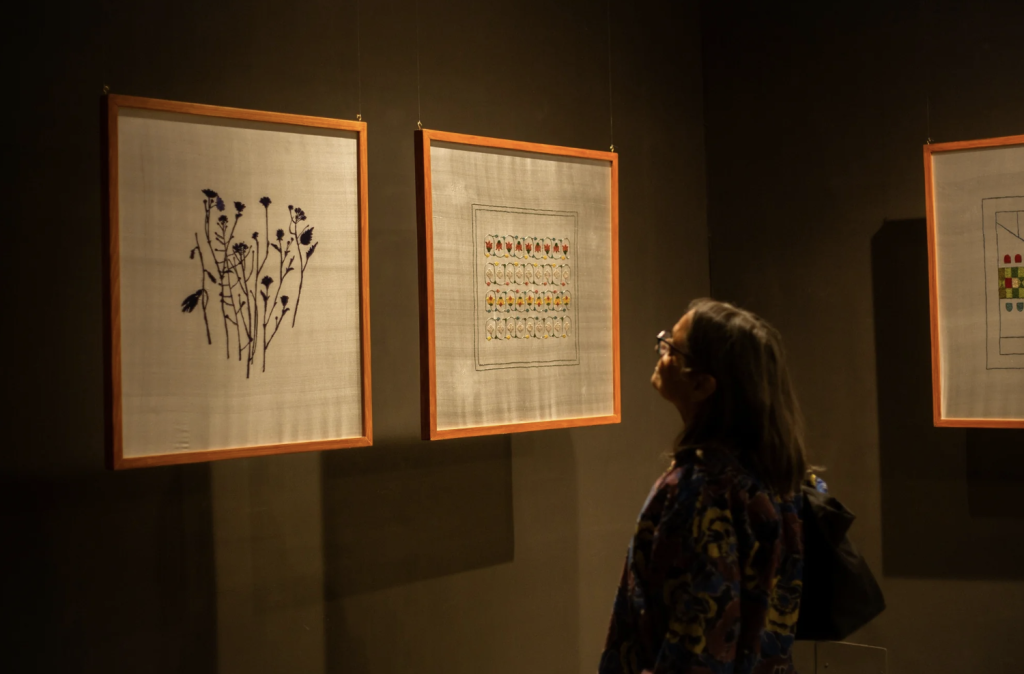
The collaboration with master artist Lalita Vakil and her atelier of women artisans anchors the project in lineage and lived knowledge. Their command over the do-rukha technique, where embroidery appears identical on both sides remains striking and fascinating. What Bridge Bharat introduces, however, is a subtle yet effective shift in material and composition. The use of a fine-count silk–cotton khadi base lends the works a certain lightness, allowing the motifs to breathe and move with a contemporary softness.
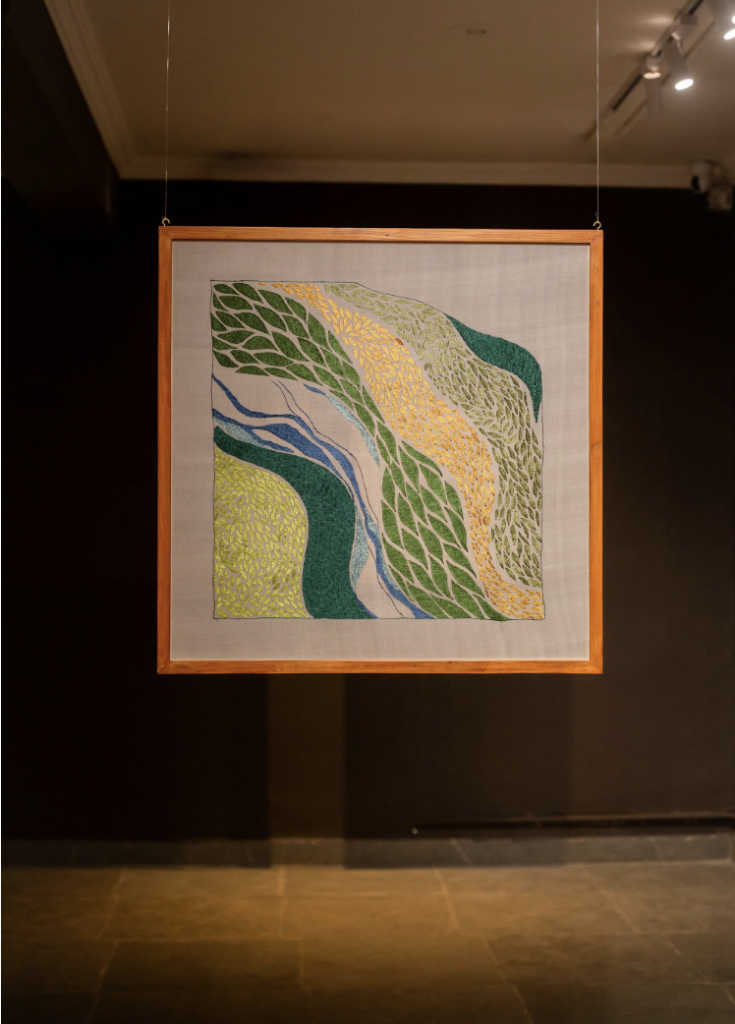
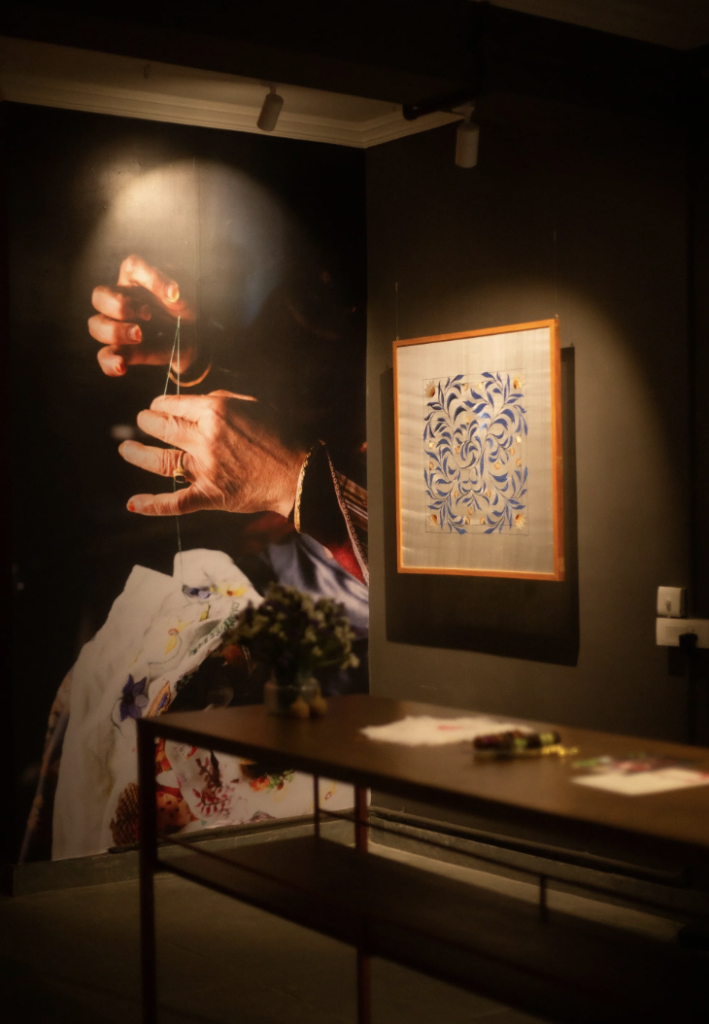
Visually, the works oscillate between the familiar and the reimagined. Traditional elements, floral borders, mythological references, animal forms are retained, but they are pared down, reorganized, and given spatial clarity. In several pieces, the compositions feel almost geometric in their restraint, even as they remain rooted in organic forms. This balance between intricacy and openness is where the exhibition finds much of its strength.
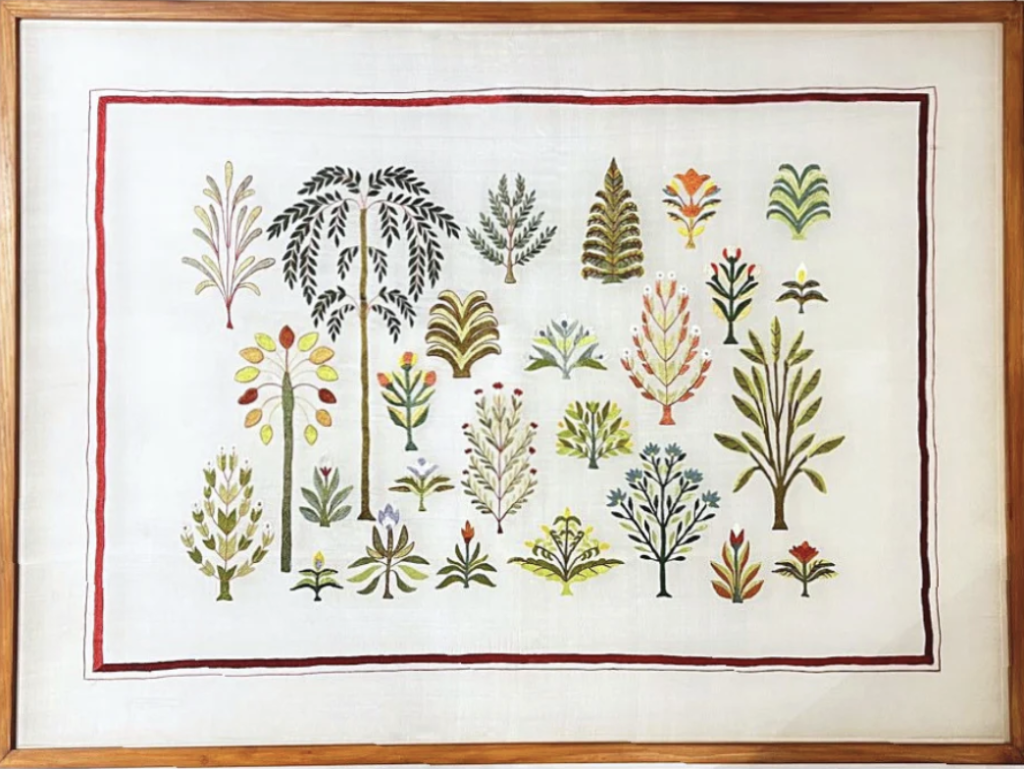
What is particularly compelling is the shift away from overtly narrative, mythological storytelling toward observational poetics. Grasses, blossoms, and animals enter the frame as carriers of presence. The exhibition also succeeds in its translation of craft into a gallery context without diluting its integrity. Rather than aestheticizing the rumal into a detached art object, it foregrounds process: labour, repetition, and embodied knowledge. This is where Fields of Chamba feels most resolved: in its ability to hold tradition and contemporaneity in tension without forcing either into dominance.
Fields of Chamba remains a thoughtful and sensitive reanimation of an ancient practice. It does not attempt to radically disrupt the tradition but instead works from within it by stretching its language, testing its materiality, and allowing it to inhabit new spaces of viewing and meaning.
All Images courtesy of Bridge Bharat
Athmaja Biju is the Editor at Abir Pothi. She is a Translator and Writer working on Visual Culture.