Every October, World Space Week (October 4–10) invites people around the globe to look up and celebrate humanity’s journey beyond Earth. There’s no better way to join in than by trying astrophotography, the art of photographing the night sky.
What Is Astrophotography?
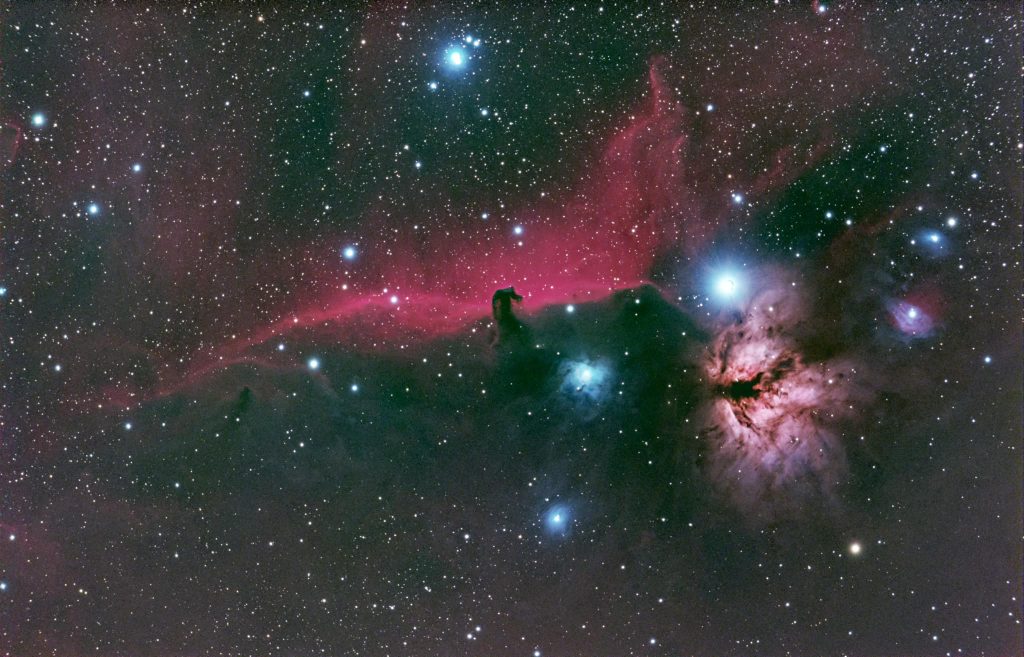
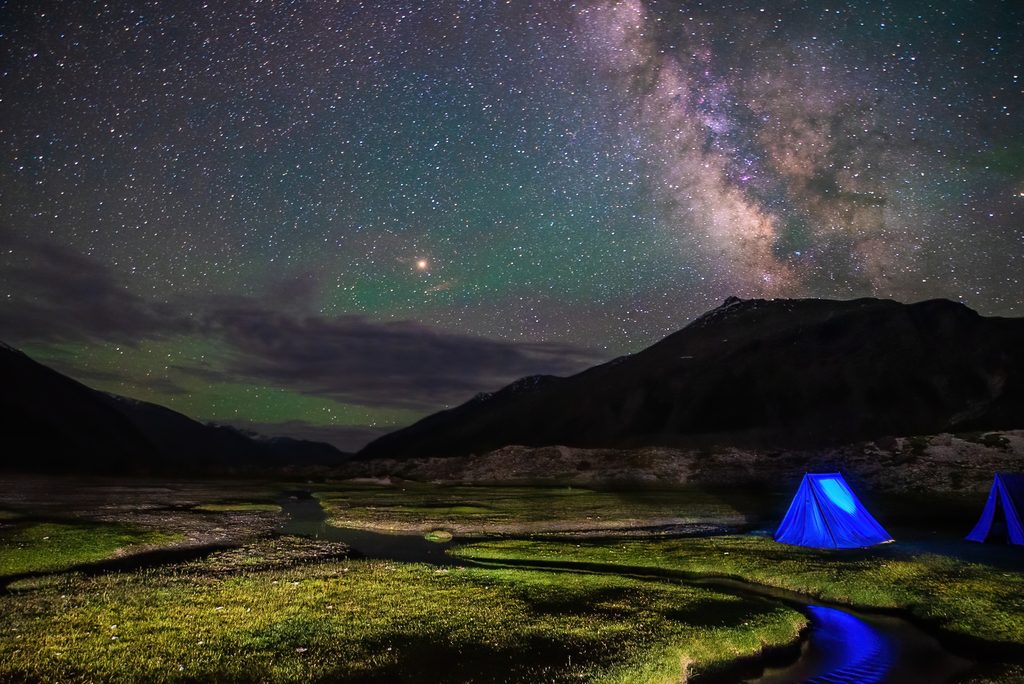
Astrophotography, also called space photography, is the practice of photographing celestial objects and events. It broadly falls into three categories. Wide-field astrophotography captures the Milky Way, star trails or constellations above a foreground such as mountains or trees. Lunar and planetary photography focuses on the Moon and bright planets like Jupiter and Saturn, usually through a telescope. Deep-sky astrophotography targets faint, distant objects such as nebulae, galaxies and star clusters, and typically involves tracking mounts and many long exposures stacked together.
The good news is that you don’t need an observatory to begin. Modern cameras, and even many smartphones, are sensitive enough to reveal stars invisible to the naked eye. Wide-field shots are the easiest starting point because they need the least equipment while delivering the most dramatic results.
Essential Astrophotography Gear for Beginners
A sturdy tripod is the single most important piece of kit. Night sky photography relies on long exposures, and even tiny vibrations blur stars into smudges.
Next, choose a camera with manual controls. A DSLR or mirrorless camera is ideal, but recent flagship smartphones with night or astro modes can produce impressive results. Pair your camera with a fast, wide-angle lens, ideally 14–24mm with an aperture of f/2.8 or wider, to gather as much light as possible and fit a large stretch of sky into the frame.
A remote shutter release or your camera’s built-in timer prevents shake when you press the button. Pack spare batteries, since cold nights drain them quickly, and a red-light headlamp to protect your night vision. As your interest grows, a star tracker lets you take much longer exposures by following the Earth’s rotation.
Best Camera Settings for Night Sky Photography
Switch to manual mode and shoot in RAW to keep the most detail for editing. Start with these settings:
- Aperture: as wide as your lens allows (f/1.8–f/2.8)
- ISO: 1600–6400, depending on your camera’s noise performance
- Shutter speed: use the “500 rule”: divide 500 by your focal length to find the longest exposure before stars trail (500 ÷ 20mm = 25 seconds). On high-resolution sensors, the stricter NPF rule gives sharper stars.
- Focus: manual, set to infinity, then fine-tuned in live view zoomed in on a bright star
- White balance: around 3800–4500K for natural-looking skies
Take a test shot, check the histogram and adjust. Every location and every night is different, so experiment freely.
Planning Your Shoot: Dark Skies, Moon Phases and Editing
Light pollution is the astrophotographer’s biggest enemy. Use a light-pollution map to find dark locations away from city glow, such as national parks, deserts and designated dark-sky reserves.
Check the Moon phase too. A new Moon gives the darkest skies for Milky Way photography, while a crescent or full Moon makes a perfect subject in itself. Apps such as Stellarium, PhotoPills and Clear Outside help you track the Milky Way’s position and the cloud forecast.
Finally, editing brings your images to life. Adobe Lightroom adjusts contrast, color and noise, while free tools like Sequator and DeepSkyStacker combine multiple exposures to reduce noise and reveal faint detail.
Astrophotography in India: Dark Skies and Homegrown Stars
South Asia has some of the finest night skies on the planet. In Ladakh, an area of roughly 22 km around Hanle has been notified as the Hanle Dark Sky Reserve, India’s first, centred on the Indian Astronomical Observatory and blessed with Bortle-1 skies, the darkest on the scale. Spiti Valley, the Rann of Kutch and the high Himalaya are other favourites, while the mountain regions of Nepal and Bhutan offer similarly dark, high-altitude skies. Plan around the monsoon: October to May generally brings the clearest nights.
India also has inspiring role models. Dorje Angchuk, engineer-in-charge at the Hanle observatory, became the first Indian named an Honorary Member of the International Astronomical Union for promoting astronomy in Ladakh through his photographs. He was mentored by Delhi’s award-winning Ajay Talwar, who with Neelam Talwar compiled the “Seven Wonders” of the Hanle night sky. And Pune’s Prathamesh Jaju went viral at just 16 with a stunningly detailed mineral Moon built from around 50,000 frames. Want to learn alongside others? Join a local astronomy club such as Pune’s Jyotirvidya Parisanstha or the Bangalore Astronomical Society.
Start Capturing the Universe
This World Space Week, step outside, look up and press the shutter. Your first astrophotography attempt may not be perfect, but every frame brings you closer to the cosmos and to a hobby that never stops inspiring.

Contributor