Going to an exhibition where you can see the sheer creativity of young artists is a truly amazing experience. When you walk into the space, you are immediately greeted by a rich mix of materials and ideas. From playing with clay, ceramics, and welded iron, to clothes, vivid colours, and ambient sound, the exhibition proves right away that art is everywhere. You just need a vision to experience it.
A Space to Think, Experiment, and Create
The Serendipity Arts Residency marks nine years of nurturing the emerging artistic practices of six talented artists. Their work has evolved over three months of sustained research, mentorship, experimentation, dialogue, and interdisciplinary exchange. Following a special preview on 31st July, the Open Studio exhibition is now on view at Serendipity Arts in Defence Colony, New Delhi, until 7 August 2026. Marking the culmination of the Foundation’s annual three-month residency program, the Open Studio offers visitors a rare opportunity to witness the artistic process at a pivotal stage.
Now in its ninth edition, the Serendipity Arts Residency has established itself as one of India’s leading platforms for nurturing emerging artistic practices across disciplines. At a time when artists increasingly face the pressures of rapid production and constant exhibition, this residency provides something invaluable: time, space, and critical support to think deeply, experiment freely, and take creative risks.
Artist: Vanshika Rathore
Through mentorship sessions, workshops, studio visits, and dedicated production support, the program creates an environment in which artists learn from one another, allowing ideas to cross disciplines. This year’s cohort features Gopinath Kshetrimayum, Vanshika Rathore, Smiha Kapoor, Nirmal Mondal, Pratik Anil Sutar, and Josefina Paz. Though distinct in medium and methodology, their projects collectively explore questions of memory, ecology, migration, labour, folklore, feminist histories, and inherited knowledge, reflecting on how personal and collective histories continue to shape contemporary life.
When Does Personal Memory Become Political?
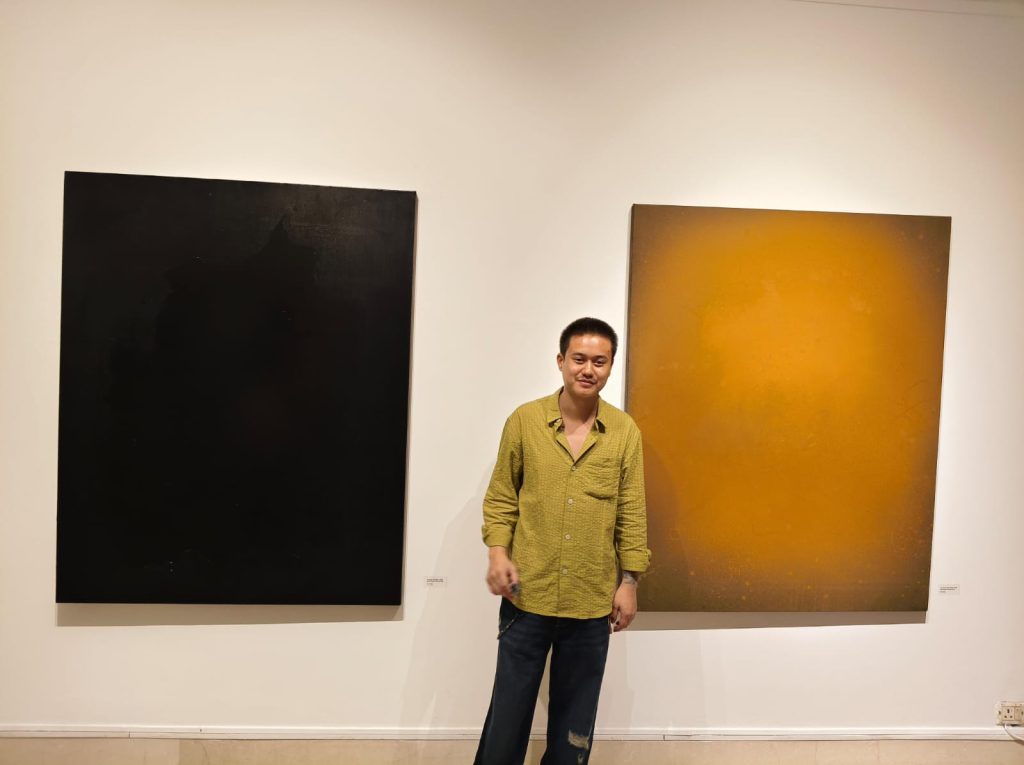
Gopinath Kshetrimayum presents a powerful body of work titled Rupture and Return, which emerges directly from his lived experiences in his hometown of Manipur. His abstract oil paintings explore how systems of power can influence the way we think, understand ourselves, and relate to home, history, and identity. For Gopinath, the residency provided sustained time to allow his paintings to evolve organically through continuous cycles of building, erasing, and rebuilding.
Artist: Gopinath Kshetrimayum
The prominent use of deep black tones in his canvases stems naturally from his environment, where he saw charcoal and burnt structures throughout his homeland. His work expresses the heavy tension of displacement, threat, and border conflicts, while still searching for a quiet hope hidden within the darkness. He draws profound inspiration from Manipuri theatre directors Oja Heisnam Kanhailal and Oja Ratan Thiyam.
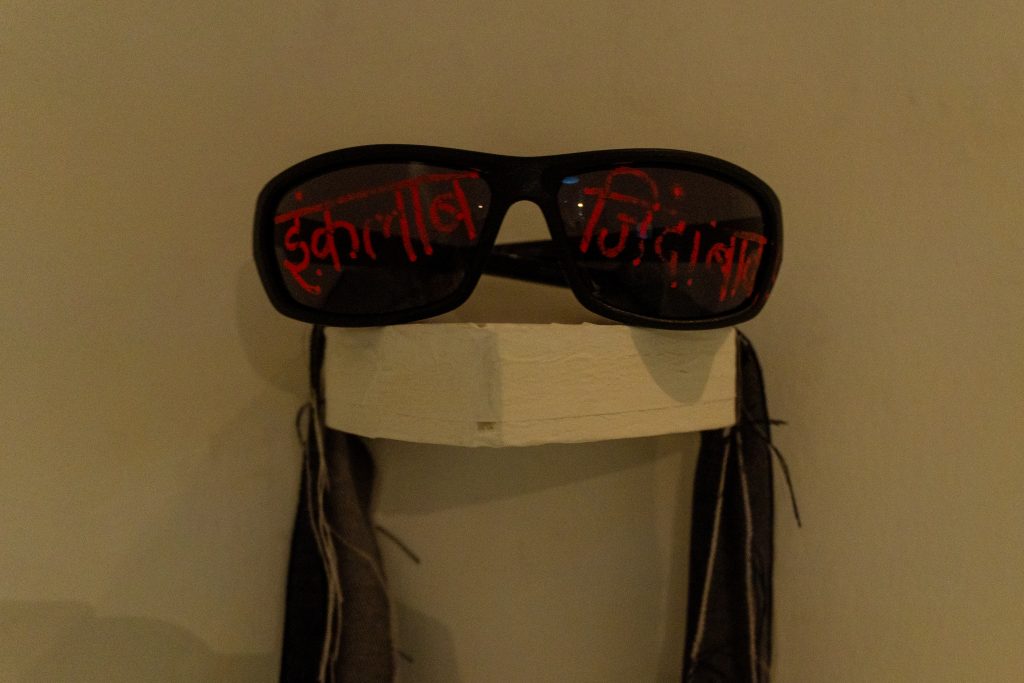
In one of his paintings, he quotes Thiyam’s poem using the traditional Meitei Mayek script. The text touches on the Innaphi, the traditional drape worn by Manipuri women that symbolises bravery, strength, dignity, and maternal tenderness. Through his layered oil compositions, Gopinath captures the delicate balance between fragile vulnerability and enduring resilience.
Can Materials Remember?
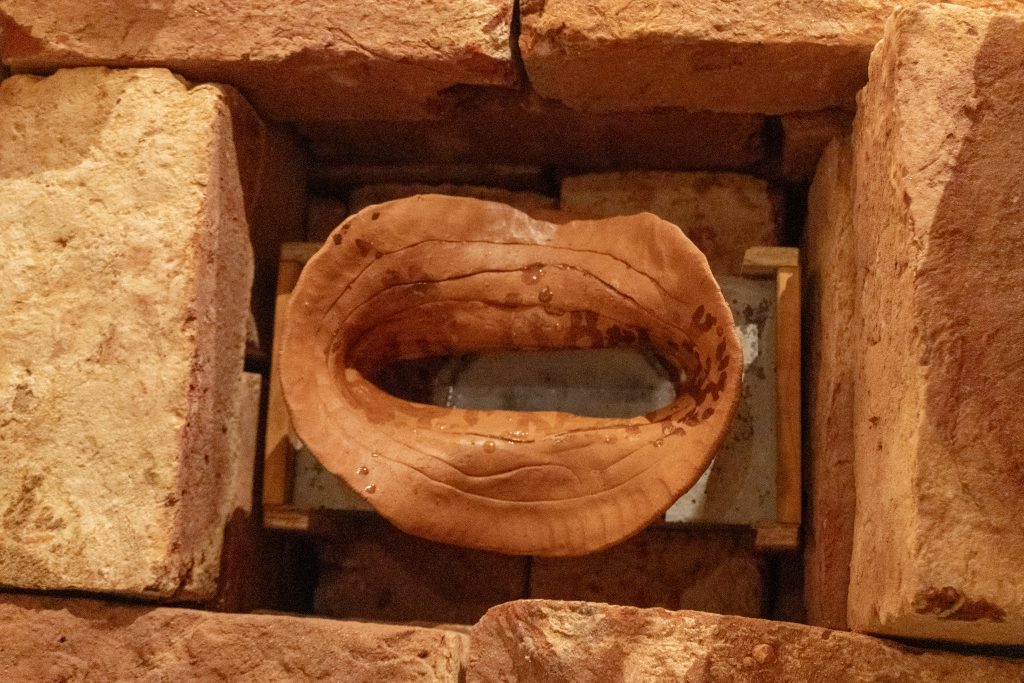
Vanshika Rathore brings a deeply intuitive, process-based approach to her installation titled Neither here Nor there. Rooted in material exploration, Vanshika works with wood, clay, terracotta, glass, cement, brass, resin, and found elements. During her time at Santiniketan, clay became her primary language because it naturally absorbs every hesitation, pressure, and impression of the human hand. Unbaked clay retains every subtle touch, but once it passes through the fire, it becomes a permanent medium.
She references the concept of a Havan Kund, in which soil, bricks, and wood all pass through fire to attain a unique, lasting presence. For her residency project, Vanshika experimented with creating small, cropped landscapes out of clay, cement, and resin, placing them low to the ground so visitors can slowly walk around them and form their own connections.
Artist: Vanshika Rathore
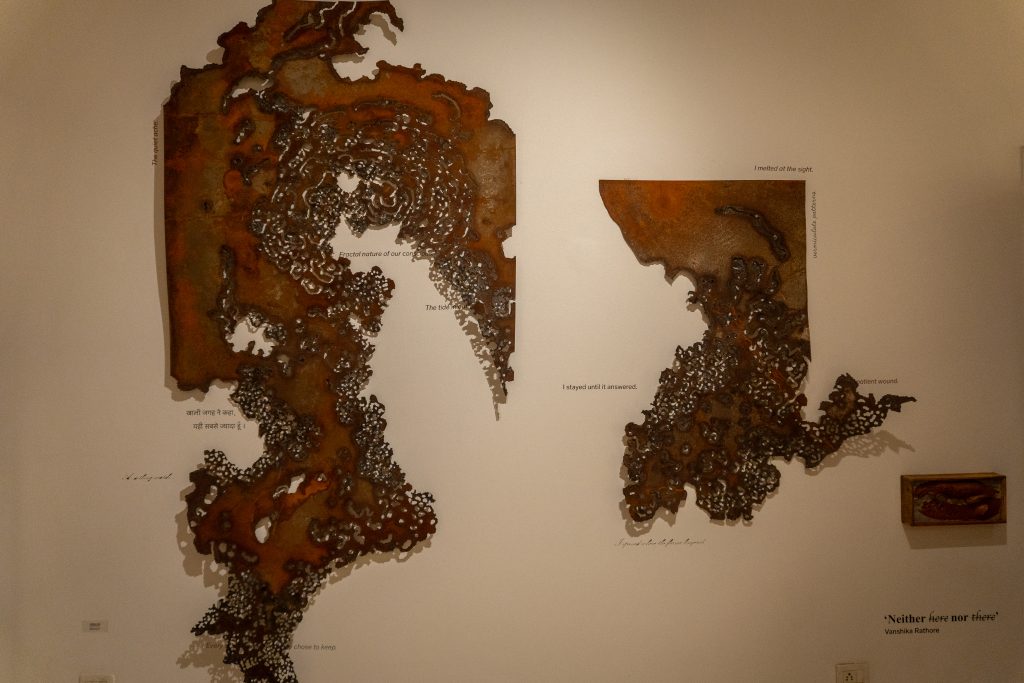
She also worked with welded metal sheets, making holes in the iron because she finds the natural darkness of holes intriguing and inviting. Her installation reflects the quiet relationship between the human body and the natural world, showing how materials retain the physical memory of their transformation.
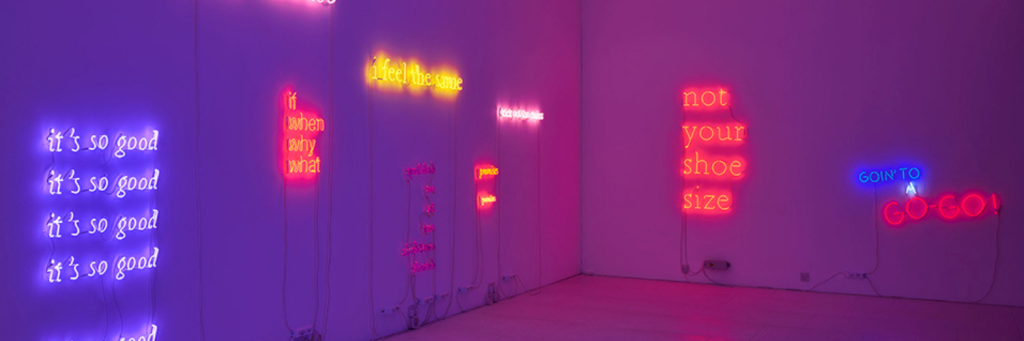
She incorporated several quotes into her installation—thoughts that came to her while creating the works and phrases that stayed with her throughout the process. These poetic reflections have been beautifully displayed on the walls, becoming an integral part of the installation and offering viewers a deeper insight into her creative journey.
Rewriting Women’s Histories Through Textiles
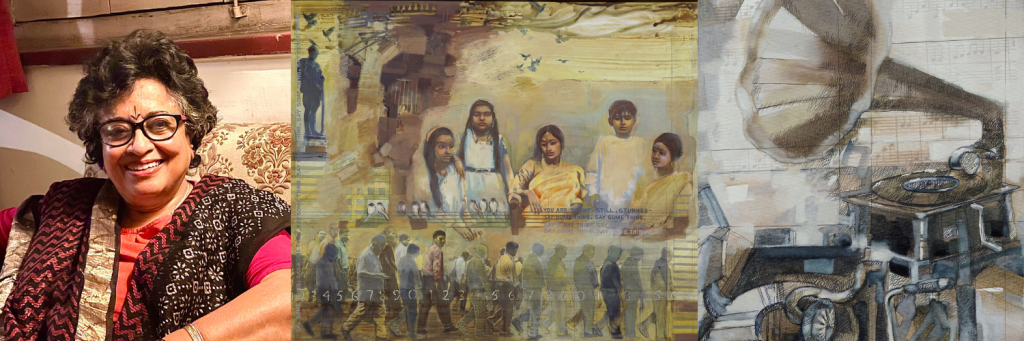
Smiha Kapoor turns her attention to historic women’s textile practices in Punjab through her research-led project titled In Her Re-Turn. Her work centres on the traditional practice of Trinjan, which were community gatherings where women from different castes and religions sat together to spin the charkha, weave clothes, and sing folk songs like boliyan while doing giddha. Smiha connects this rich cultural heritage with her own family’s background in manufacturing and selling school uniforms.
In her installation, she juxtaposes uniform factory waste, lined diary pages, and child mannequins with raw cotton wool, living plants, hand-spun thread, and traditional gudiya dolls. She explores the cultural metaphor of shok, a practice where women in a Trinjan would challenge themselves to spin two entire spools of cotton without getting up, creating immense collective momentum and speed.
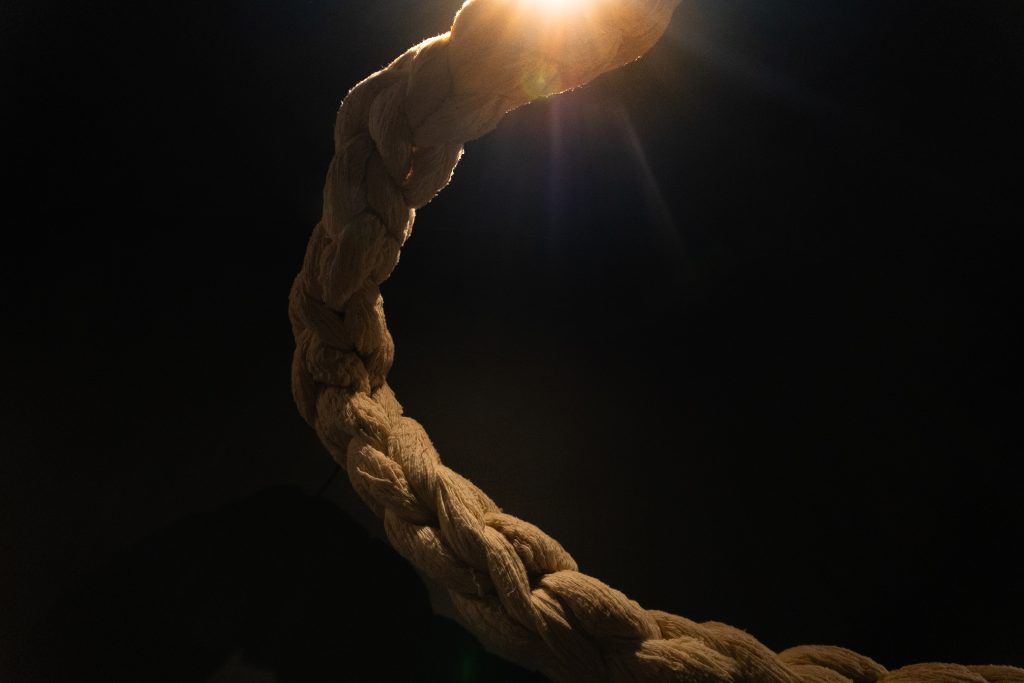
Artist: Smiha Kapoor
By placing cut cotton plant roots topped with spindles alongside stitched textile gloves that cover gun points, Smiha visually bridges the gap among historical female solidarity, creative resistance, and modern industrial labour.
Folklore, Technology, and Social Structures
Nirmal Mondal explores the intersection of myth and modern social structures in his installation titled Khela Ghar. Drawing on Bengal’s rich folk traditions and literature, which he heard from his grandparents as a child, Nirmal re-examines the famous Manasa Mangal narrative, which is also known as ‘Padma Purana’.
Through his research across Bengal, Nirmal realised how folk stories and myths have historically been politicised to establish social hierarchies and validate authority. In the traditional story, Chand Saudagar builds a heavy metal structure to protect his last remaining son from the serpent goddess Manasa.
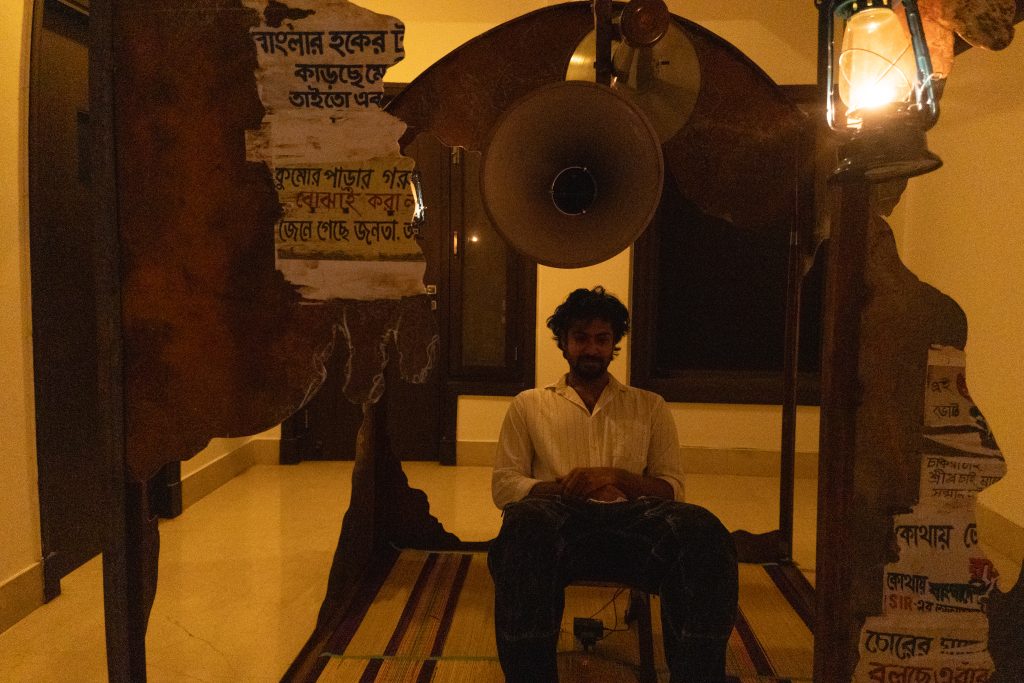
Artist: Nirmal Mondal
Nirmal metaphorically recreates this protective structure in his work to secure his childhood memories and cultural heritage. However, as he looked at the social reality of his family and community, he recognised that political structures are already deeply embedded within us, causing the protective shell to break down.
During the residency, he ventured into new creative territory by incorporating sensor-based technologies into his work, with support from technical workshops and mentors, effectively translating extensive research into a dynamic installation.
The Economics of Aspiration
Pratik Anil Sutar presents Controlled Perceptions, a series of sculptural works and portraits that reflect the harsh economic realities his peers face. Pratik uses a pencil as his main medium, but he completely reinterprets its meaning. Rather than using the pencil purely as a symbol of education, art, or creativity, he transforms it into a symbol of financial responsibility and the daily struggle for survival.
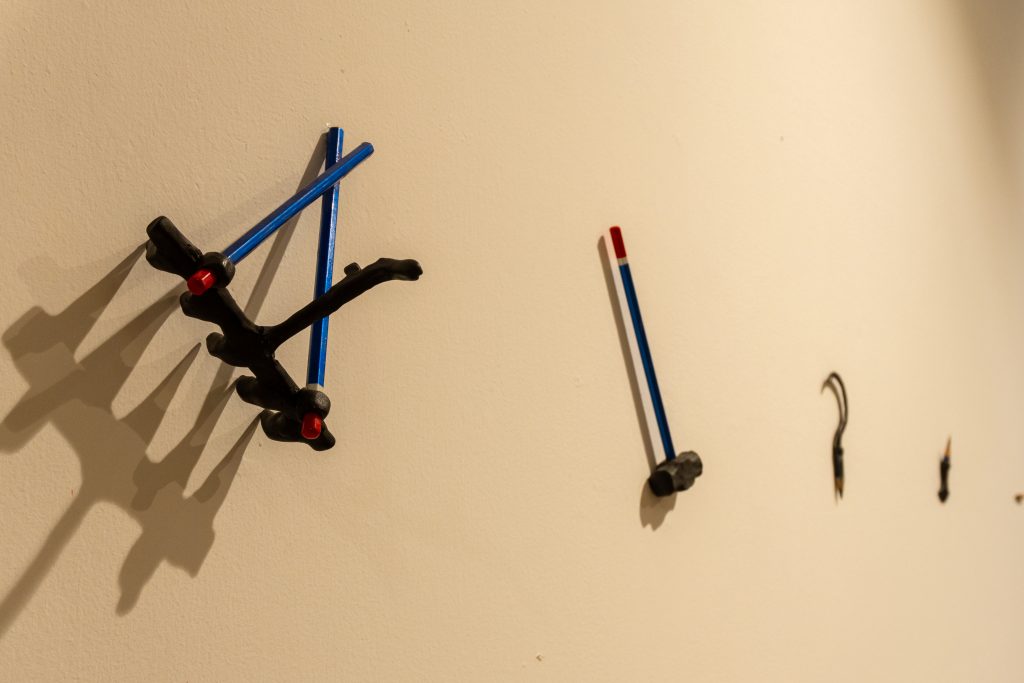
Artist: Pratik Anil Sutar
Pratik’s work serves as emotional portraits of his educated friends who, due to widespread unemployment and a lack of opportunities in their chosen fields, were forced to return to manual rural occupations such as farming, blacksmithing, and physical labour. To construct his sculptures, Pratik gathered found objects, scrap metal, and raw materials from Delhi’s local repair workshops, markets, and informal settlements. With support from the residency’s production team and studio visits, he successfully turned these discarded items into a poignant critique of labour, youth ambition, and social survival.
Language as Collective Space
Josefina Paz, work titled To Hum is to Home arriving through the Villa Swagatam program, delivers an engaging exploration of language, sound, and collective identity in her project titled To Hum Is To Home. Her work began with a linguistic observation: in English, the word “hum” refers to a continuous sound or vibration, whereas in Hindi, the word “hum” means “we”. Moving through the noisy streets of Delhi, where the background hum of traffic, engines, and human voices is constant, Josefina used calligraphy and ambient audio to map how language connects people.
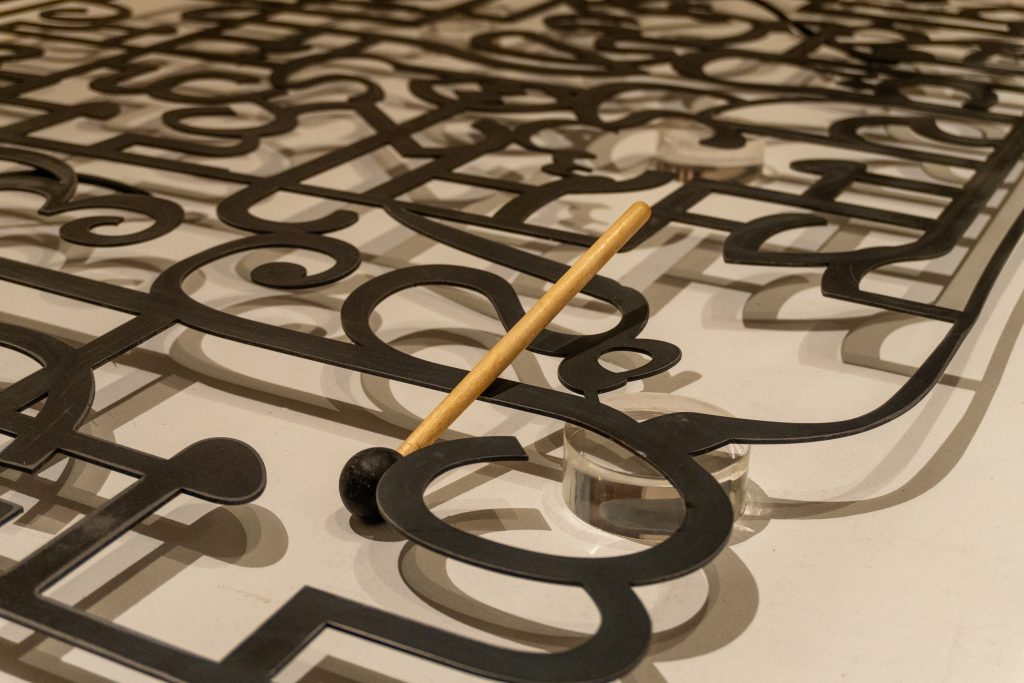
Artist: Josefina Paz
She developed the Jali series, using delicate handstrokes and the repetition of a single written word to visually represent vibration. To expand on India’s rich multilingualism, she collaborated with Gaurav Singh Nijjer to create a central interactive piece called The Matra Grid and the Flow of Translation. This installation features translations of the word “we” into all twenty-two official regional languages of India, arranged on a metal framework. Equipped with interactive sensors and small mallets, the installation responds when visitors touch or strike it, humming back in real time. Through this sensory feedback, Josefina transforms the audience into active participants, prompting everyone to think about how we relate to one another within shared spaces and power systems.
Behind the Scenes with Programmer Gaurav Kumar
Reflecting on the residency journey, programmer Gaurav Kumar explains how the Foundation structured the three months from May through July to support these emerging talents. He shares that the team organised around 25 special programs for the residents, including Vanshika, Smiha Kapoor, Gopinath, Nirmal, and Josefina from Villa Swagatam. During this period, the artists had the valuable chance to meet with different art critics and dedicated mentors who helped them develop and refine their creative vision.
Reflections on Process and Connection
Walking away from this exhibition can leave you with a deep appreciation for the unhurried journey of creation. By focusing on the delicate process rather than just the final product, the Serendipity Arts Residency reminds us that true art is built on patient listening, physical trial, and shared human connection. Each of these six artists proves that art isn’t confined to traditional galleries or distant concepts—it thrives in everyday materials, spoken memories, traditional gatherings, and the subtle hum of our shared lives.
But perhaps the exhibition leaves us with a larger question: in a world increasingly driven by speed, visibility, and constant production, do we still make enough space for slow artistic thinking? Can institutions continue to support experimentation before certainty, and process before product? Seeing these ideas take root and evolve over three months offers more than an inspiring glimpse into the future of contemporary art—it invites us to reconsider what we value in art itself: the finished object, or the patient journey that makes it possible.
Cover Image: Artist- Smiha Kapoor, images used in the article are clicked by: Swastika Rajput | Abirpothi
Akanksha is an Associate Editor at Abir Pothi, writing on contemporary art and creating engaging videos that highlight artists and make art accessible to wider audiences.