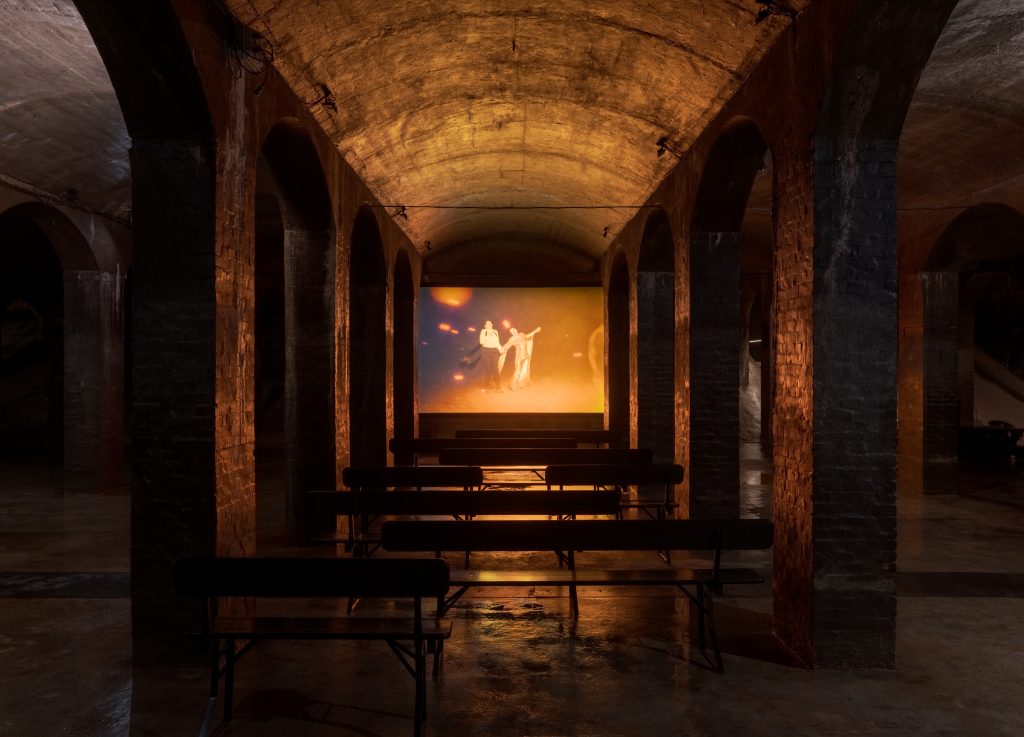
Cisternerne in Copenhagen now hosts the large-scale cinematic opera installation Marina Abramović: Seven Deaths, installed in the city’s former underground water reservoirs in Søndermarken. The exhibition runs from 14 March to 30 November 2026 and turns the dark, damp cisterns into a sequence of chambers devoted to seven iconic operatic deaths.
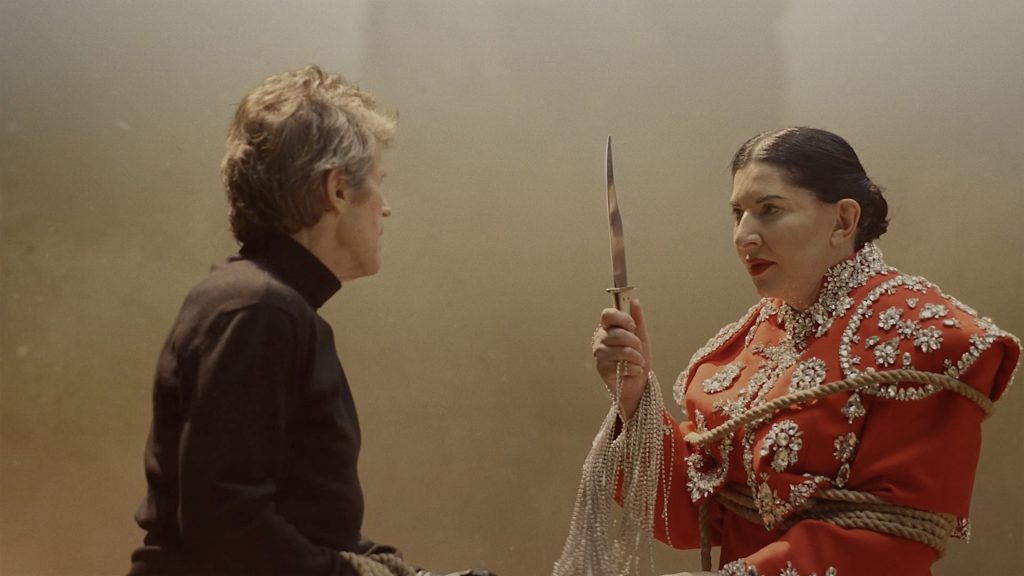
In each film, Abramović dies on screen in the role of a different tragic heroine from opera history, while the legendary soprano Maria Callas provides the recorded voice. Visitors move through the work rather than watching it from fixed seats, and they confront a cycle of emotions that the artist and curators name as love, loss, longing and fear.
“The atmospheric surroundings of Cisternerne bring a new emotional depth to Seven Deaths,” Abramović has said. “Its darkness and resonance create a space where the work can unfold with greater intensity, and the audience becomes physically and emotionally present with each death.” She added.
Maria Callas as voice, myth and double
Abramović frames Seven Deaths as a long-planned homage to Maria Callas, whom she first heard as a child on the radio in her grandmother’s kitchen.
Callas appears in the project as what Abramović calls both “voice and mirror”, a figure whose turbulent love stories and lonely death in Paris stand for “the ultimate consequence of a life in art without compromise.”
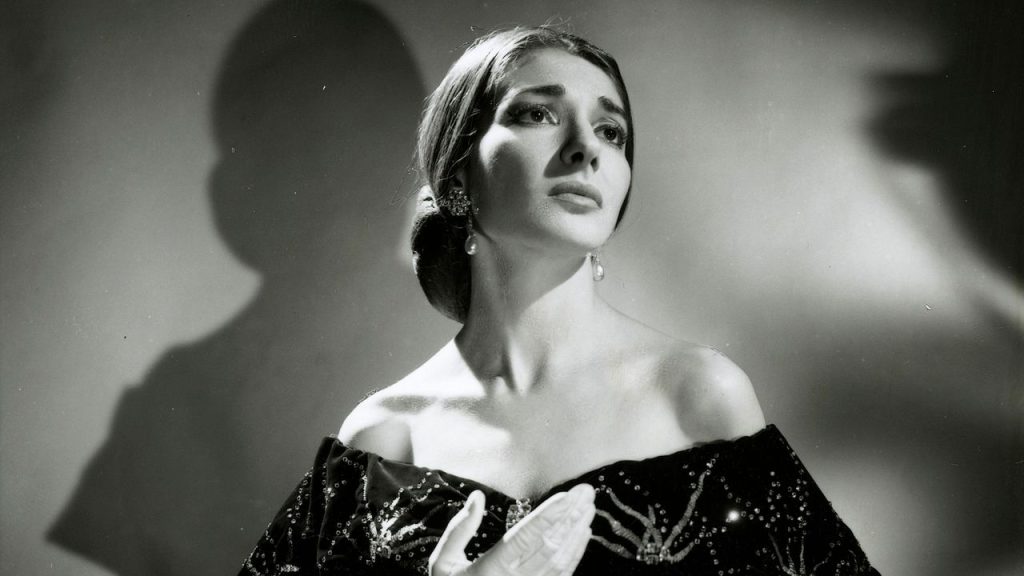
The exhibition catalogue notes that Abramović and Callas share not only a physical resemblance, but also a life devoted completely to art at great personal cost. Abramović describes Callas’s biography as “eerie echoes of my own lost loves and near-death experiences,” a line that anchors the personal tone of the project.
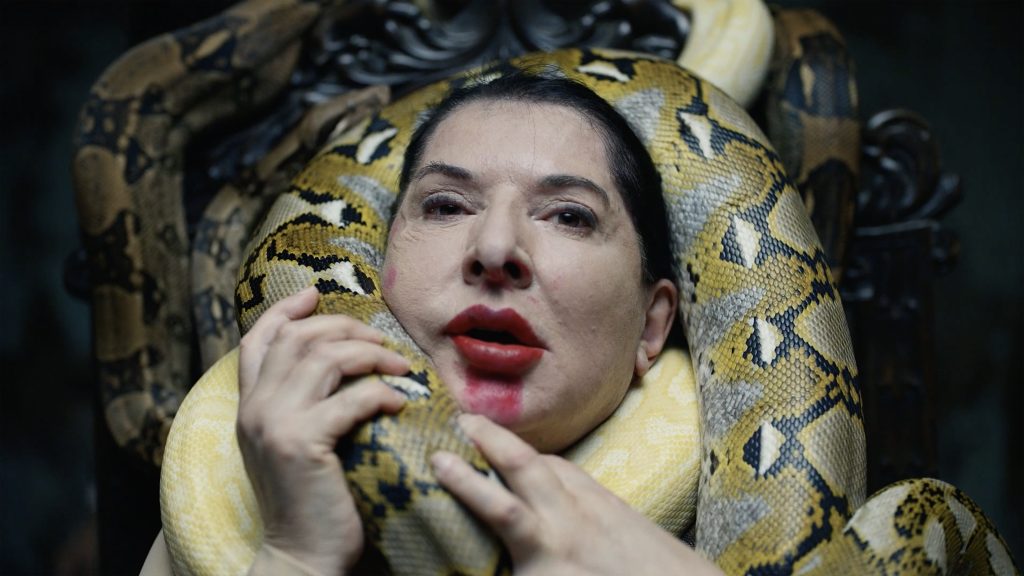
Across seven films, Abramović appears in the roles of these doomed women, dressed in sculptural gowns and surrounded by recurring motifs from her own work, including snakes, knives, blood and fire.
American actor Willem Dafoe plays the male counterpart in each scene : lover, opponent, witness or killer, as the pair restage the climactic moments from operas such as La Traviata, Tosca, Madama Butterfly, Carmen and Norma.
A slowed-down cycle of love and violence
The soundscape for Seven Deaths consists of arias from seven of opera’s most famous works, all sung by Callas and selected from roles that end in the heroine’s death. Within their original operas, these arias arrive after hours of unfolding plot and serve as dramatic peaks; in Abramović’s version, they stand almost alone, stripped of the full narrative but loaded with condensed feeling.
Rather than build suspense through fast editing, Abramović stretches time so that the action unfolds in slow motion. The catalogue text notes that “there is no panic, no frantic activity, only extended time that allows us to register every detail and sense the approaching inevitability of death.”
Tine Vindfeld, chief curator at Cisternerne, links Seven Deaths directly to Abramović’s long-standing investigation of the body and endurance.
“Seven Deaths brings together threads from Abramović’s lifelong work with the body, endurance, and extreme presence,” she says, adding that audiences meet death here as both theatrical figure and something that “touches deeply familiar experiences: love, loss, longing, and fear.”
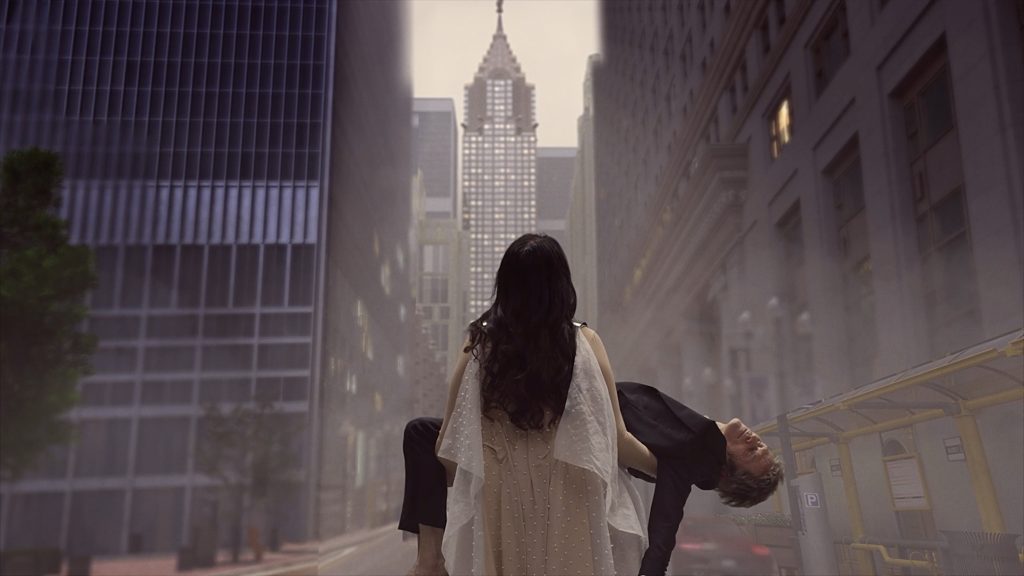
The project also foregrounds the history of female death as spectacle. Abramović exposes how the female body “again and again” functions as a stage for violence in both fiction and reality, even as opera often frames that violence as beautiful.
Cisternerne’s cavernous setting as active collaborator
Cisternerne, an underground complex of three linked chambers, dates back to the mid‑19th century as part of Copenhagen’s modern water supply system. The cisterns, constructed between 1856 and 1859, once held around 16 million litres of water and reopened to the public in 2001 before their relaunch as an exhibition venue in 2013.
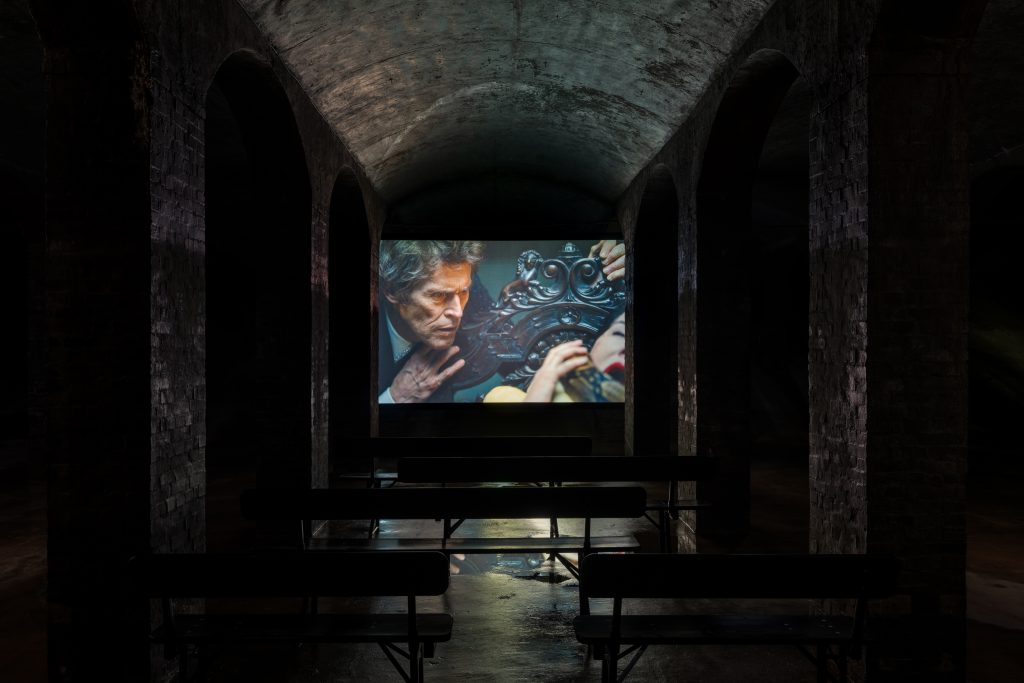
In Seven Deaths, the specific acoustics and darkness of the space shape how visitors experience the work. Vindfeld notes that this staging marks the first time the piece appears as a “total installation” that audiences encounter as they move through time and space, rather than as a fixed screening.
A landmark year for Abramović
The Cisternerne exhibition comes at a pivotal moment in Abramović’s career. She will turn 80 on 30 November 2026, the date that also marks the final day of Seven Deaths in Copenhagen. Later this year, she also opens a solo show at the Gallerie dell’Accademia in Venice, becoming the first living woman to hold a solo exhibition at the historic institution. The Venice project, titled Transforming Energy, continues a visibility that includes the major survey The Cleaner at Louisiana Museum of Modern Art in 2017 and numerous international retrospectives.
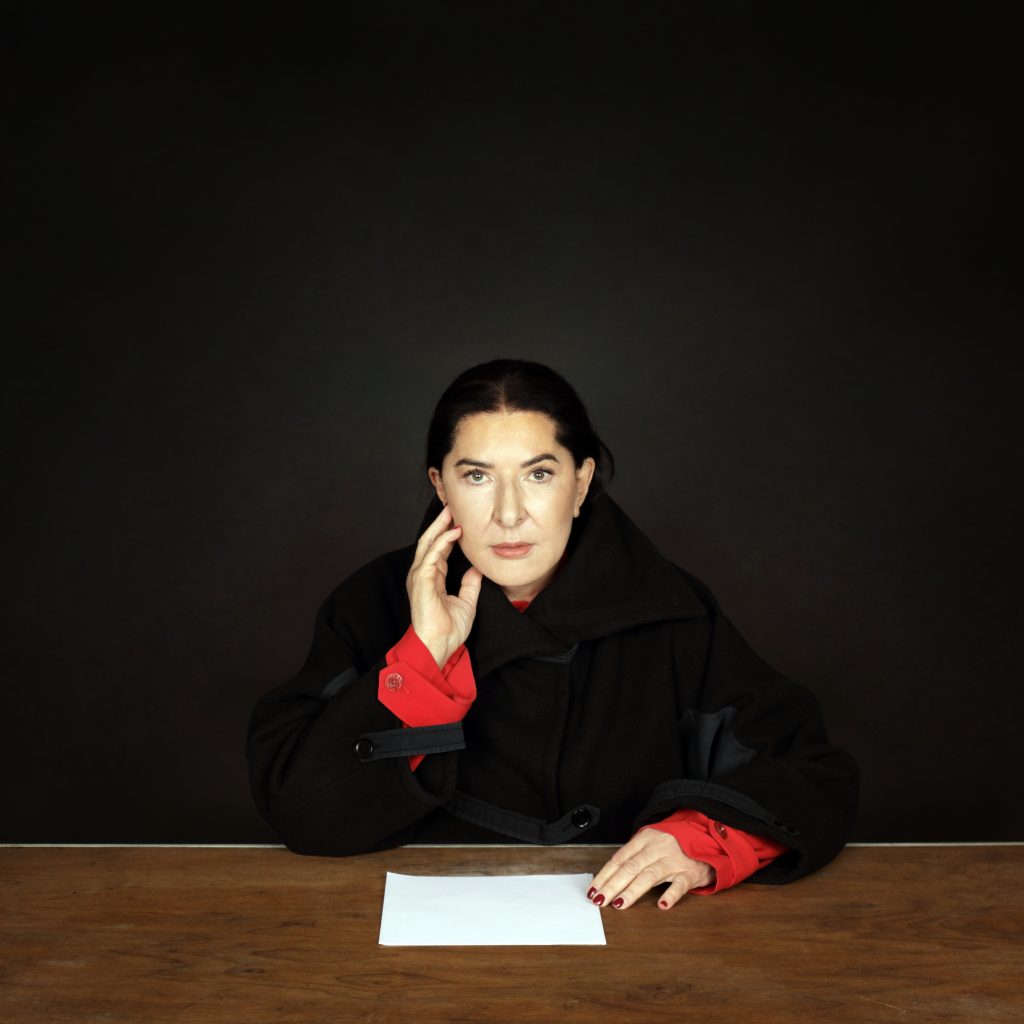
Born in Belgrade in 1946, Abramović built her reputation as a pioneer of performance art through works that test physical and psychological limits.
Her early pieces such as Rhythm 0 (1974), in which she allowed gallery visitors to act upon her body with 72 objects including a loaded gun, and Rhythm 5 (1974), in which she lay within a burning star until she lost consciousness, have become touchstones in performance art history.
She later reached a broad public with The Artist Is Present at the Museum of Modern Art, New York, in 2010, where visitors sat silently across from her in a marathon performance lasting 736 hours and 30 minutes. “I test the limits of myself in order to transform myself, but I also take the energy from the audience and transform it,” she has said of her approach, adding that “a powerful performance will transform everyone in the room.”
Institutional Support
Frederiksbergmuseerne, which runs Cisternerne as part of a network that also includes Bakkehuset, STORM and Møstings, positions Seven Deaths as a key example of its ambition to bring “art of the highest international quality” into the subterranean venue. The exhibition Seven Deaths is realized by Frederiksbergmuseerne in close collaboration with Marina Abramović and her New York studio.
For the visitors, the experience is not a conventional film screening or opera performance. Instead, they descend into a cold, echoing reservoir to meet Abramović and Callas in a looping sequence of deaths, where love and violence keep circling back, and the line between theatre and lived experience grows deliberately thin.
Cover image: Marina Abramović brings opera’s deaths underground in Copenhagen
Athmaja Biju is the Editor at Abir Pothi. She is a Translator and Writer working on Visual Culture.