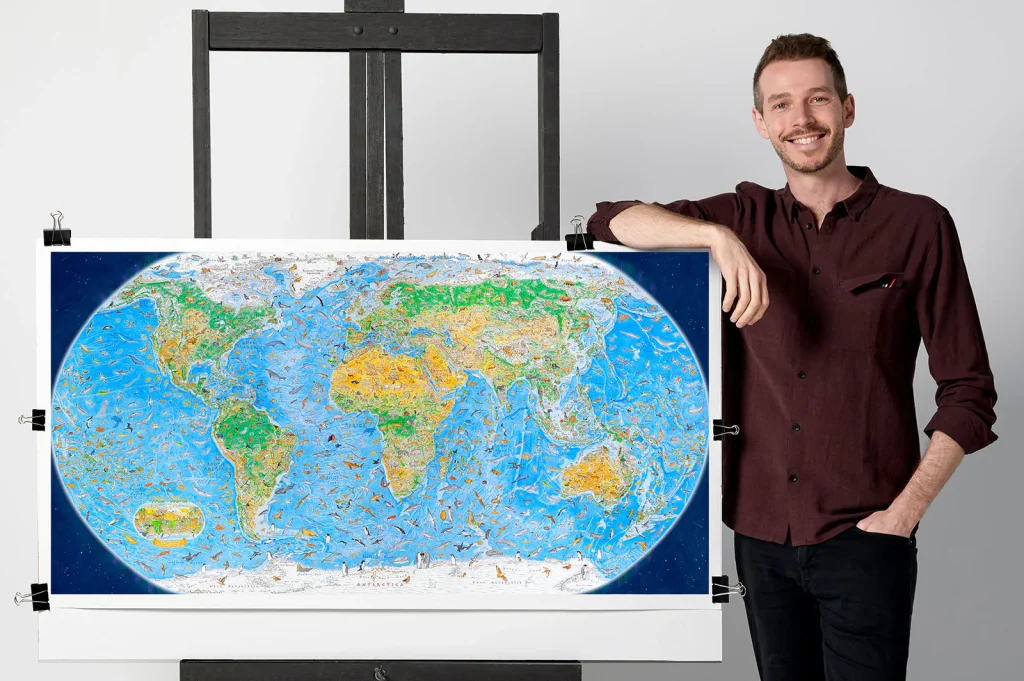
When artist-cartographer Anton Thomas began sketching Wild World in his Melbourne apartment during the quiet months of 2020, the world outside had shuttered. Yet, in that isolation, Thomas opened a vast landscape — an entire planet reborn through coloured pencil and pen.
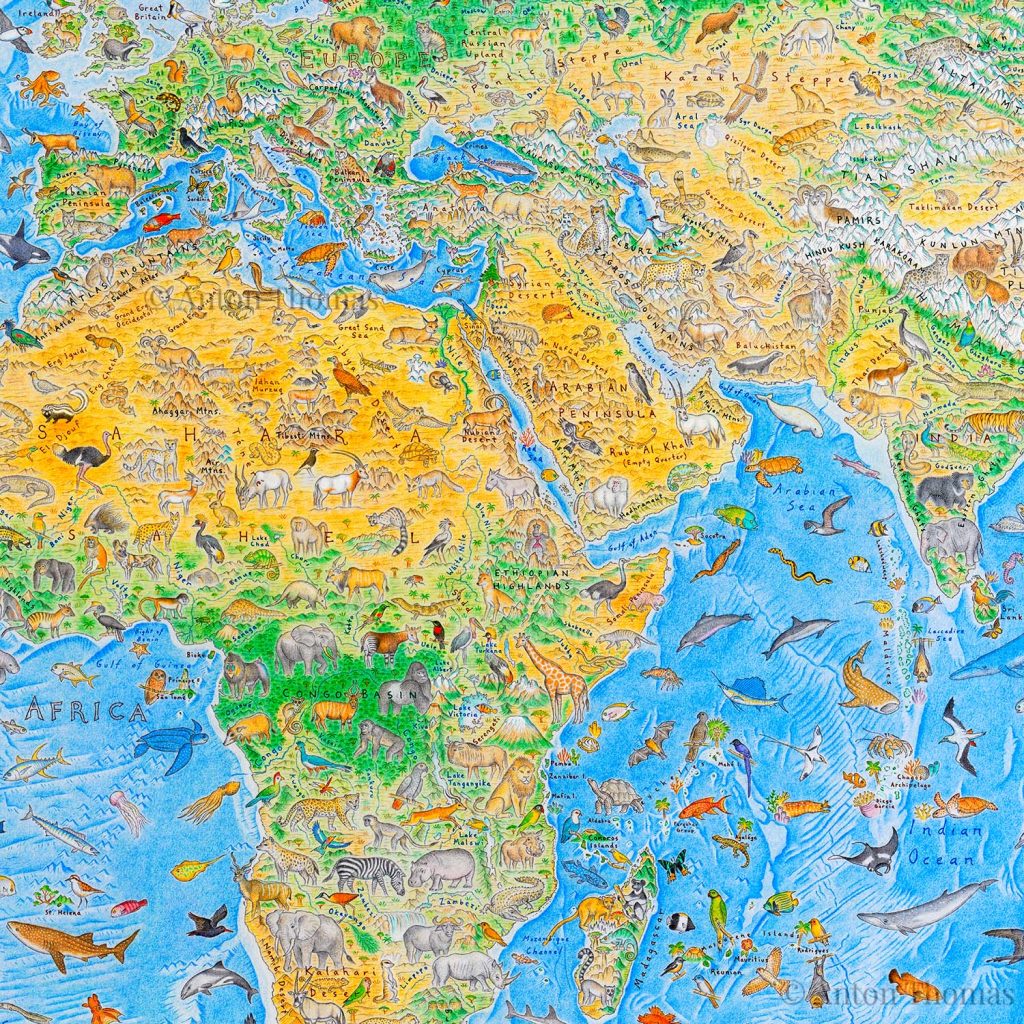
Over three years, he meticulously drew 1,642 animal species from every ecosystem imaginable. These included lions prowling the African savannas, narwhals gliding through Arctic seas, parrots bursting across South America’s jungles. Each creature occupies its true range, transforming familiar landmasses into a living atlas of biodiversity. In Wild World, political lines disappear. What remains is a pulsating map of coexistence, one that frames Earth as a shared habitat.
“I’d imagined a world map like this since childhood — no countries or cities, just the wilderness,” Thomas says. “It’s a celebration of nature, a world that still exists, one we can cherish and protect.”
The Making of Wild World
Rendered entirely by hand in the Natural Earth projection, Wild World is both scientifically grounded and deeply poetic. It bridges cartographic accuracy with artistic wonder, showing how geography can be understood through ecosystems rather than empires. It’s a challenge to anthropocentrism and a reminder of our kinship with the wild.
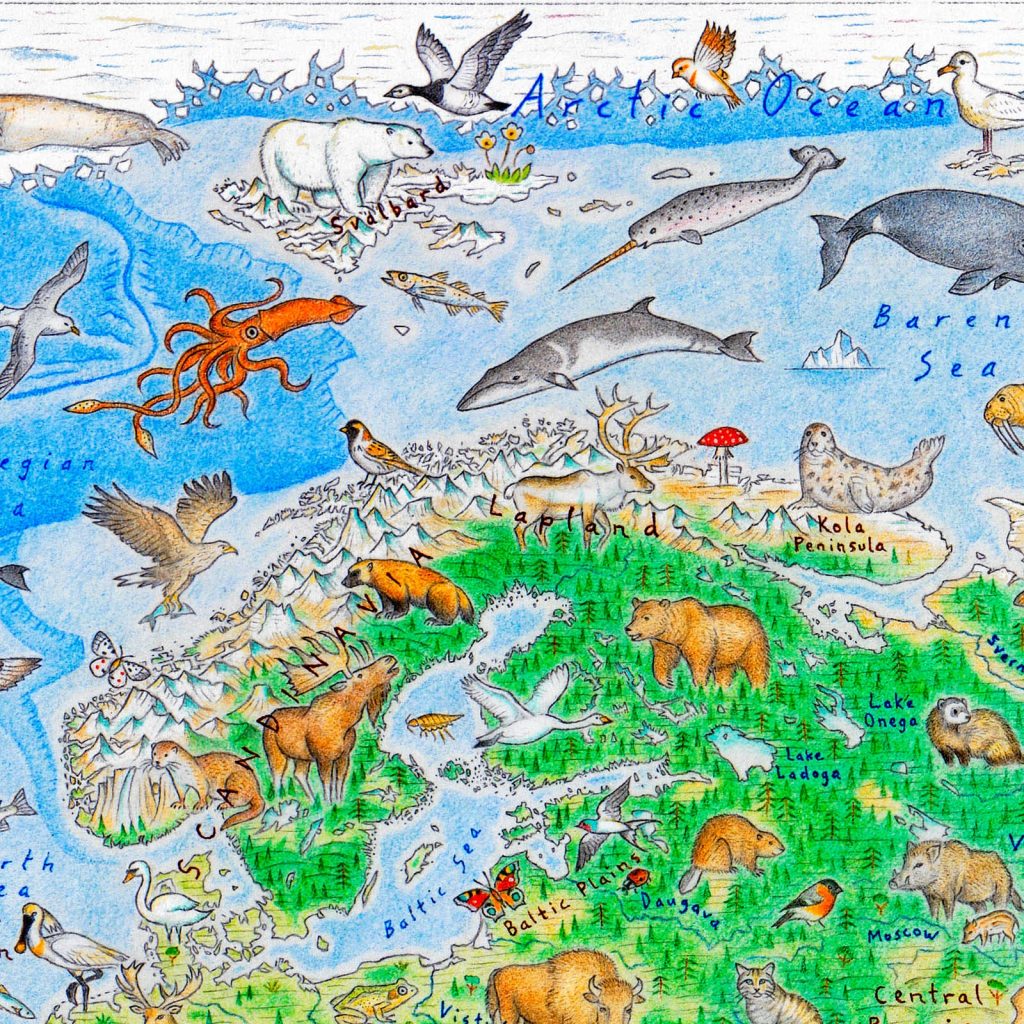
The work’s release in late 2023 struck a chord worldwide, with coverage in The New York Times, CBC, ABC, and Colossal. Audiences found in Thomas’s map a rare sense of unity — a visual narrative that transcends the political anxieties of a fractured planet. For many, it offered a form of visual therapy during a global era defined by disconnection.
Born in New Zealand and based in Melbourne, Anton Thomas has long blurred the line between mapmaking and storytelling. His previous projects have reimagined cityscapes and continents with hand-drawn precision, but Wild World stands apart in both scale and scope. It is, as he puts it, “an odyssey through Earth’s landscapes,” rooted in painstaking research and guided by wonder.
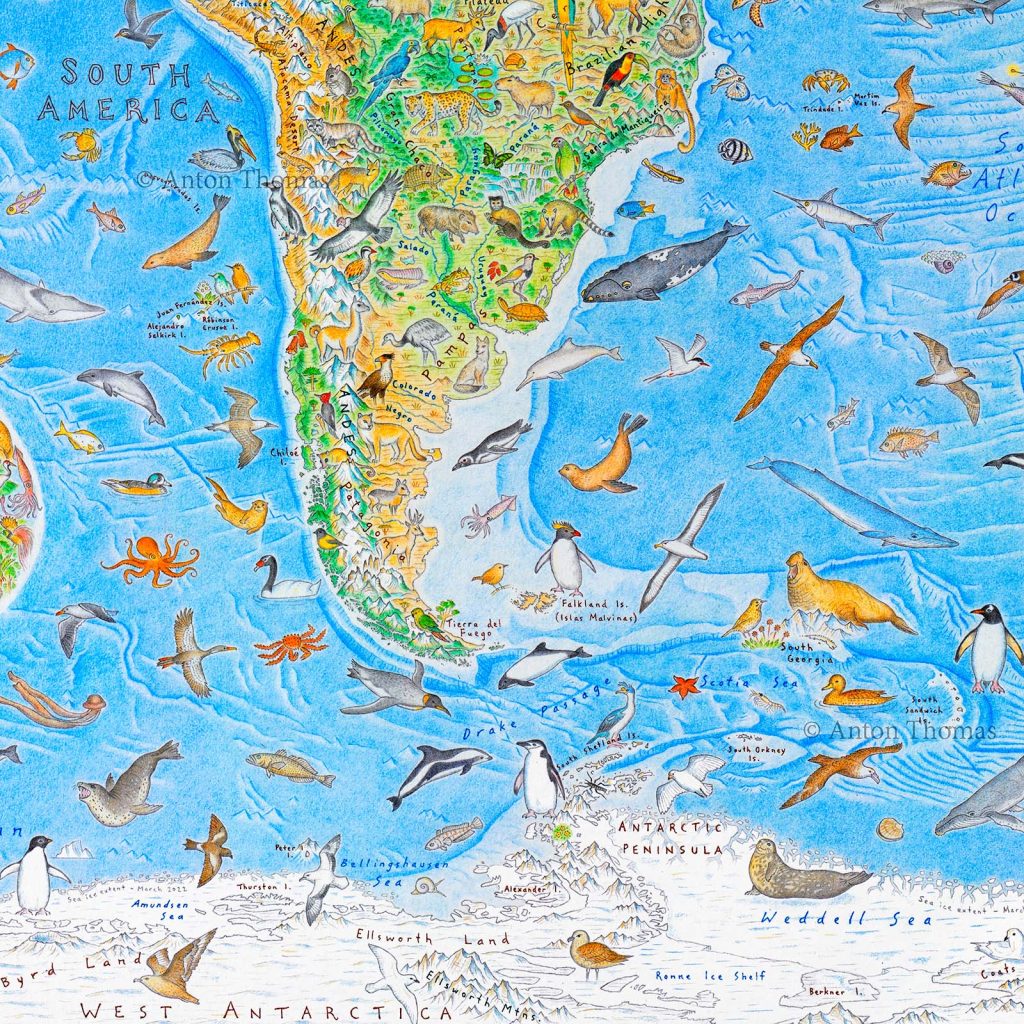
In an age dominated by satellite imagery and digital cartography, Wild World returns mapping to its tactile, imaginative origins. It reminds us that to truly see the world, we must sometimes erase its borders — and redraw it in the image of the life that sustains it.
Prints of the map is available on the artist’s official website.
Cover Image Courtesy: Anton Thomas
Athmaja Biju is the Editor at Abir Pothi. She is a Translator and Writer working on Visual Culture.