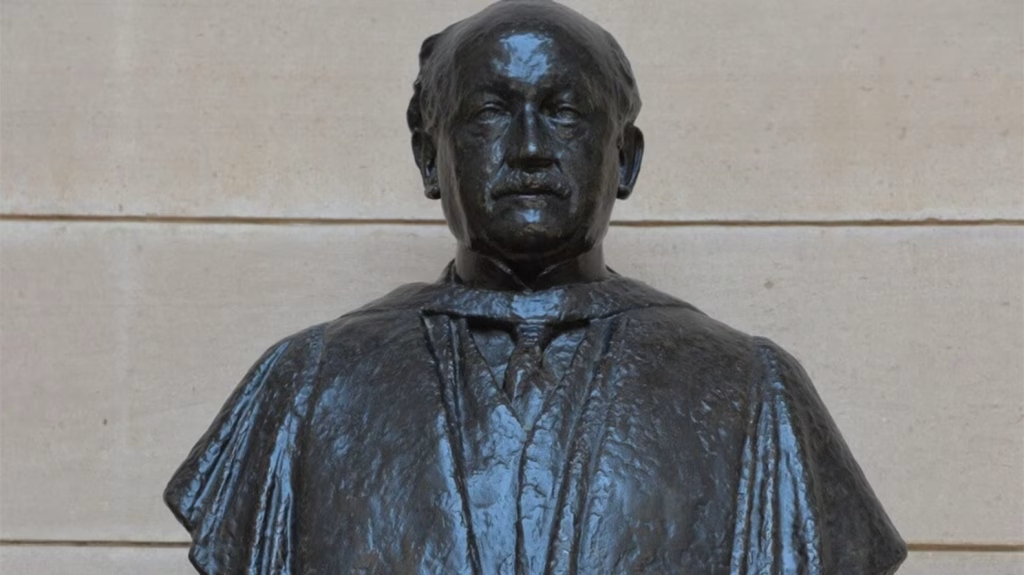
President Droupadi Murmu unveiled a bust of Chakravarti Rajagopalachari at Rashtrapati Bhavan, replacing the statue of British architect Edwin Lutyens. According to government sources, this move is part of efforts to shed colonial symbols and honor Indian leaders. The bust was placed at the Grand Open Staircase near Ashok Mandap, opposite Mahatma Gandhi’s statue. It happened during Rajaji Utsav, with exhibitions and cultural events from February 24 to March 1 at Amrit Udyan. The President’s Secretariat called it steps to embrace India’s culture and ditch colonial mindset.

President Murmu said Rajagopalachari set an example of mental decolonisation by placing portraits of Ramakrishna Paramahamsa and Gandhi in his room at the then Government House. Prime Minister Narendra Modi called it “an important act of mental decolonisation,” noting Rajaji’s bust replaces Lutyens’ where it fits opposite Gandhi’s.
Lutyens’ Architectural Contributions
Edwin Lutyens made lasting contributions to Indian architecture, especially in Delhi, by designing key colonial-era structures from 1911 to 1931.
Major Designs
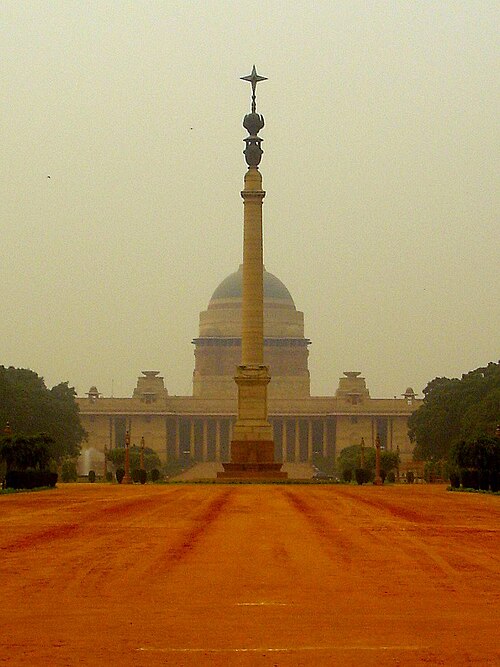
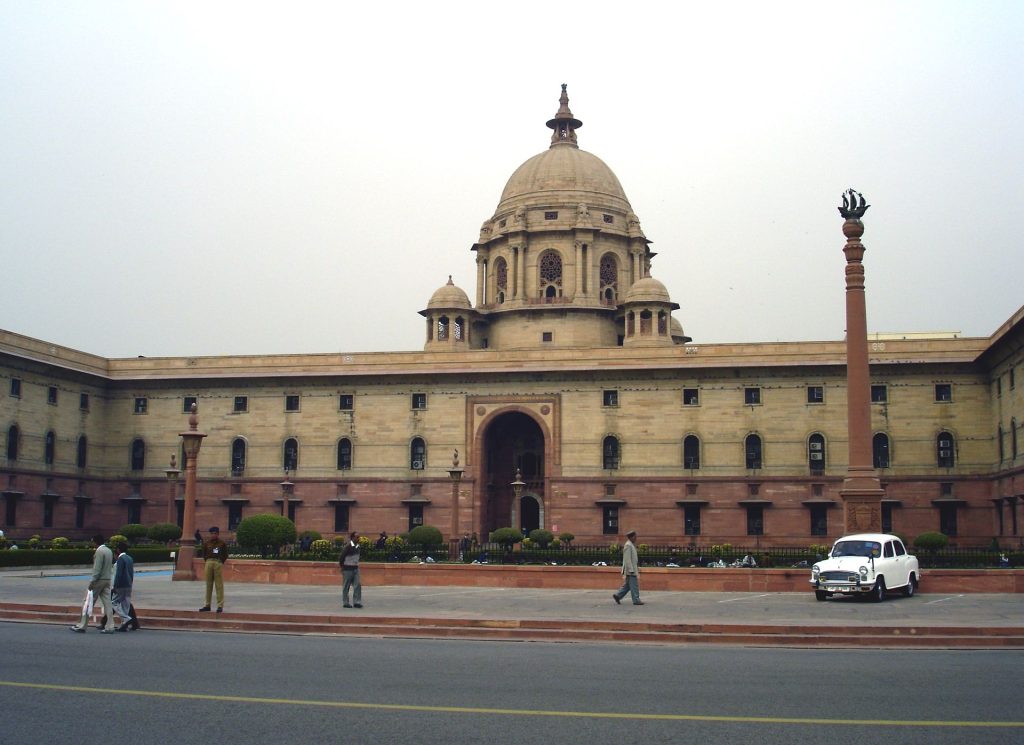
Lutyens created Rashtrapati Bhavan, originally Viceroy’s House, on Raisina Hill with a massive dome inspired by the Sanchi Stupa and St. Peter’s Basilica, plus Indian features like chhatris and jali screens. He also designed India Gate, a war memorial of red Bharatpur sandstone with soldier reliefs, aligned on Rajpath’s axis. Other works include North Block and South Block secretariats with Herbert Baker, using local red sandstone in Mughal style.
Urban Planning
Lutyens planned New Delhi as a garden city southwest of Shahjahanabad, with wide tree-lined avenues, hexagons, and a central mall like Rajpath. One-third of the area stayed green, drawing from Mughal water gardens. His layout formed “Lutyens’ Delhi,” blending neoclassicism with local motifs.
Architectural Style
He invented the Delhi Order, fusing Western columns with Buddhist bells and lotuses for capitals. Lutyens mixed European symmetry with Indian elements like carved elephants and jaalis, creating an Indo-European hybrid that shaped Delhi’s grand scale.
Athmaja Biju is the Editor at Abir Pothi. She is a Translator and Writer working on Visual Culture.