The American Institute of Architects (AIA) has declared the longest continuous downturn in US architecture revenues on record, with the sector now enduring nearly three and a half years of declining billings. The announcement comes as the July 2026 Architecture Billings Index (ABI) fell to 46.6, extending what AIA chief economist Richard Branch describes as an unprecedented stretch of contraction driven by “macroeconomic uncertainty” and rising oil prices.
Record-breaking downturn in the ABI
The AIA/Deltek Architecture Billings Index, which has tracked non-residential construction activity in the American architecture industry since the 1990s, uses a threshold of 50 to indicate stability scores above 50 signal growth, while those below reflect decline. The July reading of 46.6 marks another month of contraction, continuing a downward trend that began in early 2023 and has now become the longest negative run in the index’s history.
“This ongoing slump in business conditions has now stretched to nearly three and a half years, the longest in the ABI’s history,” the AIA stated in its latest report. While the current downturn is the most prolonged, the institute noted that billings remain well above the pandemic-era lows of 2020, when the index briefly plunged to 29.6.
Regional and sector-wide decline
The slump has been felt across all US regions and specializations tracked by the ABI. The Northeast recorded the steepest decline with a score of 44.8, while the Midwest, South, and West showed marginal improvements from earlier lows but remained firmly in contraction territory.
“Billings fell across every specialization,” the AIA reported, indicating that no segment of architectural practice from commercial to institutional projects has been spared. Despite the broad-based decline, the index noted a slight uptick in client inquiries for new projects, suggesting latent demand that has yet to translate into signed contracts.
Oil prices and inflation squeeze the built environment
AIA chief economist Richard Branch pointed to macroeconomic headwinds as the primary driver of the sustained downturn. “Macroeconomic uncertainty continues to weigh on the built environment,” Branch said. “High oil prices are putting upward pressure on inflation and may lead to even higher rates in the back half of the year. This will put additional pressure on developers and may lead to a further weakening in billings.”
Rising energy costs have rippled through the construction sector, with the Associated Builders and Contractors (ABC) reporting that construction prices have climbed as much as 7.4 percent year-over-year since July 2025. The combination of higher financing costs, elevated material prices, and uncertain demand has led many developers to delay or cancel projects, directly impacting architecture firms’ revenue pipelines.
Industry response: M&A activity and strategic shifts
In response to the prolonged downturn, architecture firms are increasingly exploring mergers and acquisitions as a survival strategy. The AIA’s July survey specifically queried firms about M&A activity, reflecting growing consolidation pressure as smaller practices struggle to maintain profitability amid shrinking billings and rising operational costs.
The historic nature of the current slump has prompted broader conversations within the profession about resilience, diversification, and the future structure of architectural practice in an era of persistent economic volatility. While the ABI remains above its 2020 crisis lows, the duration of the current contraction presents unique challenges for firms that have not faced such a sustained period of decline since the index began.
Further Reading
https://www.dezeen.com/2026/08/19/aia-announces-longest-ongoing-slump-abi
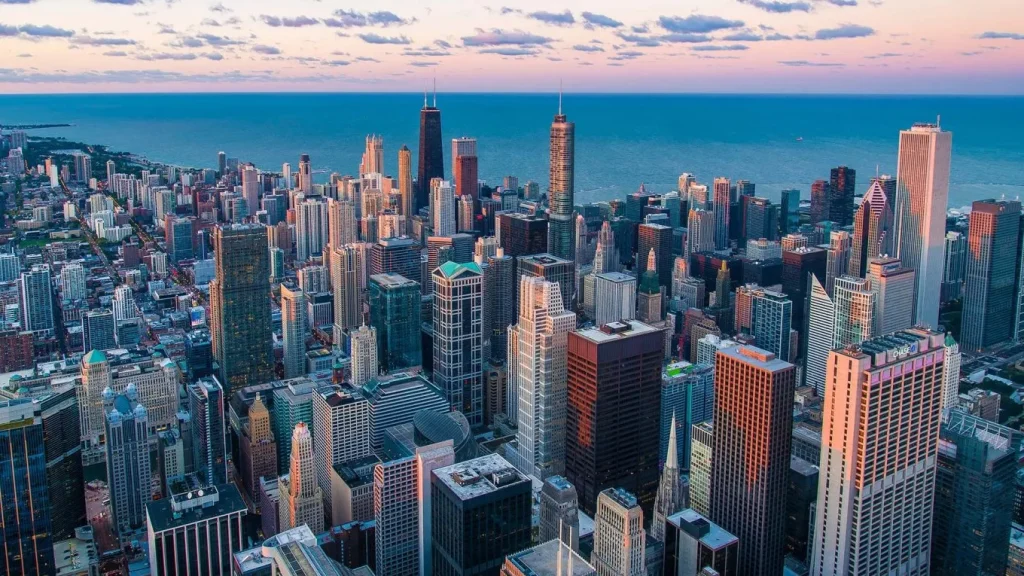
Cover image: Chicago skyline. Photo Courtesy: Pedro Lastra on Unsplash

Contributor