At Art and Charlie gallery, Saviya Lopes presents an ambitious solo exhibition that transforms intimate histories into monumental interrogations of memory, labour, and resistance. “You, Me and Them: A Body That I Used to Know,” running through January 2, 2026, stages the body not as a singular, bounded entity but as a living archive, a site where intergenerational knowledge accumulates, where invisible labour becomes visible, and where personal grief refigures itself as political consciousness.
The Architecture of Memory: Framing the Exhibition
Lopes’s practice emerges from her deep engagement with her East Indian Catholic heritage, family archives, and oral histories. Her grandmother’s quilting becomes the methodological and conceptual anchor for understanding how marginalized communities preserve knowledge through tactile, embodied practices rather than official historical record. The exhibition extends this intimate genealogy outward, staging it within the contemporary art institution while insisting on its radical political dimensions.
The show’s theoretical framework unfolds through a series of refrained declarations—statements that begin with “I used to know” and pivot to “but now I also know.” This rhetorical structure maps the artist’s own epistemological journey: from understanding kitchen spaces as sites of nourishment to recognizing them as theatres of invisible labour; from quilting as self-care to acknowledging its commodification through the spectatorial gaze; from photographs as markers of absence to sites of active presence. This reframing is not nostalgic; rather, it insists on historical reckoning, on making visible what dominant narratives have systematically obscured.
The Monumental Turn: Recasting Women’s Labour
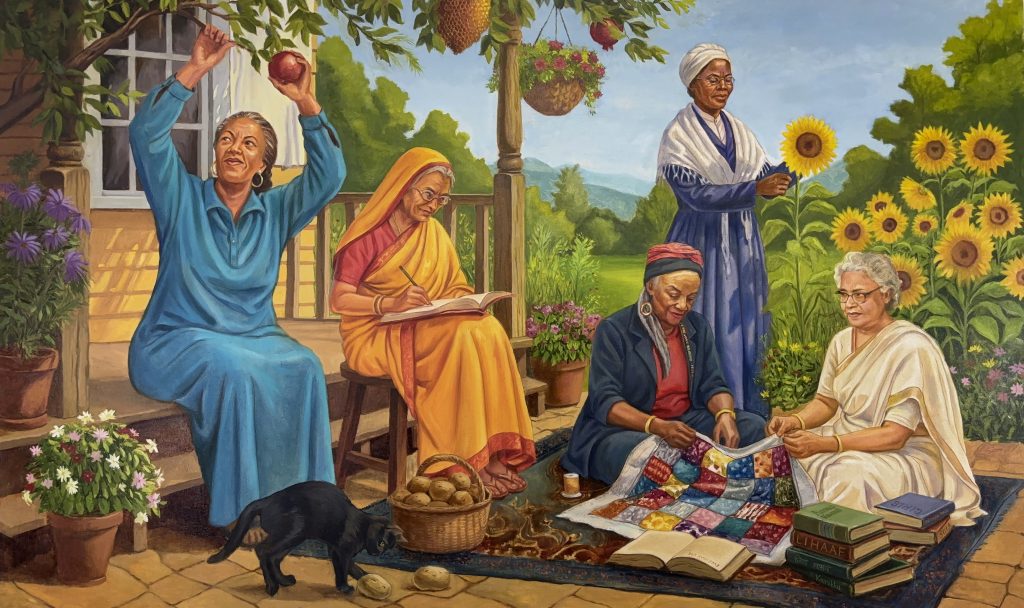
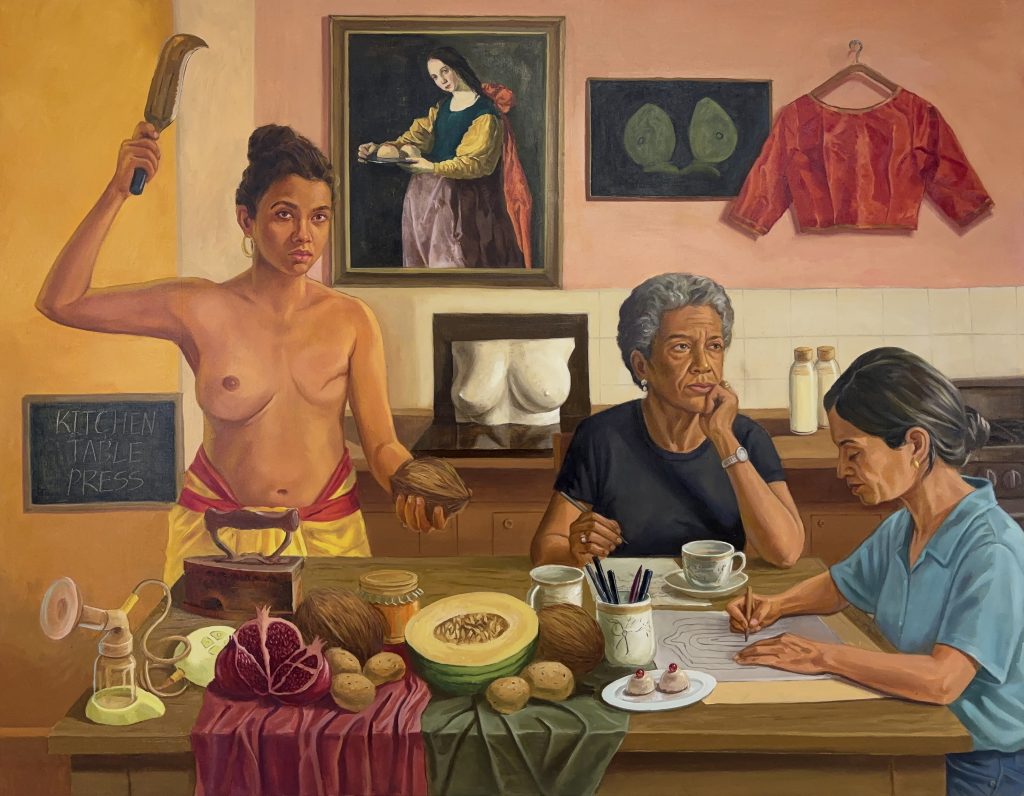
Lopes’s largest canvases enact a deliberate intervention into art historical conventions—they constitute what might be termed a womanist recasting of the monumental. Works like “What Are You Up To These Days?” and “Come Eat With Us” gather women from distinct historical moments—Toni Morrison, Babytai Kamble, Sojourner Truth, Faith Ringgold, and Ismat Chughtai in the former; Kadubai Kharat, Mikki Kendall, Irom Chanu Sharmila, Frida Kahlo, and Alice Walker in the latter—into shared scenes of rest, nourishment, and creative labour.
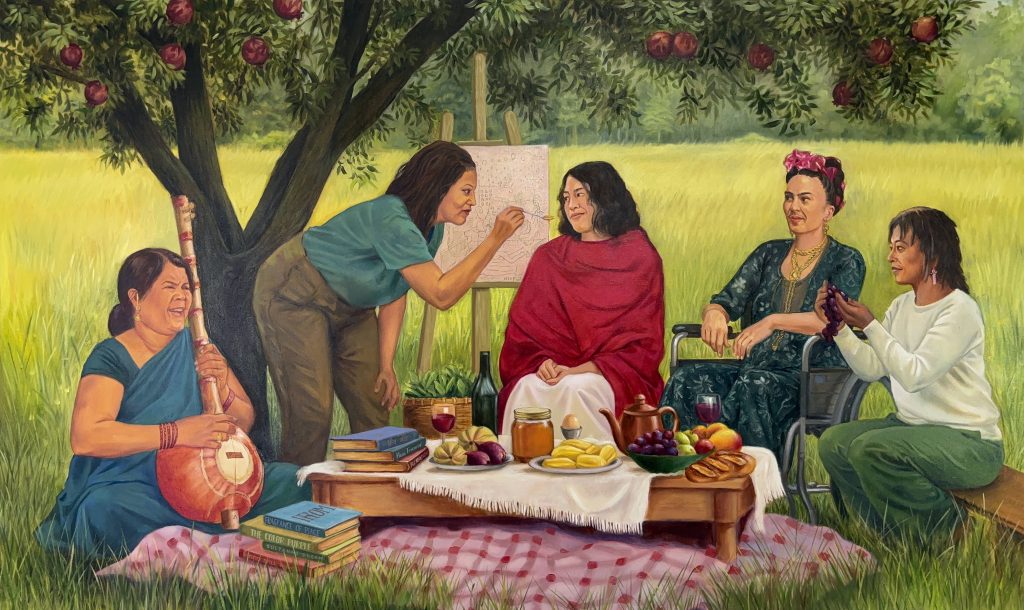
These paintings perform a critical historiographical gesture. Rather than positioning these women within canonical narratives of heroic struggle, Lopes depicts them engaged in quotidian acts: writing, sewing, harvesting, eating, conversing. The radical move lies in declaring these ordinary gestures monumental—in insisting that the intimate labour of survival, care, and creation constitutes history itself. By positioning women as the subjects and agents of monumentality rather than its symbolic vessels, Lopes challenges the patriarchal visual regime that has historically confined women’s images to domestic roles or as muses for male artistic vision.
Photographs as Presence: On Shared Intellectual and Emotional Labour
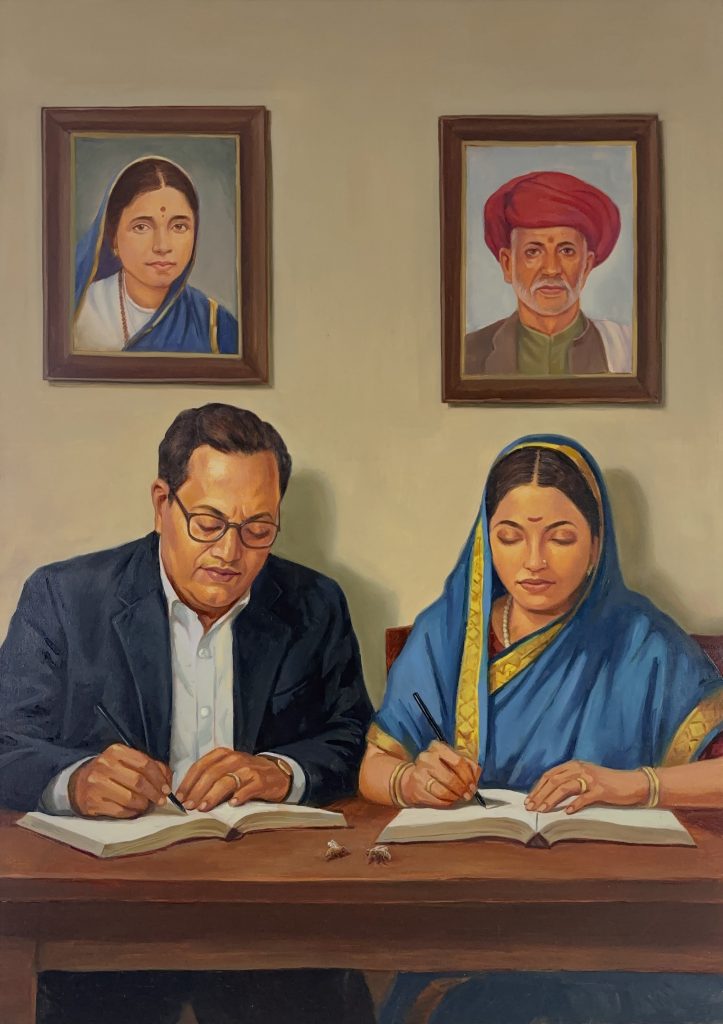
In the painting titled, “I used to know photographs as absence…. but now I also know them as a Presence”, We see Dr. B R Ambedkar and Savitribai Bhule writing, behind them in framed photographs, their respective spouses, Ramabai Ambedkar and Jyotirao Bhule meet the viewer’s gaze. in the artist’s words, through this scene, the painting reflects on how the legacies of Ambedkar and Savitribai were sustained by unseen emotional and intellectual labour, the companionship of Ramabai and Jyotirao, who, though absent in time, remain present through memory and influence.
The act of acknowledging the role played by their intimate partners in the fulfillment of their intellectual endeavors is radical and a testament to the strength and clarity of Saviya’s artistic vision.
Interrogating the Kitchen: Invisible Labour Made Visible
Among the exhibition’s most arresting works is “I Used to Know the Kitchen as a Site of Gathering but Now I Also Know it as a Site of Invisible Labour“. The canvas overflows with visual abundance—stacked utensils, half-cut vegetables, scattered spices, soiled cloths, empty vessels—yet this apparent profusion registers as the exhaustion of repetitive, unacknowledged bodily labour. The painting refuses idealization; it does not aestheticize domestic warmth but rather confronts the viewer with the kitchen’s contradictions: its simultaneous function as a space of intimacy and intimacy, of gathering and depletion.
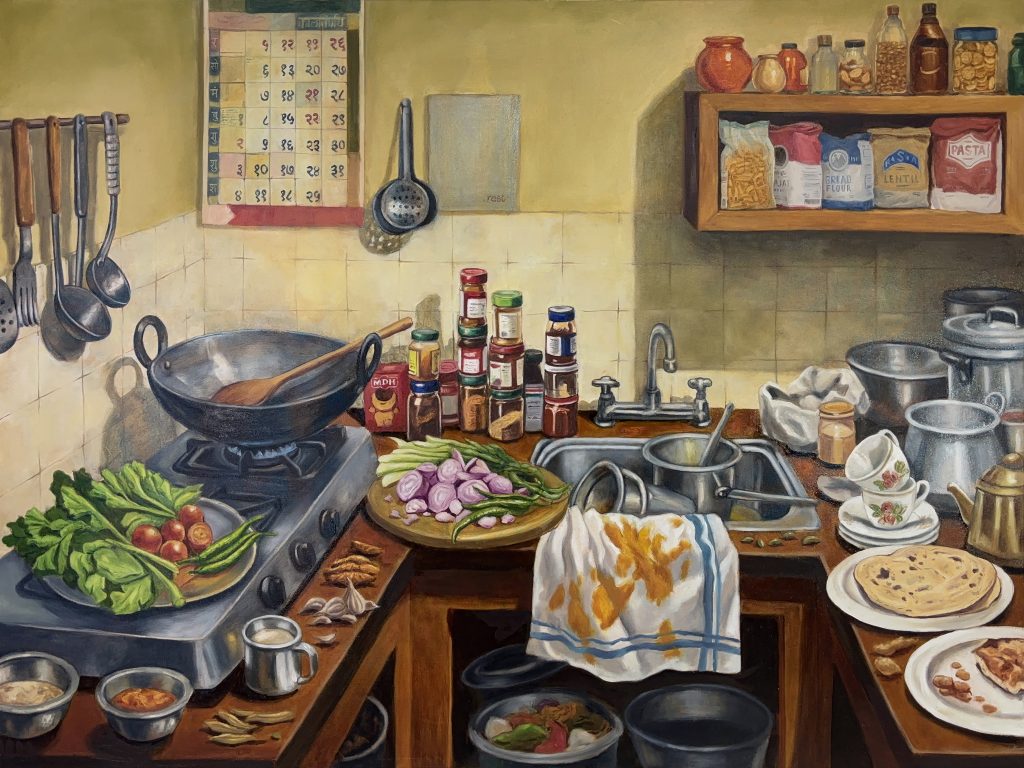
The work’s intervention extends beyond representation to critique. By insisting on seeing the kitchen’s disorder as the sediment of constant effort, Lopes unmasks the gendered structures that naturalize domestic labour into invisibility. The painting asks: who assigns value to care? Who benefits from its erasure from historical recognition? In what ways do cultural narratives of domestic harmony mask the bodily costs borne disproportionately by women, particularly working-class women and domestic workers?
The Quilt Series: Textile as Testimony
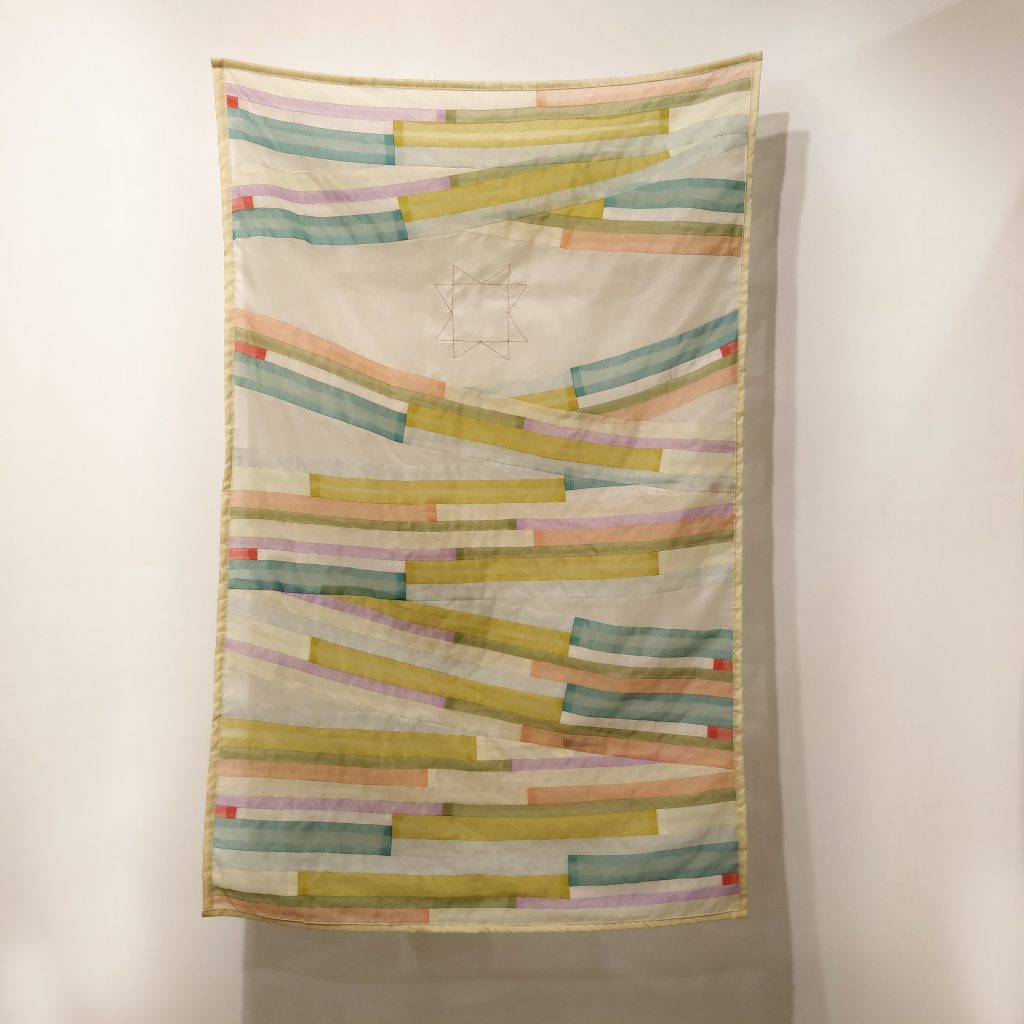
The exhibition’s “Thou Shalt Be Healed” quilt series—three large-scale works executed in organza fabric—operates as living meditation on healing, hope, and light. These works function as what Lopes terms “living archives,” blending personal narrative with collective history, challenging traditional hierarchies of art and craft. The stitched surfaces speak to care, trauma, and survival, moving beyond functional craft toward socio-political discourse that reclaims marginalized voices and recontextualizes labour as radical agency.
An Extended Gaze: Palestinian Resilience and the Land
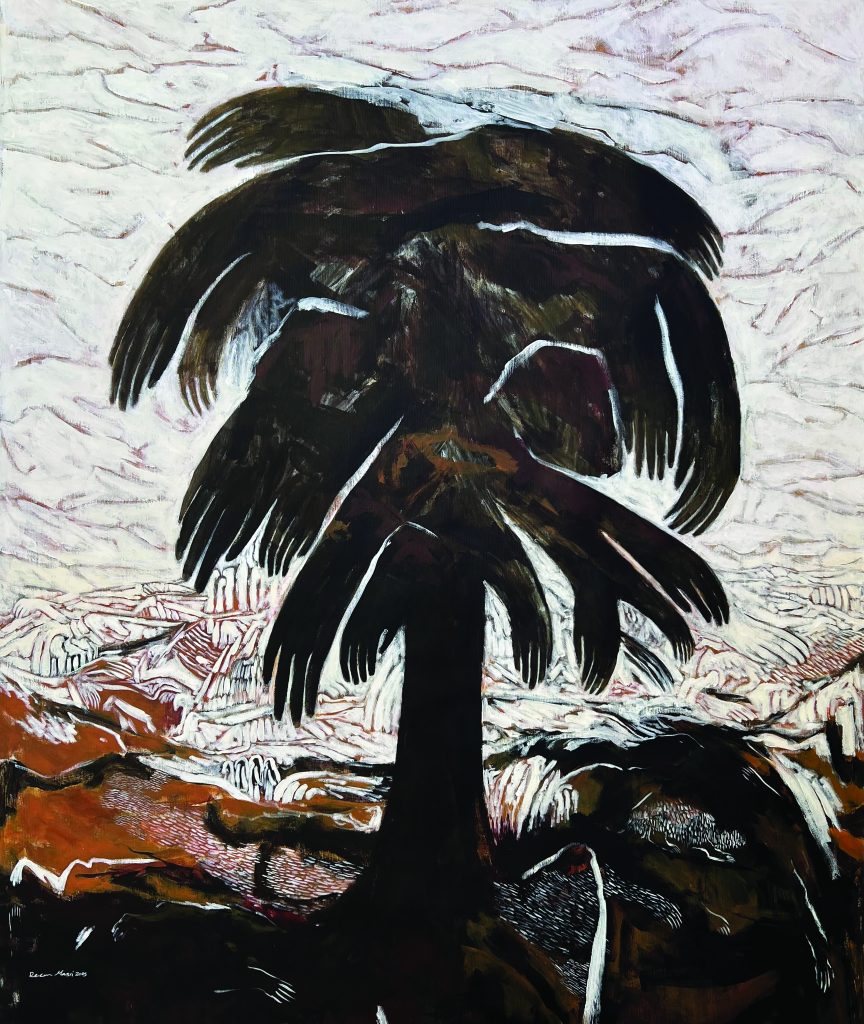
The inclusion of Palestinian artist Reem Masri’s “The Land and the Body Will Not Forget” extends the exhibition’s reflection beyond the borders of India, gesturing toward shared struggles across geographies. Masri’s work weaves land and body as inseparable entities, each carrying the memory of the other, each refusing erasure. The work registers stories of exile, resistance, and return, articulating what Lopes’s accompanying text calls “a shared pulse of resilience that transcends borders, where the body of the self and the body of the land speak as one.”
The Body Remembers
Saviya Lopes’s exhibition stakes an audacious claim: that the body is not merely flesh subject to violence and extraction, but rather a living archive capable of holding, transmitting, and testifying to histories that official institutions have obscured or erased. In paintings that gather women across temporal and geographic boundaries, in quilts that channel textile traditions into contemporary art discourse, in kitchens rendered visible in all their exhausting complexity, Lopes insists that care itself is resistance—an everyday, feminist act that sustains life in the face of systematic erasure.
Exhibition Details
Title: You, Me and Them: A Body That I Used to Know
Artist: Saviya Lopes
Venue: Art and Charlie, 71A Pali Village, Bandra West, Mumbai
Dates: 8 November 2025 – 2 January 2026
Hours: Wednesday–Sunday, 11 AM–8 PM
Gallery Website: artandcharlie.com
Cover image: छाती भरून आली / Chest is full (Nangeli, Audre Lorde, Ana Mendieta) 2025 | Oil on Linen Canvas | 54 x 42 inches | | Courtesy of the artist
Athmaja Biju is the Editor at Abir Pothi. She is a Translator and Writer working on Visual Culture.