The Smithsonian’s National Museum of Asian Art in Washington, D.C., is currently presenting Of the Hills: Pahari Paintings from India’s Himalayan Kingdoms, a major exhibition that brings renewed attention to one of South Asia’s most lyrical yet understudied artistic traditions. On view from April 18 to July 26, 2026, the exhibition features 48 paintings and coloured drawings, including several works that have never been publicly displayed before.
Drawing significantly from the celebrated Benkaim Collection, alongside holdings from the Freer Collection and loans from the Cleveland Museum of Art, the exhibition traces the evolution of Pahari painting across two centuries (c. 1620–1830). These works emerged from a network of small Himalayan kingdoms in present-day Himachal Pradesh, where artists developed a distinctive visual language that merged local aesthetics with broader Mughal and regional influences. The result is a striking range—from intricately detailed, naturalistic compositions to vivid, stylised renderings enriched with gold, beetle wings, and mineral pigments.
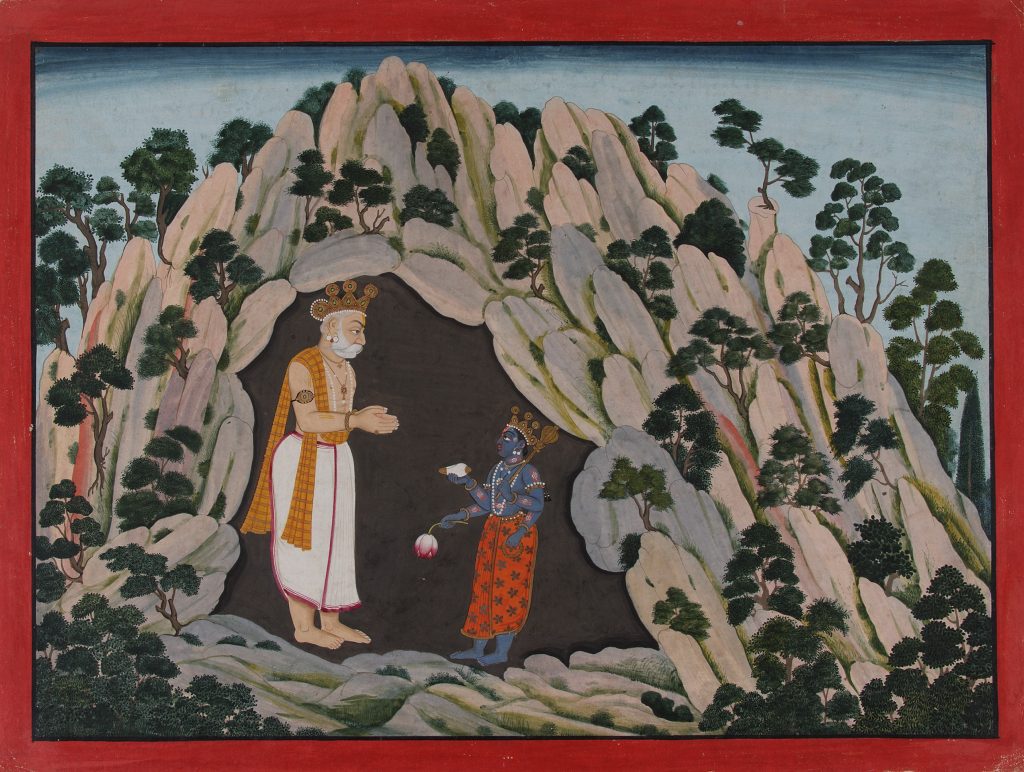
Album leaf with painting ca. 1765 | India, Punjab Hills | Opaque watercolor and gold on paper | H x W (overall): 30.4 x 40.5 cm (11 15/16 x 15 15/16 in) | Credit: National Museum of Asian Art, Smithsonian Institution, Freer Collection, Purchase — Charles Lang Freer Endowment, F1999.13
Curated by Debra Diamond, the exhibition challenges conventional art historical frameworks by foregrounding collaboration as a key driver of artistic innovation. Organised chronologically, it highlights three major phases in the development of Pahari painting while also unpacking themes of devotion, romance, and sacred geography. An introductory section situates the Himalayas not merely as a backdrop, but as a spiritually charged landscape shaped in part through artistic imagination.
A standout work in the exhibition, Krishna and His Family Admire a Solar Eclipse (c. 1775–80), attributed to an artist working in the lineage of Manaku and Nainsukh, exemplifies the narrative richness and emotional subtlety characteristic of the tradition. Such works underscore the exhibition’s broader aim: to deepen scholarly understanding while also inviting contemporary audiences to engage with the poetic and sensorial qualities of these paintings.
Of the Hills is part of a wider institutional collaboration across the United States, running concurrently with exhibitions at the Cleveland Museum of Art and the Cincinnati Museum of Art. Together, these initiatives mark a significant moment in the global reassessment of Pahari painting. Accompanied by the publication Pahari Paintings: Art and Stories, developed in collaboration with scholars and artists including Vijay Sharma and Sarang Sharma, the exhibition signals a renewed commitment to expanding the narrative of Indian art beyond dominant centres.
As the Smithsonian continues to position itself as a leading platform for Asian art, Of the Hills not only foregrounds the aesthetic brilliance of Himalayan court painting but also opens new pathways for research, interpretation, and cross-cultural dialogue.
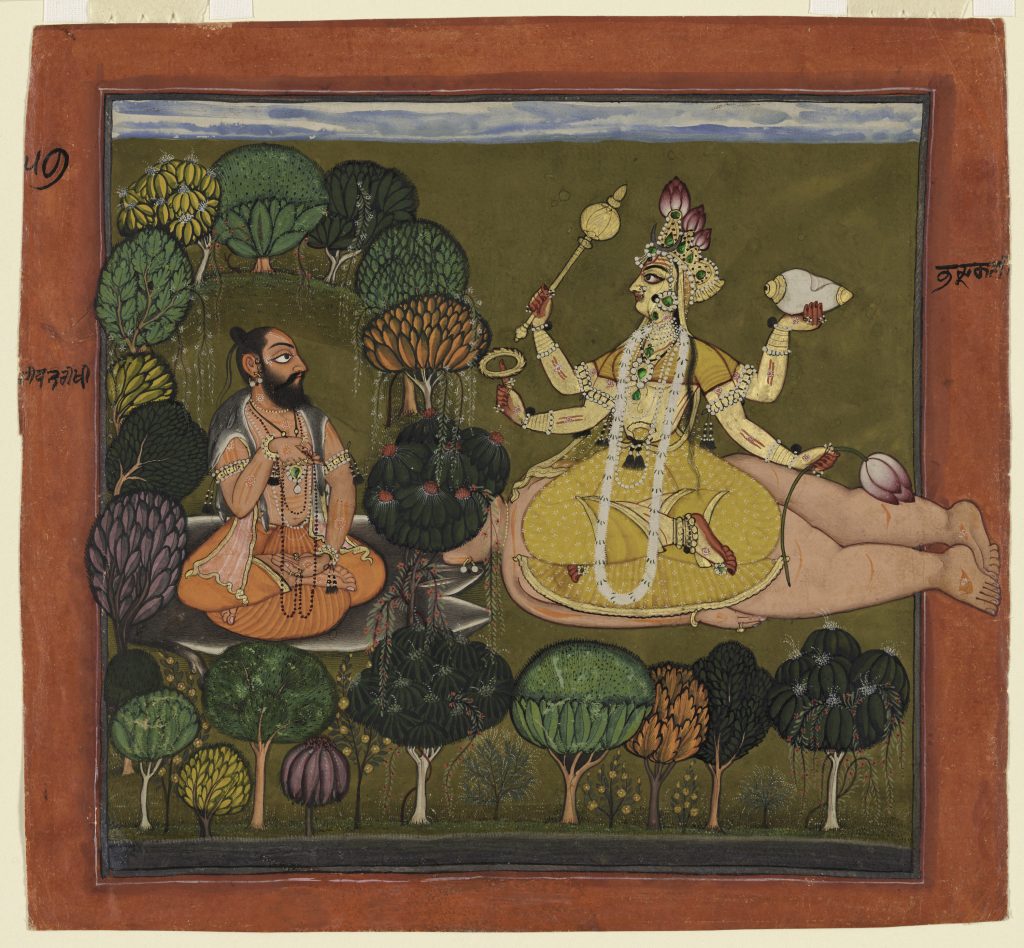
Cover Image: The Goddess worshipped by the sage Chyavana from a Tantric Devi series Album leaf with painting | Artist: Attributed to Kripal (active 1660-1690) ca. 1660-1670 | India, Punjab Hills | Opaque watercolor on paper, gold, silver, and beetle wing | H x W (painting): 17.9 × 21.4 cm (7 1/16 × 8 7/16 in) | Credit: Attributed to Kripal / National Museum of Asian Art, Smithsonian Institution, Freer Collection, Purchase — Charles Lang Freer Endowment, F1997.8

Contributor