Gaudí Architecture and Poetic Form
Gaudí architecture combines engineering, symbolism and artistic imagination. Antoni Gaudí transformed Catalan Modernism through iconic buildings such as Park Güell, Casa Batlló and the Sagrada Família.
UNESCO World Heritage (Works of Antoni Gaudí): https://whc.unesco.org/en/list/320/
Antoni Gaudi’s architectural narrative blends utility with poetic expression. His buildings function like three-dimensional texts. They combine construction, texture, colour and decoration into a unified architectural language.
Umberto Eco’s assertion that any object, including architecture, can communicate a message aligns with Bachelard’s dual functions of language. Analysing the transmission of meaning in architecture through the lens of Ferdinand de Saussure’s theory of signs, Eco emphasses the arbitrary and conventional relationship between signifiers and signifieds. Applying Saussure’s architectural analogy, an “architectural sign” becomes any part of a building that relates syntagmatically to other parts and associatively to various styles.
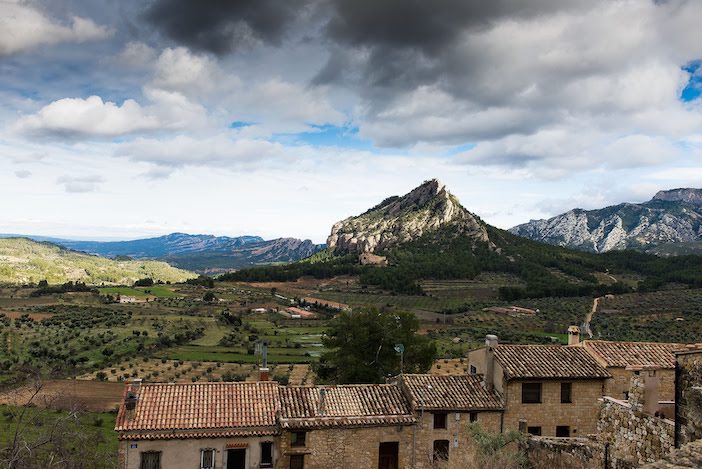
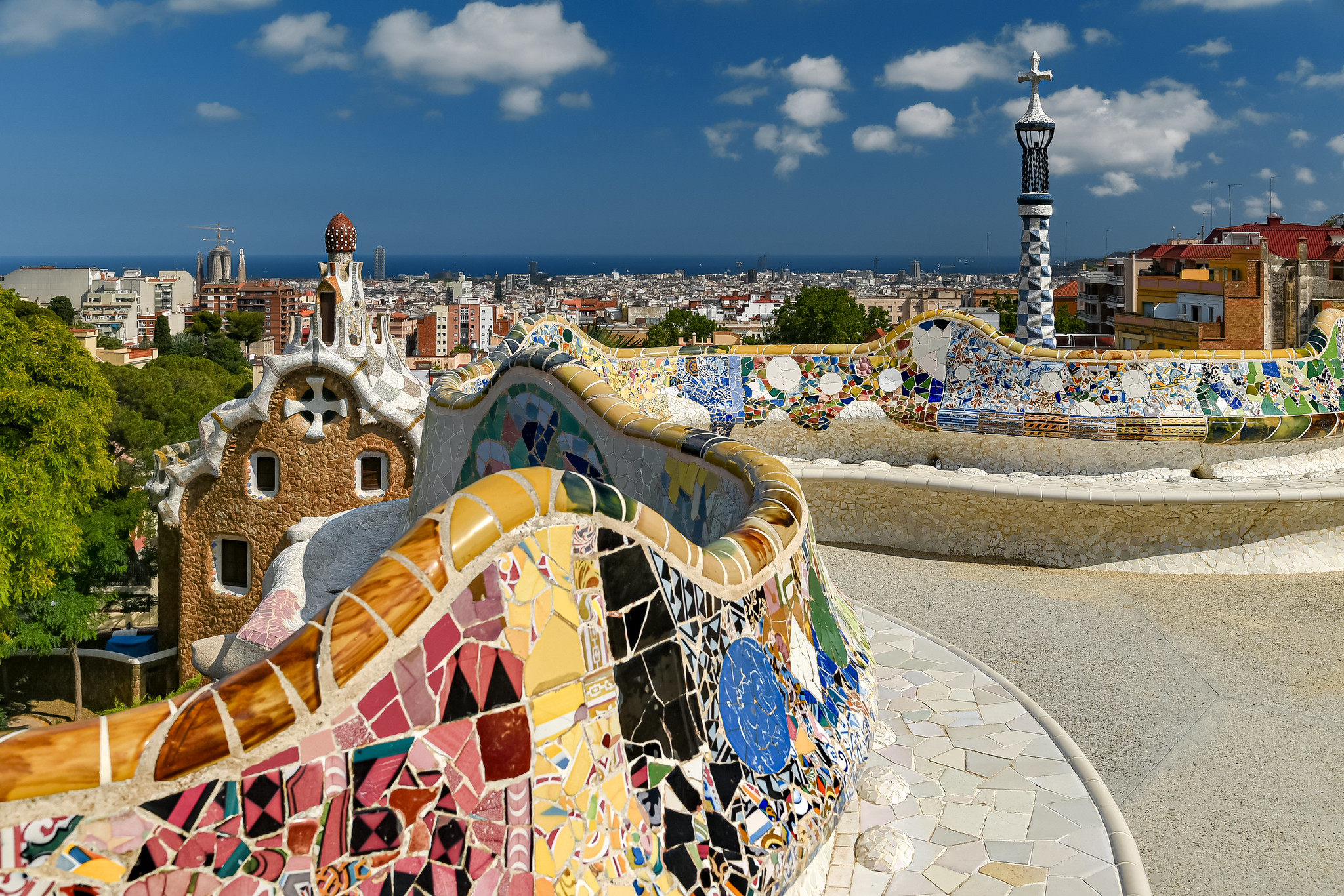
Gaudí Architecture in Park Güell
Gaudi’s work, especially exemplified in Park Güell, integrates nature as a significant element. The architectural signs draw inspiration from the Catalan landscape, reflecting the terrain, light effects, and natural forces. The syntagmatic relations of architectural units in Park Güell, with their ornamentation and organic motifs, create a figurative meaning that resonates with Art Nouveau and other styles. The architectural signs, through their interdependence, interweave signification with poetry, capturing the essence of nature and evoking emotional responses.
Colour, as a signifier in Gaudi’s architecture, disrupts the automatism of language. Gaudi’s belief that ornamentation should be coloured manifests in Park Güell through trencadis, broken pieces of colourful ceramics adorning medallions and benches. The visual patterning created by colour, repetition, rhythm, texture, and form reinforces the poetic language in Gaudi’s work. The use of colour serves as a defamiliarising element, making the architecture strange and capturing the vivid hues of the Mediterranean.
Gaudí Architecture and Colour
Gaudi’s architecture, as interpreted through Roland Barthes’ perspective, becomes a text constructed of codes and fragments that invite multiple interpretations. The trencadis, for instance, can be read as a vibrant expression capturing the sensual feeling of nature and associating with Art Nouveau. The incorporation of fragments of bottles and cups beyond the common narrative system expands the architectural code, establishing new aesthetic meanings.
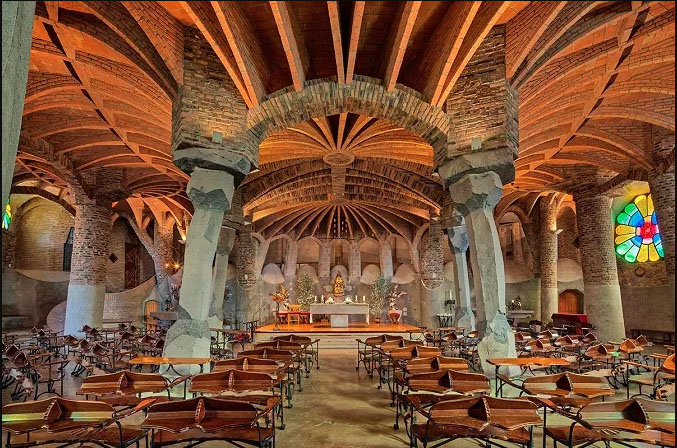
The chapel of Colonia Güell demonstrates Gaudi’s innovative structural solutions. It highlights his experimental engineering methods. Through unconventional methods, such as building an upside-down model to study forces and experimenting with volumes, Gaudi developed new architectural units, including hyperbolic parabolas and twisted forms, marking a departure from traditional Gothic design. The architectural narrative of Colonia Güell reflects Gaudi’s emphasis on both economy and efficiency in common language and the poetic expression embedded in new structural forms. The resulting space, with dissimilar columns, curved surfaces, and a mix of materials, creates a mysterious, primitive ambiance, enhancing the ritualistic role of the building.
Gaudí Architecture and Ecstatic Space
Charles Jencks introduced the concept of “Ecstatic Architecture.” highlighting Gaudi’s ability to evoke emotional reactions and a sense of euphoria. Gaudi’s work, whether in Park Güell or the crypt of Colonia Güell, captures nature’s forces, provoking feelings of delight, devotion, and even a mystical experience.
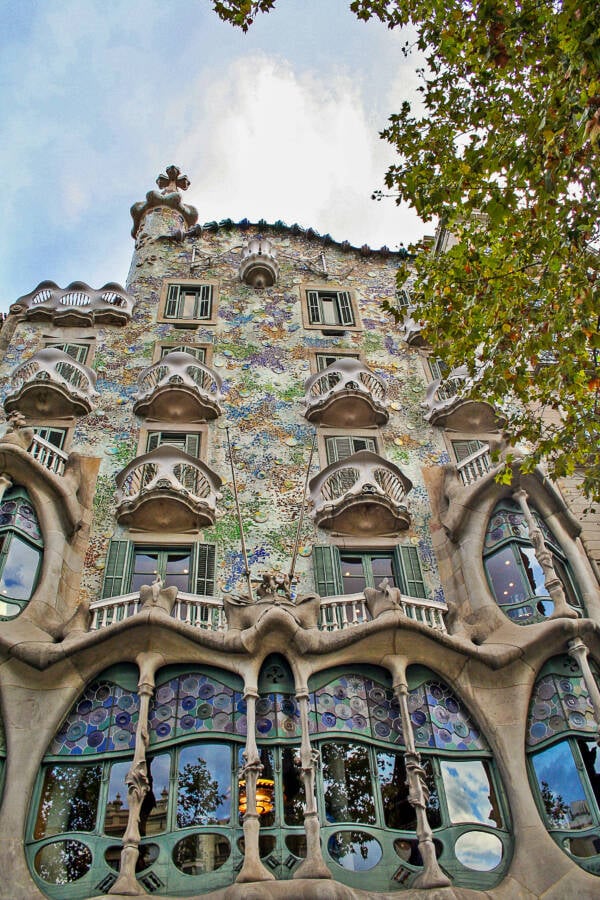
The significance of Gaudi’s architecture as metaphorical is explored, particularly in Casa Batlló. The building’s various surface metaphors, including references to the Mediterranean sea, the carnival, and the legend of Saint George, contribute to its multivalent meaning.
Gaudí Architecture and the Sagrada Família
Antoni Gaudí’s magnum opus, the Sagrada Familia, is sensitive to the intricacies of his architectural genius, weaving a narrative of religious symbolism and spiritual ascent. The three planned facades of the cathedral, representing distinct phases of Christ’s life, unfold a sacred tale frozen in stone. Although construction was halted with Gaudí’s demise in 1926, existing elements like the Nativity facade resonate with profound Christian symbolism, orchestrating an overwhelming religious experience.

Casa Milà and Architectural Symbolism

Gaudí Architecture in the Sagrada Família
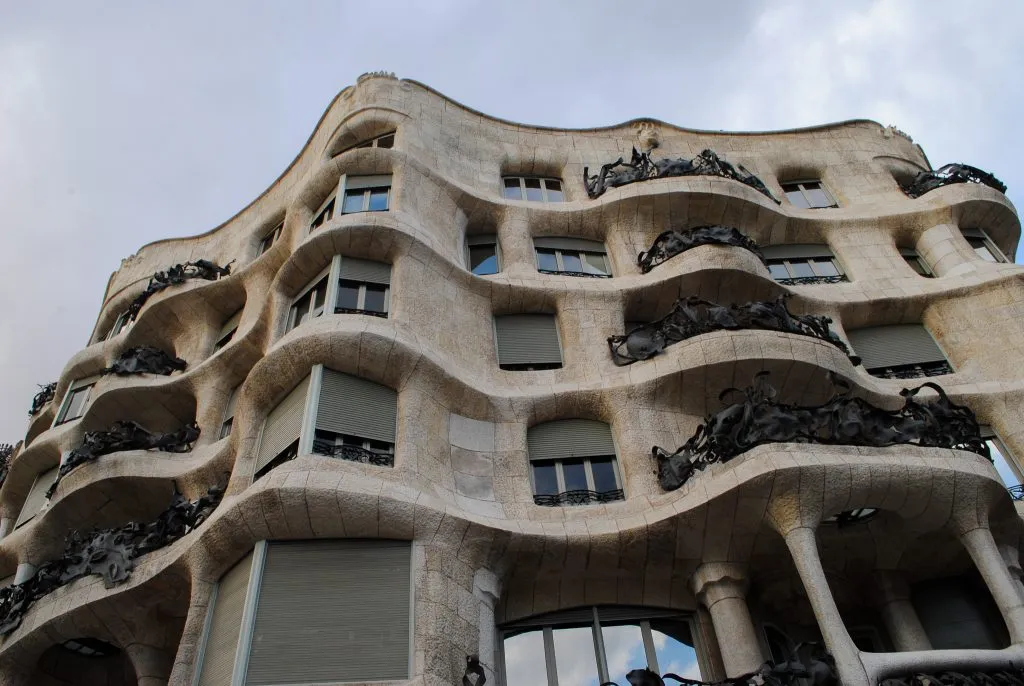
Gaudí’s architecture goes beyond practical function. It invites visitors into an immersive and poetic experience. It stimulates the senses, resonating not just with practical function but with the ability to evoke powerful emotions. Casa Milà’s unsettling rooftop shapes prompt a subconscious response, revealing the depth of Gaudí’s connection with the human psyche. His work, like a carefully crafted poem, speaks to the soul, inspiring a spontaneous overflow of powerful feelings.
In essence, Gaudí’s creations communicate a language beyond form and signification. They become conduits for profound emotional responses, akin to the essence of poetry as described by William Wordsworth. Gaudí’s architecture beckons viewers to actively engage with the built environment, transcending the boundaries of conventional design. It is an artistic expression that not only captivates the eyes but resonates with the soul, leaving an indelible mark on the imagination and emotions of those fortunate enough to witness its grandeur.
https://www.abirpothi.com/evolution-in-chinese-architectural-history-in-last-eight-decades/