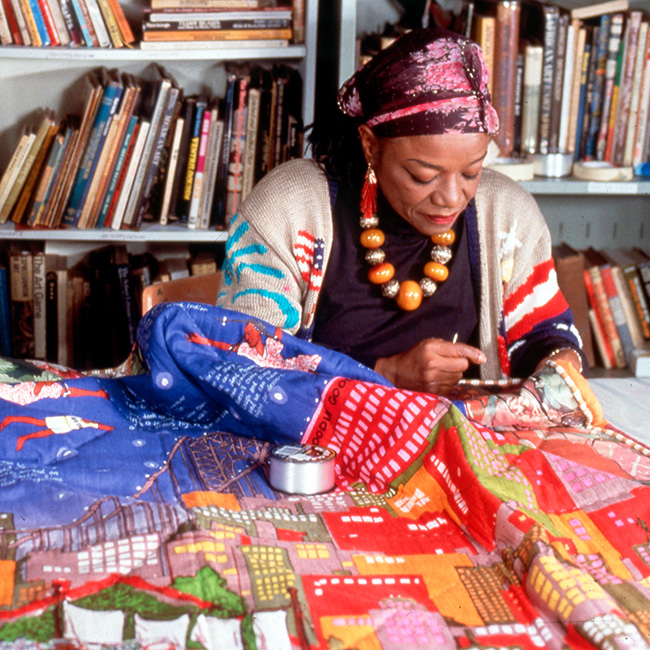
Faith Ringgold, the celebrated American artist, author, educator and activist known for her story quilts, was born on October 8, 1930. Through painting, textiles, storytelling and activism, Ringgold created an influential body of work exploring Black identity, race, gender, family, history and freedom.
Born and raised in Harlem, New York, Faith Ringgold grew up surrounded by the cultural history of the Harlem Renaissance. Her mother, Madame Willi Posey, was a fashion designer and dressmaker who taught Ringgold how to sew. That early relationship with fabric and textile-making would eventually become an important part of her artistic practice.
Ringgold initially trained as a painter and began exhibiting her work in the 1960s. During this period, her art increasingly addressed the realities of racism, sexism and inequality in America. She was also actively involved in campaigns demanding greater representation of Black artists and women in museums and galleries. Her political paintings from the 1960s and 1970s reflected the social and racial tensions of the time.
From Painting to Story Quilts
While Faith Ringgold is widely recognised today for her quilts, her journey toward textile art developed gradually.
In 1980, Ringgold created her first quilt, Echoes of Harlem, in collaboration with her mother. The work became an important turning point in her practice. A few years later, she began combining painted imagery, fabric and handwritten text to create what she called “story quilts.”
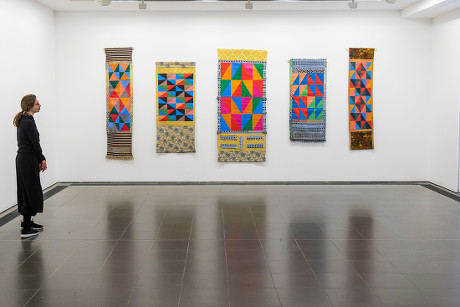
These works challenged the traditional division between fine art and craft. Ringgold brought together painting, quilting, family memories, African American history and storytelling, transforming the quilt into a space for both personal and collective narratives. Her approach was also influenced by African textiles, African American quilting traditions and Tibetan thangka paintings.
Her story quilts became one of the defining contributions of her career, demonstrating how textile art could carry complex narratives about identity, history and social change.
Reclaiming Representation Through Art
Ringgold’s art frequently questioned the ways Black people, particularly Black women, were represented in American culture.
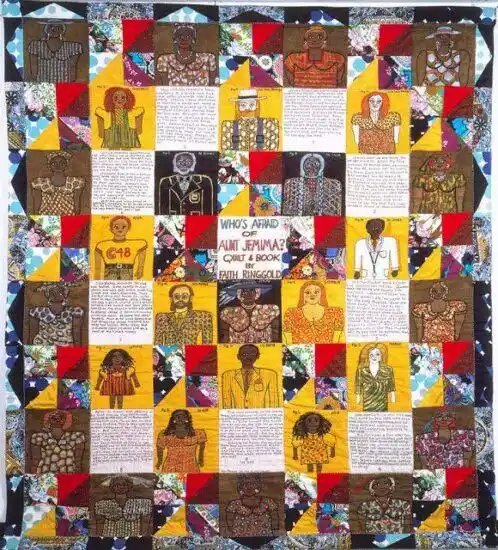
Her 1983 story quilt Who’s Afraid of Aunt Jemima? reimagined the stereotypical advertising figure of Aunt Jemima as a successful Black businesswoman. By rewriting the character’s story, Ringgold challenged racist stereotypes and replaced a commercial caricature with a narrative centred on Black agency and identity.
Art, Activism and Black History
Faith Ringgold’s artistic practice cannot be separated from her activism.
Throughout the 1960s and 1970s, she participated in protests against the exclusion of Black artists and women from major American museums. Her activism extended into feminist art and community organising, while her artworks continued to examine race, gender and the experience of Black Americans.
Why Faith Ringgold Still Matters
Faith Ringgold spent seven decades expanding what an artwork could be. She moved between painting, sculpture, textiles, performance, children’s literature and storytelling, refusing to remain within the boundaries traditionally established between fine art and craft. Her story quilts are particularly significant because they demonstrate how an everyday material associated with domestic and communal labour can become a powerful vehicle for art history and cultural memory.
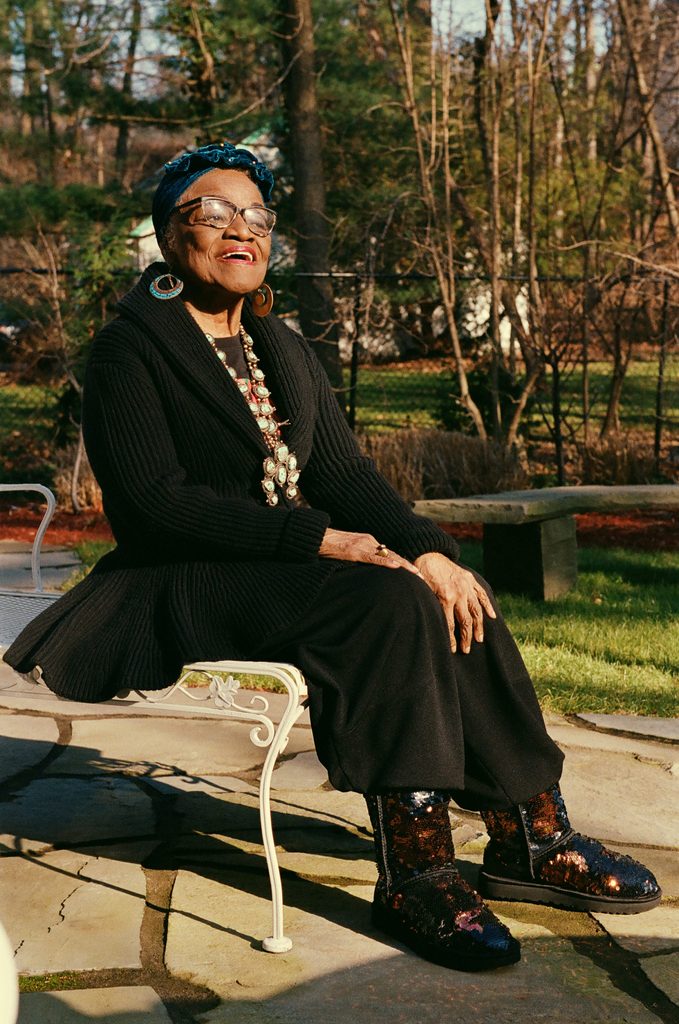
Ringgold died in 2024 at the age of 93, leaving behind an influential legacy that continues to shape conversations around Black art, feminist art, textile art and contemporary storytelling. Born on October 8, 1930, Faith Ringgold turned fabric, paint and personal memory into a visual language of freedom. Her art reminds us that history does not only live in museums and monuments, it can also live in stories, families, fabrics and the memories we choose to preserve.
Featuring Image Courtesy: The fabric workshop and museum

Contributor