Abirpothi

craft & Handmade

Bhil Tribal Art: Dots, Stories and Shifting Surfaces
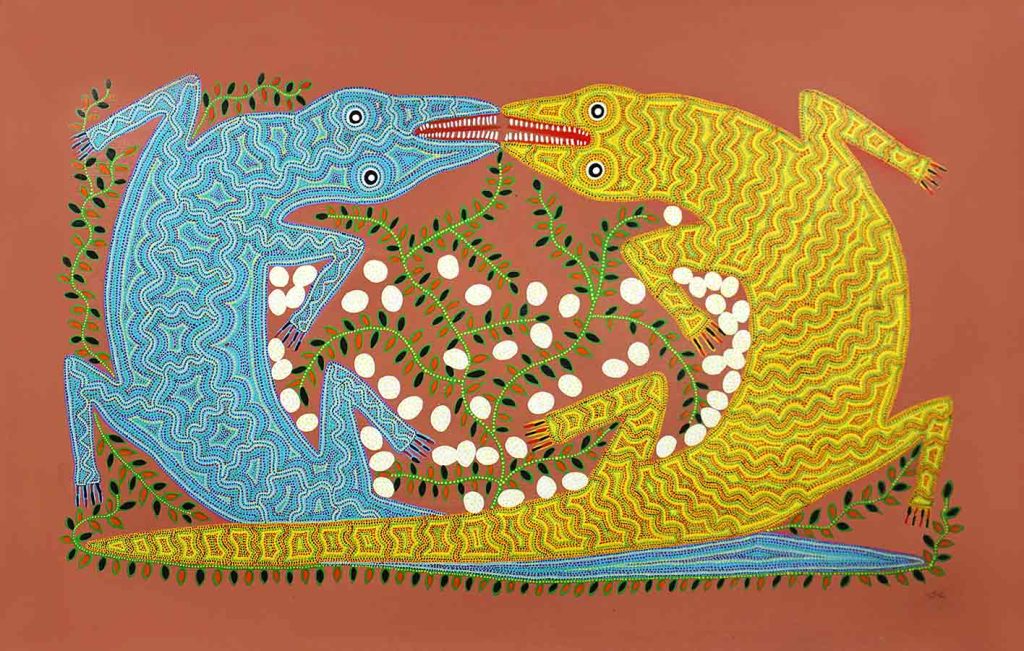
bhil art

The Bhil rank among the largest tribal communities in India and live across Madhya Pradesh, Rajasthan, Gujarat and Maharashtra.Many Bhil narratives trace ancestry to the archer Eklavya from the Mahabharata and to Valmiki, associated with the Ramayana, although these links remain part of oral tradition rather than formal history. Agriculture and forest‑based livelihoods strongly shape […]

Bhil Tribal Art: Dots, Stories and Shifting Surfaces Read More »
Saura Tribal Art : Visual Imagery of a Scriptless Community

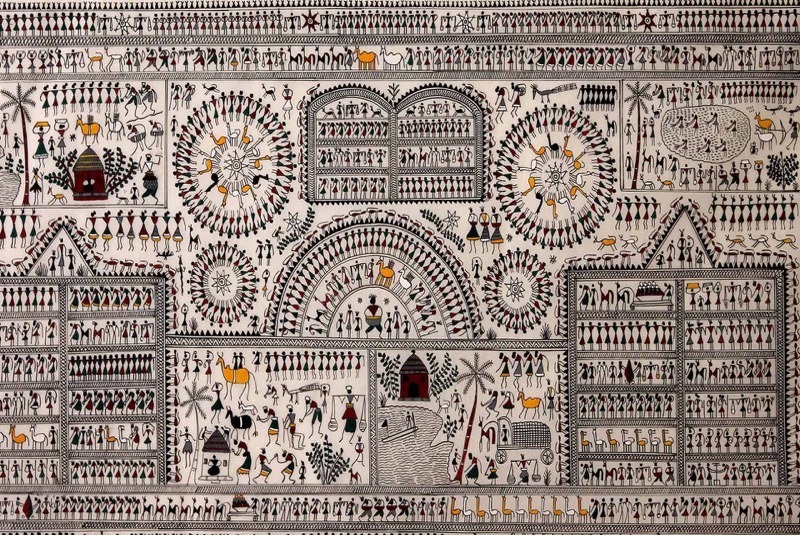
Saura paintings, sometimes called ikons or italons, feature minimal but highly symbolic figures of humans, animals, trees and space.

The Saura or Saora people live mainly in southern Odisha and count among India’s oldest tribal communities. Epic references in the Ramayana and Mahabharata, along with anthropological research, highlight the deep historical roots of this group. Because the Saura language developed without a widely used script, wall painting carries special importance as a record of

Saura Tribal Art : Visual Imagery of a Scriptless Community Read More »

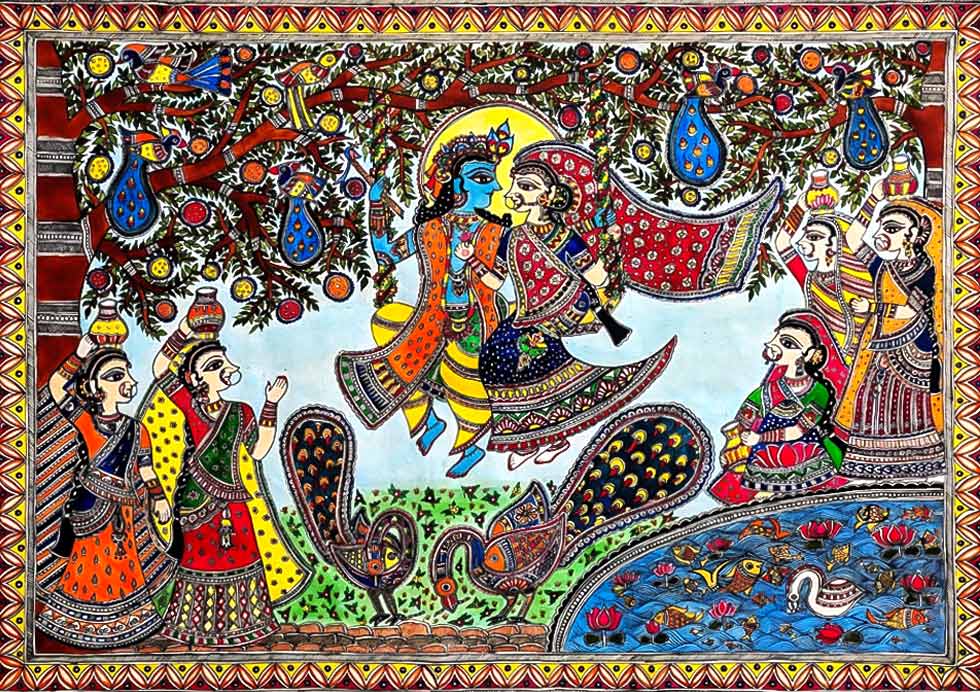
Madhubani or Mithila Painting of Bihar: Origins to the Present

Madhubani, also known as Mithila painting, originates in the Mithila region of northern Bihar and adjacent parts of Nepal, particularly around villages such as Ranti and Jitwarpur. Women in these communities historically painted walls and floors during weddings, festivals and religious ceremonies, especially the kohbar or nuptial chamber. These murals depicted gods, fertility symbols and

Madhubani or Mithila Painting of Bihar: Origins to the Present Read More »

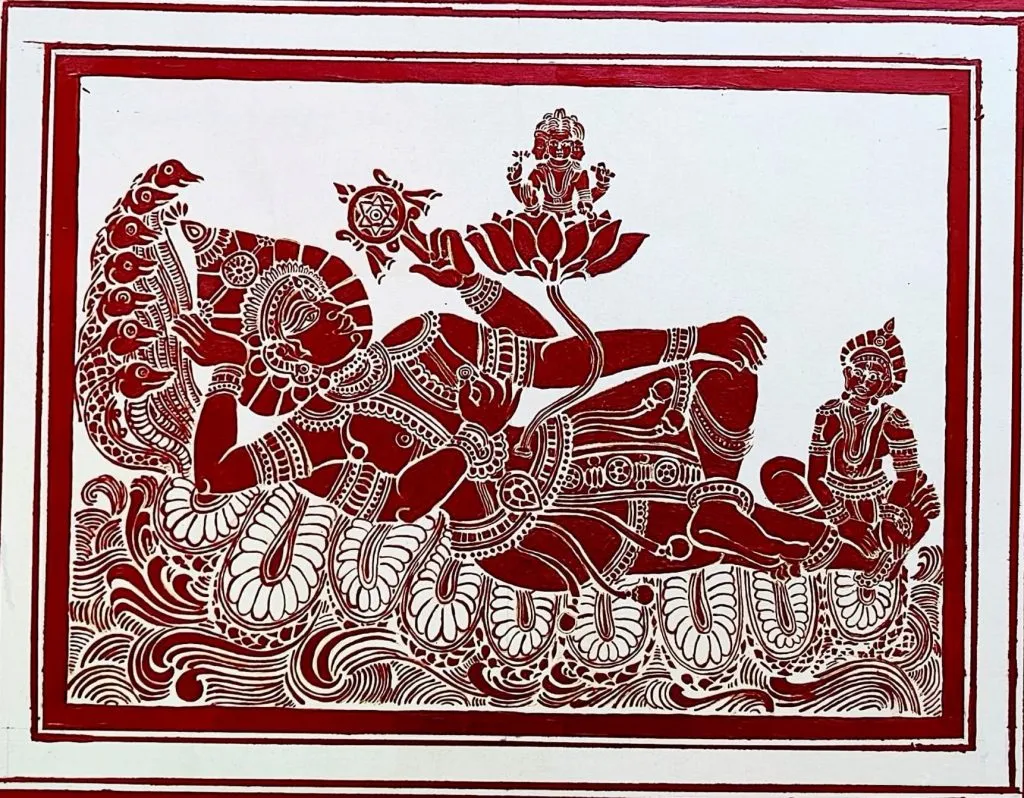
Kaavi Murals: How Goan Artisans Carve Stories into Lime

Kaavi art refers to a mural tradition indigenous to the Konkan coast

Kaavi art refers to a mural tradition indigenous to the Konkan coast, especially in Goa and adjoining parts of coastal Maharashtra and Karnataka. The term “kaav” denotes the maroon‑red pigment that artisans derive from laterite soil, while the white ground comes from lime plaster made with burnt seashells. Scholars date the practice to roughly 400

Kaavi Murals: How Goan Artisans Carve Stories into Lime Read More »

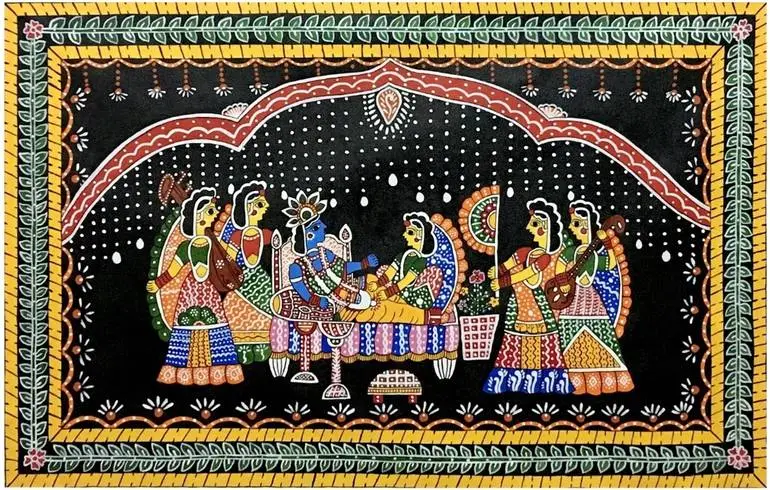
Tikuli Painting in Bihar: History, Technique and the Revival

Tikuli Painting in Bihar:

Tikuli art takes its name from “tikuli” or “tikli,” a term for the decorative bindi that women wear on the forehead. The form emerges in and around Patna and has a recorded history of more than 800 years, with references to production during Magadh and Mughal periods. Earlier, artisans created small, highly finished glass bindis

Tikuli Painting in Bihar: History, Technique and the Revival Read More »

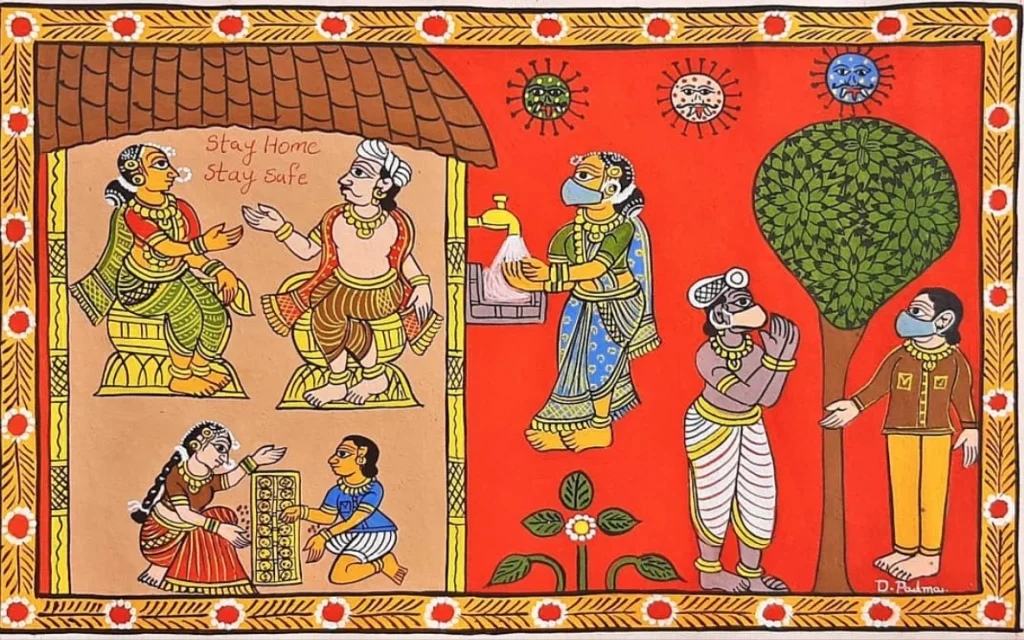
Cheriyal Scroll Painting of Telangana: The Nakashi Art

Cheriyal Scroll Painting, Telangana

Cheriyal scroll painting, part of the broader Nakashi tradition, developed in Telangana as a narrative cloth painting used by travelling bards.The practice took shape in and around Cheriyal village in the present Siddipet district and in urban centres near Hyderabad. Families of Nakashi artists supplied scrolls and related props to communities such as the Kaki

Cheriyal Scroll Painting of Telangana: The Nakashi Art Read More »

Ad