Kolkata’s Emami Art launched three significant exhibitions in January 2026, each offering distinct but complementary perspectives on artistic production, inheritance, and material transformation. Together, they constitute a substantial institutional statement on contemporary creativity in Eastern India.
Convergences: A Shared Ground — Lineages, Practices, Futures
Running through February 14 at the Kolkata Centre for Creativity’s First Floor Gallery, Convergences positions itself as the anchor exhibition for Vasudhaiva Kutumbakam VII, the seventh annual symposium of KCC. The show is fundamentally structured around a curatorial method rather than a thematic survey. As Director and Head Curator Ushmita Sahu explains, convergence functions not as sameness but as “the coming together of distinct lineages through shared processes of making.”
The exhibition features nine artists and collectives—Anshu Kumari; ARTISANS’ Sustainable Development Foundation × Leshemi Origins; Dulair Devi, Malo Devi, Putli Ganju, Rudhan Devi, and Sajhwa Devi (supported by the Sanskriti Museum & Art Gallery, Hazaribagh); Ruma Choudhury; Silpinwita Das; Simi Deka; Ujjal Dey; and Ujjal Sinha. Their work emerges from Eastern and Northeastern India, navigating centuries-old cultural, artistic, craft, and architectural traditions while engaging with contemporary ecological and social concerns.
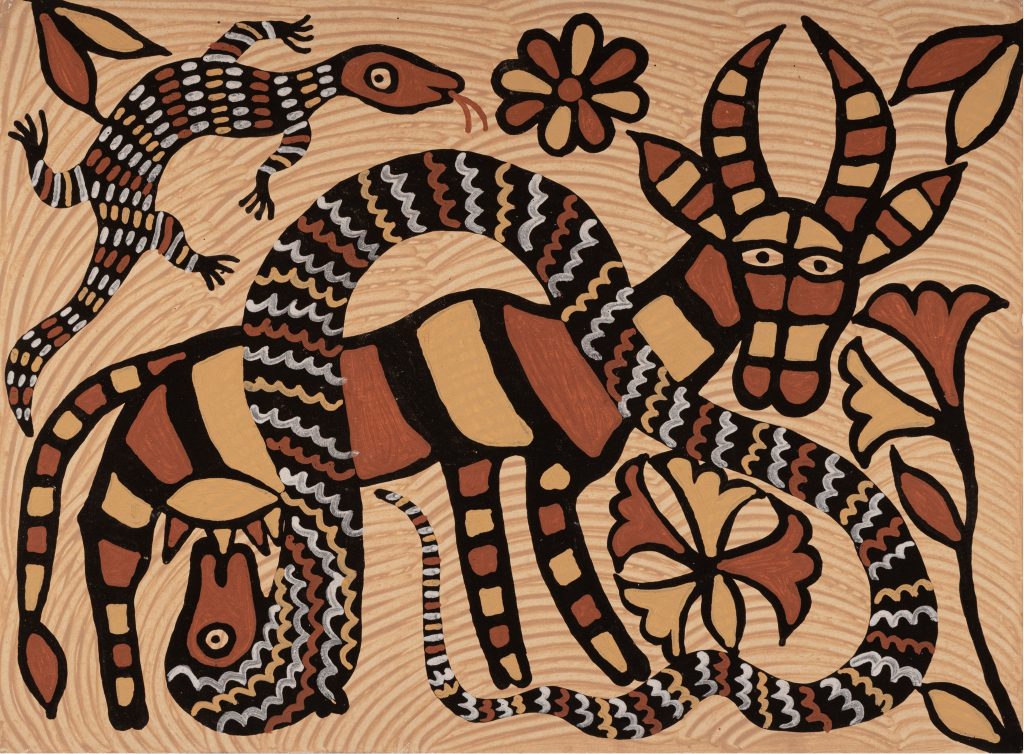
The conceptual framing foregrounds repair, reuse, and remembrance as operative principles rather than decorative gestures. The material palette—bamboo, thread, natural dyes, earth, and fibre—functions as ethical and cosmological decision-making, embedding work within biotic relationships and seasonal cycles. This materiality resists the flattened postulates of modernity and progress by foregrounding continuity and transmission over rupture or novelty.
What distinguishes Convergences is its refusal to separate culture from nature or practice from ecology. In Eastern and Northeastern regions, Sahu notes, culture is lived and transmitted through routine acts, material knowledge, and collective memory—deeply embedded in social and environmental fabric. The exhibition asks viewers to perceive value not only in what is whole or new but also in what has been mended, reimagined, and carried forward. This ethics of care represents a deliberate counter-positioning to contemporaneous narratives of technological disruption and constant innovation.
PURVAI: Printmaking in Eastern India — Pedagogy to Practice
Extending through March 7, PURVAI occupies Emami Art’s primary exhibition space and functions simultaneously as a collateral exhibition to the 3rd Print Biennale India, organized by Lalit Kala Akademi. Curated by Dr. Paula Sengupta—a distinguished artist-pedagogue, academic, and scholar of Indian printmaking history—the exhibition assembles 43 artists and collectives from Northeastern states, West Bengal, Jharkhand, Odisha, and Chhattisgarh.
The exhibition traces contemporary printmaking from its institutional foundations to contemporary practice. Bengal functions as the analytical and historical pivot from which modern and contemporary printmaking in the region is traced. PURVAI examines the critical role of art institutions and pedagogical frameworks in fostering printmaking when infrastructural constraints kept the medium closely tied to academic and workshop settings.
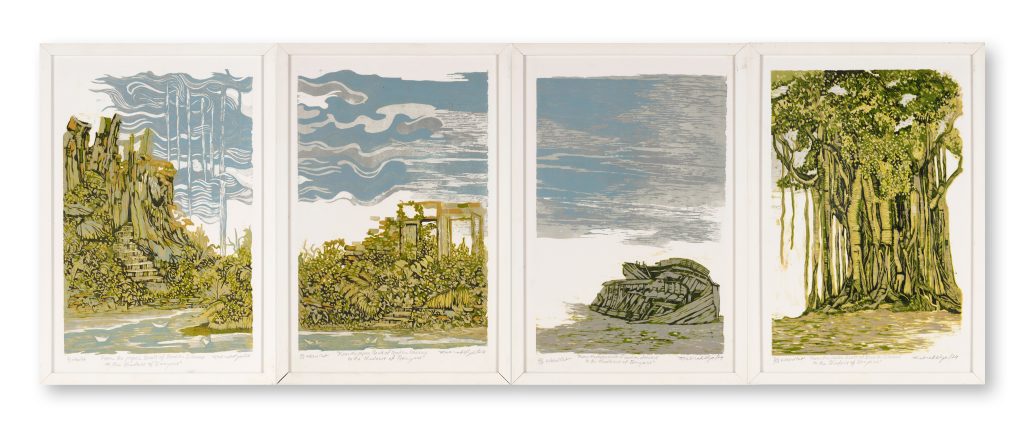
Sengupta’s curatorial methodology engages both traditional and experimental approaches—bookmaking, graphic narratives, papermaking, textile-based processes, digital and photographic methods, moving image, and sculptural extensions. The exhibition foregrounds faculty and alumni who have sustained, transformed, and expanded the medium while simultaneously addressing contemporary preoccupations. Among participating artists are established pedagogues like Jayanta Naskar, Debnath Basu, and Paula Sengupta herself, alongside emerging practitioners including Aadya Kumari, Deepanwita Das, and Sweety Chakma.
The exhibition positions printmaking not as a historical medium but as an urgent contemporary tool. As Sengupta has written, emerging printmakers employ the inherent possibilities of the medium to express anguish in an era of ecological crisis—using injured organic surfaces as matrices, wielding acids and gouging tools to inflict wound, and drawing on natural pigments as offerings of the Earth. This framing moves printmaking beyond technical accomplishment into the realm of ethical and ecological urgency, particularly among an emerging generation confronting a “fraught Earth.”
Field Notes (On the Afterlife of Trees) — Vishal Kumar Gupta
The third exhibition, Vishal Kumar Gupta’s debut solo, fills Gallery 1 through March 7. Gupta, born in 1996 and trained at Kala Bhavana, Visva-Bharati (BFA, 2021) and the Faculty of Fine Arts, Maharaja Sayajirao University (MVA with gold medal, 2023), presents a significant body of oil paintings, watercolour drawings, and graphite works.
His practice emerges from sustained observation and accumulation—deliberate acts of looking at fragments conventionally dismissed as incidental: fallen twigs, gnarled branches, weathered tree stumps. These discarded forms are transformed through paint into monumental presences—not decorative motifs but “powerful witnesses holding memories of time, growth, and decay.”
Technically, Gupta’s practice inhabits the space between abstraction and tactile presence. His brushstrokes build up in sedimentary layers, evoking how nature and memory accumulate over time. The texture and materiality invite what Sahu describes as seeing “with a sense of touch”—painting becomes simultaneously an immersive, sensory experience and a quiet record of temporality.
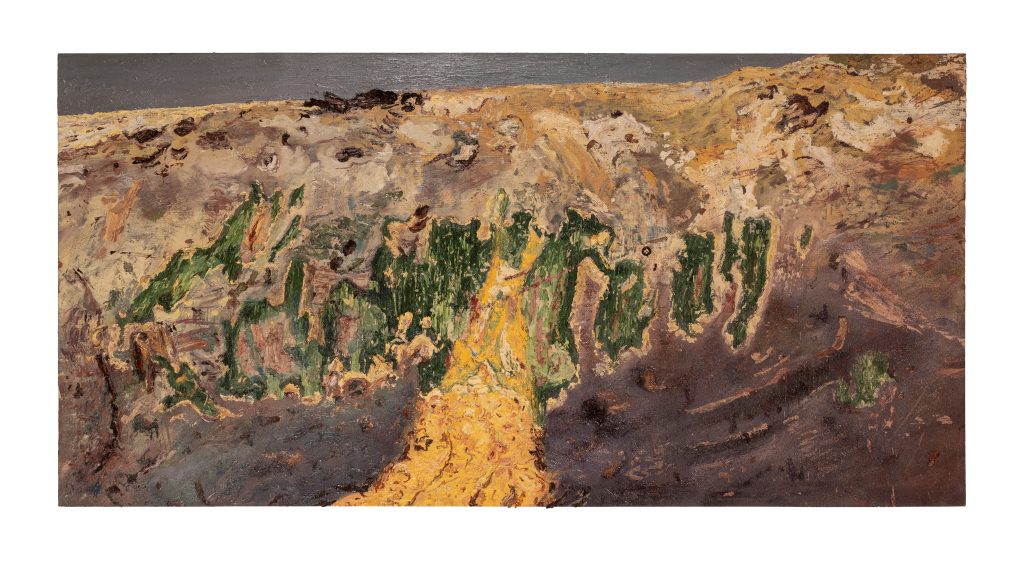
At the practice’s conceptual core is the found object—particularly wood—which carries what Gupta terms intimate resonance. Wood’s form functions as record of absence: wind, time, and decomposition. This engagement with materiality, fragmentation, and the aesthetic recuperation of waste aligns with the broader concerns articulated in Convergences, though Gupta’s method operates through painterly investigation rather than craft practice or collective knowledge transmission.
Gupta has previously exhibited in institutional contexts including the 2024 group show All That Is Hidden: Mapping Departures in Landscape, Terrains and Geographies at Emami Art and completed the month-long IMAGINARIUM 3.0 residency at the same institution in 2024. He was awarded the Nasreen Mohamedi Award 2022-2023 in Painting, positioning him within a lineage of formally rigorous contemporary painting practice.
Institutional Context and Curatorial Positioning
These three exhibitions crystallize Emami Art’s institutional mandate to position Eastern India as a generative site of contemporary artistic production. Established in 2017 and housed within the Kolkata Centre for Creativity (founded 2018), Emami Art adopts what its mandate describes as a “forward-looking, multi-dimensional approach” reflecting South Asian socio-cultural and geo-political narratives.
Under the leadership of CEO Richa Agarwal and Director and Head Curator Ushmita Sahu—both central figures in shaping institutional priorities around regional art and cultural practice—the gallery has positioned itself as a counter-weight to India’s art world concentration in metropolitan centers like Delhi and Mumbai.
The three exhibitions are deliberately interconnected. Convergences addresses inherited knowledge systems, ecological embeddedness, and collective production; PURVAI examines the institutional machinery through which artistic traditions are transmitted and transformed; and the Gupta solo explores individual artistic consciousness engaging with materiality, fragmentation, and the natural world. Collectively, they construct a nuanced argument about how contemporary practice emerges from and negotiates with tradition, pedagogy, and ecological responsibility.
For practitioners, curators, and institutional observers in India’s contemporary art field, these exhibitions warrant sustained engagement. They model an approach to curatorial practice that privileges depth of institutional knowledge, regional specificity, and ethical questioning over market-driven survey or aesthetic consolidation.
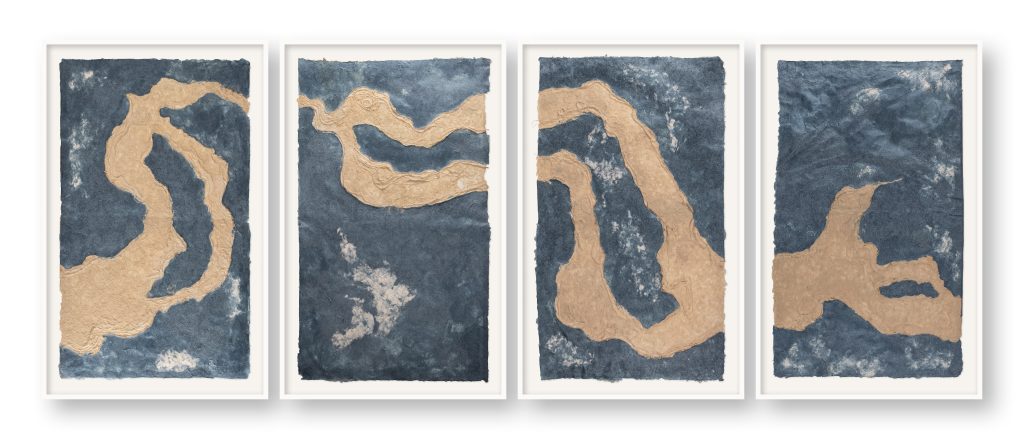
Cover Image: Ruma Choudhury (1990) River Ajay: The Journey of Autumn (Series: River Ajay) Indigo dye on handmade paper made of banana fibre, Lokta fibre, and sugarcane fibre
Athmaja Biju is the Editor at Abir Pothi. She is a Translator and Writer working on Visual Culture.