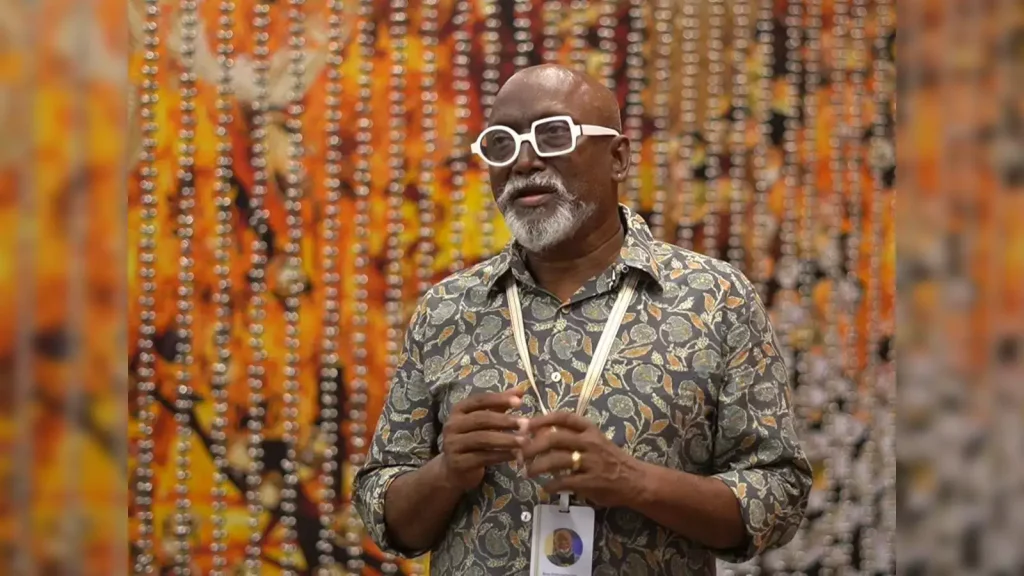
Bose Krishnamachari, artist and co-founder of the Kochi-Muziris Biennale, has resigned from his positions as President of the Kochi-Muziris Biennale and Member of the Board of Trustees of the Kochi Biennale Foundation (KBF), the foundation announced on Wednesday. The 63-year-old painter cited “pressing family reasons” for his decision to step down from both roles.
The announcement was made through a statement by Dr Venu V, chairperson of the Kochi Biennale Foundation, which acknowledged Krishnamachari’s pivotal role in establishing and developing the biennial event into one of South Asia’s most significant contemporary art platforms.
“Mr Bose Krishnamachari has resigned from the Kochi Biennale Foundation (KBF). Prior to his resignation, he was serving as the President of the Kochi-Muziris Biennale and Member, Board of Trustees of KBF. Mr Bose has cited pressing family reasons for his resignation,” the statement read. The foundation has initiated the process of identifying a successor with “high credentials in the art world” to serve as the next president.
A Legacy of Institutional Leadership
Krishnamachari’s departure marks the end of an era for the biennale that he helped establish. As co-founder and co-curator of the inaugural edition in 2012, alongside artist Riyas Komu, he was instrumental in shaping the Kochi-Muziris Biennale into a major international platform for contemporary art. The foundation’s statement described him as “one of the most influential figures in the growth and evolution of the Biennale.”
Over its fourteen-year history, the biennale has evolved significantly. The first edition brought together 89 artists from 23 countries across 13 revived heritage sites in Kochi. The current sixth edition, which opened on December 12, 2025 and runs until March 31, 2026, spans 22 venues across Fort Kochi, Mattancherry, Wellington Island, and Ernakulam, featuring 66 artists and collectives from more than 25 countries.
The sixth edition, titled “For the Time Being” and curated by performance artist Nikhil Chopra and his curatorial team HH Art Spaces, has already recorded significant visitor engagement. From its opening on December 12 through December 31, the biennale attracted approximately 1.6 lakh (160,000) visitors, indicating strong public interest in contemporary art practices.
Attempts to reach Krishnamachari for comment on his resignation were unsuccessful at the time of the announcement.
Despite its international prominence, the Kochi-Muziris Biennale has weathered a series of significant controversies and institutional challenges over the years. Most notably, in 2018-2019, contractors and workers came forward with complaints of non-payment, with investigations revealing disputed billing practices and disputes over revaluation of invoices. In 2023, over half of the 90 artists participating in that edition released an open letter detailing poor communication, incomplete infrastructure at venues, and delayed fee payments. The foundation attributed these issues to funding shortfalls, having received only ₹3 crore of an allocated ₹7 crore from the Kerala government, ombined with weather disruptions and venue-related complications. Krishnamachari had acknowledged these as “serious shortcomings” in a subsequent letter to artists.
More recently, the sixth edition itself has been marked by artistic expression controversies. In late December 2025, an artwork by Kerala-based artist Tom Vattakuzhy on display at the Garden Convention Centre sparked protests from Catholic and Christian groups, who alleged it misrepresented Leonardo da Vinci’s “The Last Supper.” The temporary closure of the venue and subsequent negotiations between the foundation, artist, and religious representatives demonstrated the biennale’s ongoing navigation between protecting artistic freedom and managing community sensitivities. The artwork was ultimately withdrawn by the artist and curators following discussions, a decision the foundation respected while reaffirming its commitment to curatorial autonomy. These controversies—spanning labour practices, institutional transparency, financial accountability, and the intersection of artistic expression with religious sentiment—form the complex backdrop against which the biennale has sought to establish itself as a serious international platform for contemporary art.
Implications for the Biennale’s Future
The resignation of such a foundational figure raises questions about institutional continuity and succession planning within one of South Asia’s leading contemporary art biennales.
Krishnamachari’s departure represents a turning point for an institution he helped build from its inception as a bold experiment in arts infrastructure and cultural revitalization in Kochi. His successor will inherit not only the presidency of a globally recognized platform but also the responsibility of stewarding the biennale’s continued growth and influence in shaping contemporary art discourse in India and beyond.
Athmaja Biju is the Editor at Abir Pothi. She is a Translator and Writer working on Visual Culture.