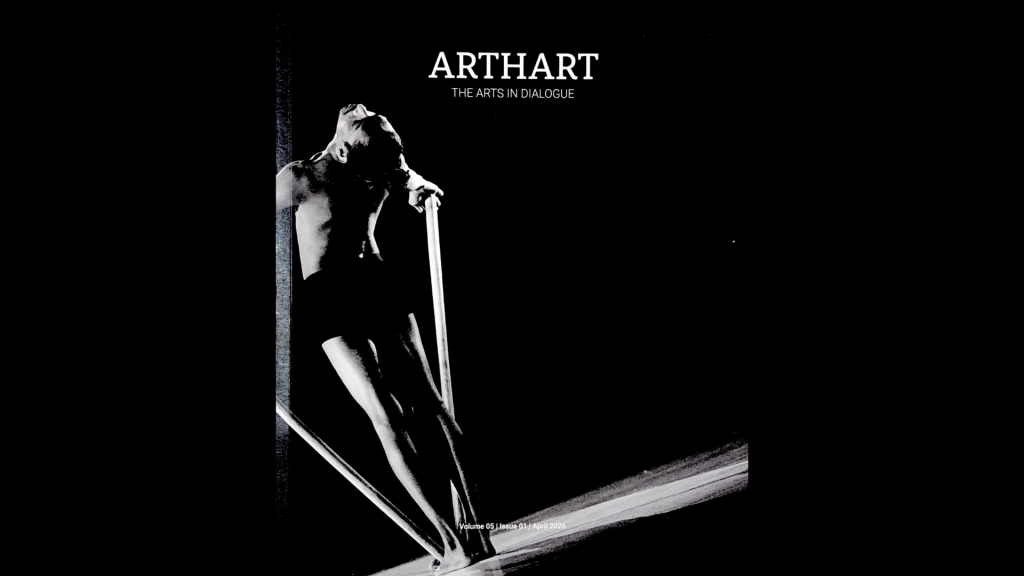
Arthart, Arthshila’s bi-annual arts journal, embarks on an ambitious journey to diversify the discourse surrounding the art landscape in India, and its latest edition marks another milestone on this endeavour. Contemporary art broadens and subverts our idea of what art can be, not only by transcending boundaries, but also by dissolving them; integrating technology into analogue art, blending performance arts with visual arts, and forging new connections between artistic disciplines. Much like the contemporary art landscape itself, what makes Arthart unique is its refusal to be constrained by medium and its commitment to fostering dialogue.
This issue’s editor Sanjukta Sharma notes, “This issue of Arthart celebrates the artist, the aesthete, and the sahrdaya. It celebrates the creator for whom a text-to-image prompt could have meant something similar to cheating even a few years ago. It is a collection of stories that celebrates the artist and the spectator – the stories behind stories, the informed eye, and some reimagining of what art and art appreciation could be in the future.”
This edition focuses on the artist and the spectator, and the conversation that unfolds between them and the artwork. It foregrounds the encounter between the spectator and the art, prompting readers to slow down and engage more deliberately. In a world full of taps, clicks, and shortened attention spans, it serves as a reminder that art exists in a leisurely, unhurried space.
The April 2026 issue opens with a feature by Premjish Achari titled ‘Cartographies of Return: The Gaze of a Serial Festivalist’. Achari introduces the concept of the ‘serial festivalist’, a symptomatic figure of what he terms the “biennal era”, an exhibition-going contemporary counterpart of Baudelaire’s 19th century flaneur. The serial festivalist is a recurring spectator of art festivals, fairs, and biennales, mapping the temporal and topographical changes in these spaces. Achari reflects on the role of the serial festivalist in the Kochi Biennale, who encounters art while also engaging with the historical traces of the space. The serial festivalist maps the transformation of the exhibition and its topographical modifications, while also engaging with the conversations and procedures that led to the curation of the Biennale.
Kishore Singh’s essay accompanies Rohit Chawla’s photo series ‘Inside the Artist’s Studio’, documenting the artist’s studio and its significance as a deeply personal, ritualistic space for artists. “What is it then – the studio? A place of refuge for the artist away from the world, or the world itself?” asks Kishore Singh. The photo series captures artists such as Ravinder Reddy and Anju Dodiya in their studios. Some are organised with intent, others wilfully scattered with paints, brushes, and tools, but each is nonetheless a reflection of the artist’s practice and rituals.
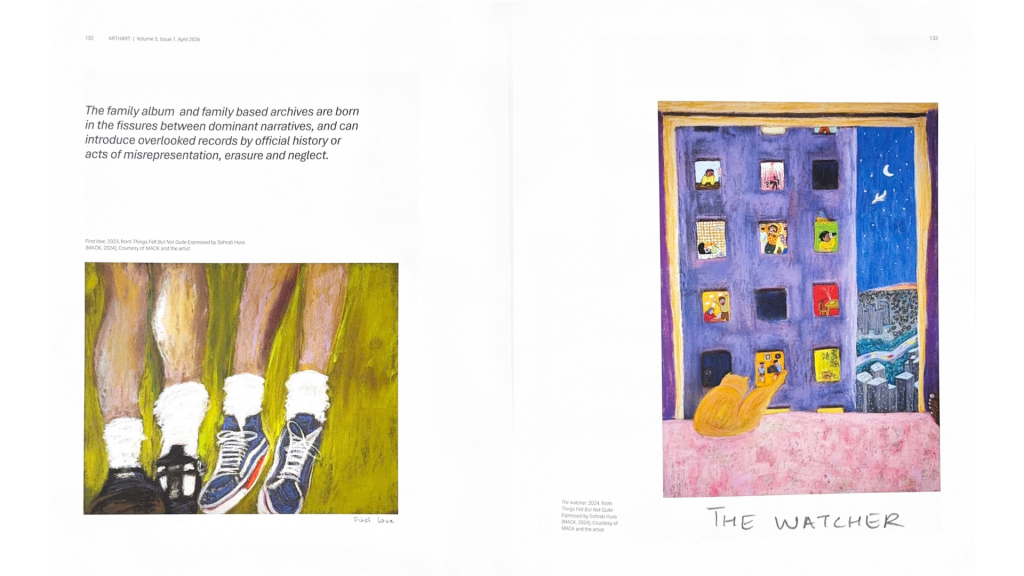
In ‘Freeze Frame’, Shetta Upadhyay analyses the art of family photographs through literary representations and visual art practices; and the narratives embedded within these visual archives. Anurag Banerjee’s ‘Music and Belonging in Meghalaya’ is a photo-series recording the music landscape of Meghalaya, which is deeply entwined with its culture, as he photographs the veterans, their faith in music, and how music manifests in the everyday. ‘Contemporary Lives’ by Ranjana Dave is a study of the lives of four Indian contemporary dance artists. Together with essays on climate art, film, and poetry, these contributions reflect the breadth of artistic practices and conversations explored in this issue.
This edition of Arthart holds the artist and the spectator on equal footing, giving equal significance to the art of making, as well as the art of encountering. The issue aims to disrupt our technology-driven lives for a little while and reflect on our encounters with art. For anyone interested in the latest dialogue surrounding art in all its manifestations, this new edition of Arthart would be an engaging and cerebral read.

Contributor