Two concurrent shows at Thapar Gallery and Thapar Contemporary in New Delhi are offering starkly different yet surprisingly complementary perspectives at a time when Indian art institutions are exploring both the roots of modernism and contemporary concerns. From the solitary vision of modernist master A. A. Raiba to the fragmented realities investigated by eleven contemporary artists today, the shows, presented by Thapar Gallery and Thapar Contemporary, highlight the enduring significance of artistic practice across generations.
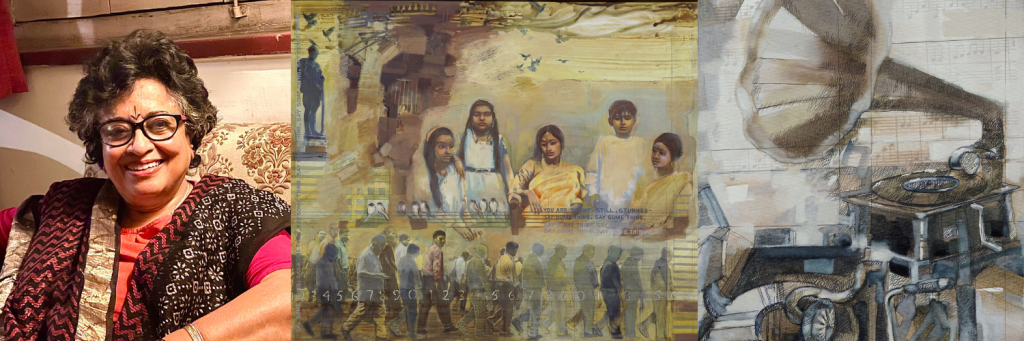
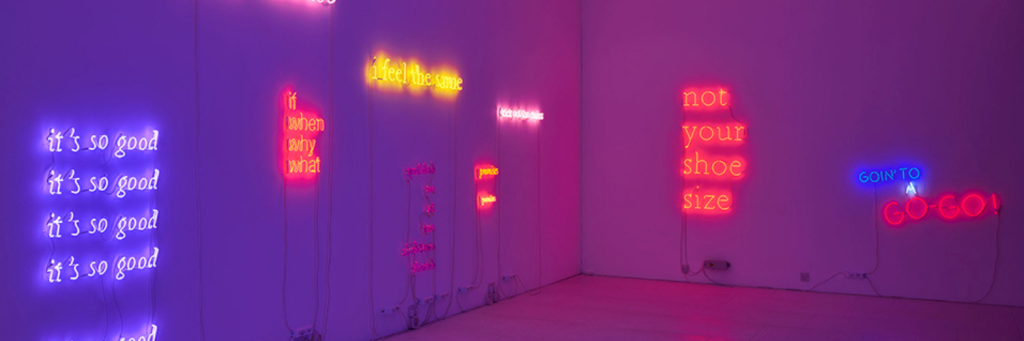
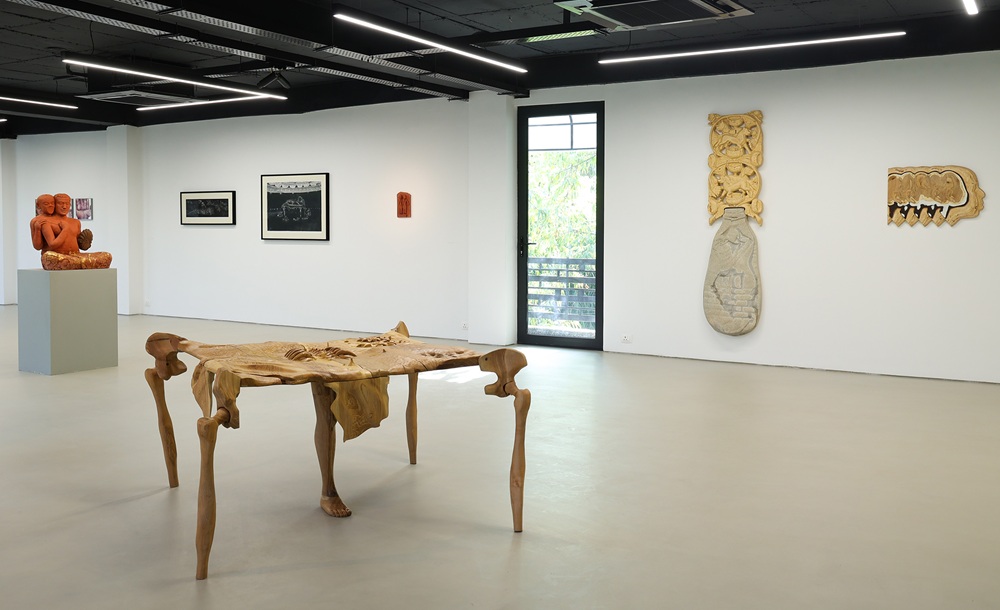
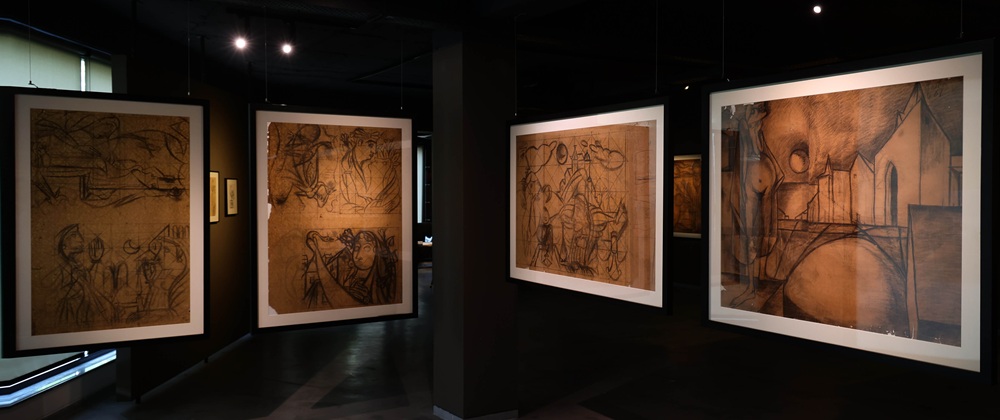
‘Master Artist A. A. Raiba: A Unilateral Eclectic,’ on display at Thapar Gallery until June 21, 2026, features the artist’s works from the 1950s and 1960s. We can say that during his six-decade career, Raiba held a unique place in Indian modernism, and key artworks from his oeuvre are included in this exhibition. Eleven contemporary artists participate in the group exhibition ‘Wild, Ordinary, Enchanting, Excruciating Beauty,’ which runs concurrently at Thapar Contemporary and explores instability, collective uneasiness, and the blurring of boundaries between the personal and the political. Beyond that, a representation of some of the most prominent voices in contemporary art practice is taking place here.
When taken as a whole, the exhibitions foster an intergenerational conversation on vulnerability, artistic independence, and the evolving role of art in the face of social change.
The Raiba exhibition highlights the artist’s extraordinary ability across a variety of media, including calligraphy, jute paintings, murals, reverse glass paintings, serigraphs, and intricate sketches. Raiba’s work is representative of “the multistranded synthesis within the Indian modernism where the unique fusion of Indo-Islamic traditions, European academic naturalism, the Bengal School, and European modernity lent an amazing richness and depth,” according to historian Shivaji K. Panikkar.
Raiba’s unwavering independence was a distinctive feature of his work. The exhibition’s title, “A Unilateral Eclectic,” reflects the artist’s decision to stay “a solitary loner” and “quickly denied any group association,” according to Panikkar. In addition to Raiba’s planned narrative compositions, the exhibition includes landscape sketches from his 1957–1959 visit to Kashmir, which give more personal and observant pieces.
“AA Raiba’s work holds a quiet yet powerful place within Indian modernism,” stated Ashish Thapar, Director of Thapar Gallery, in reference to the exhibition. His work is captivating because it skillfully combines various traditions with his very own approach to shape and line. This exhibition highlights that legacy and enables modern audiences to interact with its ongoing significance.
“Wild, Ordinary, Enchanting, Excruciating Beauty” focuses on the concerns that shape everyday life, whereas Raiba’s exhibition examines a pivotal era of Indian modernism. Amitabh Kumar, Harsha Durugadda, Madhurjya Dey, and Vanshika Babbar are among the artists whose sculptures, installations, drawings, and moving images are on display in this exhibition, curated by Vaibhav Raj Shah and Jasone Miranda-Bilbao.
The curatorial commentary for the exhibition sets the scene in a world where “systemic failures seep into the air we breathe”, and it is getting harder to distinguish between “small problems” and “big problems.” Instead of providing closure, the pieces encourage viewers to pause, focus, and think.
According to Ashish Thapar, “what stands out is how these artists engage with complexity without simplifying it.” “Their practices continue to be rigorous and attentive, creating a space where viewers are encouraged to slow down, look more closely, and stay with the realities shaping our everyday experience.”
“We are frequently told to separate what is small from what is large, the personal from the political,” curator Vaibhav Raj Shah continued. However, as those lines blur, it becomes clear how intertwined these experiences are. This tense space gives rise to the show, which offers perspectives that remain true to the complexity of the present.
Despite being decades apart, both exhibitions address artistic practice as a response to uncertainty, whether through contemporary artists’ observations of instability and social fragmentation or Raiba’s autonomous modernist vocabulary. When viewed collectively, the two exhibits provide a more comprehensive reflection on how artists continue to negotiate shifting realities while developing fresh visual languages for their eras.

Contributor