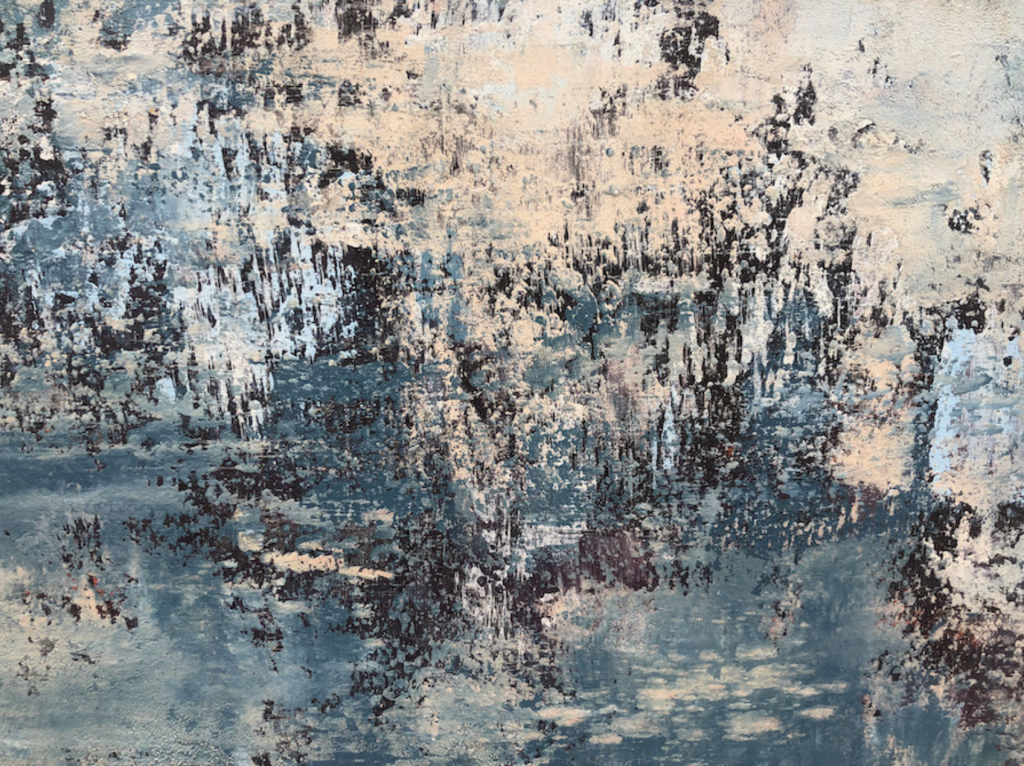
Lorraine THIRIA is a contemporary french artist, whose practice moves fluidly between painting, photography, writing, and material research. Her Art is anchored in a singular visual world shaped by walls, matter, memory, and time. Trained in mural art and visual arts, and having arrived at photography through painting, she treats surfaces as living skins that hold traces, wounds, erasures, and accumulations of lived experience.
Her photographs emerge from a close, almost tactile attention to texture, fracture, rust, erosion, and impermanence. In THIRIA’s work, walls become archives, landscapes, bodies, and thresholds between presence and absence, as abstraction becomes a way of revealing rather than obscuring reality.
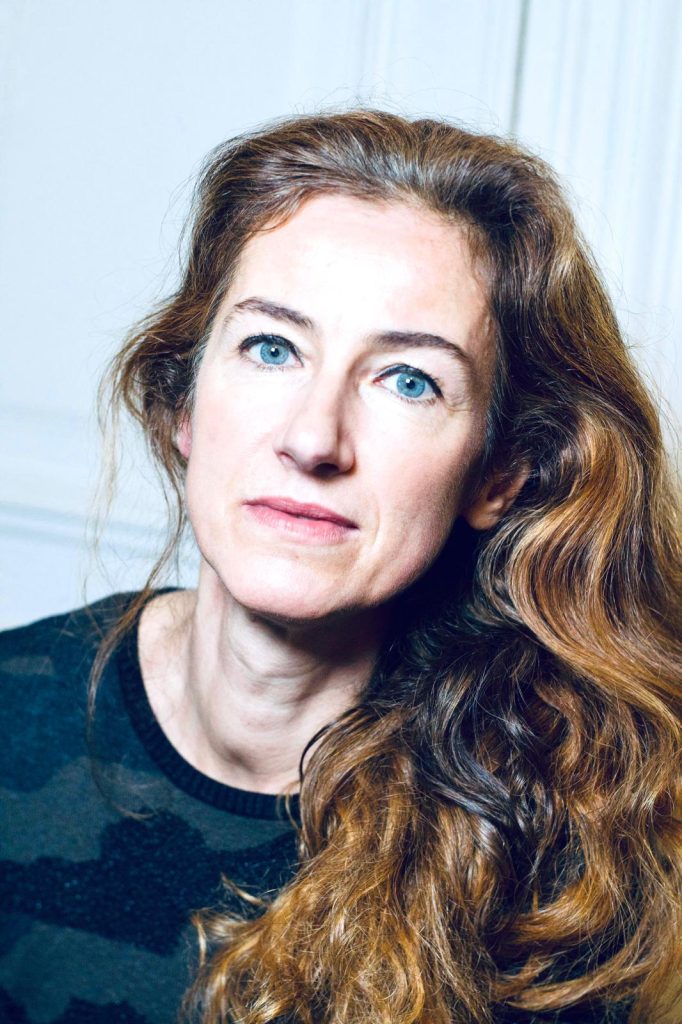
THIRIA’s artistic language is also shaped by travel, residency, and cross-disciplinary thinking. From Paris to Busan, Kyoto, Kuala Lumpur, Petra, Pondicherry, and New Delhi, her images continue to evolve through encounters with place, history, and atmosphere. Across these contexts, she pursues a sensitive abstraction that invites the viewer to lose familiar reference points and enter a space of perception, imagination, and emotion.
In this thought provoking conversation with Abir Pothi, Lorraine THIRIA touches upon the philospophies, paradigm and truth of her artistic impulse.
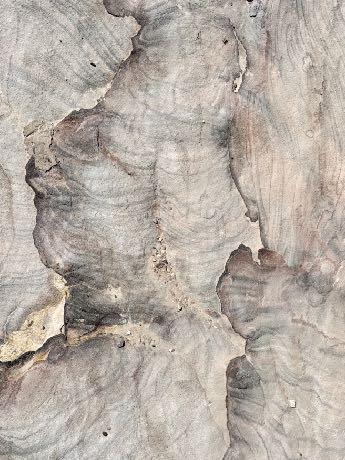
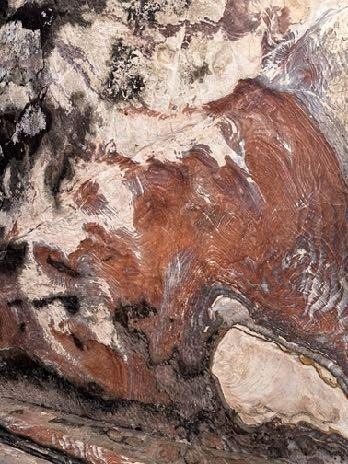
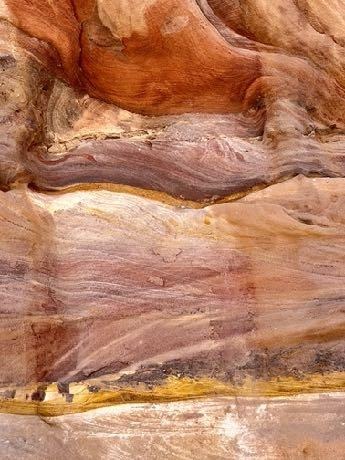
Series : « Requiem for Reqem », 2025 | Left : Colored triclinium, 2 | Center: Stone stamps, 1 | Right : Abstract draperies, 1 | Exhibited in Paris and Amman
Q: You came to photography through painting and mural work. What did photography allow you to say that painting alone could not? How did that decision come about?
Lorraine THIRIA: I came to photography through painting—abstract painting. Photography gradually became an essential part of my practice : at first, it was a source of inspiration and a medium for reproducing my textural paintings and creating murals made not only of pigments but also of textures such as sand, plaster, oxidized copper sheets, rust, and more.
Photography was almost a documentary-style exploration of wall surfaces and stones, which have always fascinated me.
Then, through constantly observing the matter and “shooting” it, photography emerged as a distinct and independent art form. This explains why my photographic work is imbued with pictorial codes and inspirations. It also explains why my photography is a gaze on abstraction.
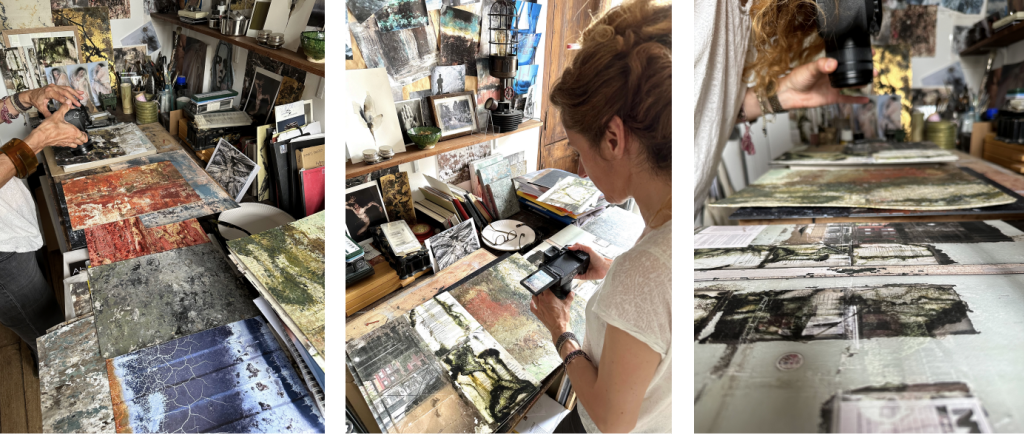
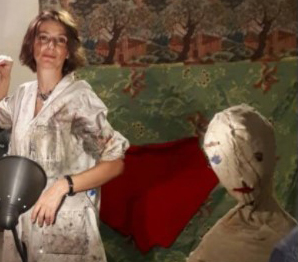
In the studio with both photographs and paintings
When the matter is captured in close-up—with all its details, lines, and textures—and the shot is tight, it is sometimes difficult to grasp both the spatial and temporal references and the representation of the subject. The viewer thus finds himself “lost” inside the very essence of the matter. And this intimate connection with the matter, as well as this loss of reference points, reveal the imagination and generate emotions. This sensation is more intense in photography than in painting.
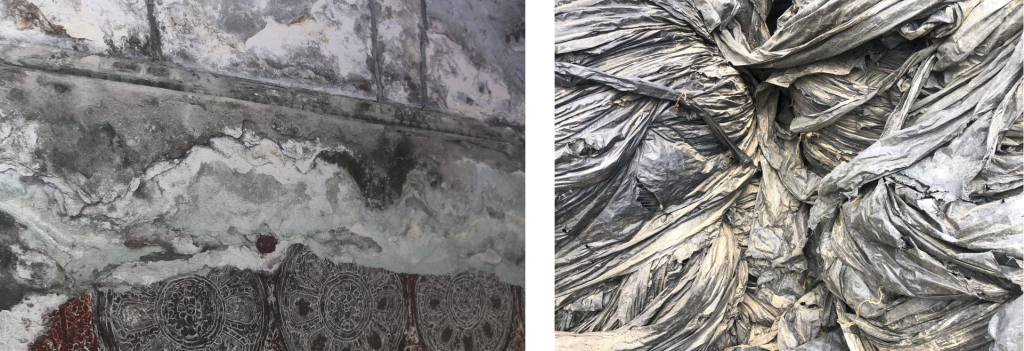
Left : Series « Abstraction attraction », Angkor Vat,1, 2017 | Right : Series « The senses of time », Black link, 1, 2022 | Exhibitions in different galleries in Paris, Busan, Delhi and Kyoto.
I often say that I photograph what I see in a painting, as if a pictorial filter was inserted between my photographic eye and the concrete, figurative reality that I deconstruct to create an abstraction.
Consequently, when faced with one of my photographs, some viewers ask themselves : Is this a painting ? Or is it a photograph of a painting ? Or is it a photograph of a transformed figurative reality, imbued with a pictorial gaze—a reality as it might have been painted ?
I enjoy cultivating this confusion, which, once again, allows me to create a powerful connection with the matter and a strong emotion.
I don’t think I could provoke such confusion with painting, but only with photography.
Finally, working with matter not only as a subject but also as a printing medium, I have experimented with many materials such as brushed aluminum, organza (a translucent, ethereal fabric), glass, Plexiglas, tracing paper, and highly textured papers… This allowed me to expand my experiments and combine form and content, something I was unable to achieve to this extent in painting.
In my opinion, photography offers greater freedom and a more diverse field of exploration.
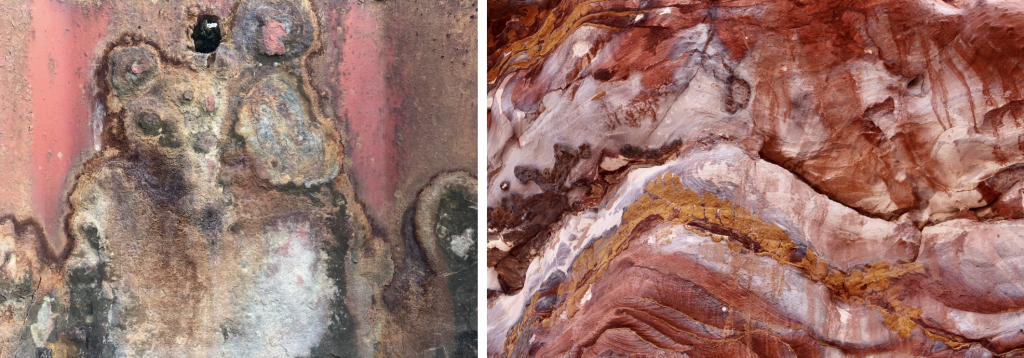
Left : Series : « Abstraction attraction », Arcachon, 1, 2021 | Right : series « Requiem for Reqem » , Grerosion, 4, 2025
Exhibitions in Amman, Paris, Busan, Dubaï.
Q: How did your earlier life as a lawyer, especially in women’s and children’s rights, shape the way you see memory, vulnerability, and testimony now?
Lorraine THIRIA: For twenty years, as a lawyer specializing in women’s rights and the protection of children at risk, I gave a voice to victims through my words and my arguments in court. I stood by their side, witnessing their life stories and defending their rights.
There was no outsider observing another’s story, but rather a connection between two individuals—lawyer and victim—facing others in the “theatricality” of the courtroom.
Today, as part of my artistic work, I often think back to that connection and what it sparked in me—not only a need to repair, but also to make visible what lies unseen within each of us, to dig deep within oneself, and to evoke an emotion in a stranger. It is no longer about repairing, but about suggesting ; no longer about giving my voice, but about offering a perspective.
Facing my photograph, everyone is free to choose what he wants to see or not, to interpret or not, to love or not, and to ask himself questions (What do I see ? What does this create within me ?). And in asking them, to experience emotions in response to the themes I explore, such as memory (of walls, of matter), time (questioning the passage of time, capturing what is no longer there, magnifying what remains), and disappearance (what remains of the photographic subject ? how to reconsider the boundary between absence and presence ?).
What is common with my previous work is that the viewer is no longer an outsider but experiences the work from within. He enters into the matter and becomes an active participant. And what interests me is that he is part of the work.
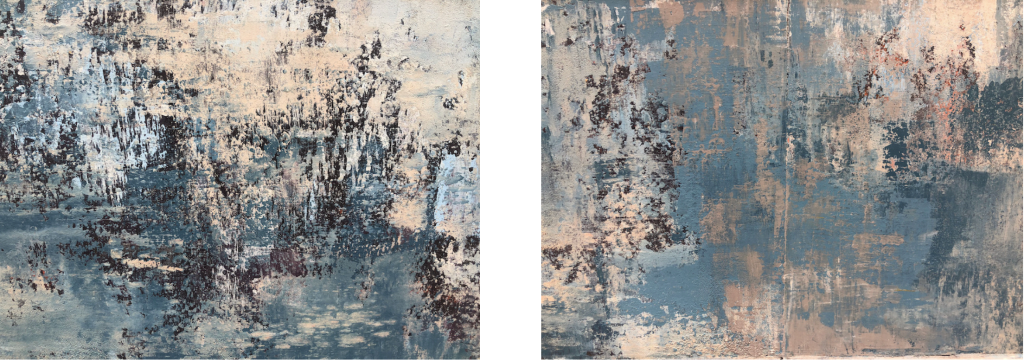
Left: Series « Abstraction attraction », Breakout reality, 3, 2021 | Right : Series « Abstraction attraction », Breakout reality, 2, 2021 | Exhibitions in Paris, Busan, Delhi, Kuala Lumpur
Q. When you first began working with walls as subjects, how did you perceive them? Has that perception changed now?
Lorraine THIRIA: I have always been fascinated by raw mineral materials, and especially walls. My eyes are attracted to these materials admired worldwide, and my work means to depict their outer life as if to reveal their inner essence.
I am moved by their meaning and history, by what they represent as well as by their aesthetic quality.
Are they separations, partitions or openings ? Borders ? Or universal memory, traces, symbols ?
Moreover, walls are for me the materialization of a sensitive body in permanent apprehension. They constitute a second skin, a physical presence, and a memory as well.
I have always been attracted by their lines, their asperities, their scales and sinuosities, their furrows and traces, their cracks and wounds, and touched by the imprints of time that they conceal. Their tangible memories and their whispers also call out to me.
Capturing them through images allows me to make the invisible visible, to explore the border between absence and presence, between present and past. Working with memory, and through constant observing, I find that they constitute living portraits of nature and time. Catching them thus allows me to explore an enigma, to create a new form of expression, and to access their residual memory—something I strive to achieve with each new experience.
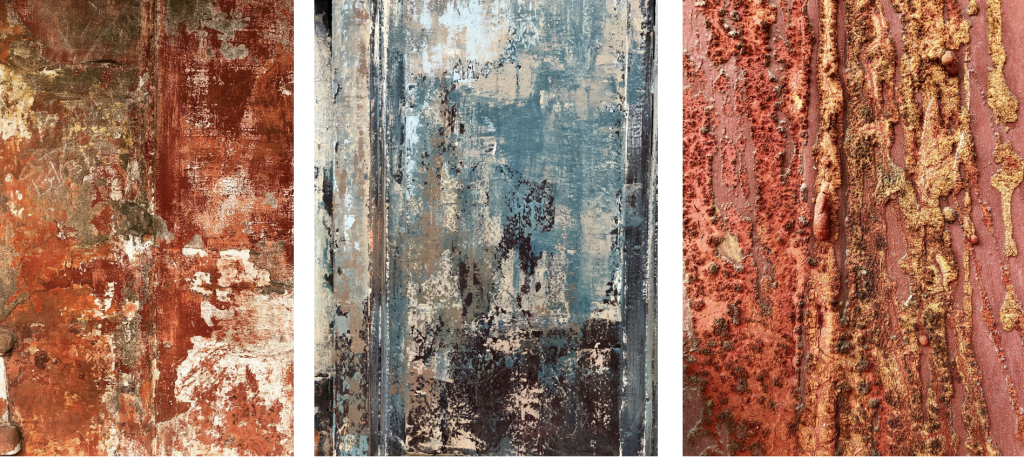
Left : Series : « Abstraction attraction », Pondichéry, 2, 2019 | Center: Series « Abstraction attraction», Breakout reality, 6, 2021 | Right : Series : « Abstraction attraction », Seoul soul, 1, 2022 | Exhibitions in Paris, Delhi and Busan
Q. You often speak of abstraction as something that comes from looking closely at reality. How do you understand the relationship between observation and abstraction?
Lorraine THIRIA: Since I was a child, I have been lucky enough to explore museums and contemporary art galleries in Paris and around the world, to have been introduced to art, to observe it, and to be moved by all forms of art, particularly abstract painting.
Abstraction, as I mentioned earlier, opens the gates of imagination, gives access to pure sensations and feelings of free fly.
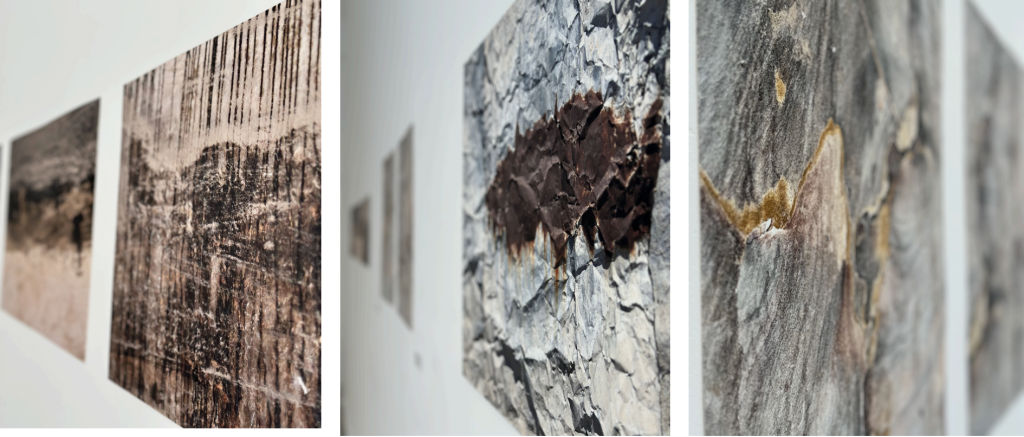
Left : Series : « Requiem for Reqem », triptyque Dark Landscape, 2025 | Center: Series « A singular vision », Modica, 1, 2018 | Right : Series : « Requiem for Reqem », Stone stamps, 2, 2025 | Exhibitions in Amman and in Paris
But abstraction isn’t limited to painting : one only has to observe nature—a stone, a tree branch, earth, or water—to create an abstraction from this figurative reality. Or, conversely, to take abstraction as a starting point and perceive a figurative reality within it. This is called pareidolia, the mental process of imagining figurative forms when observing a cloud, an ink stain, smoke…
What is wonderful about matter (and its capture through the creation of an abstraction) is that it both anchors me in reality and at the same time extracts me from it, drawing me towards elusive thoughts liberating the imagination. As if I were situated in a space between figuration and abstraction. And my photography fluctuates in this space : how, through the photographic eye, can I abstract a concrete reality ?
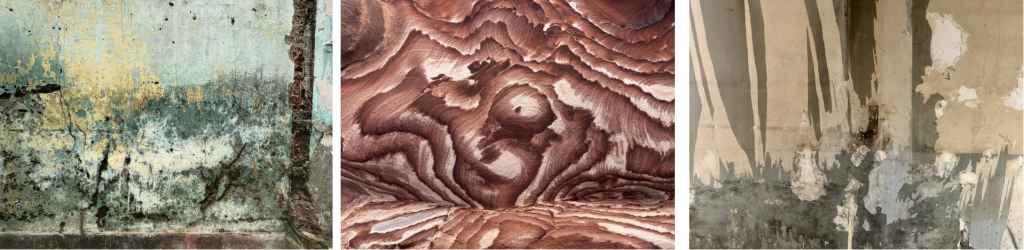
Left : Series : « Abstraction attraction », Bubaneshwar, 1, 2024 | Center: Series « Requiem for Reqem », Colored triclinium 1, 2025 | Right : Series : « Abstraction attraction », Houlgate, 1, 2021 | Exhibitions in Paris, Amman, Aix, Delhi.
The connection between reality and abstraction is fascinating because it is not only complex and ever-changing, but also deeply subjective. It also gives rise to confusions and ambiguities that I strive to highlight, so that everyone can ask himself questions based on visual sensations that evoke emotions.
I often say that I try to paint fertile abstraction. I could also say that I try to explore, grasp and then restore a language.
When I exhibited a series titled “Emotional Abstractions” in New Delhi in 2024, I realized that I like to create emotions from visual sensations themselves created by abstract proposals. From there emerged my emotional abstractions and the book “Abstractions” that followed.
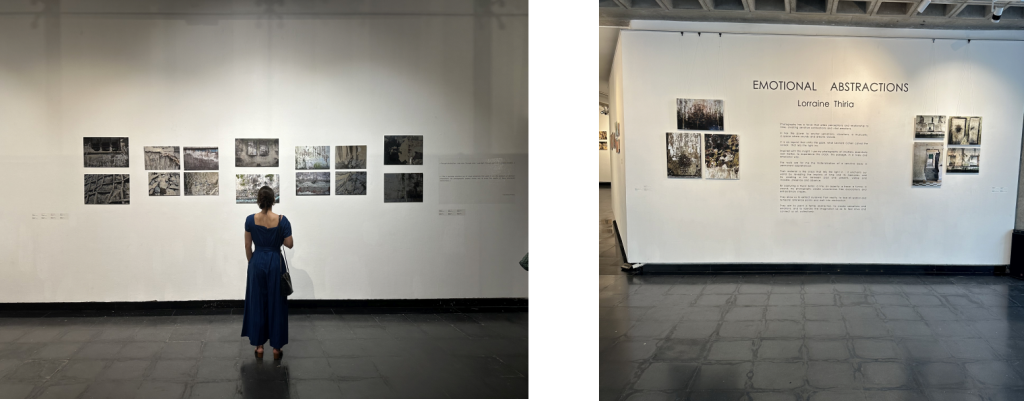
Exhibition : « Emotional abstractions » in Delhi, July 2024
Q: What does beauty mean to you when it appears through cracks, wounds, rust, or erosion?
Lorraine THIRIA: I am attracted by the beauty of fragments, cracks, wounds, accidents, and the irregular and imperfect lines that emerge on the surface of matter.
Anything smooth and flat bores me deeply.
I love the beauty of what is unseen but nevertheless part of our immediate surroundings : the base of a crumbling wall revealing layers of paint, a crack in a door creating a fascinating composition, a piece of chipped glass, a waterline on dry earth, a partially rusted frame creating magnificent hues, a stain on wallpaper forming a pattern, decaying waste…
I go back to what I previously stated : what seems invisible becomes visible.
I am sensitive to all these details, these elements born of life that bear witness to it—to its passage, its transformation, to what remains, and to what disappears.
And from these details of life, beauty is born.
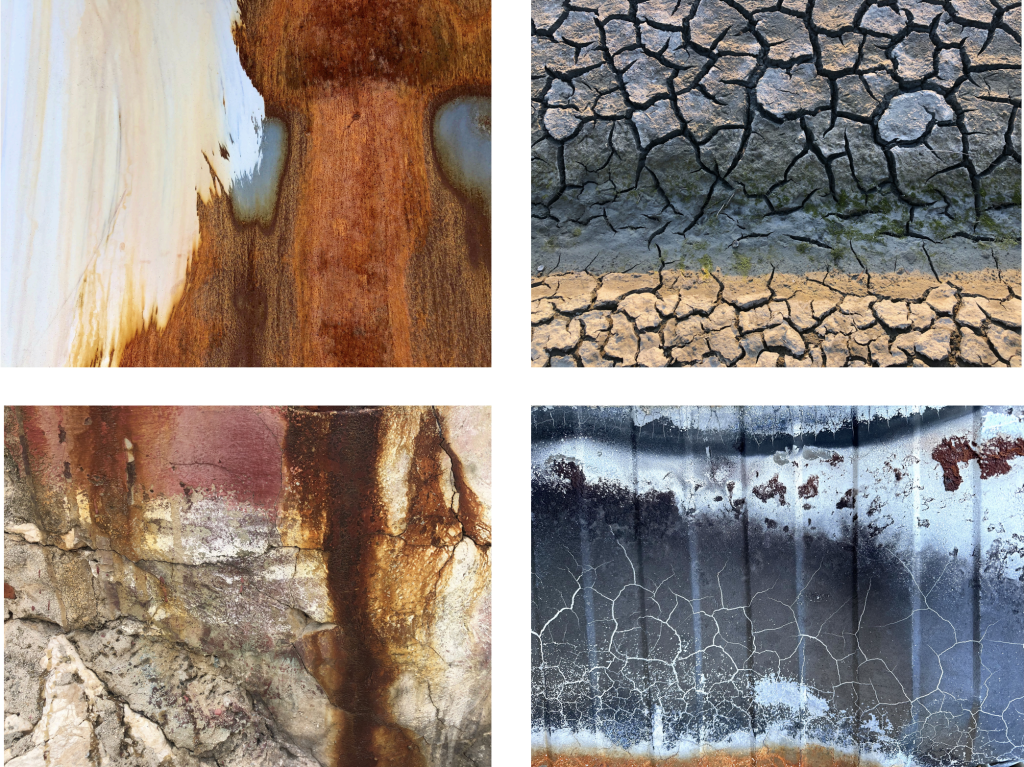
Left up : «Series « Abstraction attraction », Seoul soul, 4, 2022 | Left down : Series « Abstraction attraction », Marseille, 2021 | Right up : Series « Abstraction attraction », Earth and salt, 2, 2021 | Right down : Series « Abstraction attraction », Earth and sea, 1, 2023 | Exhibitions in Paris, Kyoto, Delhi.
Q: Why do you return so often to walls, stones, minerals, and textured surfaces?
Lorraine THIRIA: My research is intrinsically linked to the textures of matter, as I am fascinated by them.
During my residency in Jordan in 2025, in Petra, for instance, I wondered what meaning my work might take on in this mythical, often-photographed place.
And the answer was found in the matter and its texture. The photographic subject was mineral matter captured as closely as possible to create pictorial abstractions, paintings.
But this work was insufficient to reveal the light that emanates from the matter and its texture. It was also necessary to consider the material of the printing medium itself. To think about matter in a holistic and deeply intimate way. And my research turned toward very light, transparent organza fabric veils that allow me to sculpt light and space and create a poetic, almost abstract superimposition of mineral strata. I also wanted to symbolically recreate the layers of stone through superimposed fabrics.
The transparency of the work also allowed for a dialogue between what is visible and what is no longer visible, between the ancient past and the present. The drapery became the memory of the rock. The installations thus created expressed an emotional, physical trace—like a scar—especially in Petra, where time is visible in the layers of lines and hues and in the erosion of the rocks.
Once again, the viewer found himself inside the work, acting as a participant in it. Among the suspended drapes, he was free to wander through them, to glimpse the imprint of the rock, to touch the skin of the stone, at the core of its very intimacy.
The veil became the skin of the mineral material, the protective fabric, the boundary allowing entry into the intimacy of the rock—and our own.
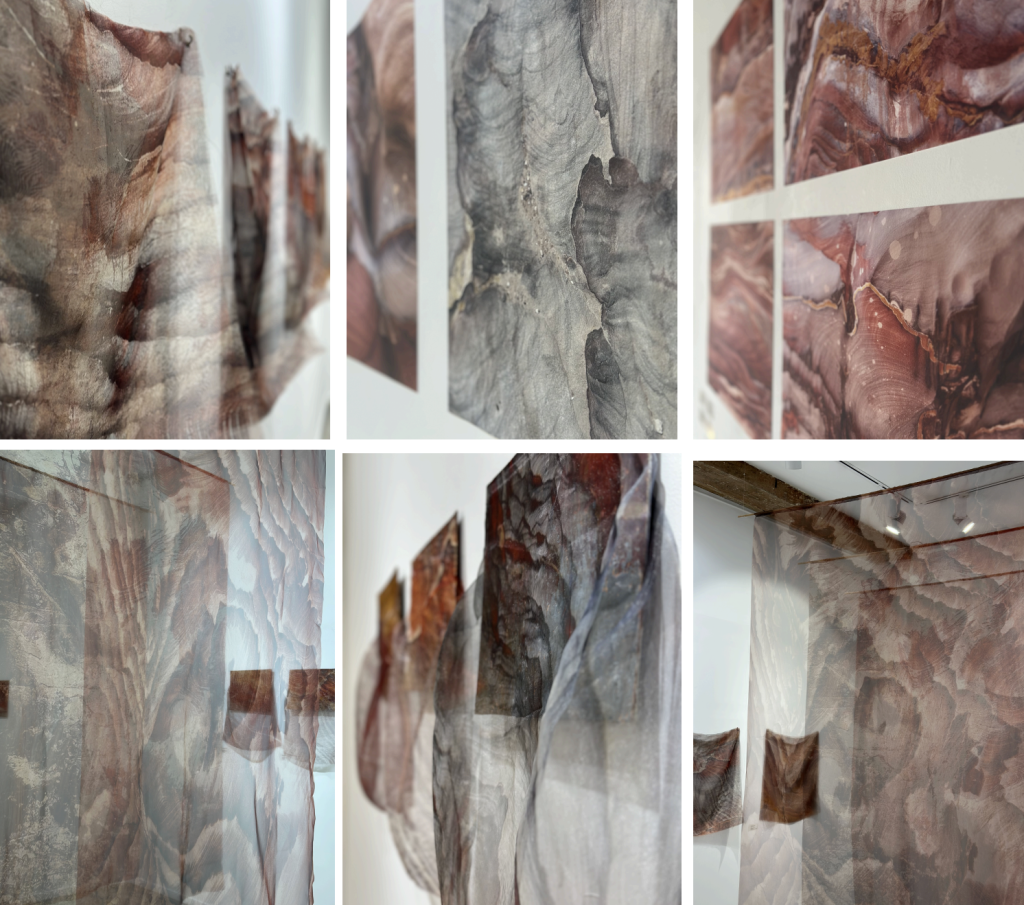
Photos from exhibitions in Amman and Paris
This is a great example of the relationship between matter, texture, body, memory, and the emotions that emerge from them.
The Part 2 of the interview will be published soon.
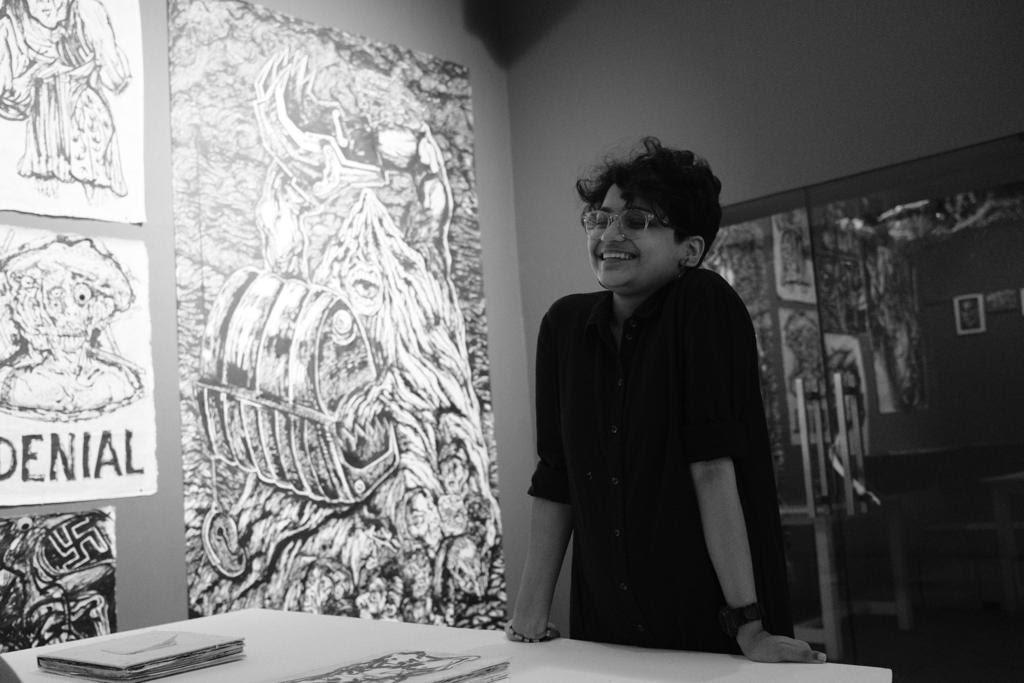
Athmaja Biju is the Editor at Abir Pothi. She is a Translator and Writer working on Visual Culture.