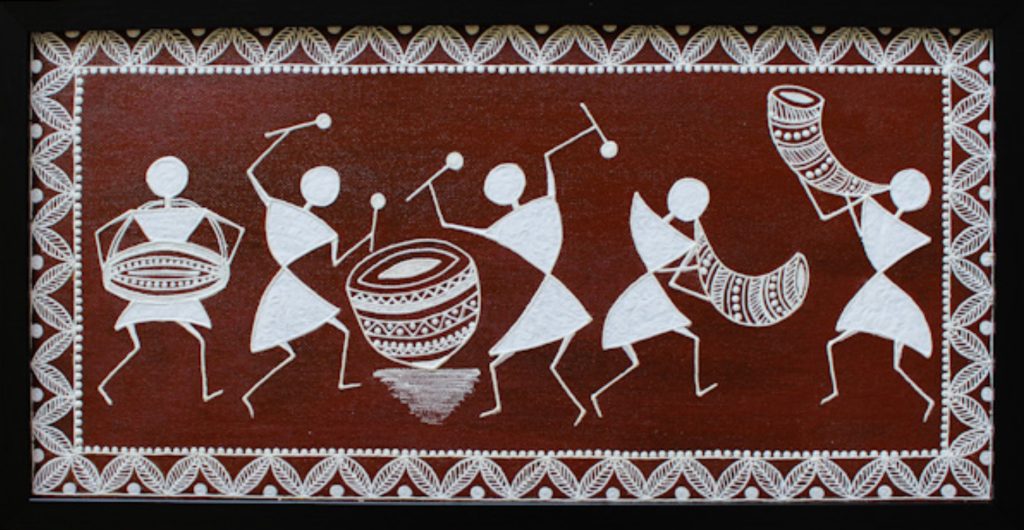
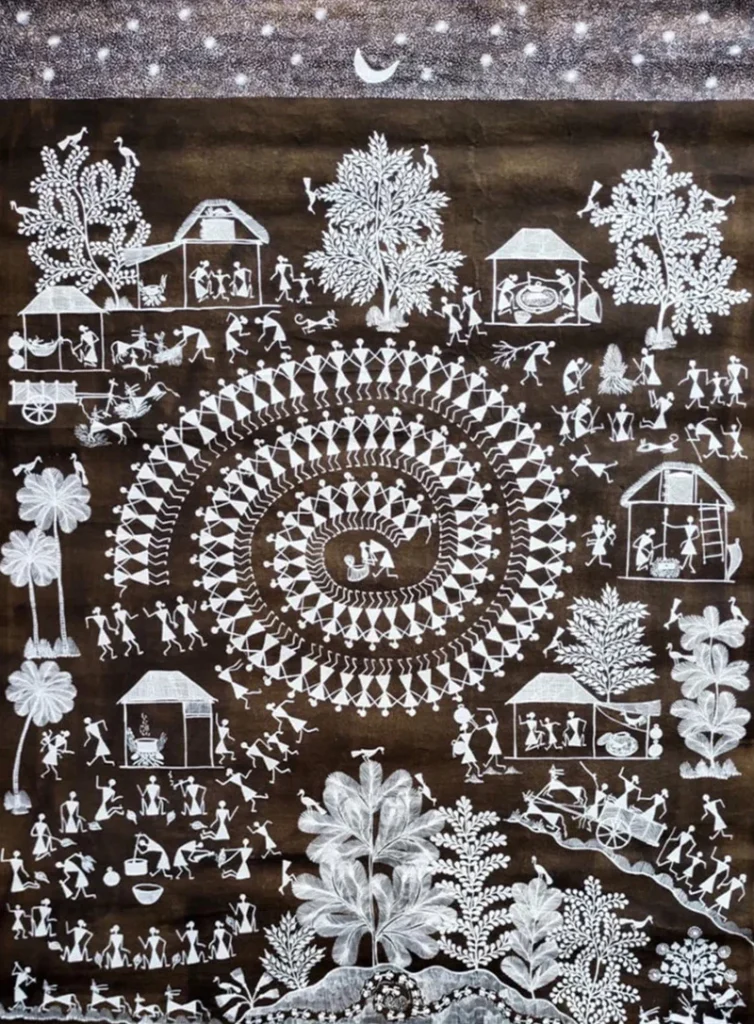
Warli art is a tribal painting tradition from Maharashtra that is known for its simple forms, white motifs, and strong connection to daily life, ritual, and nature. It is often described as an “art of the living” because it reflects the social and seasonal rhythms of the Warli people rather than epic or mythological themes.
What Is Warli Art?
Warli art comes from the Warli tribe, which lives in Thane district in Maharashtra, with important settlements in places such as Dahanu, Talasari, Mokhada, Vada, and Palghar. The tradition is closely linked to agrarian life, and its imagery is shaped by the agricultural calendar, seasonal change, and community rituals.
The style is recognisable for its restrained visual language, but it is energetic and celebratory rather than austere.
Cultural Roots & Motifs And Symbolism
Warli painting is deeply embedded in the community’s social and religious life. The community worships Nath Dev, Hiranya Dev, and Palghata Devi, linking the art to agriculture, fertility, and divinity. The tradition is also associated with household and ceremonial practice, especially paintings made before marriage.
Warli paintings are typically created in square or circular formats. Circles are especially important because they are described as symbolising the eternal cycle of life, with no beginning or end. The paintings include scenes of marriage rituals, such as the baaraat and puja, along with stories like Dhann Ki Mela and Manir Ki Puja. Some works also show hardship, poverty, and suffering caused by floods and other crises.
Materials And Technique
Traditionally, Warli paintings were made with rice powder solution and brushes crafted from bamboo sticks. The text notes that some artists now use poster colours and polished brushes, especially for work beyond the traditional wall surface.
Before painting, the wall is cleaned and polished with cowdung and Geru Mitti, a red mud, and white colour is used prominently for the motifs. Warli designs are also made on cloth, using materials such as Latha cloth.
Warli Art Today
Warli art has moved beyond its original setting and now appears in exhibitions and wider markets. New demand has brought new designs, sometimes influenced by designers or artists working outside the traditional community context. At the same time, the tradition faces challenges because fewer young people are learning it as a livelihood. Warli painting also functions as a source of income for practitioners. Orders rise during marriage season, which lasts from November to January, and Shaadi Ka Chowk can cost between Rs 450 and Rs 600 depending on size and design. Fairs and exhibitions provide an important market for the art, while broader awareness has increased demand.
Warli art remains significant because it combines heritage, ritual, and everyday experience in a visual language that is both simple and socially grounded. Its future depends on continued recognition, fair markets, and the transmission of knowledge to younger generations.
Athmaja Biju is the Editor at Abir Pothi. She is a Translator and Writer working on Visual Culture.