Do you know that an Italian artist, Salvatore Garau, had an invisible sculpture auctioned for $18,000, drawing a variety of reactions online. For example, someone commented, ‘That’s not fair! I have the exact same sculpture in my bedroom.’ Another added, ‘I have some farts as well.’ Some individuals expressed uncertainty about how an invisible sculpture could achieve such a price, while others, as seen in several comments, referred to it as ‘money laundering.’
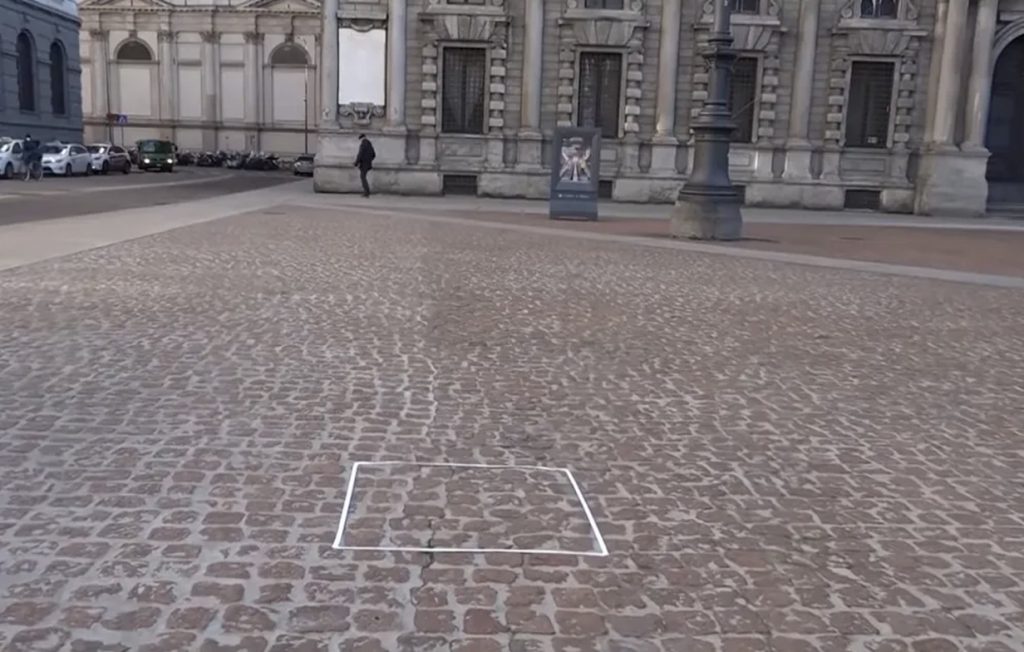
Building on this online response, the sale of this (formless) sculpture, “Io Sono” (I Am), sparked significant controversy. In actuality, the piece only exists in the imagination. How is it possible to observe that the successful bidder did not receive a tangible item to showcase? The artist sent him a certificate of authenticity and detailed instructions to display the “piece” in an unobstructed five-by-five-foot area, ideally in a private residence, even though no tangible object was provided.
Noteworthy is the artist’s assertion that the piece is a profound portrayal of “energy, imagination, and thought,” contending that the empty space is actually brimming with possibilities and concepts. Even if art acknowledges that it is the artist’s claim, it is often debated whether an invisible sculpture embodies that claim or mocks it. Critics contend that the sale represents the increasing excess and absurdity of the modern art market, while advocates celebrate it as a victory of conceptual art that pushes the limits of human inventiveness. This exceptional sale compels a reconsideration of whether art needs a physical form to be valuable, or whether an idea’s power alone is sufficient to fetch a five-figure price.
Art, Space, Time, and Location
In the book ‘Where is Art? Space, Time, and Location in Contemporary Art, edited by Douglas, Geczy, and Lowry, states that ‘Some experiences of art are not necessarily connected to a single image, object, time, or location.’ In the chapter ‘Where Is Art?’ co-written by Lowry and Geczy, it is initially stated that ‘Art was largely configured for prescriptive orders of power.’ It also argues that ‘an experience of a work of art is not necessarily tied to a single object, location, time, or event.’ When art, with a history spanning centuries and numerous experiments and historical intersections, enters the digital age, experimentation reaches its peak. That is why it is said, ‘A work of art was now less likely to be regarded as materially fixed in space and time.’ Art has long been liberated from forms like painting and sculpture. Along with conceptual art and installations, art is now breaking boundaries. The concept has become central to art. When an image of a pipe is drawn, the title ‘This is not a pipe’ triggers a kind of conceptualisation.
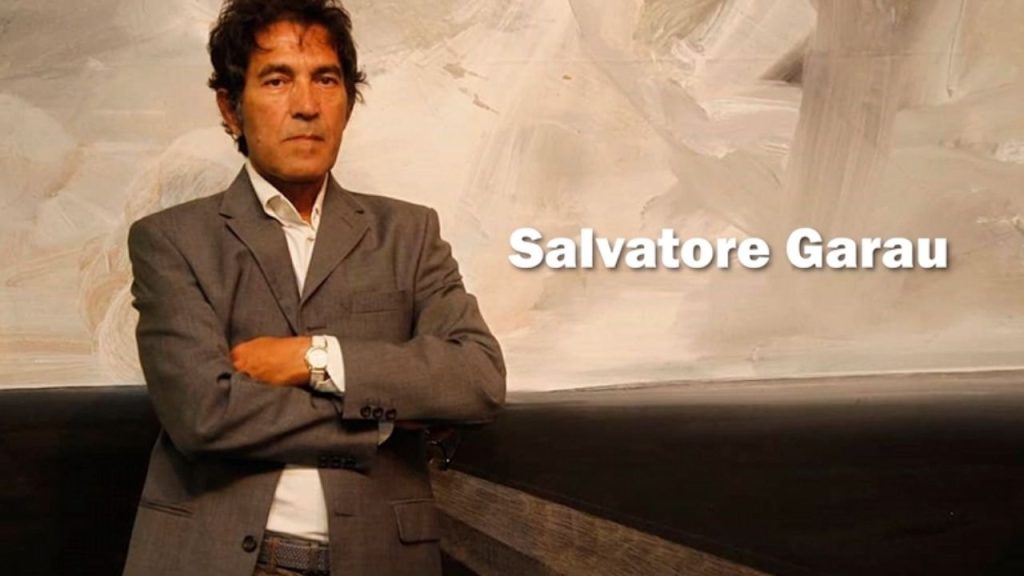
Mamoona Khan argues about Salvatore Garau‘s invisible sculpture I am that it is created from air and spirit. It exists in a vacuum, which has energy that can be converted into particles, and he sculpted those particles into an invisible shape.’ That is, Khan says that ‘propaganda has replaced physical existence, and artists have completely cast aside the idealistic stance of beauty.’ When we see an artwork as the artist’s argument, that argument becomes an artwork that can be perceived even without an object. It is not about filling a space with the artwork; instead, it challenges its concept. That challenge is not only towards the space but also towards the viewer and the concept of ‘art.’
Creating art by challenging art, engaging in the act of art-making, is the mission that Garau has undertaken here. The argument that art challenges vision is very common. However, we can see that an artwork that has nothing to see, existing merely as a concept, represents the ultimate state of conceptual art.
In the article ‘Aesthetic Absence and Interpretation’ written by David Fenner, this is viewed in a different way. ‘something missing’ – which he call an ‘aesthetic absence’ – in the sense of what is missing – art or artwork? – The arguments are presented in a way that allows for various interpretations. For example, Fenner’s argument is as follows: ‘These absences are aesthetically relevant to the identities, meaning, and value of the works of art where audiences find such absences, but such relevance can only fully be ascertained and assessed once the absence is resolved, and this resolution comes through an act of interpretation.’
David Fenner’s arguments give some possibilities to Garau’s invisible sculpture. The artist claims that a sculpture exists. He argues that there is a sculpture of a certain size, but invisible. That is what Fenner analyses. The absence of the sculpture can actually be considered a greater creation than the ‘visible’ sculpture (the heard song is sweet, the unheard is very sweet!). The sculpture is argued to exist not by being seen, but by being nonexistent. It is through this argument that the existence of the thing is called into question. However, by claiming it exists and by the artist establishing it, the mission of seeing what does not exist becomes the viewer’s responsibility. While even a visible artwork is seen individually by everyone, an opportunity arises to see the artwork that exists ‘only in argument’ in multiple ways.
Artworks that are constantly renewed and question the very medium of art enrich the world of art. Not only art, but also the ways of seeing art are being renewed. We can say that art becomes art by being seen. However, even something that cannot be seen at all can be celebrated, accepted, and criticised as art. Those with memory can understand the criticisms/questions raised by Garau’s invisible artwork by recalling the criticisms of the fruit pasted to the wall with cellotape. Art is breaking boundaries, questioning art itself. All this is made possible in a world where art, galleries, and the market come together. There, the very idea that art is only what is seen can appear naive.
Feature image: I Am by Salvatore Garau (image: creapills.com)
Krispin Joseph PX, a poet and journalist, completed an MFA in art history and visual studies at the University of Hyderabad and an MA in sociology and cultural anthropology from the Central European University, Vienna.