
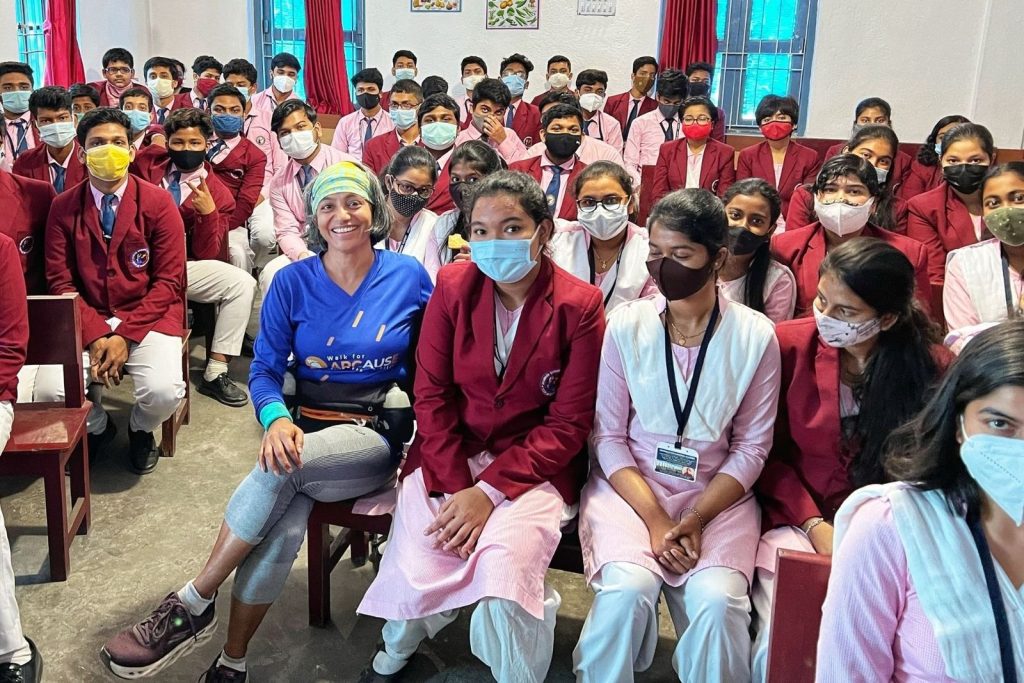
In an era when design is often equated with visual spectacle, Gita Balakrishnan stands out for turning architecture into an instrument of empathy and social change. Trained at the School of Planning and Architecture, New Delhi, and later at Carnegie Mellon University, she began her career with hands-on community work in Bangalore’s slums through AVAS, an early experience that grounded her belief that architecture is not just about constructing buildings but shaping lives. In 2002, Gita Balakrishnan founded Ethos, an organization that bridges academic learning with real-world practice and nurtures young minds into socially conscious professionals. Over the years, her initiatives—ACEDGE, Arcause, and their many offshoots such as ShramA, UDita, and BODH—have transformed architectural education into a living practice of empathy, inclusion, and sustainability.

Through walking, teaching, and dialogue, she has redefined architecture as a social process that builds not only spaces but also stories and shared responsibilities. At once educator, activist, and bridge-builder, Balakrishnan continues to remind the profession that the truest foundations of architecture lie in care, justice, and collective imagination.
In this insightful conversation with Abir Pothi editor Athmaja Biju, Gita shares her philosophy of design, social change and on embodying architecture.
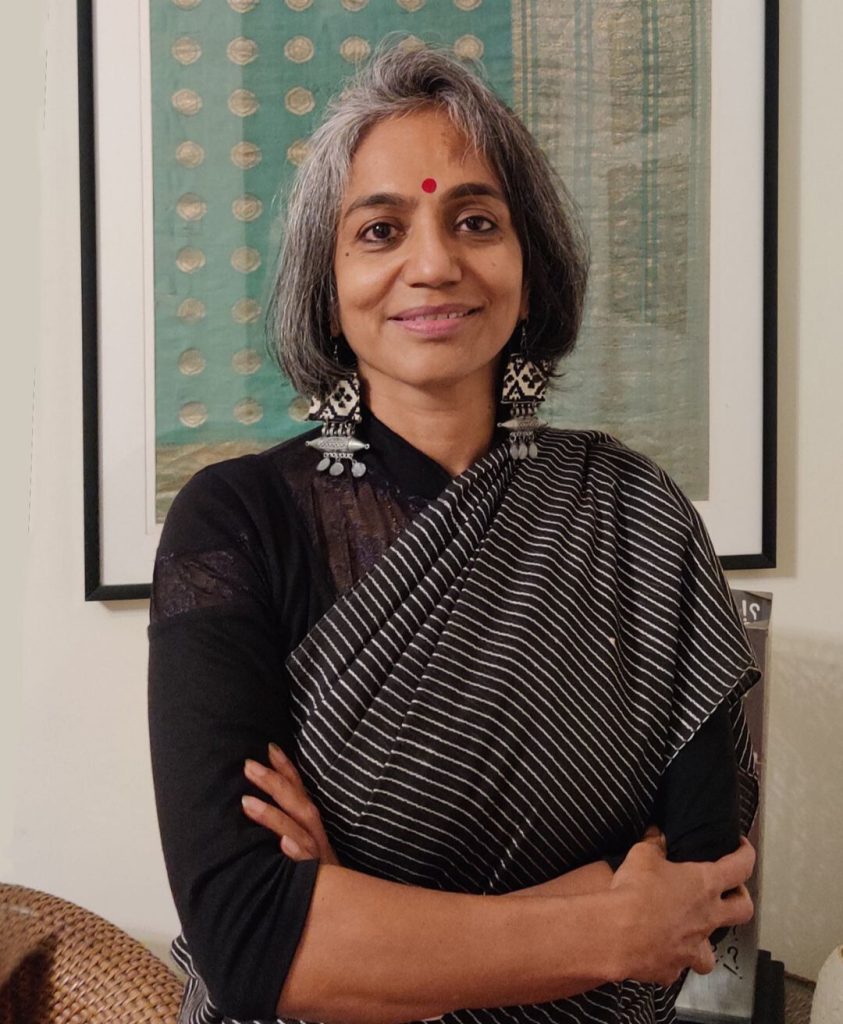
Q. You’ve often described your practice as “building stories, minds and ideas” rather than just buildings. How did this expanded idea of practice take shape for you over the years?
Gita Balakrishnan: Very early in my journey, I understood that architecture is not just about making buildings. It is about shaping how people think, feel, and live. Buildings are visible outcomes, but the deeper impact lies in how they influence everyday life.
Working closely with communities, students, workers, and fellow architects taught me that design can open conversations, build dignity, and create hope. Over time, my domain expanded to facilitating conversations, nurturing young minds, and building platforms that allow people to imagine and claim better futures for themselves. Architecture, for me, became a social process – one that constructs stories, cultivates empathy, and builds collective agency.
Q. Looking back at your early work with AVAS in Bangalore’s slums, what were the formative experiences that shaped your understanding of land, housing rights, and the ethics of working with the urban poor?
Gita Balakrishnan: My time with AVAS was transformative. Working with informal settlements, I moved beyond the role of an architect to become a participant in collective action. I was deeply involved in the shelter-building process and actively engaged in community meetings, discussions, and workshops.
One powerful exercise involved residents drawing their dream homes. These drawings revealed layered social realities: women often sketched wells inside their homes, reflecting daily struggles for water and safety, while men drew shops or animal shelters, pointing to livelihoods and economic survival. The visual narratives opened my eyes to how deeply spatial design is connected with gender, labour, culture, and dignity. This experience reshaped my understanding of housing – not as a product, but as a right and architecture as a moral responsibility. It was here that I truly became rooted in social engagement
Q. You founded Ethos in 2002 to bridge the gap between architectural education and the realities of practice and the built environment. What specific gaps did you see then, and how have they changed or persisted today?
Gita Balakrishnan: At that time, architectural education in India was heavily focused on form, aesthetics, and isolated studio exercises, largely disconnected from social scenarios, construction labour, climate, accessibility, and governance. Students graduated technically trained, but socially unprepared.
Ethos was founded to build awareness of our built environment, to provide more opportunities to budding professionals, and to create a platform, a network of young designers and civil engineers who will be decision-makers in the years to come – to bridge the gap between students undergoing education in colleges and the outside professional world.
While there has been a noticeable shift today, with students being more socially aware and environmentally sensitive, architectural education still largely remains confined within classroom and studio boundaries. Opportunities for meaningful exposure to real-world conditions, construction labour, community engagement, and governance structures remain limited and fragmented. As a result, the deeper integration of empathy, ethics, and participatory thinking into everyday design practice is still lacking.
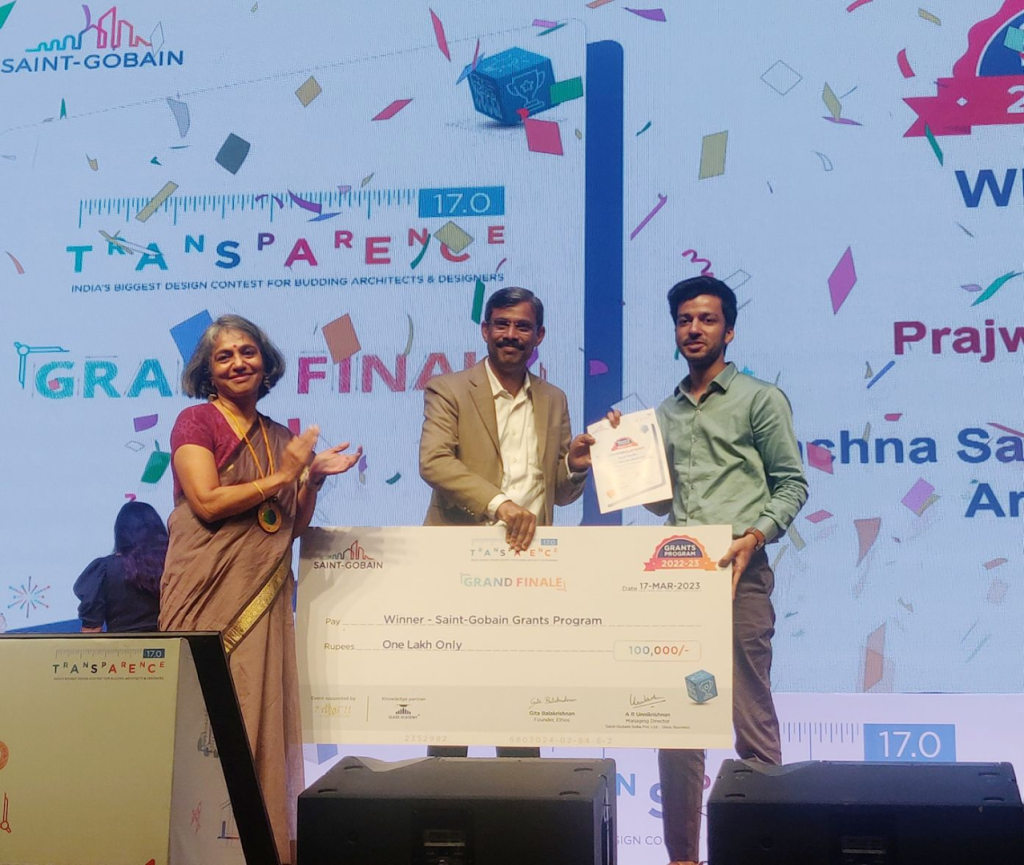
Q. Ethos now reaches thousands of students across hundreds of colleges through competitions, workshops, and learning platforms. What, in your view, has been the most meaningful shift you’ve witnessed in student attitudes to responsibility and agency in design?
Gita Balakrishnan: The most meaningful shift has been the emergence of agency. Students today increasingly see themselves not merely as future employees, but as changemakers. There is a growing desire to engage with communities, address injustice, and question dominant models of practice. I see students moving from passive learning to active responsibility – asking not just how to design, but why, for whom, and at what cost.
Q. Arcause positions “our cause” as both the cause of the ACED community and the community supporting a cause. How do you personally negotiate this duality between serving the profession and serving society at large?
Gita Balakrishnan: For me, the profession and society are inseparable. Architecture gains meaning only when it serves people, and society benefits when the profession acts responsibly. Arcause embodies this reciprocity: we strengthen designers while anchoring them for social purpose. This duality is not a conflict – it is a necessary balance. Serving the profession without serving society is hollow; serving society without nurturing professional ecosystems is unsustainable.
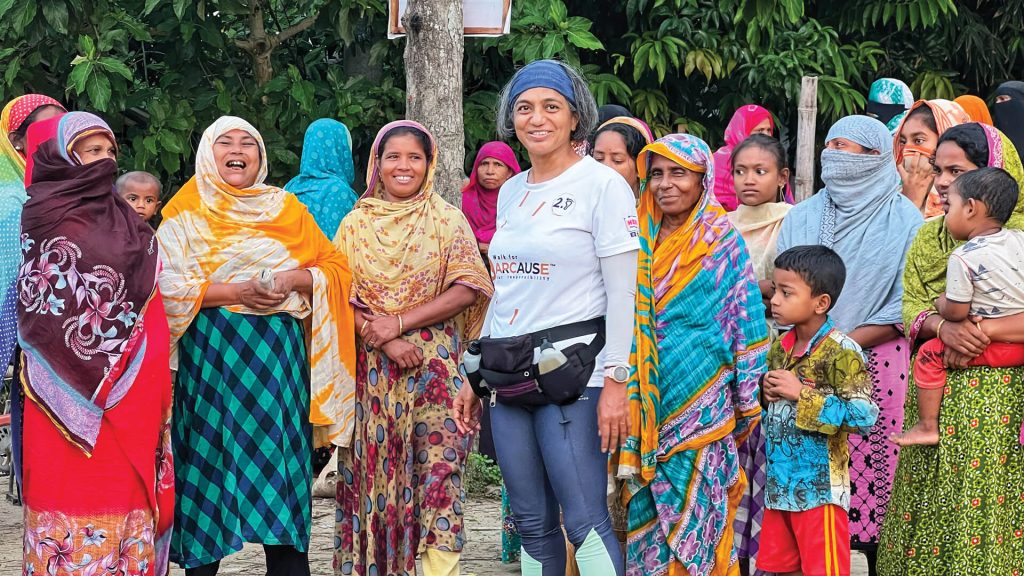
Q. Your 1700 km Walk for Arcause from Kolkata to Delhi and further walks like the Kolkata–Dhaka journey have become powerful symbols of design-led activism. What did walking teach you about the distance between policy, profession, and people?
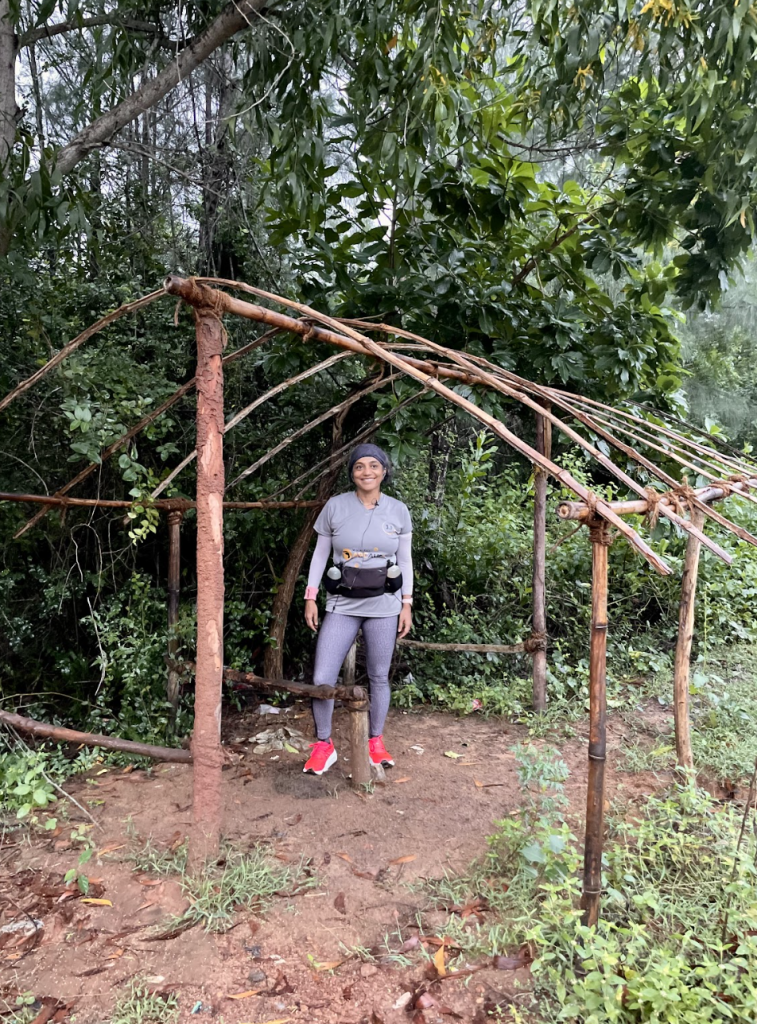
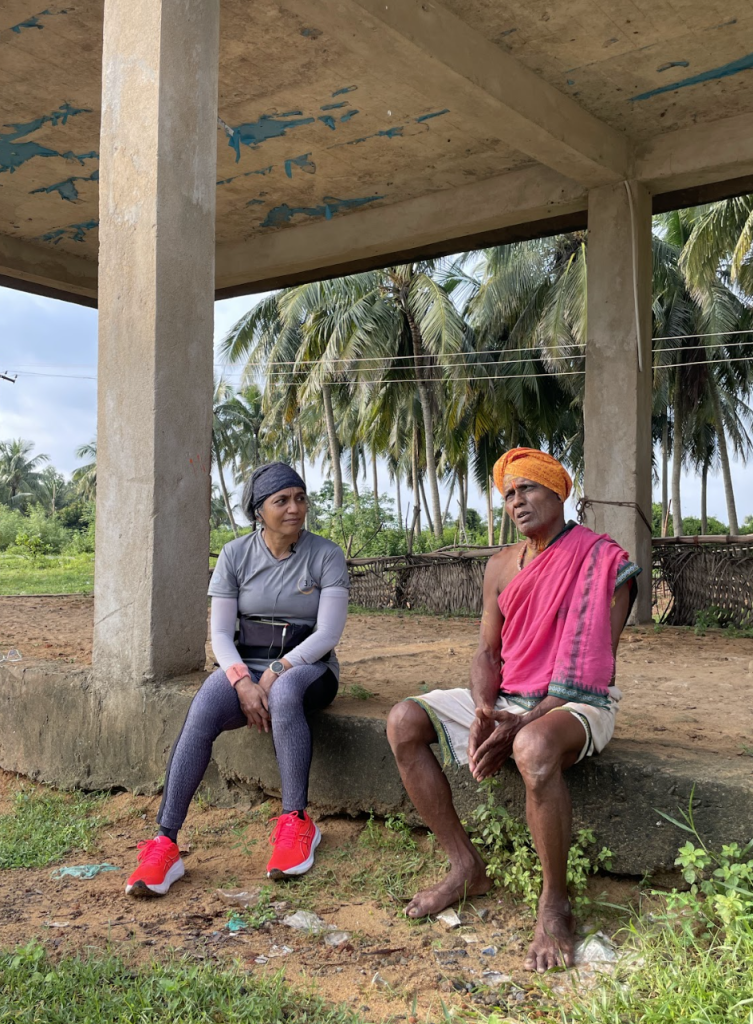
Gita Balakrishnan: Walking those long distances made the gaps between policy, profession, and people impossible to ignore. On the road, everyday realities – heat, water scarcity, housing issues, informal labour, and fragile ecosystems – were immediate and visceral, while policy frameworks and professional discourses often felt distant and abstract. The journey turned villages, highways, and small towns into “moving studios,” where conversations with residents, students, craftspeople, and workers revealed how design decisions made far away directly shape lived experience. Walking slowed everything down, creating space to listen, observe, and recalibrate priorities, reinforcing the idea that meaningful architecture must emerge from grounded engagement rather than top-down mandates.
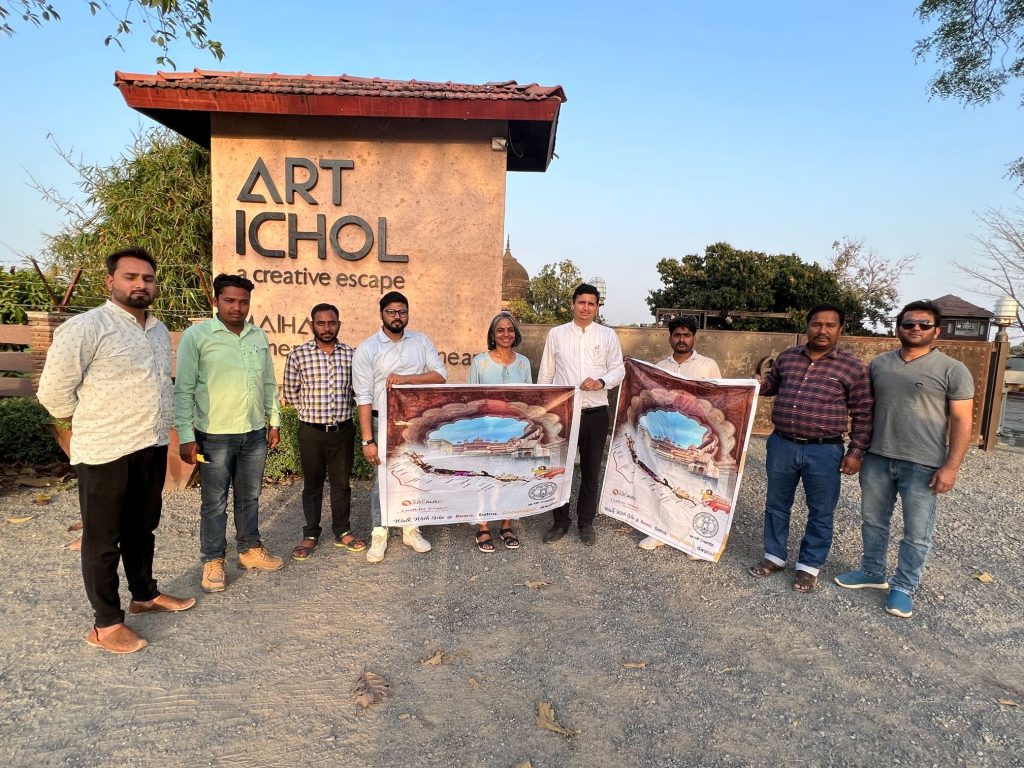
Q. In your walking campaigns, you have engaged with everyone from construction workers and students to local residents and officials. What have been some of the most uncomfortable or challenging conversations, and how did they reshape your own beliefs about architecture’s social role?
Gita Balakrishnan: Some of the hardest conversations were with construction workers who felt disconnected from the buildings they were constructing. They saw themselves only as labour, not contributors. This highlighted how dignity and inclusion are missing from mainstream practice.
Meeting them challenged my ideas of expertise and grounded my practice in humility, reinforcing my commitment to Architectural Social Responsibility — the idea that architecture must serve the most vulnerable first, not just the privileged.
Equally challenging was experiencing the city as a pedestrian. Navigating broken pavements, dark streets, blocked walkways, and inaccessible crossings revealed how hostile our urban environments are to everyday users, especially women, the elderly, children, and persons with disabilities. These moments became a direct critique of my own discipline, showing how easily human experience is sidelined. They reinforced my belief that architecture cannot remain a luxury service or elite pursuit, but must become a social right – bridging the gap between the designer, the builder, and the citizen, while placing dignity, inclusion, and care at the center of practice. Together, these experiences reshaped both my practice and my purpose – captured in the ethos that guided the journey:
Walk Alone. Walk Together. Walk for Others. Walk to Change. Walk to be changed.
Q. Arcause has evolved a set of initiatives like UDita, ADaR, ShramA, BODH, Sva-Des and SaATh. Could you speak about one or two of these that, for you, best capture what “socially responsible design” looks like in practice on the ground?
Gita Balakrishnan: For me, ShramA and UDita most clearly reflect what socially responsible design means in everyday practice. ShramA brings shramiks – often the most invisible yet essential stakeholders in the built environment, into the centre of design discourse. By focusing on safety, dignity, skill-building, and labour rights, it challenges architects to confront the ethical foundations of construction itself.
UDita, on the other hand, works at the intersection of accessibility, inclusion, and awareness. Through immersive workshops, audits, and real-life engagements, it enables students and professionals to understand disability not as a technical checklist, but as a lived experience. Together, these initiatives demonstrate that responsible design is not about isolated solutions, but about sustained engagement, empathy, and systemic change – where architecture becomes a tool for equity, care, and social transformation.
Q. Through the Arcause Bridge Scholarship and other support mechanisms, you’ve consistently foregrounded students from marginalised or structurally disadvantaged backgrounds. How do you hope this will change who gets to be an architect or designer in India in the coming decades?
Gita Balakrishnan: Architecture education and practice in India have long been shaped by elite access – financial, social, and cultural – which determines who gets to enter, survive, and succeed within the system. By foregrounding students from marginalised and disadvantaged backgrounds, we aim to disrupt this exclusivity and challenge the idea of who an architect can be.
When students with lived experiences of inequality and resilience enter the profession, they bring with them perspectives that cannot be taught in studios or textbooks. Over time, this diversity has the potential to reshape architectural discourse – moving it away from aesthetics towards grounded, socially responsive practice. Our hope is to build a profession that is more representative, empathetic, and accountable to the realities of the society it serves.
Q. The Arcause Social Internships place young designers within NGOs, community projects, and social design studios. What have interns told you about how this experience shifts their understanding of design beyond drawings, studios, and juries?
Gita Balakrishnan: Interns often describe a profound shift – from designing for juries to designing for people. They learn to navigate uncertainty, complexity, and ethical dilemmas. Many say the experience changes how they define moving from concepts to impact.
Q. You’ve held leadership roles within professional bodies like the Indian Institute of Architects’ West Bengal Chapter. How has your institutional experience informed your critique of the profession and your efforts to push it towards greater empathy and inclusion?
Gita Balakrishnan: Being within professional bodies exposed structural hierarchies, exclusions, and rigid conventions. This reinforced my belief that reform must come both from within institutions and through parallel grassroots ecosystems. True inclusion requires cultural change, not just policy amendments.
Q. Many architects and students feel torn between doing socially engaged work and sustaining a viable career. What honest advice would you offer to young practitioners who want to centre ethics, labour, and justice in their practice without burning out?
Gita Balakrishnan: Build slowly. Seek allies. Practice sustainably. Socially responsible work need not mean self-sacrifice. Hybrid models – combining practice, teaching, research, and community work can create both ethical fulfillment and economic stability. Burnout helps no one.
Q. Ethos and ACEDGE emerged as “outside-the-classroom” ecosystems for learning. What, in your view, are the most urgent things architectural education in India still does not teach—but must, if we are to face climate, social, and urban crises responsibly?
Gita Balakrishnan: At the core of this is empathy – the ability to listen, observe, and design in response to lived realities. Architectural education still prioritises form and representation over social engagement, often distancing students from people, labour, and ecological contexts.
Equally urgent is climate responsibility, understood not just technically but ethically, along with labour ethics, which foregrounds the dignity, safety, and rights of construction workers. Participatory design and governance literacy are also essential, enabling architects to work meaningfully with communities, institutions, and policy frameworks.
Ultimately, education must shift from producing isolated objects to engaging with complex social and ecological systems, so future practitioners can respond responsibly to climate, urban, and social crises.
Q. As someone who works closely with construction workers, students, educators, and policy-adjacent spaces, where do you see the deepest disconnects in our conversations on design—and what bridges are you most determined to keep building?
Gita Balakrishnan: Bridges between policy and people. Between education and labour. Between sustainability rhetoric and ground realities. Policies are often framed without sufficient engagement with lived conditions, while architectural education remains distanced from construction labour and everyday urban struggles. At the same time, sustainability is frequently reduced to technical checklists or symbolic gestures, disconnected from material practices, resource access, and social equity.
The work we do is driven by the need to keep building bridges across these fractures – by creating platforms for dialogue, experiential learning, and collective action that connect classrooms with construction sites, institutions with communities, and design intent with social impact.
Q. When you think about your own professional life in terms of “before Arcause” and “after Arcause”, what inner shifts of purpose, practice, or politics do you recognise most clearly in yourself?
Gita Balakrishnan: Before Arcause, my work was largely centred on architectural education and professional development. Through Ethos, the focus was on expanding learning beyond conventional classrooms – creating platforms that built awareness, confidence, and critical thinking among students and young professionals. The intent was to strengthen the profession by nurturing informed, capable designers who could engage thoughtfully with the built environment.
Arcause marked a deeper shift – from education to ethical action, and from professional empowerment to social responsibility. Walking across regions, engaging directly with communities, construction workers, students, and civic systems reshaped my understanding of architecture as a social act.
Q. Arcause Spotlight at Municipalika 2026 frames the city itself as a “living urban laboratory”, with walks, audits, and community dialogues replacing conventional conference formats. What made you choose this immersive, on-ground pedagogy for a platform embedded within a large urban expo context?
Gita Balakrishnan: Cities are dynamic classrooms. Learning must be embodied, participatory, and immersive. By embedding pedagogy within real urban contexts, we enable participants to experience their city first hand – moving beyond abstract concepts into live engagement.
Q. The program brings together themes of design literacy, accessibility, waste, heritage, and community spaces in Delhi in very specific locations and with specialised facilitators. What kinds of long-term collaborations or policy/education shifts do you hope will be seeded by this first Spotlight edition?
Gita Balakrishnan: The first Spotlight edition is intended to seed long-term collaborations between designers, civic bodies, educators, and community groups, enabling design to become an active tool in urban governance and public engagement. It aims to influence education and policy by embedding design literacy, accessibility, waste management, and heritage conservation into mainstream planning conversations.
By engaging directly with real urban contexts, participants begin to understand cities as complex social and ecological systems rather than abstract design problems. Our aim is to translate these engagements into sustained partnerships, research, and long-term action.
Athmaja Biju is the Editor at Abir Pothi. She is a Translator and Writer working on Visual Culture.