Tikuli art takes its name from “tikuli” or “tikli,” a term for the decorative bindi that women wear on the forehead. The form emerges in and around Patna and has a recorded history of more than 800 years, with references to production during Magadh and Mughal periods. Earlier, artisans created small, highly finished glass bindis for elite customers, using gold foil and fine engraving to turn them into luxury accessories.

Modern Tikuli practice shifts from glass to hardboard or medium‑density fibreboard and uses enamel paints that produce a glossy, durable surface.
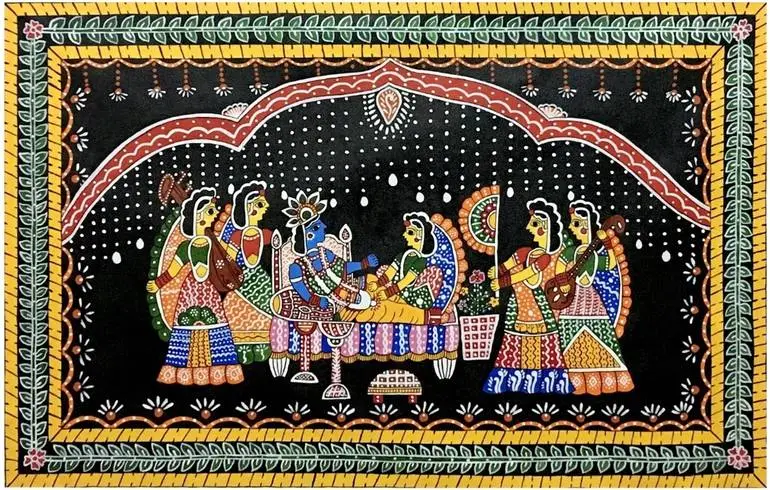
Artisans sand the board, apply a base coat, sketch the design and then paint with very fine brushes to achieve miniature‑like detail.
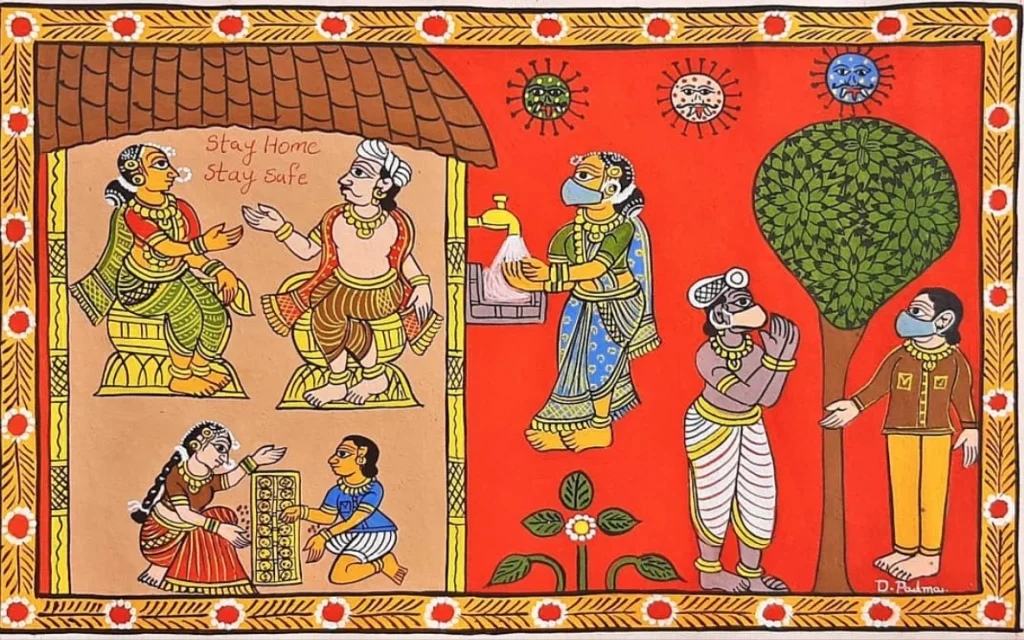
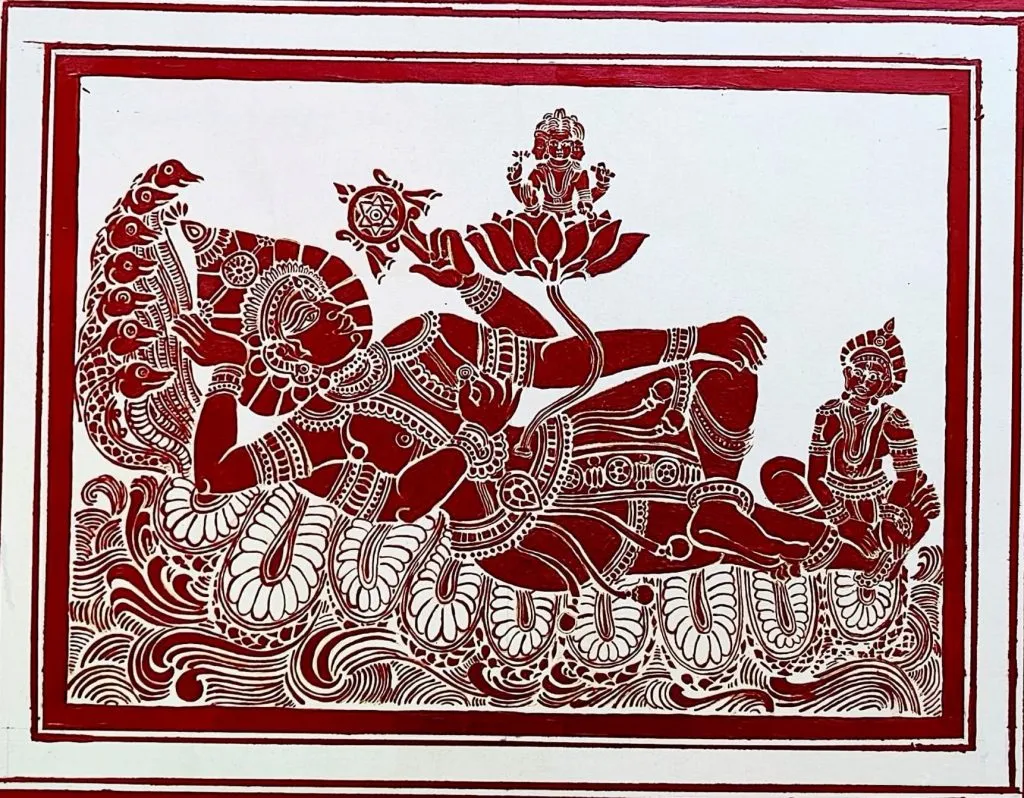
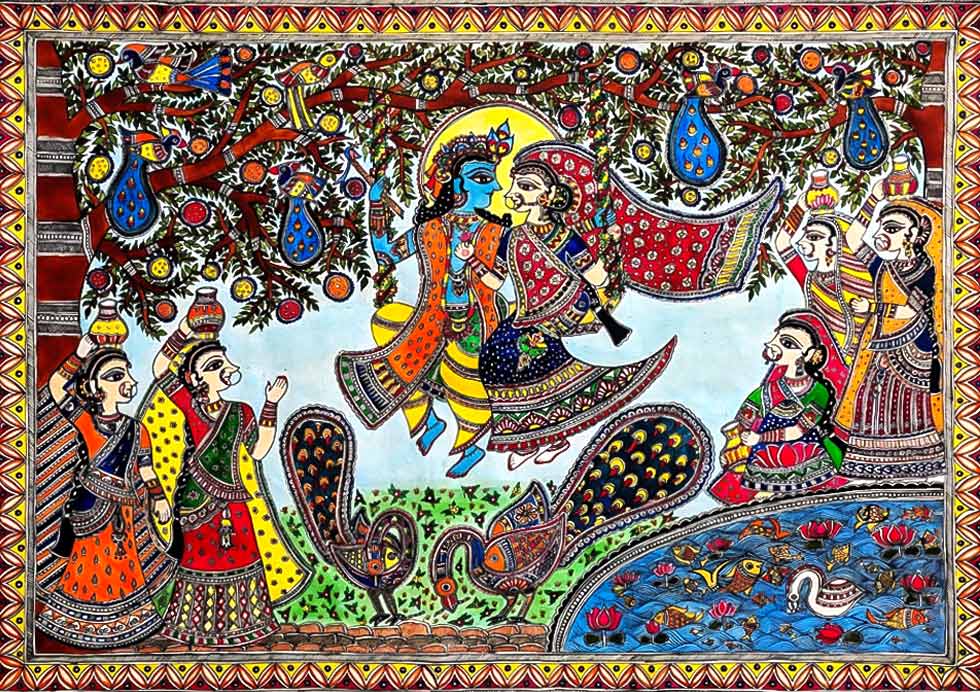
Motifs draw on Mithila and other North Indian visual vocabularies and include gods and goddesses, women at work, festivals and stylised floral borders.
The craft nearly disappeared in the early twentieth century as industrially produced bindis and decorative objects replaced labour‑intensive handmade pieces. Artist and designer Upendra Maharathi played a major role in reviving Tikuli in the mid twentieth century by adapting techniques, training artisans and linking them to new markets. State craft agencies now profile Tikuli as a key folk painting tradition of Bihar, and they highlight its role in supporting hundreds of artisan families in Patna.
Today, Tikuli painters produce coasters, trays, wall plates, jewellery and souvenir panels alongside more conventional framed images.
Women artisans in particular use Tikuli work as a source of income and as a way to claim visibility within local craft economies.
The combination of miniature‑style detail, enamel sheen and bindi‑derived symbolism positions Tikuli as both a continuation of older aesthetics and a modern urban craft language.
Athmaja Biju is the Editor at Abir Pothi. She is a Translator and Writer working on Visual Culture.