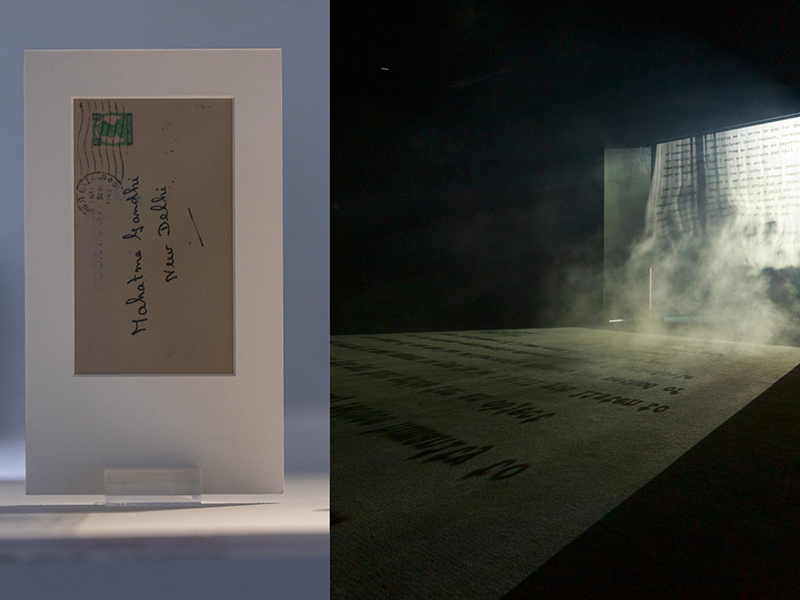
At the latest edition of the Kochi-Muziris Biennale, acclaimed artist-filmmaker Naeem Mohaiemen confronts the fragility of historical memory. Through A Missing Can of Film (2025) — a moving-image installation that transforms absence into its central protagonist.

The work revisits the mystery surrounding the disappearance of legendary Bangladeshi filmmaker and novelist Zahir Raihan. Who had vanished soon after the 1971 Liberation War in Bangladesh. Mohaiemen reimagines this unresolved event through the lens of a rumoured 16mm reel — a “missing can” believed to contain politically sensitive footage, whose existence has become part of Bangladesh’s modern folklore.
Shot inside the largely abandoned Bangladesh Film Development Corporation (BFDC), the installation weaves together contemporary footage, archival fragments, and speculative narrative. The deserted studios, with their ghostly silence, mirror the erasure of dissenting voices from official narratives and the lingering uncertainty that shadows Raihan’s fate.
“Historian Afsan Chowdhury was the first person to tell me the fable of Raihan’s unfinished film, as a possible tell-tale clue as to his disappearance,” said Mohaiemen during his conversation at the Biennale. “Over the years I was alternately motivated and defeated by the idea of tracing that missing canister. At a certain point, you encounter the limits of ‘maybe one day.“
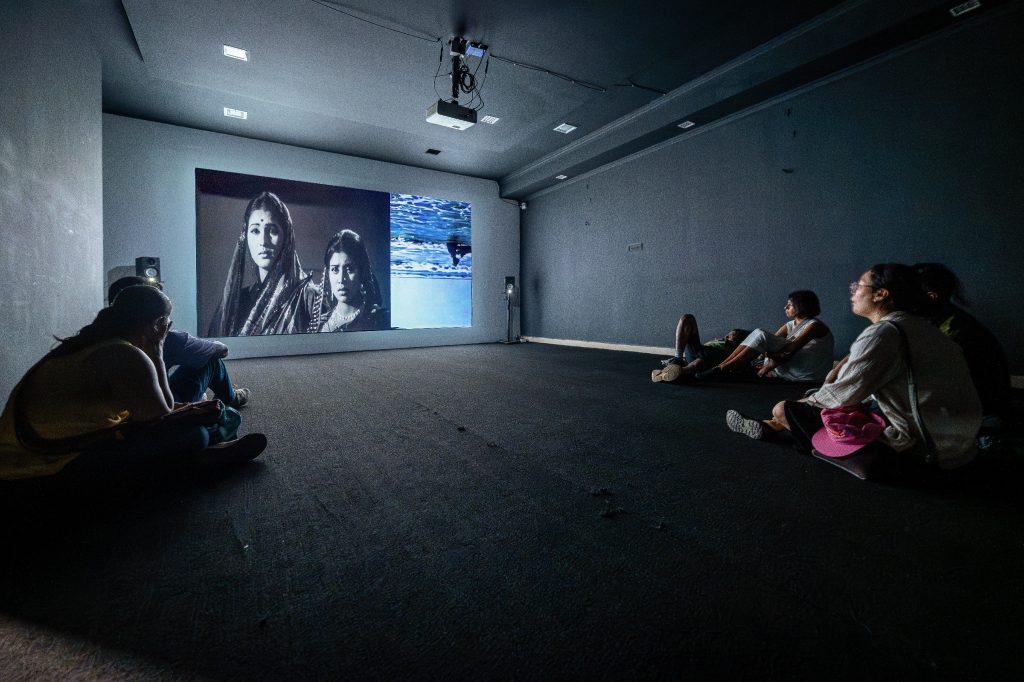
Mohaiemen’s refusal to reconstruct the truth as a closed narrative gives the work its strength.
Naeem Mohaiemen’s Process
The project also captures the shifting landscape of Bangladeshi society. The emptiness of the BFDC, filmed amid the aftermath of the 2024 student uprising becomes a metaphor for the cyclical silence that follows periods of upheaval. “I did not make this analogy,” Mohaiemen clarifies. “Rather, I suggested that the power vacuum following the 2024 student uprising meant that, ironically but also perhaps appropriately, the film studios were largely deserted when we filmed.”
By situating a lost reel at the heart of his narrative, Mohaiemen expands it into a symbol for the collective amnesia surrounding unfinished revolutions. In doing so, he honors not only Raihan’s legacy but also the many suppressed stories scattered across the subcontinent’s fractured archives.
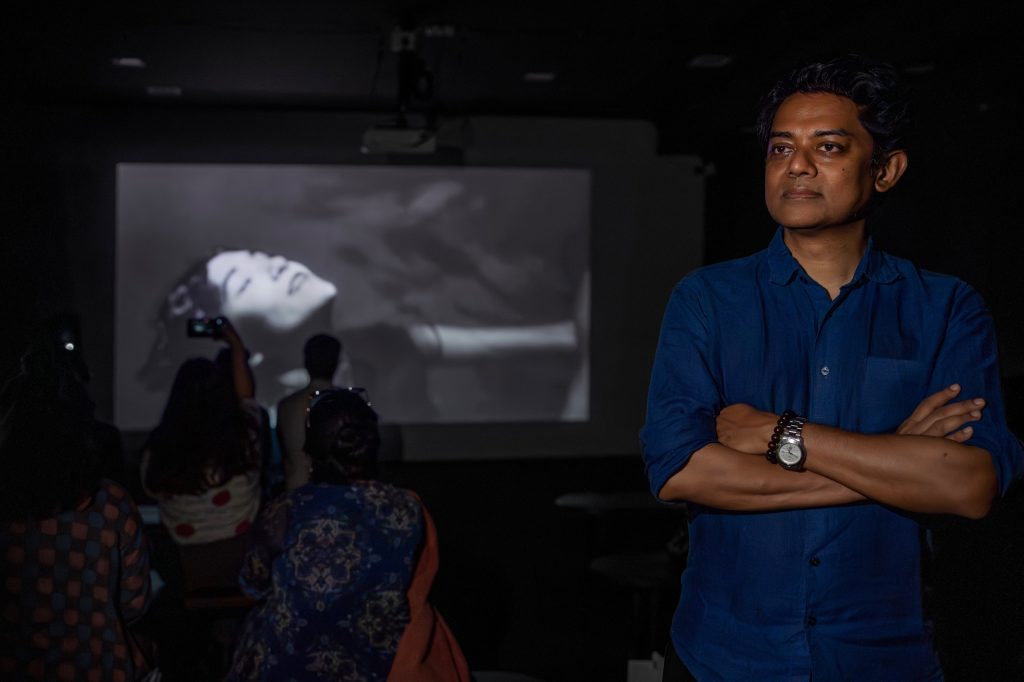
Cover Image: Artist and filmmaker Naeem Mohaiemen at Kochi-Muziris Biennale
Athmaja Biju is the Editor at Abir Pothi. She is a Translator and Writer working on Visual Culture.