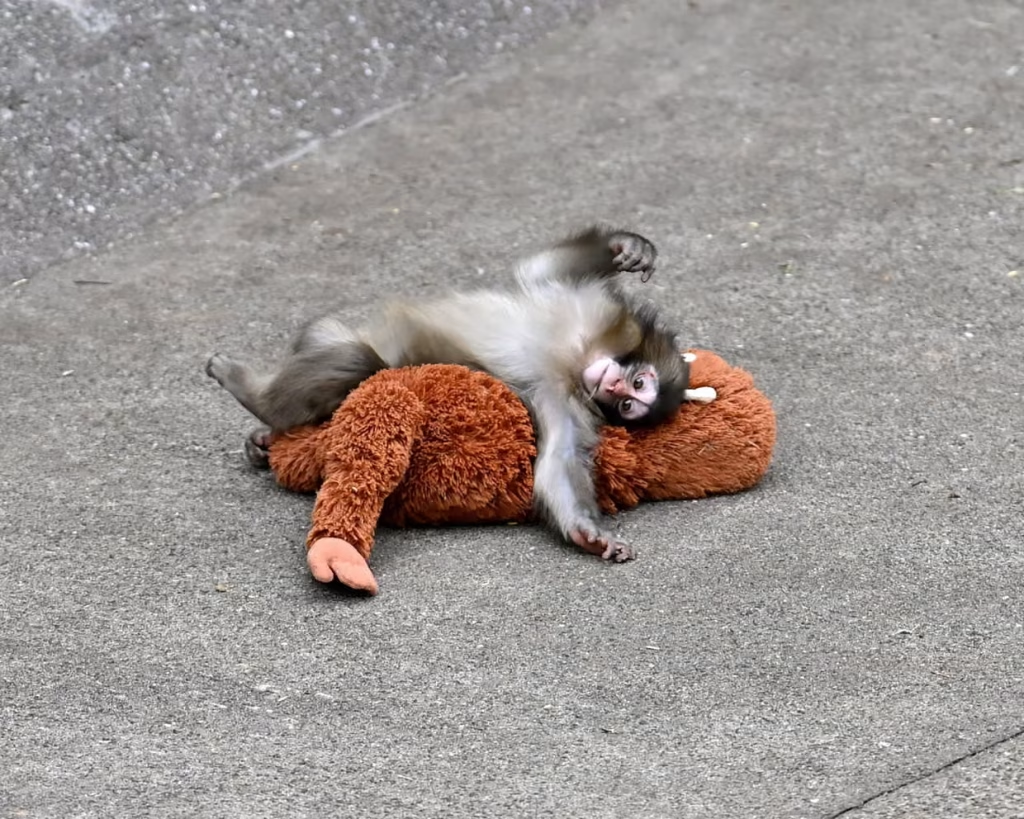
Punch the Monkey, a baby macaque at Japan’s Ichikawa City Zoo, went viral after his mother abandoned him. Viewers connected deeply with clips of the lonely primate clutching a stuffed orangutan toy for comfort, seeing their own isolation reflected in his quiet distress. This digital phenomenon echoes a timeless theme in visual art, where artists have long used solitary figures and empty spaces to portray emotional disconnection.

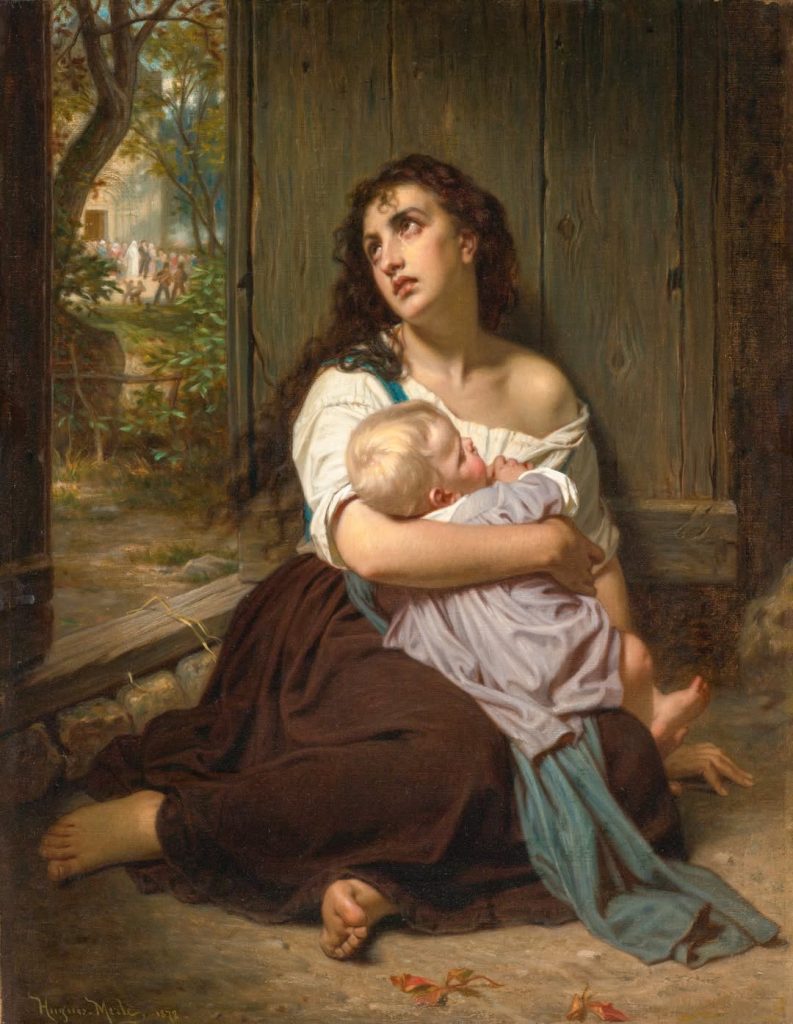
1. Hugues Merle, The Abandoned (1872)
Oil on canvas, c. 64.8 × 50.8 cm; featured in 19th-century French realist collections and online archives like the Art Renewal Center. A young, barefoot mother sits on the floor, clutching her baby, a tear on her cheek; through a doorway, a distant wedding party moves away, oblivious to her grief. This work turns private heartbreak into social critique, showing how an unmarried mother is emotionally and socially exiled even as life and celebration continue just out of reach.
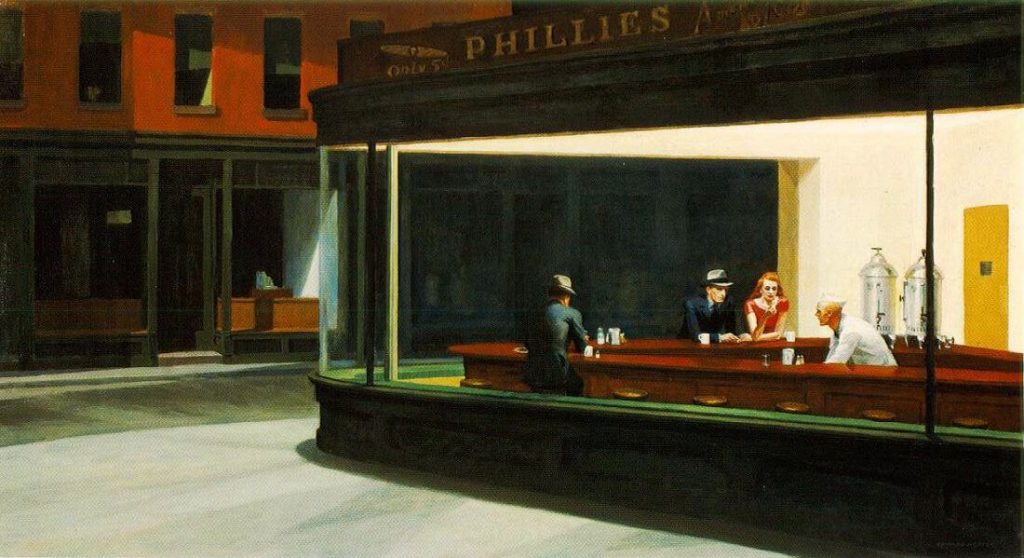
2. Edward Hopper, Nighthawks (1942)
Oil on canvas, 84.1 × 152.4 cm; Art Institute of Chicago. Late at night in a sharply lit diner, a lone man hunches over his drink while a couple and the waiter share the same space but not the same emotional world. Hopper stages urban loneliness as being alone in plain sight, trapped behind glass in a fluorescent island of light that only sharpens the sense of emotional distance.
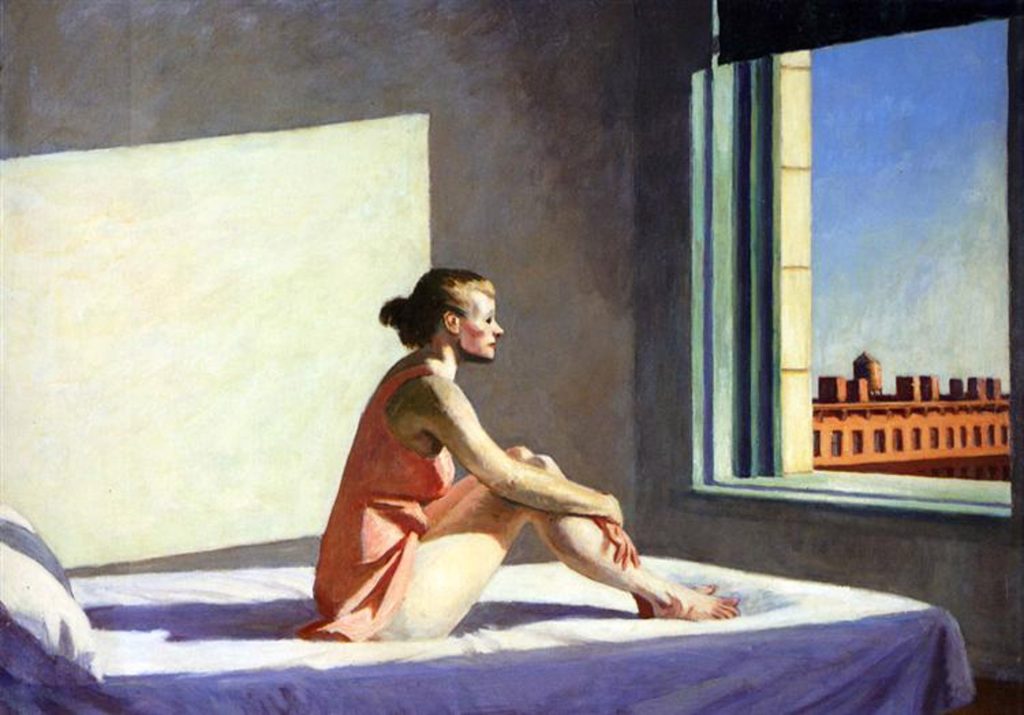
3. Edward Hopper, Morning Sun (1952)
Oil on canvas; Columbus Museum of Art, Ohio. A woman in a slip sits on a neatly made bed, facing a sunlit window and a bare wall; the room is almost clinically empty. The painting suggests an inner void, where order and cleanliness mask a profound sense of disconnection from both the city outside and any real sense of home.
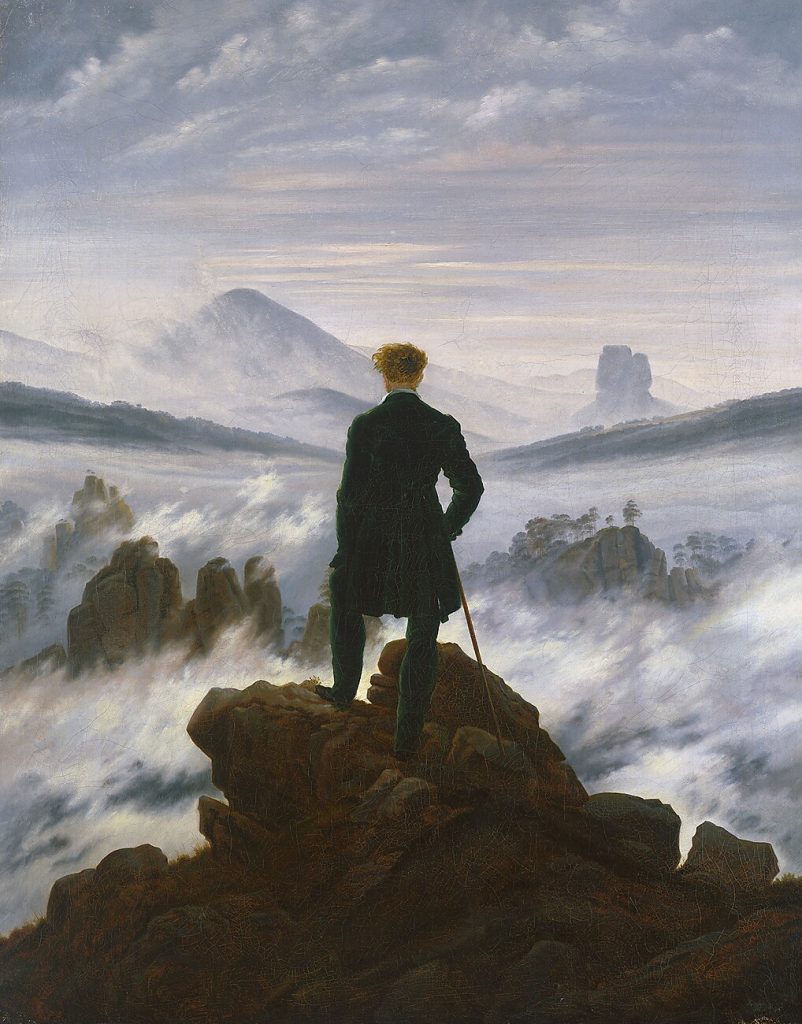
4. Caspar David Friedrich, Wanderer above the Sea of Fog (c. 1817)
Oil on canvas, 94.8 × 74.8 cm; Hamburger Kunsthalle, Hamburg. A solitary man stands on a rocky peak, his back to us, looking out over a vast, fog-covered landscape of mountains and valleys. Friedrich turns isolation into metaphysical solitude, suggesting a figure suspended between insignificance and grandeur as he confronts the unknown.
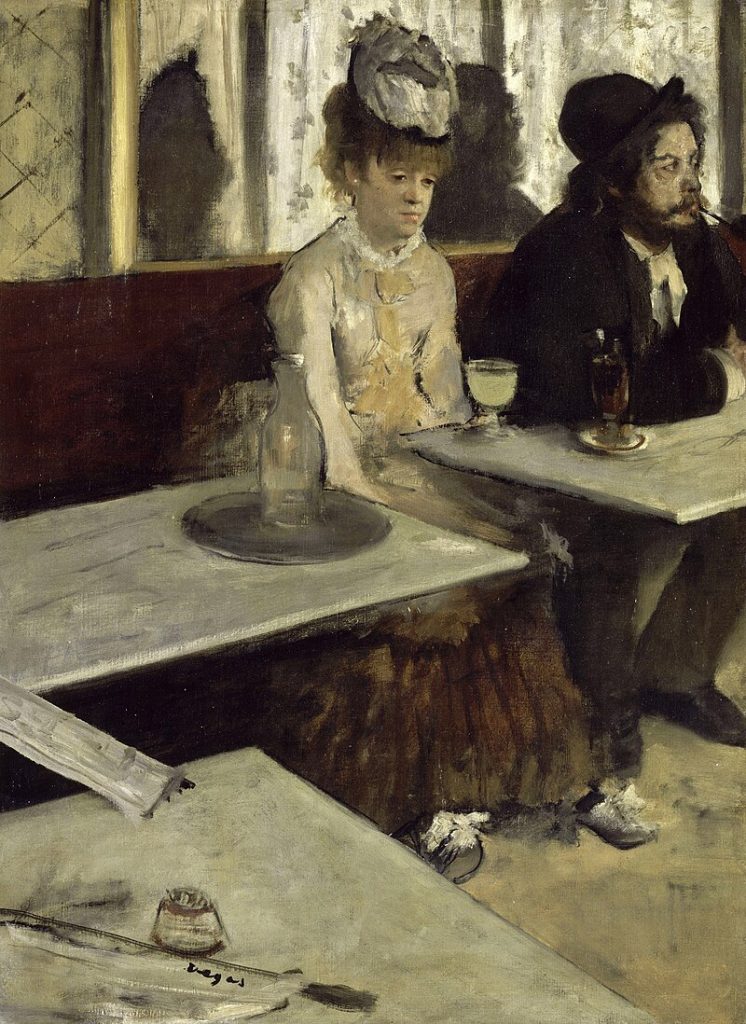
5. Edgar Degas, Dans un café (L’absinthe) (1875–1876)
Oil on canvas; Musée d’Orsay, Paris. A woman and a man sit side by side at a café table, each with a glass of absinthe; she stares downward, vacant, while he looks away, lost in his own thoughts. Degas captures modern loneliness not as physical solitude but as a psychic distance so deep that even close company cannot bridge it.
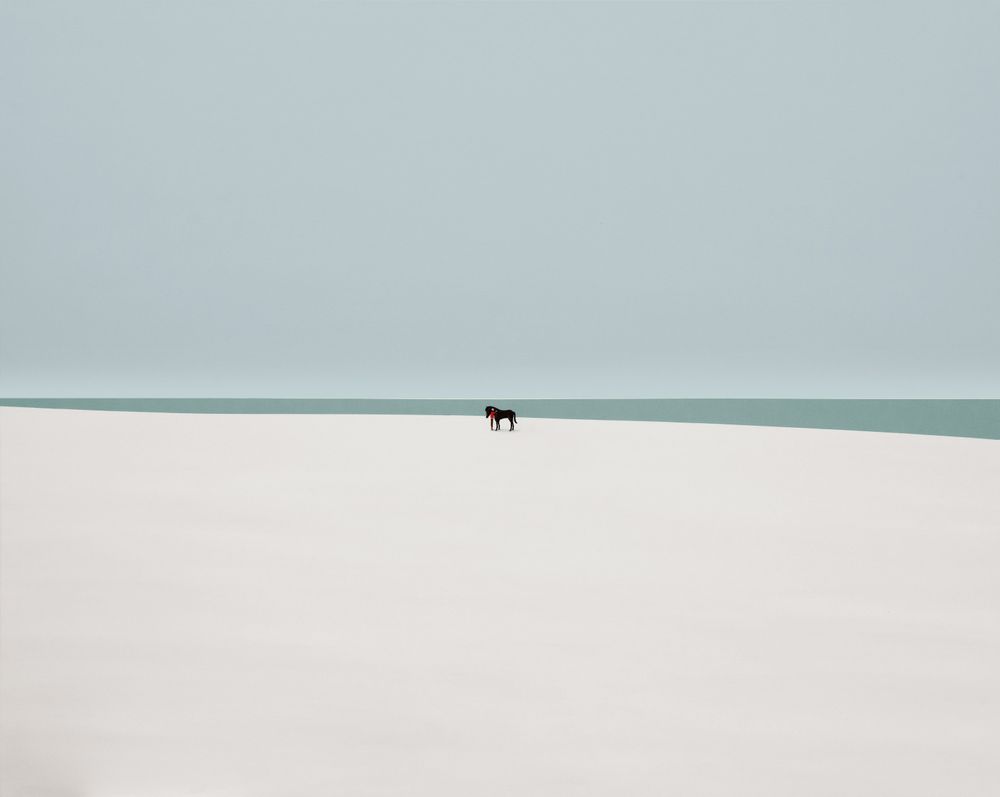
6. Suntur, Can you walk alone after this? (2024)
Acrylic on canvas, 120 × 150 cm; exhibited with Villazan gallery. A tiny horse figure is set against a vast, almost empty landscape, with an endless horizon that dwarfs their presence. Suntur uses scale and open space to show how loneliness can feel both calm and crushing, asking whether a person can still move forward after deep emotional rupture.
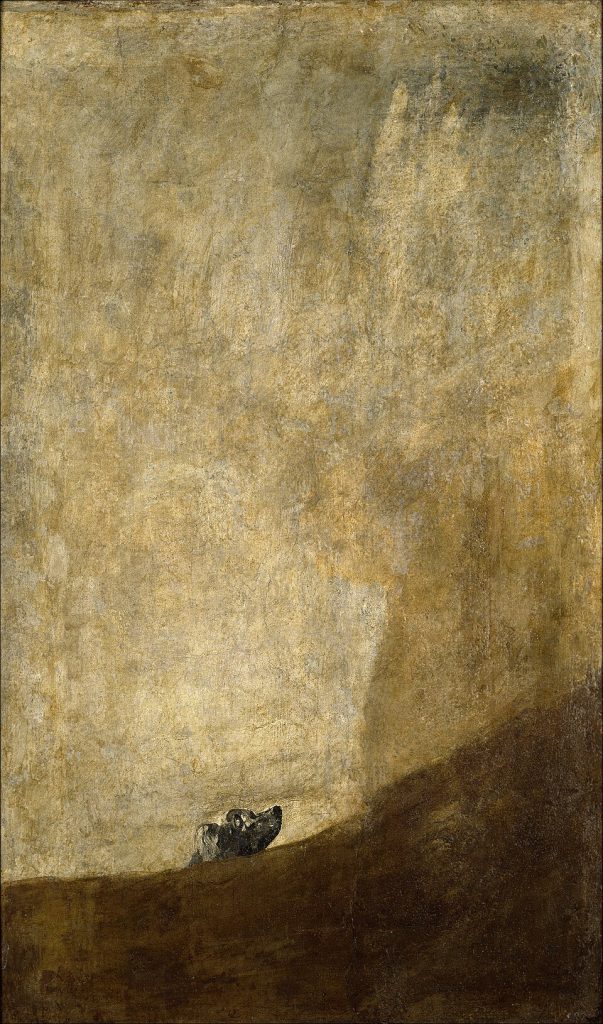
7. Francisco de Goya, The Dog (c. 1819–1823)
Oil mural transferred to canvas; Museo del Prado, Madrid; one of the Black Paintings. Only the head of a small dog emerges from a sloping mass at the bottom of the canvas, gazing upward into an almost empty, murky field of color. The Dog distills isolation into a single desperate gesture, as the tiny creature seems to sink or drown in an indifferent, formless void.
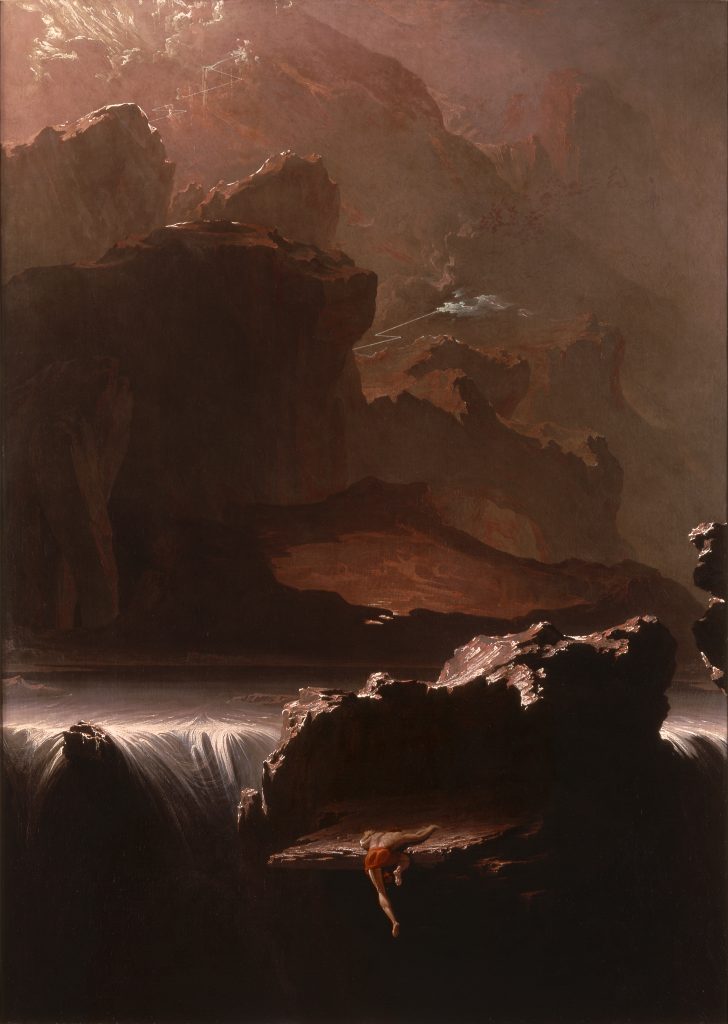
8. John Martin, Sadak in Search of the Waters of Oblivion (1812)
Oil on canvas; based on James Ridley’s Tales of the Genii. The minute figure of Sadak clings to a rock at the bottom of a towering, jagged landscape, with steep precipices and rays of light in the distance. Martin uses the heroic scale of the landscape to emphasize existential isolation, turning Sadak’s quest into an image of a lone soul battling overwhelming trials.
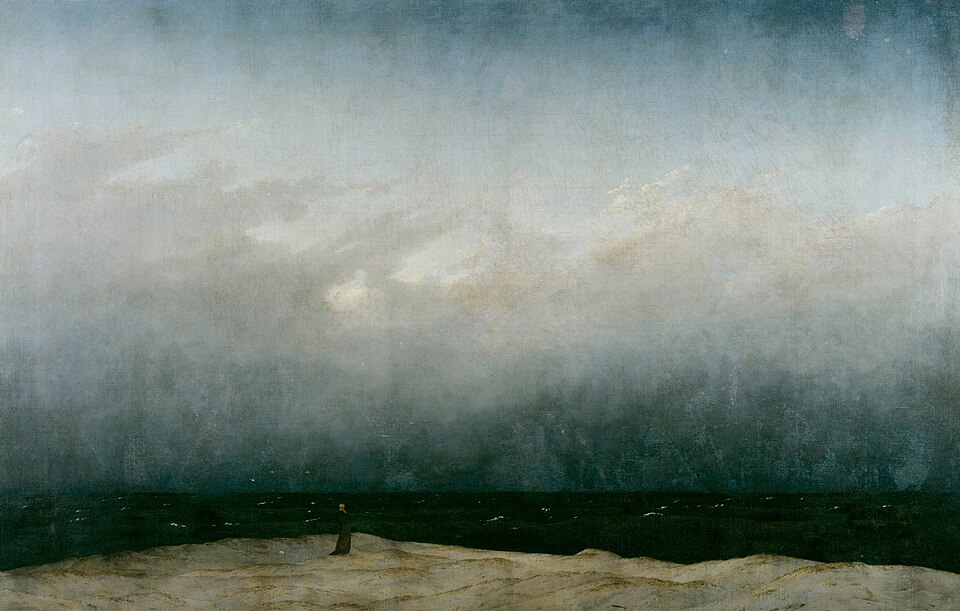
9. Caspar David Friedrich, Monk by the Sea (1808–1810)
Oil on canvas; Alte Nationalgalerie, Berlin. A tiny monk stands on a dark strip of shore beneath an immense band of sea and sky, with almost no other detail. The stripped-down composition makes human presence feel fragile, placing the solitary monk on the edge of an immeasurable, possibly indifferent infinity.
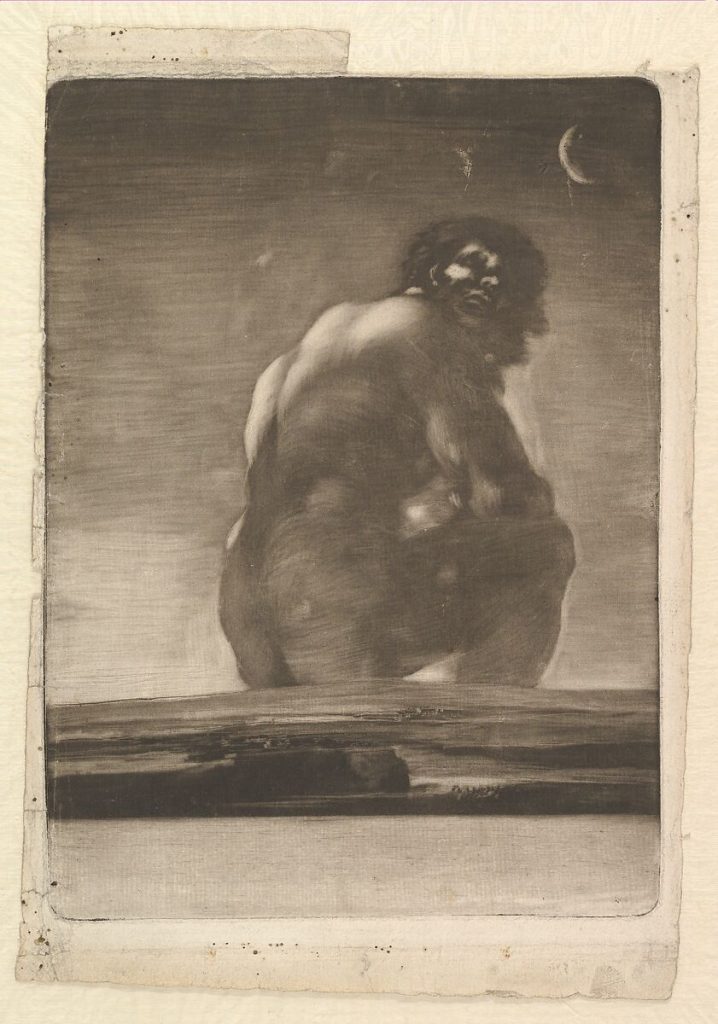
10. Francisco de Goya, The Seated Giant (by 1818)
Aquatint print, c. 1814–1818; Metropolitan Museum of Art. A massive giant sits in a barren, dimly lit landscape, turning his head as if just awakened from heavy thought or despair. The giant’s size does not protect him from isolation; instead, it amplifies the sense of uneasy stillness, as if he is too large and too lost to belong anywhere.
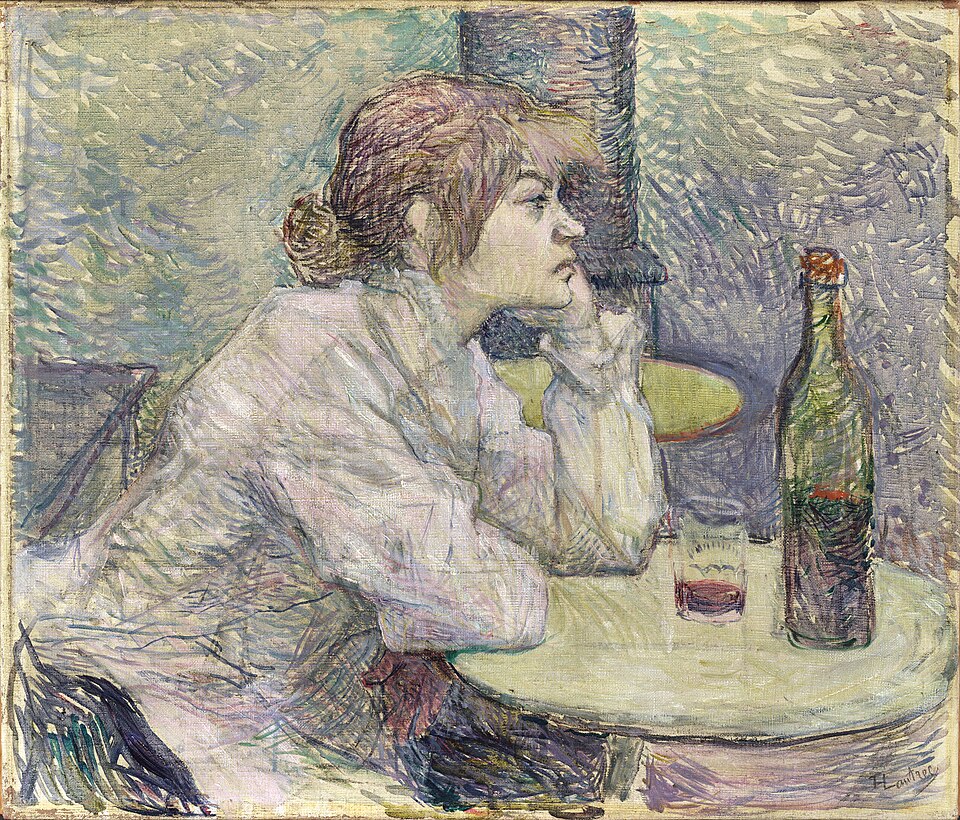
11. Henri de Toulouse-Lautrec, The Hangover (Suzanne Valadon) (1887–1889)
Oil on canvas; Musée d’Orsay, Paris. Suzanne Valadon sits at a café table, slumped over with a glass before her, her expression tired, wary, and emotionally closed. Lautrec links alcohol, public space, and private misery, showing a woman whose isolation is etched into her posture as much as her surroundings.
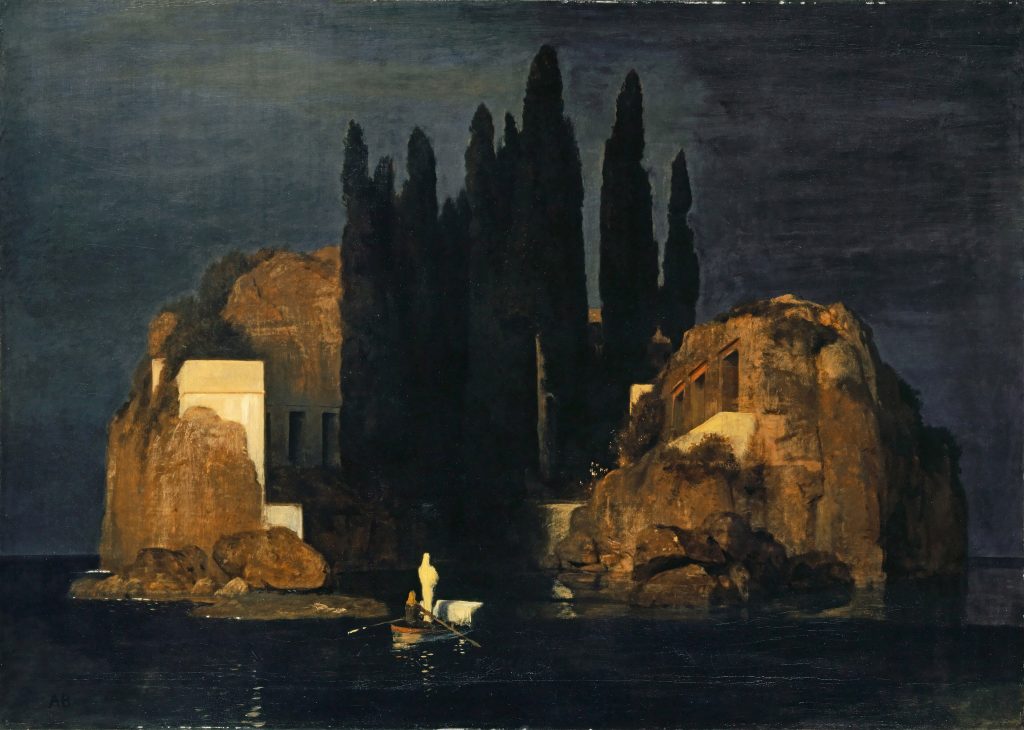
12. Arnold Böcklin, Isle of the Dead (1880–1886)
Multiple oil versions; Basel, New York, Berlin, Leipzig, Saint Petersburg. A small boat carrying a standing, shrouded figure and a white coffin approaches a rocky, cypress-filled island rising starkly from dark water. The painting stages loneliness as a final, one-way journey, where the solitary traveler moves toward an island of eternal separation.
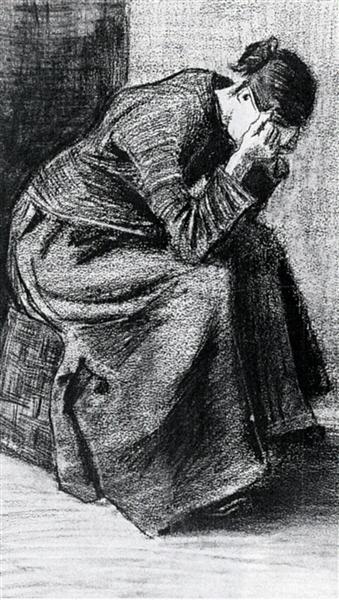
13. Vincent van Gogh, Woman Sitting on a Basket, Head in Hands
Drawing. European collections. A woman sits hunched, elbows on knees, head buried in her hands, her body language heavy and closed. Van Gogh reduces everything to bodily gesture, making her folded, inward-turned pose a stark image of everyday despair and exhaustion.
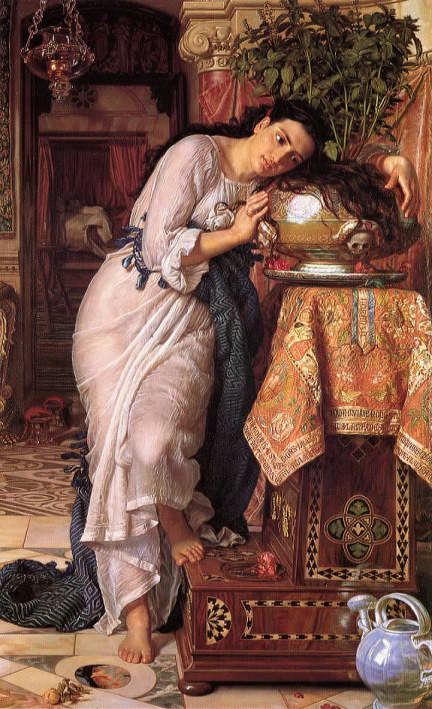
14. William Holman Hunt, Isabella and the Pot of Basil (1868)
Oil on canvas; Laing Art Gallery, Newcastle upon Tyne. Isabella leans over a large pot of basil, caressing it tenderly, knowing it hides the buried head of her murdered lover Lorenzo. Hunt turns grief into ritualized solitude, showing a woman whose intense, secret mourning cuts her off from the living world around her.
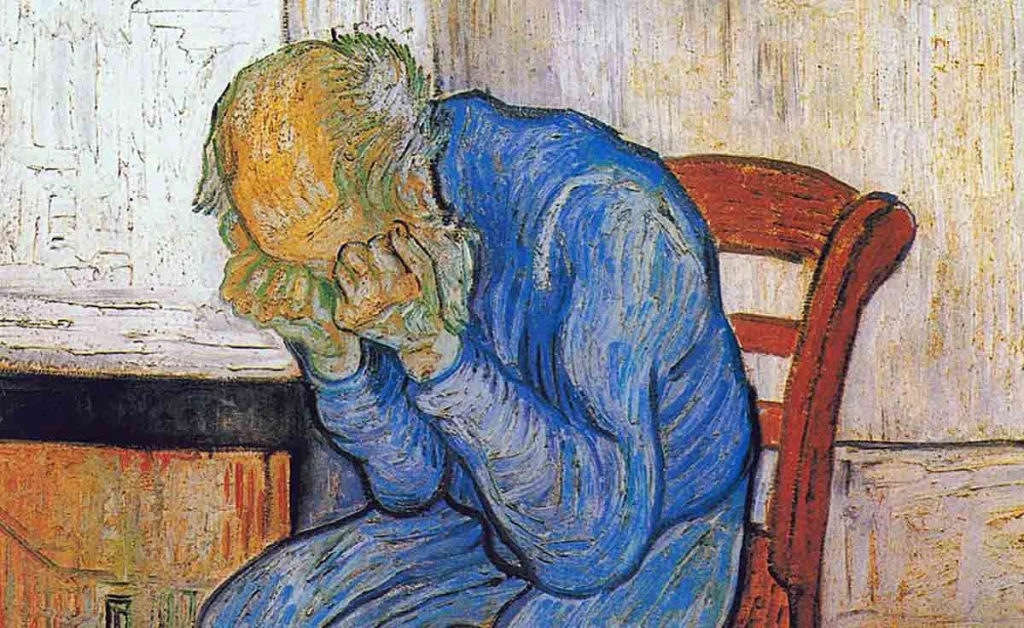
15. Vincent van Gogh, Sorrowing Old Man (At Eternity’s Gate) (1890)
Oil on canvas; Kröller-Müller Museum, Otterlo. An old man in a blue suit sits on a chair, head in his hands, his bent body filling the small interior space. The painting condenses anguish into a single pose, presenting loneliness in old age as a crushing weight that presses the figure inward on himself.
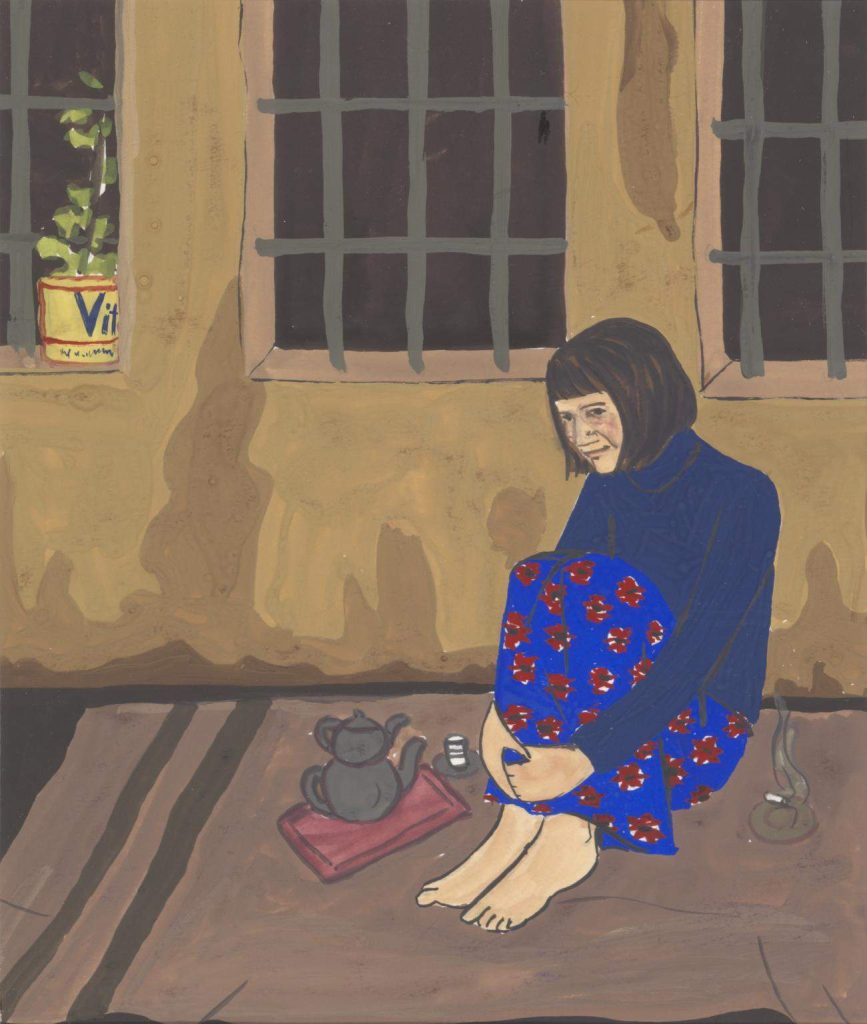
16. Gülşün Karamustafa, Prison Paintings 9 (1972)
Mixed-media; Tate collection. A minimal, schematic depiction of prison interiors and figures, reflecting Karamustafa’s political imprisonment in Turkey. The work shows isolation as a political condition, where confinement and surveillance strip people of individuality and connection.
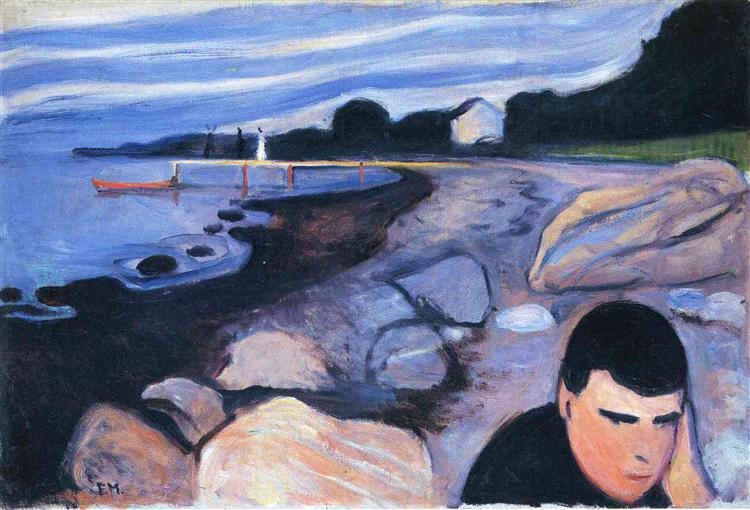
17. Edvard Munch, Melancholy (Melankoli) (1892)
Oil on canvas; Norwegian collections. A man sits on a shoreline, his head resting on his hand, while distant figures and a boat appear further along the coast. Munch paints emotional isolation as being trapped in one’s thoughts, unable to join the life that quietly continues just a short distance away.
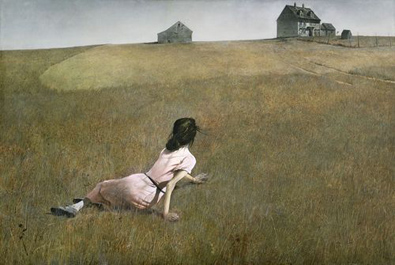
18. Andrew Wyeth, Christina’s World (1948)
Tempera on panel; Museum of Modern Art, New York. A woman lies or sits in a field, turned toward a distant farmhouse and outbuildings, her body twisted as if struggling to move. Wyeth portrays loneliness as the painful distance between body and desire, with the farmhouse symbolizing a place of belonging that remains physically and emotionally far away.
Athmaja Biju is the Editor at Abir Pothi. She is a Translator and Writer working on Visual Culture.