Madhubani, also known as Mithila painting, originates in the Mithila region of northern Bihar and adjacent parts of Nepal, particularly around villages such as Ranti and Jitwarpur. Women in these communities historically painted walls and floors during weddings, festivals and religious ceremonies, especially the kohbar or nuptial chamber. These murals depicted gods, fertility symbols and auspicious plants in order to bless the couple and reinforce social values around love and domestic life.

The term “Madhubani” refers both to a district in Bihar and to the broader style that outsiders began to recognise during the twentieth century.
British civil servant William G Archer drew attention to the murals in 1934 when he noticed the painted walls exposed by a major earthquake.
In the 1960s, the All India Handicrafts Board encouraged women to move the work onto paper as a way to earn income during the Bihar famine.
Styles, themes and materials
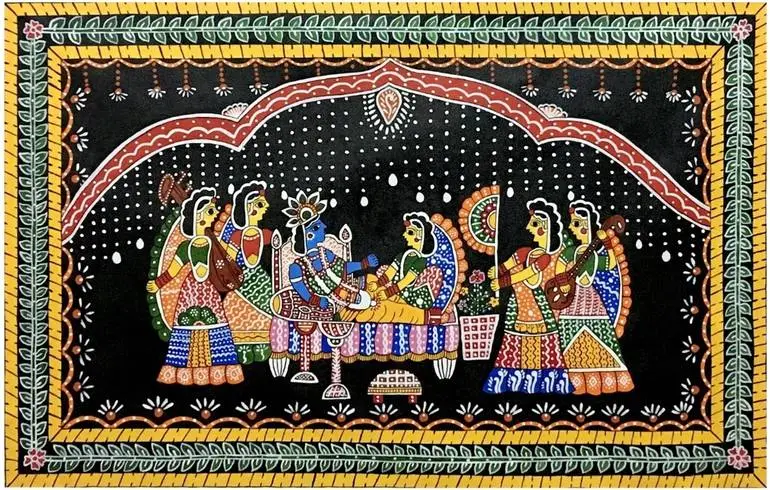
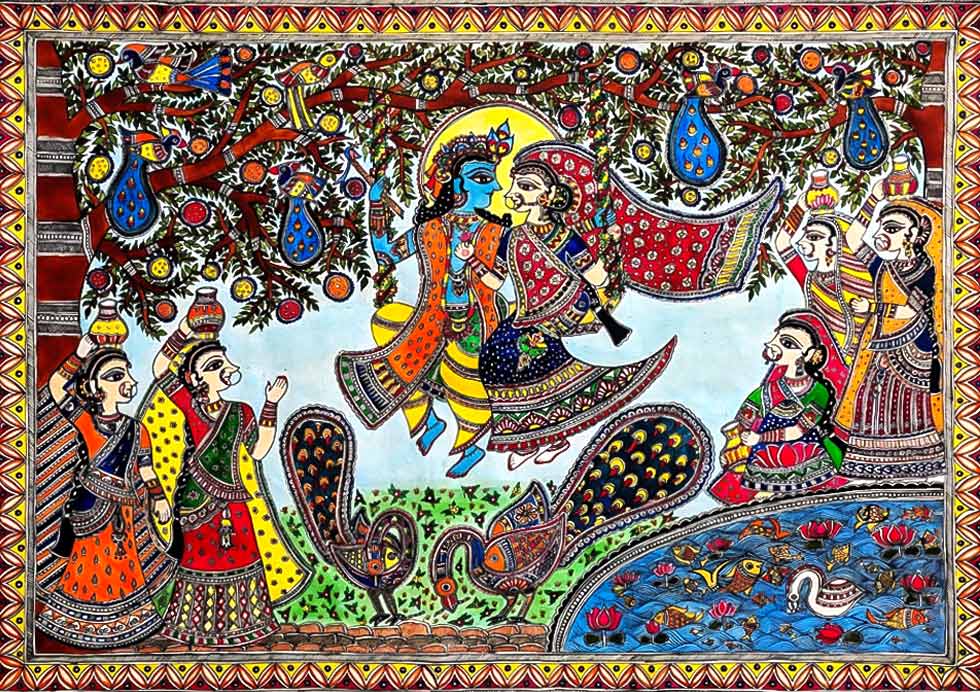
Madhubani painters favour strong line drawing, flat areas of colour and densely patterned surfaces that leave little empty space.
Artists often outline figures in black using homemade tools such as cotton wrapped around bamboo, then fill forms with bright mineral or plant‑based pigments. Traditional colour sources include soot, turmeric, indigo, kusum flowers and rice powder, although synthetic colours now appear widely in commercial pieces. Themes range from images of Hindu deities such as Krishna, Rama, Shiva, Durga and Lakshmi to scenes of village life, weddings and local flora and fauna.
Different castes and regions cultivate distinct sub‑styles, including Brahmin, Kayastha and Dalit lineages, each with characteristic iconography and detailing. Prominent artists such as Ganga Devi, Mahasundari Devi, Baua Devi and Sita Devi helped shape the form’s public image and received national and international recognition.
Contemporary practice and markets
Today, Madhubani painting covers paper, canvas, textiles and functional objects, and it appears in galleries, export showrooms and online platforms.
For many families in Mithila, painting provides a significant non‑agricultural income source and supports local craft clusters.
Government bodies continue to use Madhubani as a symbol of Bihar’s cultural identity in tourism promotion and cultural diplomacy.
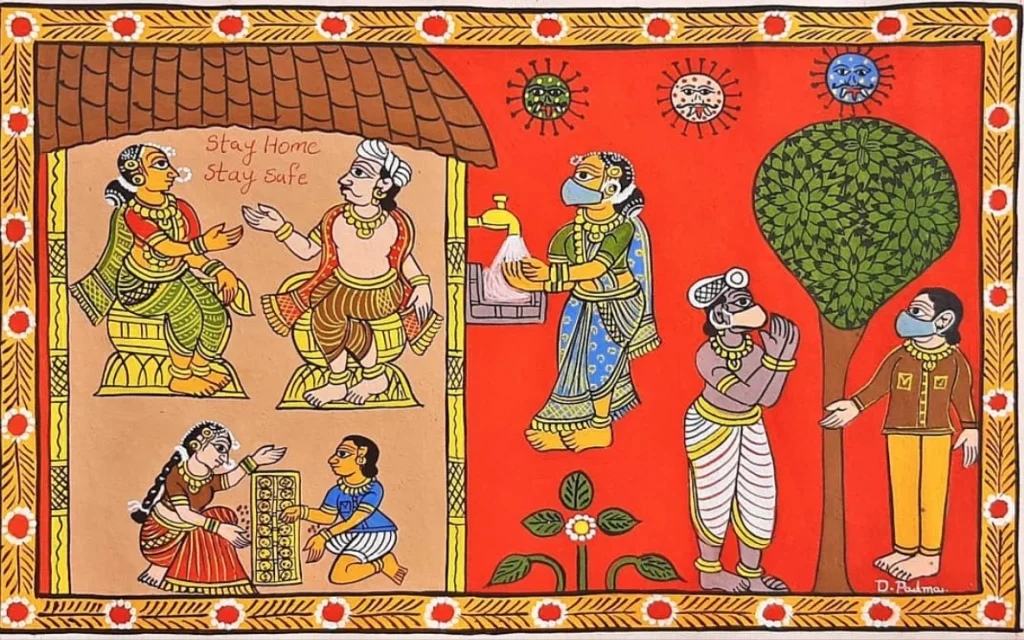
Artists also address contemporary concerns such as environmental degradation, gender dynamics and political events through the established symbolic vocabulary. Workshops, residencies and collaborations with designers allow young painters to experiment with scale and medium, while they still recognise the form’s ritual origins. The growing market also raises debates around authenticity, mass production and the balance between innovation and the preservation of lineage‑based styles.
Athmaja Biju is the Editor at Abir Pothi. She is a Translator and Writer working on Visual Culture.