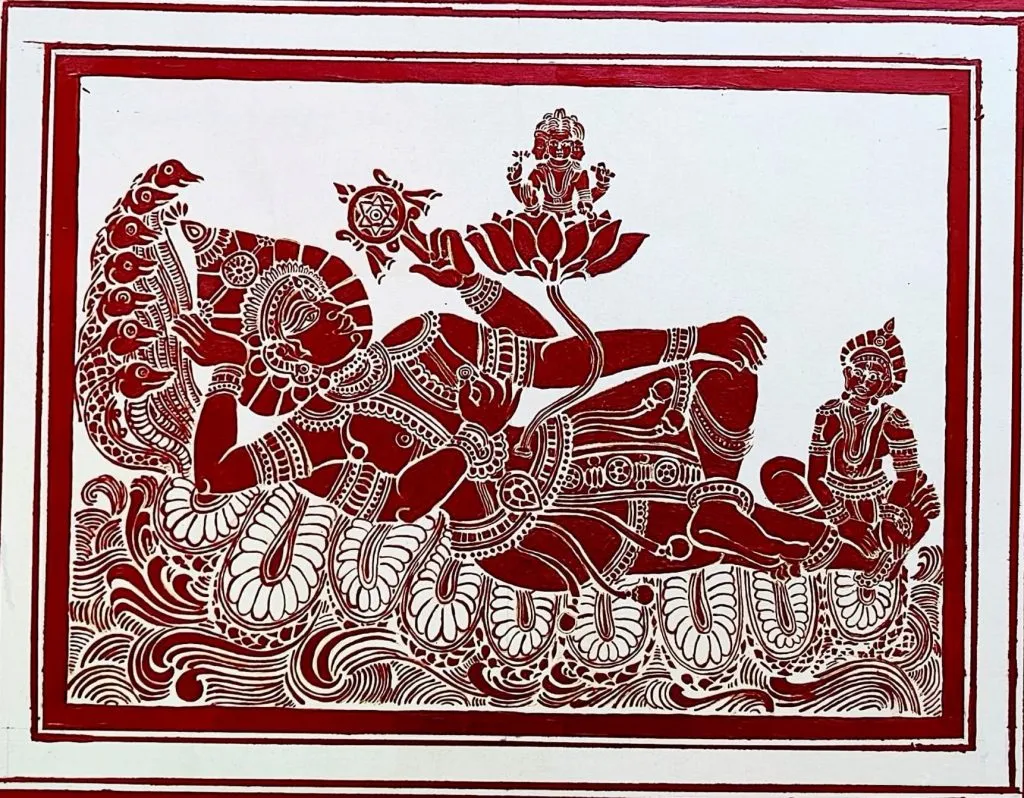
Kaavi art refers to a mural tradition indigenous to the Konkan coast, especially in Goa and adjoining parts of coastal Maharashtra and Karnataka. The term “kaav” denotes the maroon‑red pigment that artisans derive from laterite soil, while the white ground comes from lime plaster made with burnt seashells. Scholars date the practice to roughly 400 to 600 years ago and link its development to Saraswat and other communities that adapted decorative techniques to humid coastal architecture.
Artists apply a smooth layer of lime plaster to temple walls, house facades or church interiors and then coat the surface with the red pigment mix. While the top layer remains damp, they incise designs with steel bodkins and compasses, which reveals the white ground beneath. The finished murals appear as intricate red‑on‑white relief drawings that can withstand monsoon conditions better than many painted surfaces.
Kaavi imagery combines geometric bands, lotus motifs and ornamental borders with narrative panels that depict deities, ritual specialists, dancers and scenes from local folklore. Art historians note that some murals also include colonial‑era figures, which turns temple and church walls into layered visual records of regional history. Because Kaavi work appears across Hindu, Christian and domestic architecture, it embodies a shared coastal aesthetic rather than a single sectarian style.
Many Kaavi murals now face deterioration due to neglect, renovations and a decline in the number of trained artisans. Recent documentation projects, heritage walks and collaborations with contemporary artists seek to record existing examples and adapt the technique for smaller panels and interior design. These efforts position Kaavi as both a fragile coastal heritage resource and a potential reference point for sustainable, material‑driven mural practice in the present.
Athmaja Biju is the Editor at Abir Pothi. She is a Translator and Writer working on Visual Culture.