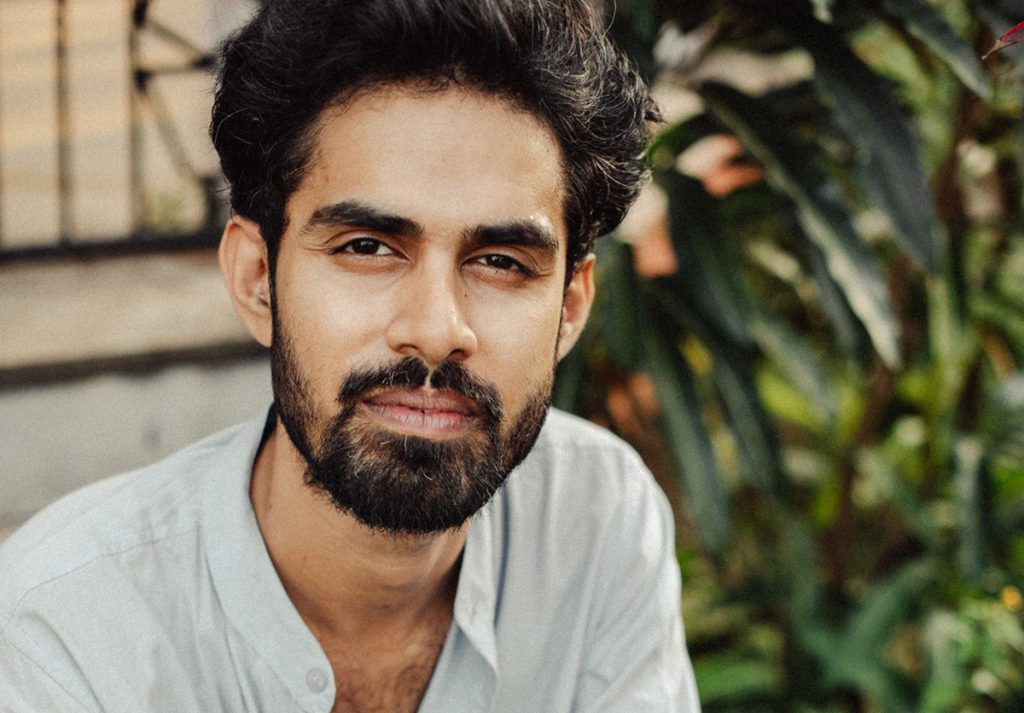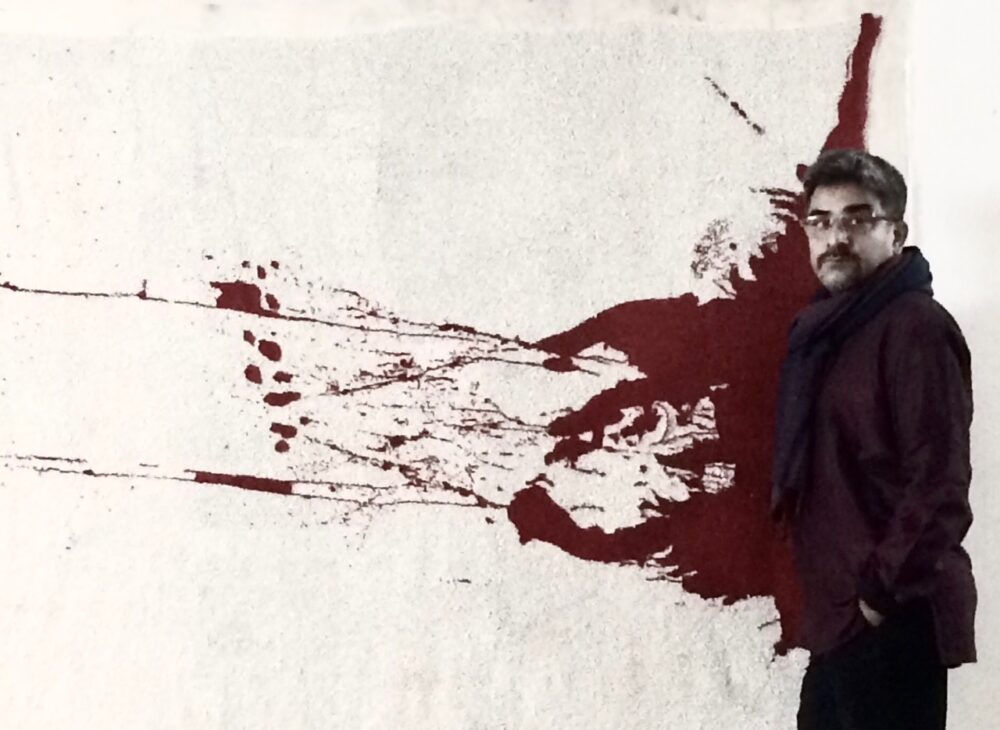
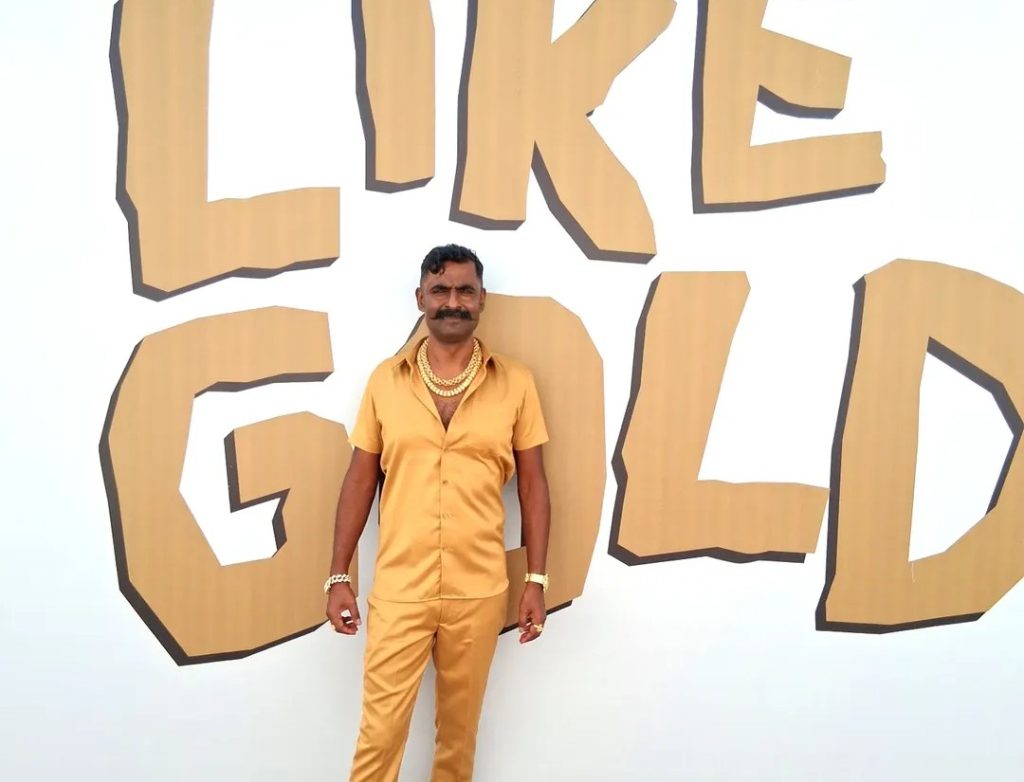
Cop Shiva is one of India’s most significant contemporary photographers. In Like Gold, a collateral exhibition at the Kochi Muziris Biennale, he presented ‘Being Gandhi’, which explores the tension between the banal and the formal, between bureaucracy and emotion, and exemplifies his ability to navigate and express the ambivalence of photography and contemporary visual culture.

Cop Shiva, who works as a police constable for the Bangalore City and also a farmer based in rural Karnataka, brings his direct engagement with the marginalised communities, located on the periphery of society, into an artistic space that perhaps is most akin to being an activist within the parameters of the institution he works for. This artist sees the state apparatus with a sensitive lens and feels the need to highlight the lives of those left out by society. This artwork reflects not only his views on the role of the state but also bears testament to the enormous focus and calm with which he executes the vivid depiction of social injustice.
Through renowned exhibitions such as Being Gandhi and Retake, as well as the India Art Fair, Kochi-Muziris Biennale, and Chobi Mela, Shiva has consistently questioned how images generate social, political, and semiotic significance. His subjects—who are frequently refugees, entertainers, and people leading unconventional lives—become mirrors reflecting the inconsistencies, aspirations, silences, and unresolved histories of modern-day India.
Cop Shiva discusses the two realities he lives in: the monotony of administrative work, reflected in his creative style, and his criteria for selecting sensitive subjects that raise ethical questions. He offers an apparent view of the documentation as a form of critique, the observation as a form of care and the citizen as the crossroads of possibility, power and history.
1) Your work in “Like Gold,” especially Being Gandhi, is described as a re-negotiation of the Indian story. How do you see your dual identity—as a police officer and an artist—shaping this re-negotiation?
I think it comes very naturally to me. I didn’t plan to become an artist while in the police; it just happened over time. As a police officer, I see society very closely—how power works, how people suffer, how rules affect everyday life. As an artist, I reflect on these same experiences. So my work comes from inside the system, from lived reality, not from imagination. That is why my work seeks to honestly re-examine India.
2) You’ve spoken about navigating the bureaucracy and pressures of the Bangalore police force. How does this lived experience influence the visual language of your art?
Police life teaches you discipline, patience, and control. There is a lot of waiting, silence, and pressure. Over time, these things enter your body and mind. My photographs also carry that feeling. They may look calm and simple, but there is tension inside them. That tension comes directly from my everyday experience in the police force.
3) The name “Cop Shiva” itself reflects a merging of professional and artistic identities. How did this ontological convergence evolve for you over time?
In the beginning, I never thought of this name seriously. Photography was something personal for me. But slowly, people started calling me “Cop Shiva,” and I realised they saw both sides together. Over time, I came to accept that I cannot separate these identities. Being a cop and being an artist are both part of who I am. The name simply reflects my real life.
4) Your transition from the rural landscapes of Karnataka to the urban complexity of Bangalore marked a turning point. How has this rural-urban journey shaped your understanding of portraiture and representation?
Village life taught me closeness and simplicity. People are open, and relationships are direct. When I moved to the city, I saw a very different world—fast, crowded, and often lonely. These two experiences shaped how I photograph people. I don’t try to make dramatic portraits. I focus on presence and reality. My portraits carry both rural honesty and urban complexity.
5) Your exhibition history includes major platforms—such as the Kochi-Muziris Biennale, the India Art Fair, and Chobi Mela. How have these diverse contexts influenced your artistic evolution?
Showing work in different places helped me understand how images are read differently. In some spaces, people focus on politics, in others on emotion or culture. This taught me that photographs are not fixed—they change with context. It gave me confidence to trust my own experience while allowing multiple interpretations. It helped my work grow without losing its roots.
6) Being Gandhi transforms a rural schoolteacher’s performance into a philosophical inquiry on national ideals. What drew you to Bagadehalli Basavaraj, and what does his continuous Gandhian enactment reveal to you?
What drew me to him was his sincerity. He was not trying to perform for the camera or for recognition. He was living Gandhi every single day, quietly. That honesty stayed with me. His life made me realise that Gandhian values still exist outside politics and institutions. They survive through ordinary people, without noise.
7) Your work challenges Ansel Adams’s formalist idea that “there are only good photographs” by emphasising semiotic depth. What, for you, makes a photograph “meaningful” rather than merely aesthetically strong?
For me, beauty alone is not enough. A photograph becomes meaningful when it carries a life experience. It should have social, political, or emotional depth. When an image makes you stop and think, when it stays with you, then it works. Meaning comes from context and lived reality, not just good composition.
8) Many of your subjects occupy liminal spaces—migrants, performers, people living non-normative lives. What compels you to foreground these peripheral identities within the fine-art canon?
These lives are very close to me. They live with uncertainty every day. I feel they reflect society more honestly than people at the centre. Their stories are often ignored, but they carry strong truths. By photographing them, I want to give dignity and visibility. It is both a personal and ethical choice for me.
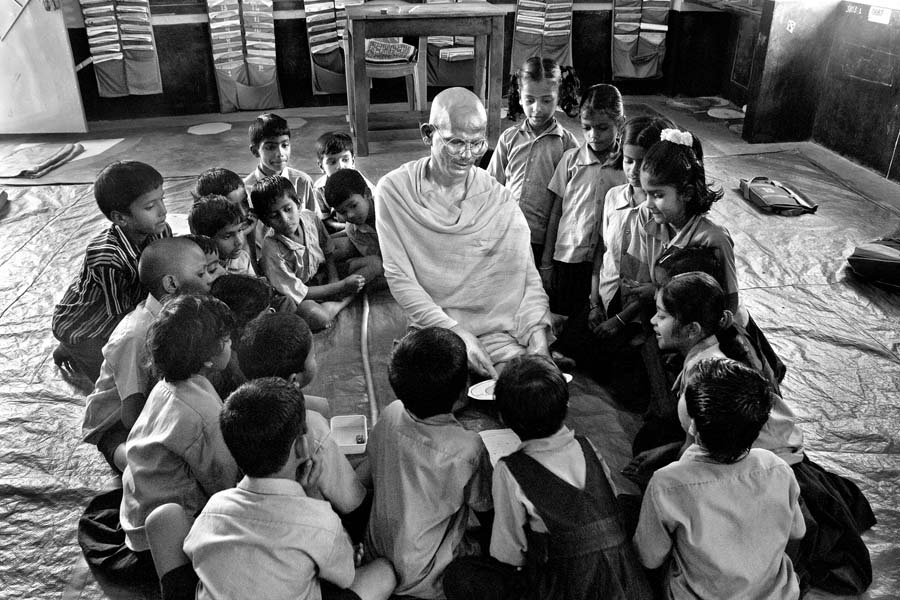
9) Being Gandhi explores the tension between Gandhi as an iconic signifier and Gandhi as a lived performance. How do you navigate this dialectic in your visual storytelling?
I try not to freeze Gandhi as an icon. I focus on everyday action and repetition. In my work, Gandhi exists as a way of living, not as a statue. I allow belief and doubt to exist together. I don’t explain everything. I let the viewer experience that tension.
10) In Retake: Galaxy of Musicians, you reconstruct Raja Ravi Varma’s classical tableau by placing cut-outs in contemporary social spaces. What questions are you raising about the “classical” and its continued authority in Indian art history?
I wanted to question who decides what is classical and timeless. When these figures move into today’s spaces, their authority changes. They start to feel unstable. The work asks whether tradition is fixed or whether it can be questioned. It also looks at hierarchy in Indian art history and who controls it.
11) Your practice often collapses historical categories and present-day realities. How do you understand the relationship between reproduction, historiography, and the ordinary subject?
For me, reproduction is a way to reopen history. History is not only about great figures—it lives through ordinary people. By placing historical images into present-day life, I show how the past continues to repeat itself. This makes history active, not something locked in books or museums.
12) As someone trained to observe with forensic precision, how do you reconcile the police officer’s gaze with the artist’s urge to witness, empathise, and speculate?
Police work trained me to observe carefully and notice details. Art taught me to slow down and feel. I don’t reject my police gaze—I change it. Observation becomes listening, and control becomes empathy. This balance shapes how I see people and the world.
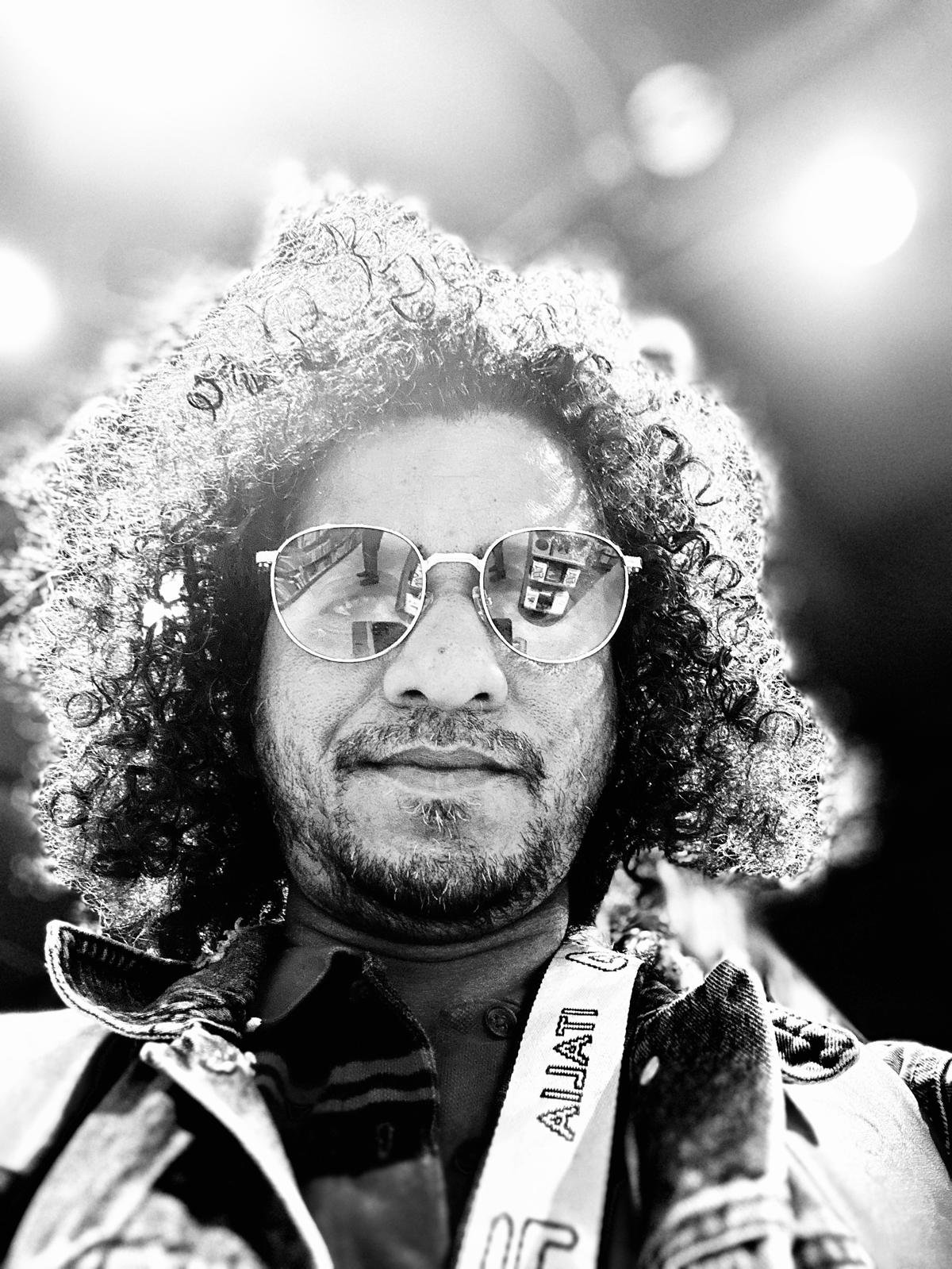
Krispin Joseph PX, a poet and journalist, completed an MFA in art history and visual studies at the University of Hyderabad and an MA in sociology and cultural anthropology from the Central European University, Vienna.