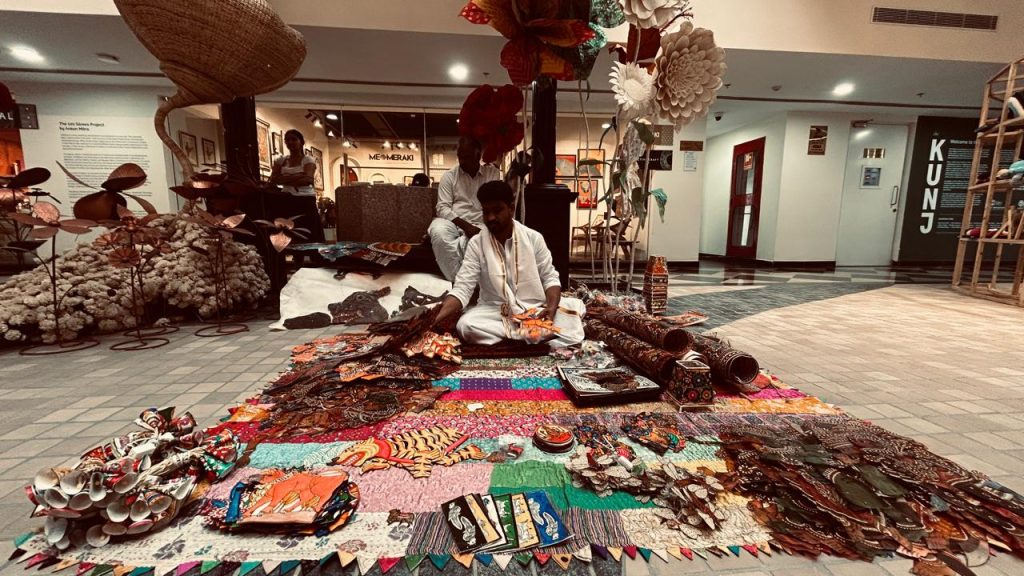
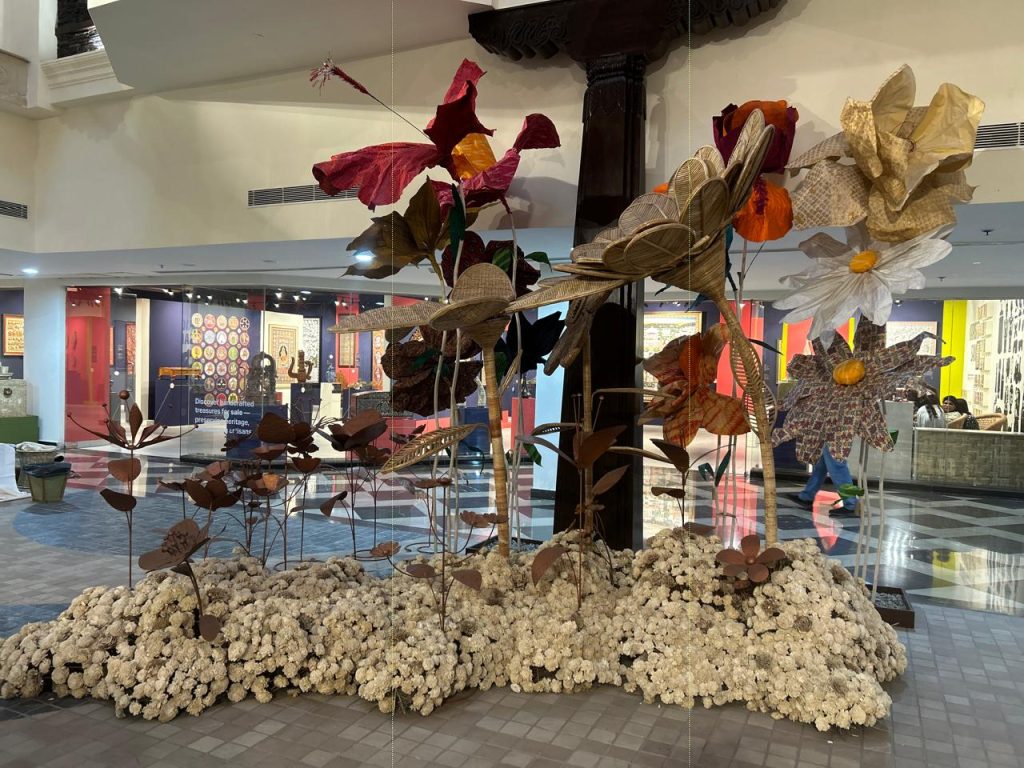
HASTAANTAR: Dawn of Transmission, a one-day exhibition organised by Jiyo Live It, unfolded as a thoughtful and immersive exploration of how knowledge lives, moves, and endures through the human hand. More than a conventional showcase, the event positioned itself as a living archive—one that foregrounded memory, labour, and embodied knowledge as central to India’s cultural continuity. Rooted in the philosophy that the hand is both a vessel and a transmitter of lived experience, Hastaantar created a space where craft, performance, language, and technology intersected meaningfully.
The curatorial vision was both innovative and ecologically sensitive, emphasising sustainability not only in materials and processes but also in the preservation of intangible heritage. By mapping and bringing together diverse communities of artists and craftspeople, Jiyo Live It reinforced its commitment to repositioning traditional practices as dynamic, future-facing legacies rather than static relics.
The workshops, held between 1:00 PM and 3:30 PM, formed the experiential core of the exhibition. Charkha Naulakha opened the afternoon with a meditative charkha-spinning performance interwoven with the evocative poetry of Bulleh Shah. The subsequent session with Nila Jaipur extended this into a tactile engagement, allowing participants to understand spinning as both rhythm and resistance—a practice deeply tied to histories of self-reliance and identity.
The Last Calligrapher offered one of the most compelling narratives of transmission. Featuring Mohammad Ghalib, often regarded as the last traditional calligrapher of Old Delhi, alongside graphic novelist Vishwjyoti Ghosh, the session traced the journey of script across mediums. It demonstrated how the handwritten form evolves into visual storytelling, bridging analogue precision with contemporary interpretation. This dialogue between fading traditions and new media was particularly resonant.
In Mudra, Geeta Chandran, in collaboration with NAB Delhi, expanded the idea of “touching language” into a multi-sensory experience. By engaging gesture, movement, and accessibility, the session challenged conventional notions of communication, highlighting inclusivity as an essential dimension of cultural practice.
The conversations segment (3:30 PM – 7:30 PM) deepened the day’s intellectual engagement. Haath-Kathit brought together Nina Sabnani and Anuj Sharma in a rich discussion on embroidery as narrative, pedagogy, and animation, revealing how threads can function as both medium and message. Hazaar Bazar tackled the pressing question of market access for artisans, offering a grounded analysis of haats, malls, and e-commerce that balances opportunity with critique.
Designer, Karigar Aur Voh stood out for its timely reflection on the relationship between artisans and emerging technologies like AI. The dialogue, featuring Jiyo alums and karigars, did not frame technology as a threat but as a threshold—one that demands careful negotiation to retain authenticity while embracing change. The closing session, Vishwaroopa, brought together artists such as Manjunath Kamath, Bhajju Shyam, and Santosh Kumar Das, weaving contemporary, tribal, and traditional visual languages into a shared narrative space.
Equally significant were the participating craft and artisan groups, which grounded the exhibition in material practice. The Bell Metal Craft of Tikamgarh exemplified a deep-rooted metallurgical tradition, with its intricate lost-wax casting process underscoring the precision and individuality inherent in handmade production. Each piece, shaped through a labour-intensive and non-replicable method, embodied both heritage and adaptability.
The inclusion of Crochet & Handcrafted Textile Art highlighted the evolving potential of a widely familiar yet under-recognised craft. By showcasing contemporary applications such as amigurumi and diversified product design, the exhibition foregrounded crochet as a viable and innovative livelihood, capable of responding to global markets while retaining its handmade essence.
The presence of Mirasi, the craft-led label founded by Tanya Berry and Lara Chandra, added a vital dimension of design intervention and ethical collaboration. With its emphasis on handwoven textiles, natural dyes, and long-term partnerships with artisans, Mirasi exemplified how tradition and modernity can coexist. The brand’s philosophy of “inheritance” resonated strongly with Hastaantar’s overarching theme, reinforcing the idea of craft as a living, evolving legacy.
Overall, HASTAANTAR: Dawn of Transmission was not merely an exhibition but a carefully curated ecosystem of ideas, practices, and dialogues. It succeeded in bridging generational, disciplinary, and technological divides, offering a nuanced perspective on sustainability—not just an environmental concern but a cultural imperative. By centring the hand as both a tool and a metaphor, the event left a lasting impression of continuity, care, and creative resilience.

Contributor