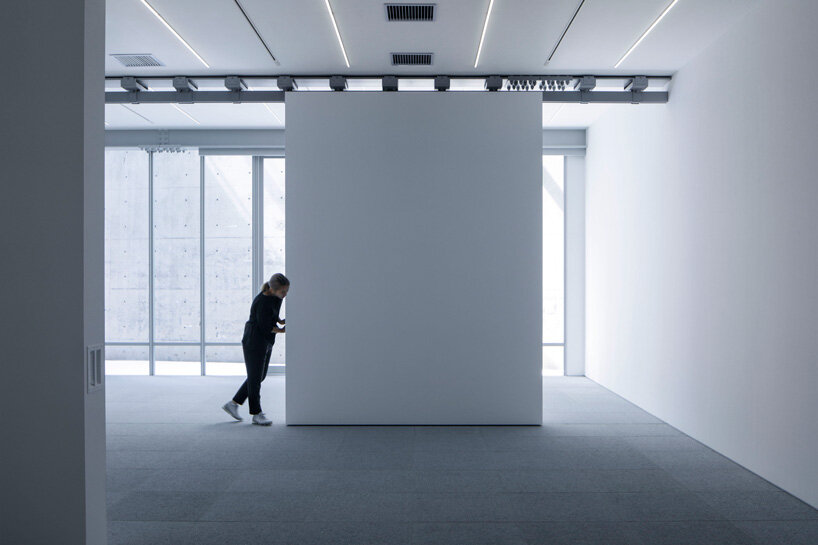
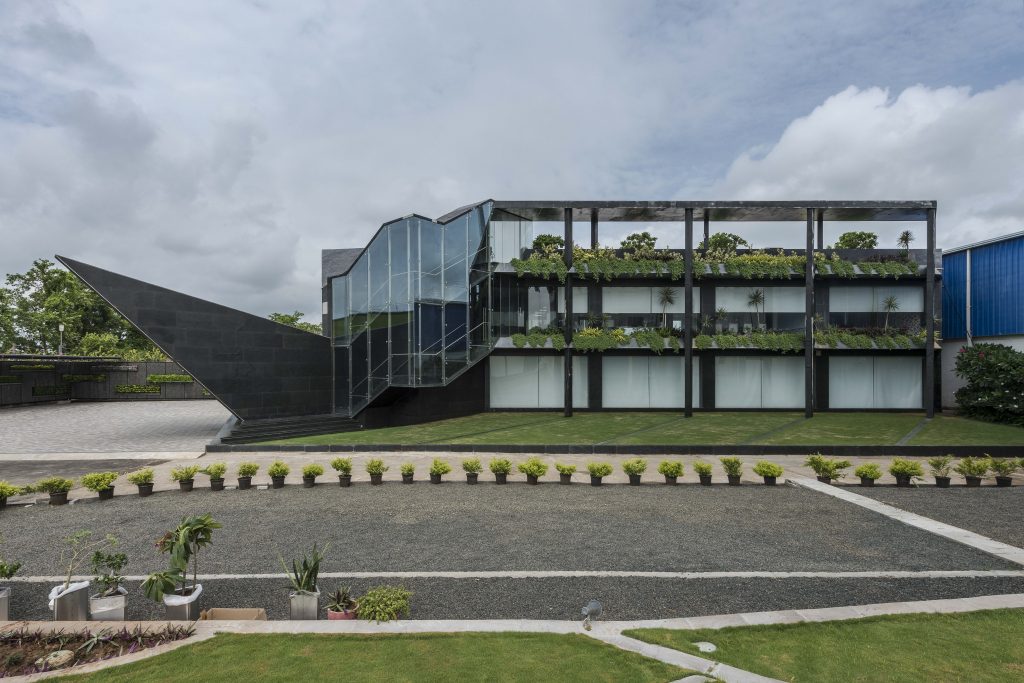
In an industry that often celebrates the loud and the monumental, Nayan Shah, founder of the Mumbai-based studio Palindrome Spaces, prefers a different frequency. Since establishing the firm in 2018, Shah has been quietly refining a design language where light, proportion, and memory take center stage, recalibrating the rhythms of daily life without ever “shouting for attention.”

Educated in India and seasoned through years of diverse residential and retail practice, Shah’s portfolio now spans from the intimate to the expansive. Whether it is the Mediterranean-inspired Slice of Amalfi in Thane, the sprawling 75,000 sq. ft. GOMA Headquarters, or the thoughtfully crafted Villa Anantya in Vapi, his work remains consistently context-driven and emotionally intelligent.
His approach has caught the eye of major publications—including GoodHomes, Society Interiors, and Rethinking The Future—yet Shah remains refreshingly grounded. He often describes his role with a disarming simplicity: “I design things.” But look closer at those “things,” and you’ll find spaces meticulously built to hold the routines, relationships, and rituals of their inhabitants for decades to come.
As part of Abir Pothi’s DTalks series, Nayan Shah open up about his creative process, projects and design philosophy.

Q. How would you describe your signature design aesthetic, and how has it evolved while working in India?
Nayan Shah: My philosophy sits somewhere between memory, proportion and feeling.
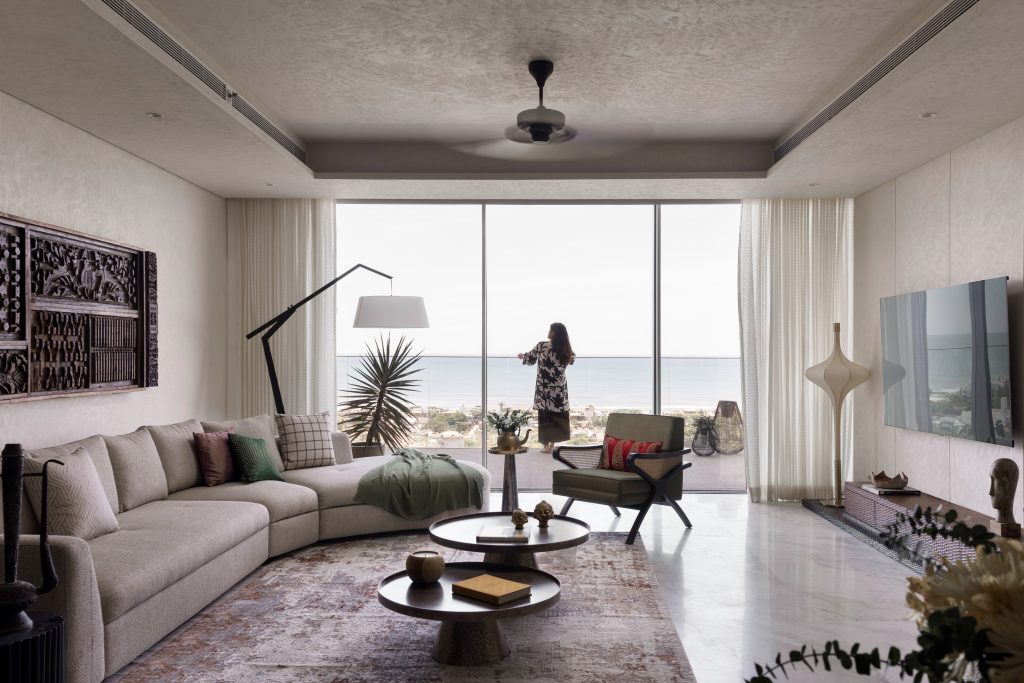
I am drawn to spaces that feel calm at first glance and then reveal themselves slowly. The structure is disciplined, the planning is clear, but there is always a softness in how edges, materials and light meet. In homes like Slice of Amalfi, Villa Anantya and Villa in the Sky, that balance shows up as relaxed, lived in luxury rather than something stiff or intimidating.
In recent years I have been particularly interested in a contemporary reading of modern Art Deco and modern neo-classical ideas—clean geometry, clear axes, quiet symmetry—softened by an Indian sense of maximalism. Not maximalism as clutter, but as layers of art, textiles and objects that carry memory. The challenge and the joy both lie in holding that potential “more” inside a very controlled, restrained frame.
Over the years my own language has shifted from “interesting form for its own sake” to a much more rigorous editing of what truly serves the user. I am less excited by dramatic gestures and more obsessed with flow lines, sight lines, thresholds and how a space behaves on a random weekday morning, not just on the day it is photographed.
Working in India has pushed this evolution. Tight city apartments, multigenerational homes, a design forward villa in an industrial town like Vapi, a sculptural office in an agricultural setting like Ace of Edges, a large engineering headquarters at GOMA. All of these demand clarity and empathy far more than they reward theatrics.
If I have to describe our signature today, I would call it quiet, contextual luxury. Soft forms, controlled proportions, warm and tactile materiality and a narrative that always begins with the client’s life and landscape, not a fixed house style.
Q. What influences and inspires your current work? Could you share some movements, designers, or elements of Indian culture that have shaped your practice?
Nayan Shah:I am influenced by architects and studios that manage to be both precise and humane. I relate to the restraint of Japanese modernism, the craft led clarity of certain Scandinavian practices and the way many contemporary Indian architects reinterpret vernacular ideas without being nostalgic.
I am also deeply shaped by Mumbai’s own layers of modernity—the city’s Art Deco buildings, old apartments with generous proportions and simple cornices, and the way older “classical” details sit next to everyday, working-class lives. That mix of modern Art Deco, quiet neo-classical order and lived-in Indian warmth has definitely seeped into the way I think about facades, grids and interior proportioning.
But my strongest influences are very local and very ordinary in the best way:
- Vernacular intelligence in India: courtyards, plinths, verandahs, jaalis, shaded thresholds and all the in between spaces where actual life happens.
- The layered texture of our cities: sun bleached walls, worn stone steps, old grilles, tropical greens pushing through concrete.
- Clients and their stories. Our own love for the Italian coast and our need for a home that felt like a retreat gave us Slice of Amalfi. A multi generational family home set within an industrial city became Villa Anantya. A high rise penthouse with a strong relationship to sky and horizon led to Villa in the Sky. An engineering-led company with deep factory roots shaped the tone and narrative of GOMA Headquarters.
So while I follow global movements, my design compass is set by light, heat, monsoon, family, ritual and the very particular way we live, host and work in India.
Q. Could you walk us through your creative process? How do you move from initial concept to final execution?
Nayan Shah: Our process is part detective work and part choreography.
- Listening and decoding
We begin with long conversations that have very little to do with furniture references. We talk about rhythms, habits, stress points, aspirations. In a project like GOMA HQ we spent time simply mapping how engineers, plant teams and leadership actually moved, met and worked before drawing anything.
- Site, light and bones
We treat every site as a character. Orientation, views, prevailing winds, neighbouring buildings, noise and privacy all feed into the first diagrams. For compact city homes and vertical villas, for instance, we are constantly tuning the relationship between light, storage, openness and acoustics.
- Concept narrative
Out of that emerges a clear narrative line. It might be “home that travels with you”, “villa as family anchor”, “office as landscape” or “apartment as sky pavilion”. That line then becomes a filter for every subsequent decision, from the plan to the hardware.
- Spatial planning and experience mapping
We work through plans, sections and 3D studies, but always with the experience sequence in mind. What you see at the door. How your body turns. Where your eye rests at the end of a corridor. Which axis feels public and which feels intimate.
- Detailing and prototyping
Once the big moves are locked in, we move into details. Joinery, junctions, custom lights, metal and stone interfaces, handrails, edge conditions. Many pieces are mocked up with our carpenters and fabricators before they go on site, so the final result feels seamless rather than improvised.
- On site improvisation
Reality on site always has a say. Material batches, local labour, small surprises. We treat the site as a live lab. Micro adjustments happen all the time, but the central narrative and proportion logic are protected quite fiercely.
Q. Your work often involves collaborations with artisans and other creatives. What draws you to these partnerships, and how do these collaborations enrich your design practice?
Nayan Shah: For us collaboration is not a garnish placed at the end. It is the way the work acquires its depth.
- Engineers help us make the invisible beautiful. In GOMA Headquarters, the structure and services had to support high pressure industrial processes and still feel human, daylight rich and green. That only happened because the engineering and architectural thinking were in constant conversation.
- Artisans and fabricators bring texture, nuance and cultural memory. The carved edges, layered joinery and crafted metal work in homes like Villa Anantya and Villa in the Sky come from many on site discussions over tea with carpenters, polish teams and metal workers, not just from drawings.
- Other creatives such as lighting designers, photographers and product designers push us to see the work differently. The way Ace of Edges has been photographed, for instance, made us even more conscious of how its biophilic and sculptural qualities are perceived by users.
I enjoy collaborations where everyone at the table has a stake in the outcome. The architecture then becomes more layered, more specific and ultimately more generous.
Q. Looking back at your portfolio, which project represents a significant turning point in your career, and among your recent works, what project are you most proud of and why?
Nayan Shah: Ace of Edges in Pandhurna was a clear turning point. It is a commercial office sitting within an agricultural landscape. Designing something that was simultaneously bold, biophilic and rooted in a relatively small town pushed us to resolve questions about context, aspiration and identity in a very sharp way. It proved that high quality design does not belong only to metro pin codes. It belongs wherever there is ambition and trust.
Among more recent work, I am particularly proud of Villa Anantya and GOMA Headquarters.
- Villa Anantya is a 10,000 sq ft family home in Vapi that allowed us to explore a maximal but considered language. It weaves vintage pieces and collected objects into a warm, layered shell without tipping into visual noise. It is a house designed as a long term anchor for a large, close knit family.
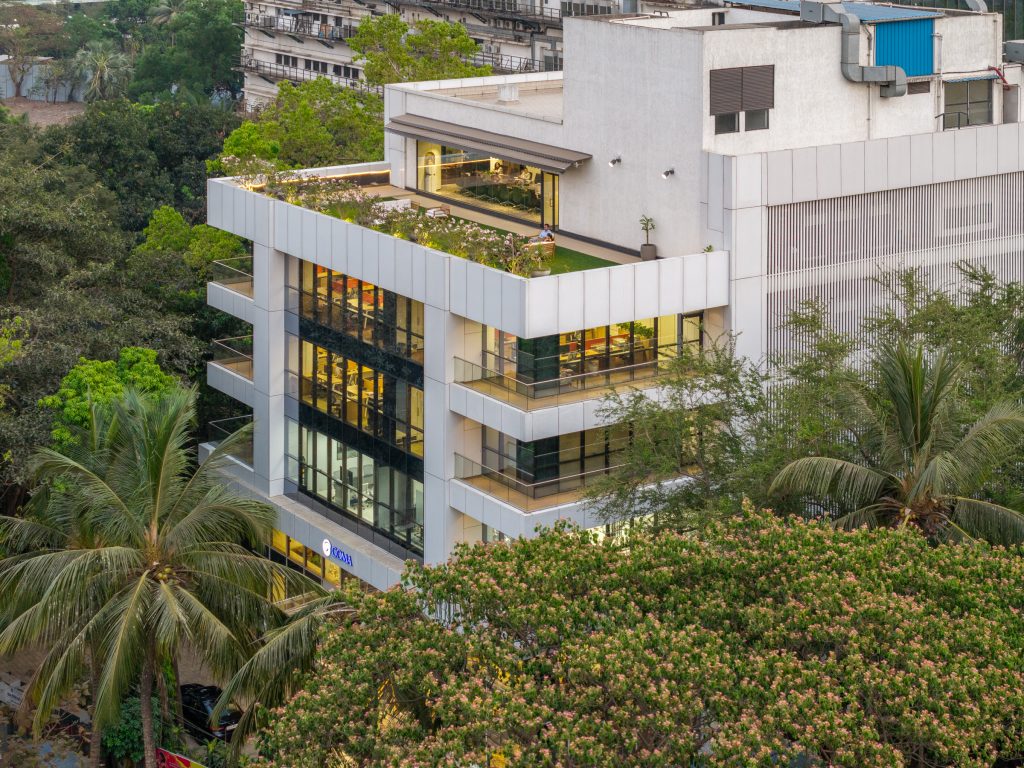
- GOMA Headquarters is a 75,000 sq ft engineering workplace where we were determined that efficiency would not come at the cost of experience. The building is daylit, green in key pockets and choreographed to support both focused work and informal exchange.
Together they represent two ends of our spectrum. A deeply personal, memory rich villa and a large scale corporate ecosystem, both designed with the same concern for proportion, light and emotional clarity.
Q. What unique challenges and opportunities have you encountered as an emerging designer in the Indian design industry, and how are you working to overcome these obstacles?
Nayan Shah: India is demanding in all the best and worst ways.
Challenges
- Material and labour levels can be unpredictable. Finishes, tolerances and skill sets vary widely, even within the same city.
- Approvals and regulations can be opaque and slow, which means project timelines always need intelligent buffers.
- Clients are increasingly global in what they see and expect, but their spaces are used in very Indian ways. High density, heavy use, extended families, staff and guests all sharing the same rooms.
Opportunities
- An extraordinary palette of local materials and crafts, from stones and metals to textiles and woodworking traditions.
- A climate that rewards passive strategies such as shading, cross ventilation, courtyards and deep reveals.
- A rapidly maturing design literacy. Younger clients and many tier 2 city clients want work that feels genuinely world class yet rooted in their own context.
We deal with this mix by being very practical in our planning and contracts and stubbornly idealistic about the quality of design and detail we are willing to accept.
Q. How do you approach sustainability and eco-friendly practices in your designs, particularly considering India’s traditional wisdom and contemporary environmental challenges?
Nayan Shah: For us sustainability is less about a separate checklist and more about a series of quiet decisions that run through the project.
- Passive first
We try to maximise natural light without glare, encourage cross ventilation, control solar gain and use shading intelligently, especially in large footprint projects like GOMA HQ and in west facing apartments and villas in Thane and Mumbai.
- Materials that age well
We prefer stone, lime based systems, engineered wood and well detailed metal over fashionable finishes that look good for a year and then need constant maintenance.
- Efficient and flexible planning
Compact cores, multi use rooms and generous built in storage reduce the need for frequent renovations and allow families to grow and change without constantly breaking walls.
- Green pockets and biophilia
From the way landscape is threaded into Ace of Edges to the placement of plants and outdoor nooks in our residential work, we treat greenery as both a cooling device and an emotional one.
We lean heavily on vernacular wisdom. Deep window reveals, perforated or layered skins, shaded transition zones are all recast in a contemporary language so they feel current, not nostalgic.
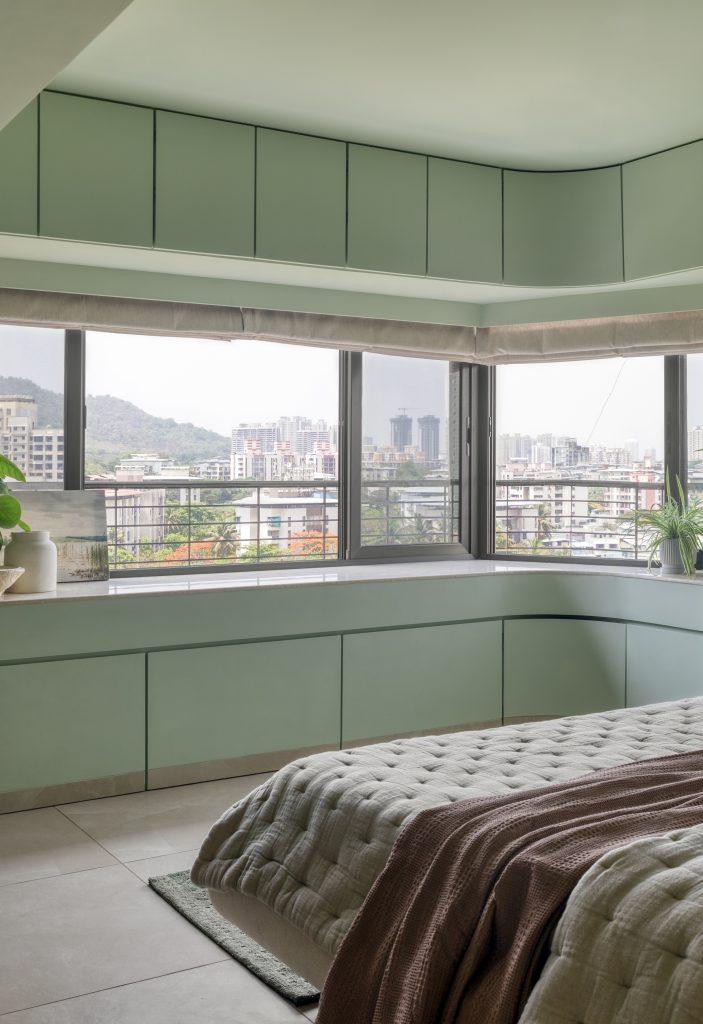
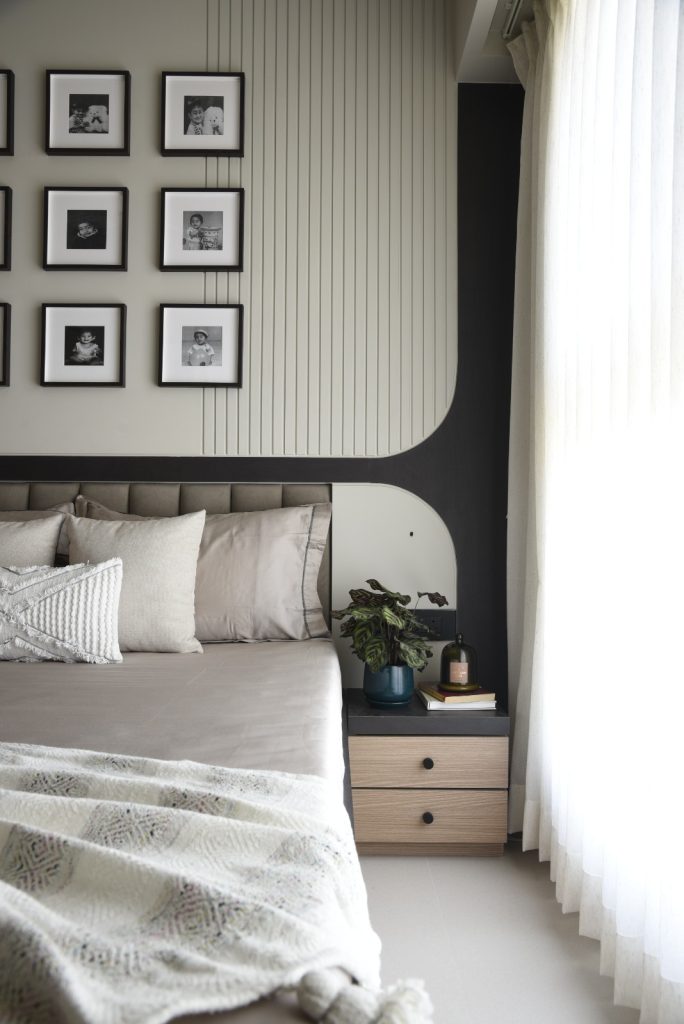
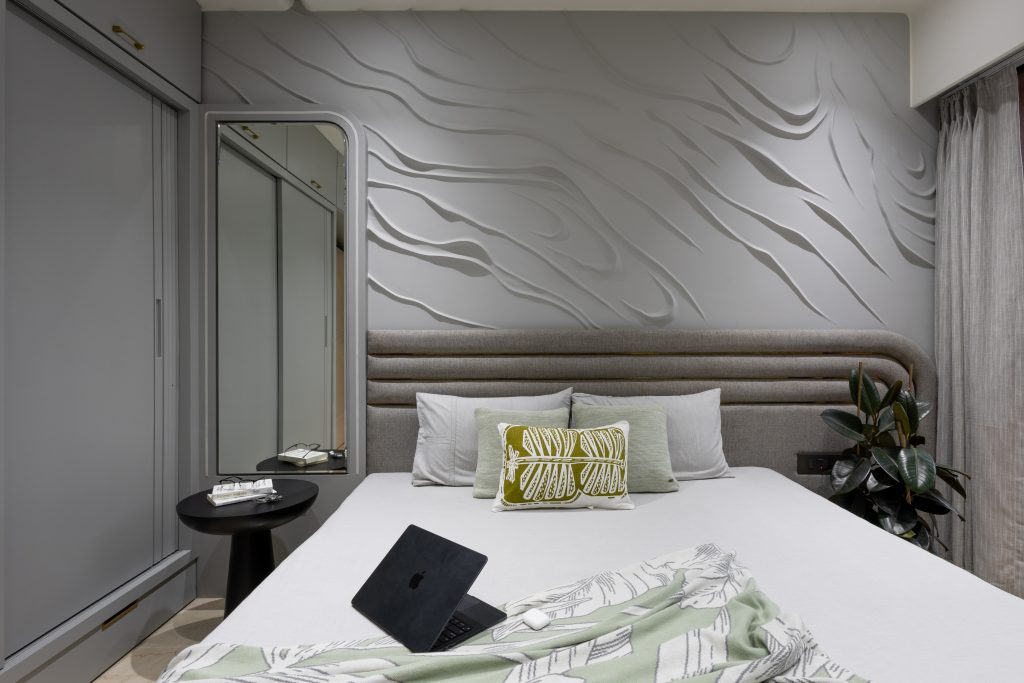
Sage Green Haven | Sukoon | Image Credit: Palindrome Space
Q. What’s your most exciting recent design or art discovery that’s influencing your current thinking?
Nayan Shah: Two ideas are currently at the front of my mind.
- The emotional performance of a space
Beyond comfort and function, I am very interested in how a space behaves emotionally across the day and across life stages. In projects like Villa Anantya, Villa in the Sky and Slice of Amalfi, we have deliberately created corners for decompression, quiet rituals and shared family time, so the home can soften the edges of daily stress rather than add to it.
- Workplaces as ecosystems instead of floor plates
GOMA Headquarters and Ace of Edges pushed us to think of workplaces as ecosystems. Movement paths, breakout zones, landscape pockets and formal meeting rooms are all tuned to support different kinds of work energy rather than simply fitting the maximum number of desks.
Both ideas keep nudging us away from composing single hero images and towards designing long, lived experiences.
Q. How do you build visibility and reach out to potential clients – what platforms and strategies have worked best for you?
Nayan Shah: Most of our work has come from three channels that feed into one another.
- Referrals and word of mouth
Clients who feel seen and well supported tend to come back for second and third projects and recommend us to their circle. That has been our most reliable source of aligned work.
- Editorial features
Publications like GoodHomes, Interiors & Decor, Society Interiors, ACE Update, Architect’s Diary, Homes India and Rethinking The Future have profiled different parts of our portfolio. This builds trust and helps potential clients see that our work holds up under independent scrutiny.
- A thoughtful digital presence
Instagram and other platforms allow us to share the process as much as the final result. Reels and posts around projects like Slice of Amalfi, Villa Anantya, Villa in the Sky and Ace of Edges give people a sense of how we think, draw and build, not just how we style.
We have noticed that the clients who are the best fit usually arrive after quietly observing us for a while, rather than after a single viral image.
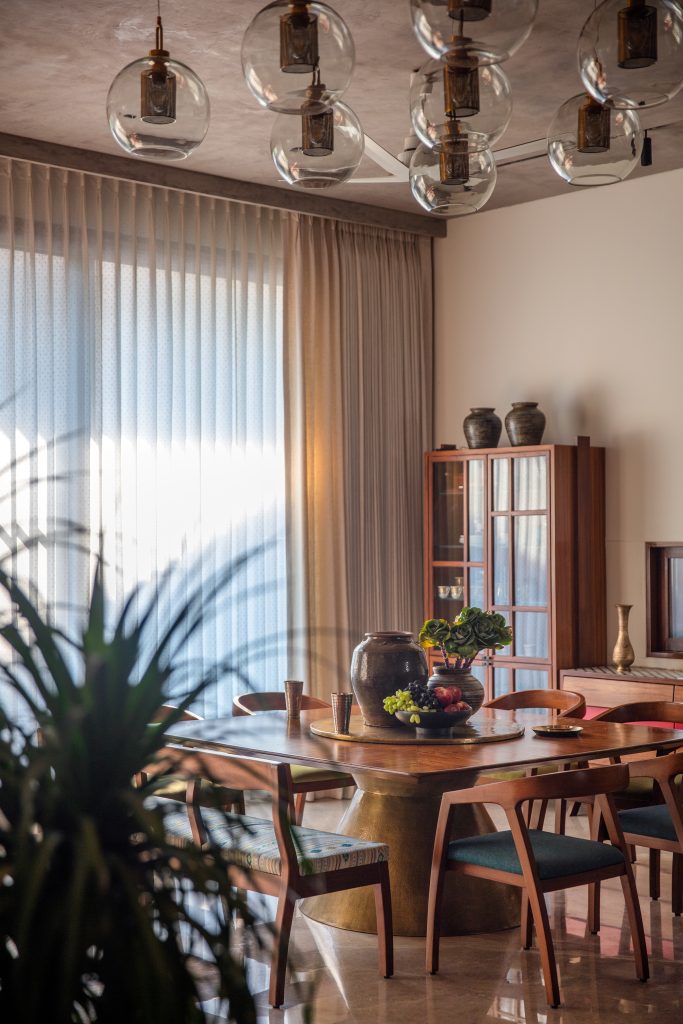
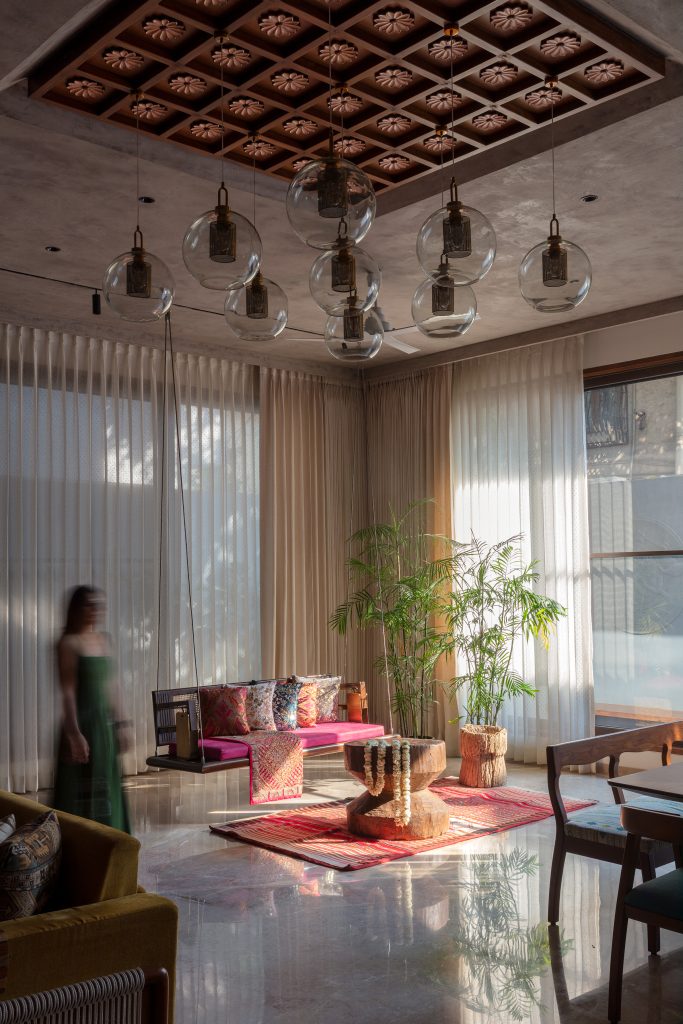
Anantya Villa | Image Credit : Palindrome Space
Q. From your experience, what are the crucial dos and don’ts for young designers trying to establish themselves in India, and what professional forums or communities would you recommend they join?
Nayan Shah: Dos
- Learn to listen. Your first responsibility is to understand a life and a site, not to impose a style.
- Get very good at the basics. Clear drawings, accurate BOQs, honest timelines and disciplined site supervision are what build your name.
- Respect budgets and time. Clarity and transparency here create long term trust.
Don’ts
- Do not design primarily for social media. A beautiful corner that fails on a working Tuesday will come back to you one way or another.
- Do not underprice your work indefinitely. You can be flexible early on but it should not become your permanent identity.
- Do not lift trends from elsewhere without understanding climate, culture and maintenance realities.
In terms of communities, I would encourage young architects to participate in juries, student crits, local design chapters and cross disciplinary forums with product designers, interior designers and makers. The most useful rooms are the ones where knowledge is genuinely exchanged, not just visiting cards.
Q. As you look ahead, what kind of projects or directions would you like to explore?
Nayan Shah: Looking ahead, there are three directions I would like to push further.
- Hybrid homes
Residences that combine living, working, wellness and hosting with ease, especially in dense Indian cities where space has to work harder and lives are more layered.
- Next generation workplaces
More headquarters and offices like GOMA and Ace of Edges, where the building acts as a cultural and emotional anchor for the organisation rather than just a neutral container.
- Small, high impact interventions
Compact apartments, vertical villas and weekend homes where the design intensity is high and budgets are used with precision. I enjoy the challenge of doing something finely tuned within tight constraints.
Across all of this, I want to keep exploring how architecture can be both emotionally intelligent and operationally ruthless. Spaces that feel like home while performing like a well engineered system.
Q. For aspiring designers looking to make their mark in India’s design landscape, what wisdom would you share from your journey?
Nayan Shah: India does not need more loud buildings. It needs buildings that are responsible, generous and intelligent.
A few thoughts for younger architects:
- Be more curious about people than about precedents. Plans get sharper when you pay attention to how people argue, make up, cook, pray, work and rest.
- Let climate and context be your starting teachers. If your building cannot survive without artificial cooling, something fundamental has been ignored.
- Respect craft. Spend time with masons, carpenters, welders and polish teams. They will teach you things no software is capable of.
- Play the long game. It takes time to build both a body of work and an ethical backbone. Do not rush that process.
If, ten years after completion, your users still feel at home in the spaces you designed, even after trends have shifted, then you are already shaping the future in a meaningful way.

Contributor