Sustaina in its 3rd edition deals with Bitter Nectar. The ongoing project curated by artist duo Jiten Thukral and Sumir Tagra in collaboration with CEEW is appropriately titled as it critically examines the environmental change that the world is witnessing, rooted of course in India. This year’s edition, examines climate change through fruiting cycles, food systems, and the concept of ‘abundance’. Using food and fruit as the entry point, the exhibition explores how shifting seasons, ecological stress, and changing agrarian systems are reshaping everyday life across India.

The project that showed recently at Bikaner House (February 1 to 15 2026) comprises of installations and videos that explore how ecological stress and changing agrarian systems are reshaping everyday life across India.
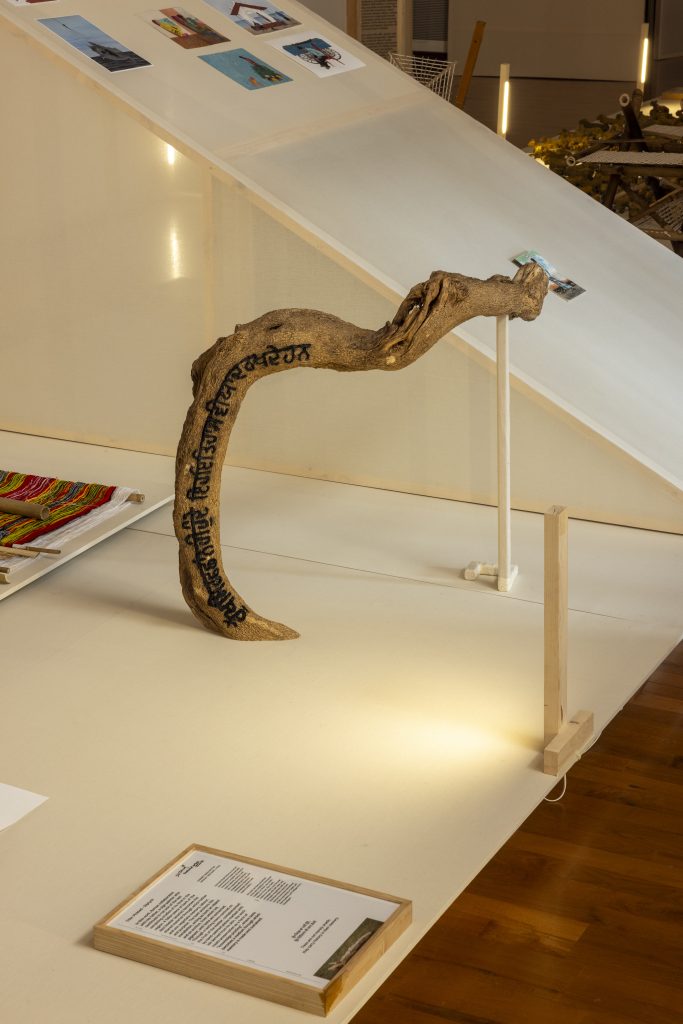
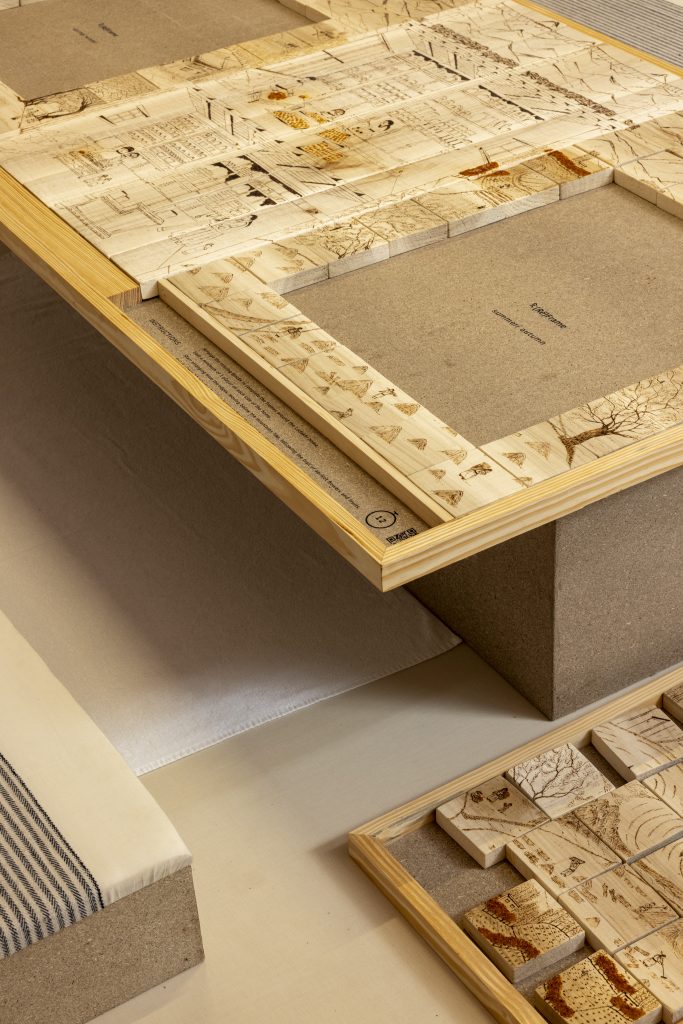
We are welcomed to solve a puzzle in order to win a supply of apricots! Anuja Dasgupta, an artist and ‘agri-preneur’ based in Ladakh, uses the apricot—a keystone of the region’s ecology—to explore interdependence, seasonal knowledge, and climate vulnerability in high-altitude communities. Viewers are encouraged to piece together the large puzzle made up of blocks of wood and engraved with an image of Ladakh mountainranges, the apricot trees and the surrounding livestock.
The video work by Vedant Patil deals with the fragile journeys of milk. It is artistically shot as the camera follows an elderly man delivering milk, all the challenges he faces and how the milk finally reaches its destination. It throws up several questions about sustenance of the industry and how the quality of the product has been affected by the various difficulties faced by those engaged in producing it locally.
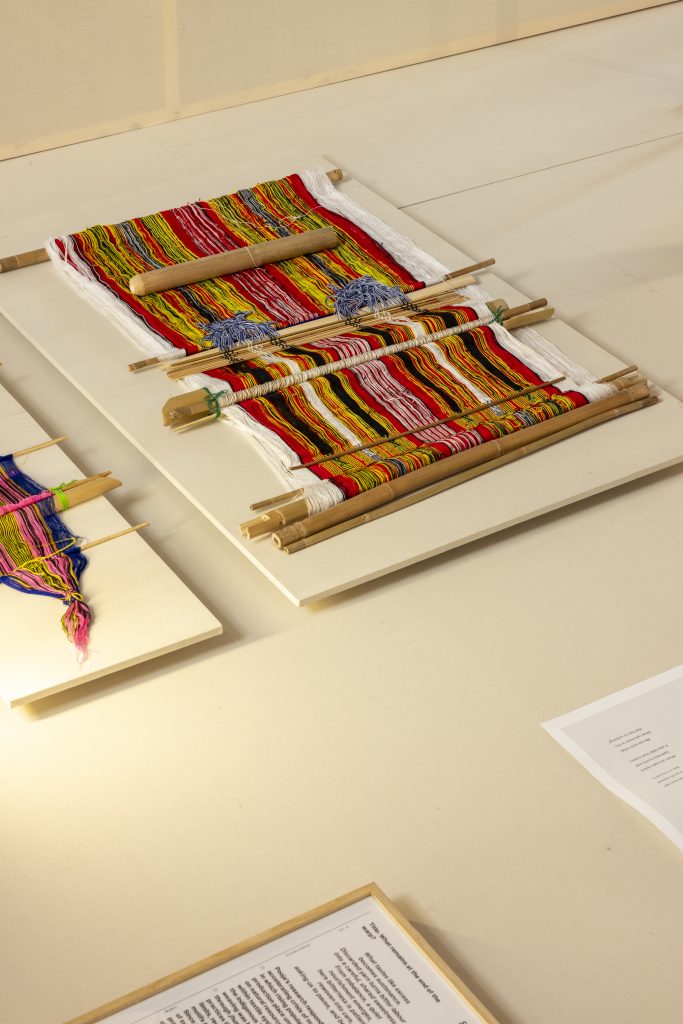
Another video by animator Smita Minda, features a girl who is unable to order anything for her birthday that is sustainable—be it the very paper cup she is drinking water in to the desert of berries she finally consumes. It is an emotional work that looks at the anxiety one can get while examining how the world works around the kind of food what are we order and how urgent the conversation really is.
The third video by Sidhant Kumar is a rather bone-chilling symbolic depiction of three men clad in the green net used to cover houses that are being constructed, as they walk around construction sites in Delhi and its outskirts. Then three dummies stuffed with waste, created to resemble the three protagonists, sit around a fire listening to a Sufi Bhajan playing in the background. The fire spreads to figures and finally they are burnt as they sit around a fire. The words of the Bhajan ring out appropriately. The film highlights that those least responsible for pollution suffer the most economically and physically from what is passed off as ‘pollution control’.
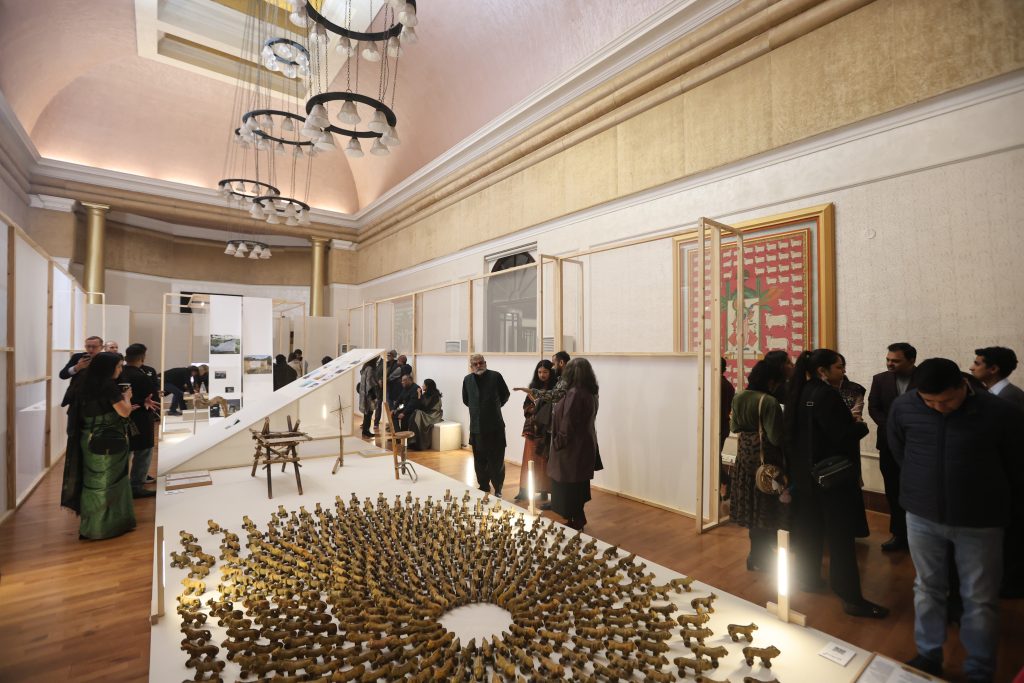
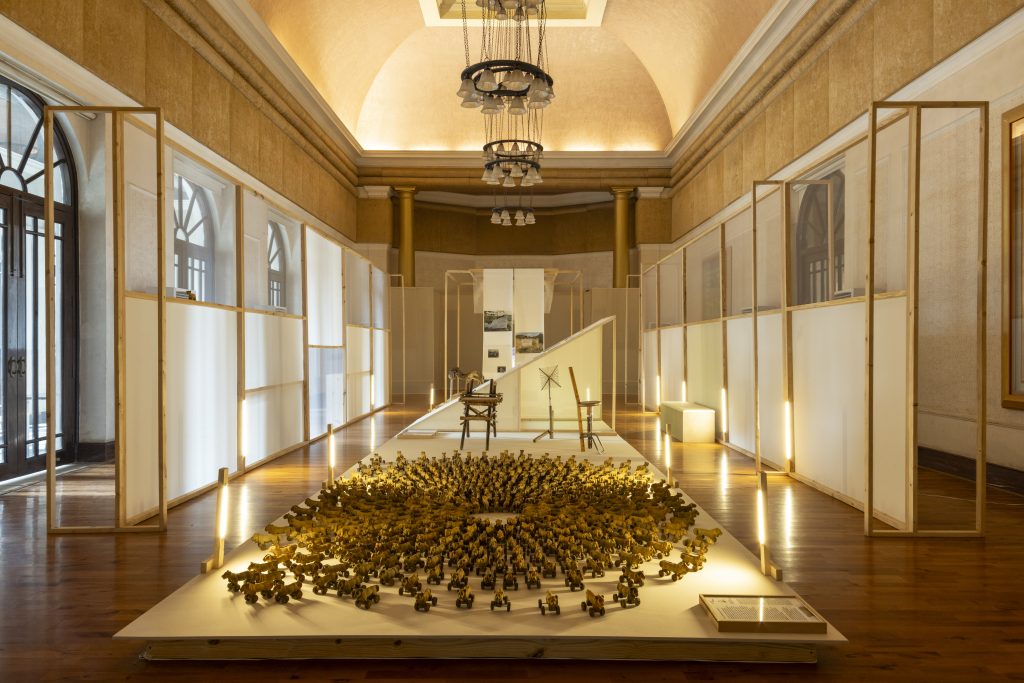
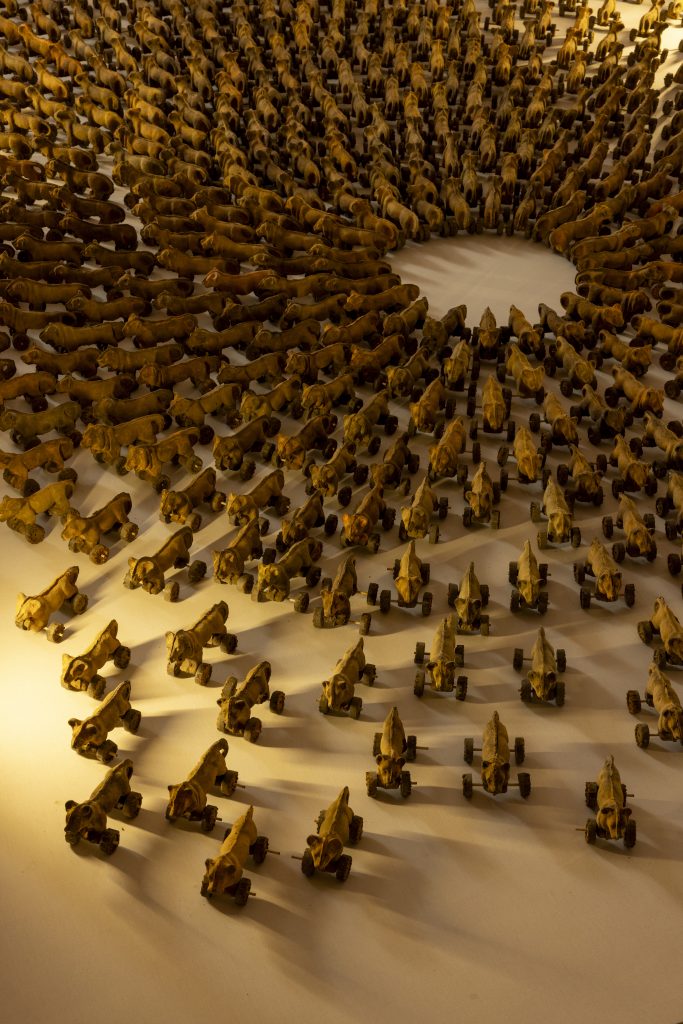
The arresting installation featuring 550 clay toy lions on wheels who appear to be radiating away from an empty circle. The work by Mrugen Rathod, refers to ‘single-species’ conservation in Gujarat’s Gir forests. This leads to an ecological imbalance because it neglects ecosystem-level health, which is causing Asiatic lions to move out of their habitat and encroach onto nearby mango orchards, leading to further disruption in the man-animal equation.
We wonder how Sustaina began for T ’n’ T and how it developed. “How it began was we have been working with the idea of farming but at the same time, climate action and how an individual sees it. It has been 10 years of climate action with CEEW, (Council on Energy, Environment and Water) and we have been looking at policy, research, design and arts. Sustaina India, was born out of these artistic practices. It ruminates on how we should be thinking about building this platform together,” says Sumir Tagra
How did that develop further then? “We kept artistic practice at the center of it. Action against and within the community and what do they look like, we look at the framework and mindset we have on the issue. Designers and artists have new ways of looking at the matter and walking the talk. We also looked at how do we practice these things in our studio, to the point of even reconsidering the materials we use like bubble wraps, and avoided using certain materials to design the exhibition,” says Jiten Thukral.
“We have our eyes and ears to the heart of it. First on the horizon and then on the ground. That is why the exhibition invites the viewer to look down to the ground,” he adds.
“For Sustaina 3 we decided to curate on our own, whereas last time we worked with Srinivas Aditya Mopidevi. This time he is an advisor,” recalls Tagra. “We worked from scratch on the project with 230 plus applications that were received and we singled out three prominent practices, involving fruits and the idea of ‘nectar’ from fruits like mangoes and apricots and milk. We looked at the artistic vision that takes place around this theme that essays the changes and shifts to capture the bitter nectar. We examined the uneasiness generated by this pursuit of ‘sweetness’, which we all engage in,” says Tagra.
The project looks at nostalgia and climate change, here but also at the same time how do the marginalized communities approach it. “This is what Sustainer looks at this year. It is seasonal, intergenerational knowledge that is passed on,” says Tagra. The artworks and installations highlight the fact that a particular fruit needs a type of climate, an ecosystem which will also shifts where lifestyles that get affected.
We are left mulling over the message long after the exhibition concluded.

Georgina is an independent critic-curator with 18 years of experience in the field of Indian art and culture. She blurs the lines of documentation, theory and praxis by involving herself in visual art projects. Besides writing on immersive art for STIRworld, she is a regular contributor for The Hindu, MASH Mag and Architectural Digest.