MAP’s third birthday on 18 February 2026 marks the consolidation of a museum that has quickly become one of India’s most important experiments in making art public. Opened on 18 February 2023 as South India’s first major private museum, the Museum of Art & Photography (MAP) in Bengaluru now sits at the intersection of collection, community and accessibility in a way few institutions in the country attempt.
A three-year milestone
To celebrate turning three, MAP is throwing the doors open: for an entire week, visitors can enjoy free entry to all exhibitions and digital experiences at the museum, alongside giveaways and a line-up of performances, workshops and film screenings. The institution is also turning the spotlight back onto its publics, inviting visitors to share memories of dates, family outings and moments of reflection at the museum via Instagram, foregrounding how personal and social the act of museum-going can be.
A museum for Bengaluru
MAP stands on Kasturba Road, in the heart of Bengaluru’s museum district, across from existing cultural institutions and overlooking Cubbon Park, positioning itself deliberately within the city’s civic and cultural life. From the outset, it has framed itself as a “melting pot” of ideas and stories, using art to build empathy and a deeper understanding of the world, and explicitly seeking to grow a museum-going culture in India rather than remain a niche destination for specialists.
Architecture and accessibility
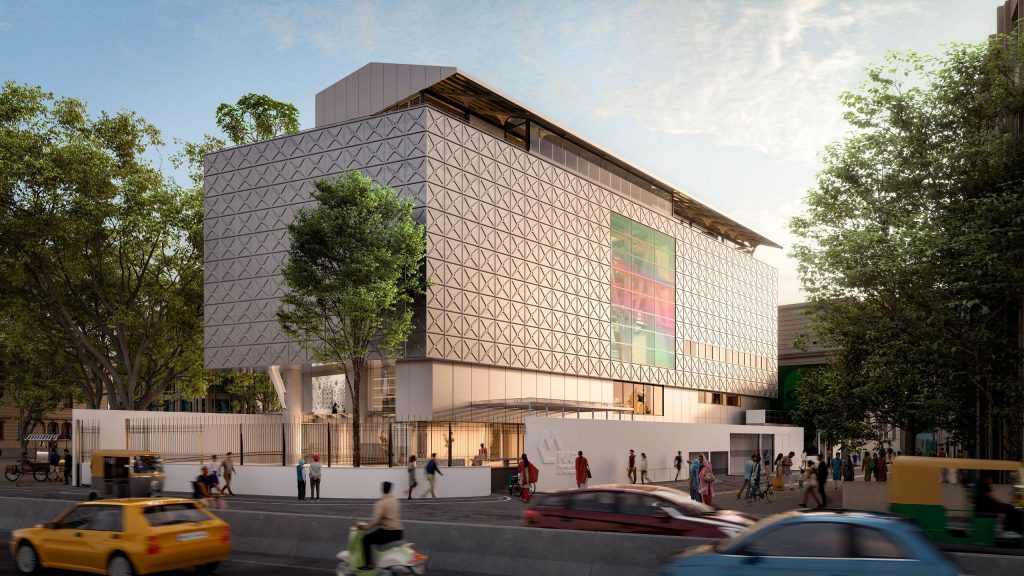
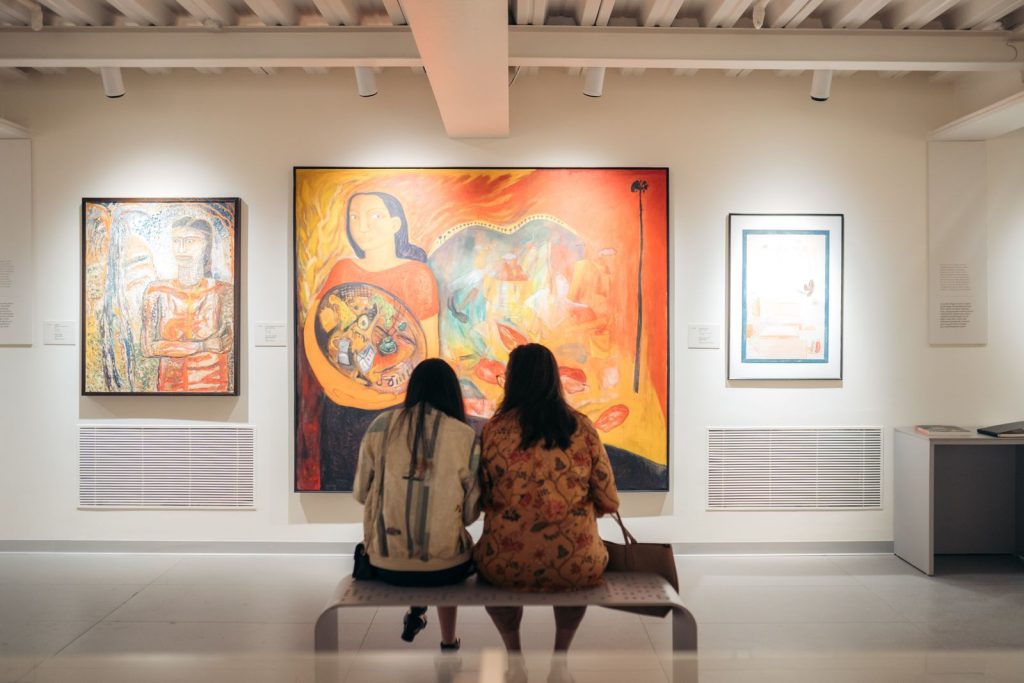
Designed by Bengaluru-based architects Mathew & Ghosh under the guidance of an architectural committee led by Rahul Mehrotra, MAP’s six-storey, 44,000-square-foot building reads as a stark, steel-clad volume whose embossed panels recall industrial water tanks. This metaphor of a vessel storing something precious is matched by an interior that deliberately recedes, maximising gallery and public space so that art and people, rather than architecture, dominate the experience.
Accessibility is not treated as an add-on but as core to the building and its programming, developed in collaboration with organisations like the Diversity and Equal Opportunity Centre to support a wide range of disabilities. Tactile exhibits, audio guides, Indian Sign Language walkthroughs, wheelchair access and other features have already earned MAP recognition such as the 15th NCPEDP–Mphasis Universal Design Award 2024 and a place among National Geographic’s “top cultural hotspots of 2024.”
A collection born of relationships
At the heart of MAP is a collection of over 60,000 objects spanning painting, sculpture, textiles, photography, popular prints and more, predominantly from the Indian subcontinent and ranging from the 10th century to the present. This breadth allows the museum to place an ancient bronze, modernist canvases and Bollywood memorabilia in the same narrative field, deliberately collapsing boundaries between so-called “high art” and everyday visual culture.
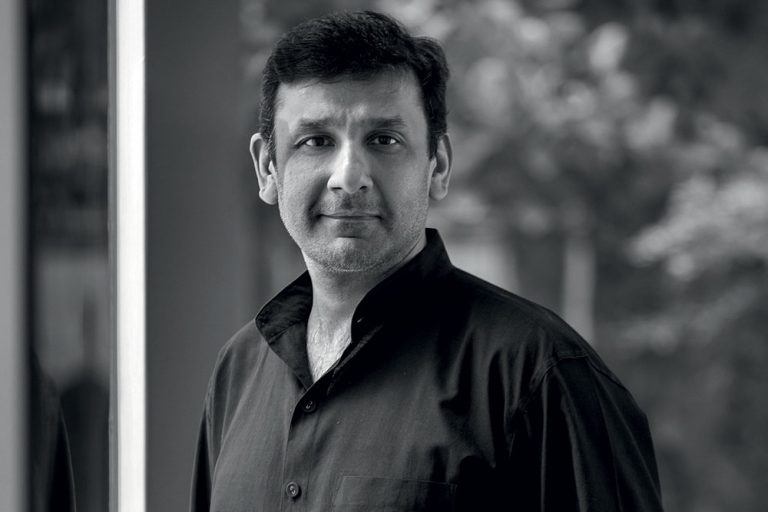
The nucleus of this collection is the art, photography and textiles assembled over three decades by industrialist and collector Abhishek Poddar, who donated around 7,000 works and substantial funds to seed the museum. Poddar’s early friendships with artists like Manjit Bawa, Tyeb Mehta, Ram Kumar, Arpita Singh and J. Swaminathan shaped his eye, and many of these names now anchor MAP’s holdings, turning a private network of relationships into a public cultural resource.
From digital beginnings to physical presence
Before its building opened, MAP launched as a digital museum in 2020, using online exhibitions and platforms like the MAP Academy to reach audiences during the pandemic and begin telling South Asian art histories at scale. This digital-first strategy has remained central, with the physical museum conceived not as a replacement but as an expansion of its virtual footprint, allowing people to move between screens, galleries and interactive installations with relative ease.
When the doors finally opened on 18 February 2023, MAP became the first new private museum of its scale to open in India in roughly a decade, signalling a fresh model of philanthropic and institutional investment in culture. In the three years since, the institution has used this hybrid identity to host exhibitions that range from photography retrospectives to contemporary commissions, often drawing connections between historical collections and urgent present-day questions.
Leadership and a shifting museum language
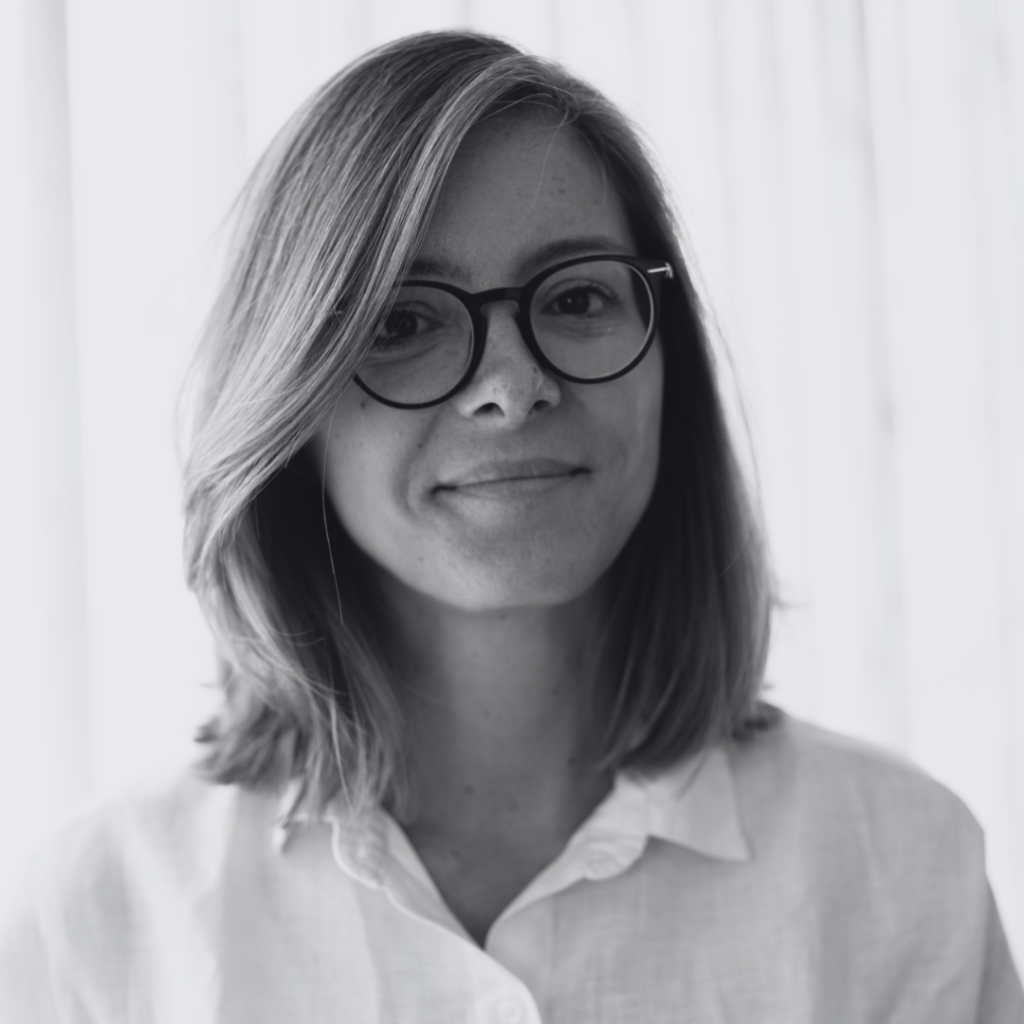
Today, MAP is led by museum director and curator Dr. Arnika Ahldag, whose previous work at the institution has focused on exhibitions that reframe underrepresented histories and explore how technology can open up access in playful, participatory ways. Her practice, grounded in research and teaching in India and beyond, dovetails with MAP’s ambition to see museums less as static repositories and more as dynamic spaces shaped continuously by their publics.
This vision extends to institutional care and intersectional approaches—thinking seriously about which stories are told, whose experiences are centred, and how different communities encounter the collection. In a city defined by technology and migration as much as by its older cultural institutions, this kind of curatorial and organisational stance positions MAP as both mirror and critic of Bengaluru’s rapid transformation.
Celebrating with community
For the third-birthday week, MAP’s mix of free admissions, performances, workshops and film screenings underscores how central live programming has become to its identity, turning the museum into a site of ongoing conversation rather than a once-in-a-while visit.
As MAP steps into its fourth year, the stakes it has set for itself are clear: to move the needle within India not only in how art is collected and conserved, but in how it is enjoyed, debated and shared. On its third birthday, the museum stands less as a finished project than as an evolving proposition—that in a city of code and capital, a steel “tank” full of images and objects can quietly, insistently, change how a society looks at itself.
Athmaja Biju is the Editor at Abir Pothi. She is a Translator and Writer working on Visual Culture.