The Grand Egyptian Museum (GEM) in Giza is a new, large-scale archaeological museum dedicated to the material culture of ancient Egypt, designed as the world’s largest museum focused on a single civilization. Located just outside Cairo near the Pyramids of Giza, it is planned as a flagship cultural and tourism hub, integrating galleries, conservation labs, public amenities and direct visual and physical links to the Giza Plateau.
Location and Architecture
The GEM stands on a site between central Cairo and the Giza pyramids, with the building oriented to frame views of the pyramid complex through large glazed facades. The total complex spans roughly 500,000 square metres, with the museum campus extending across about 50 hectares including exhibition spaces, gardens and visitor facilities.
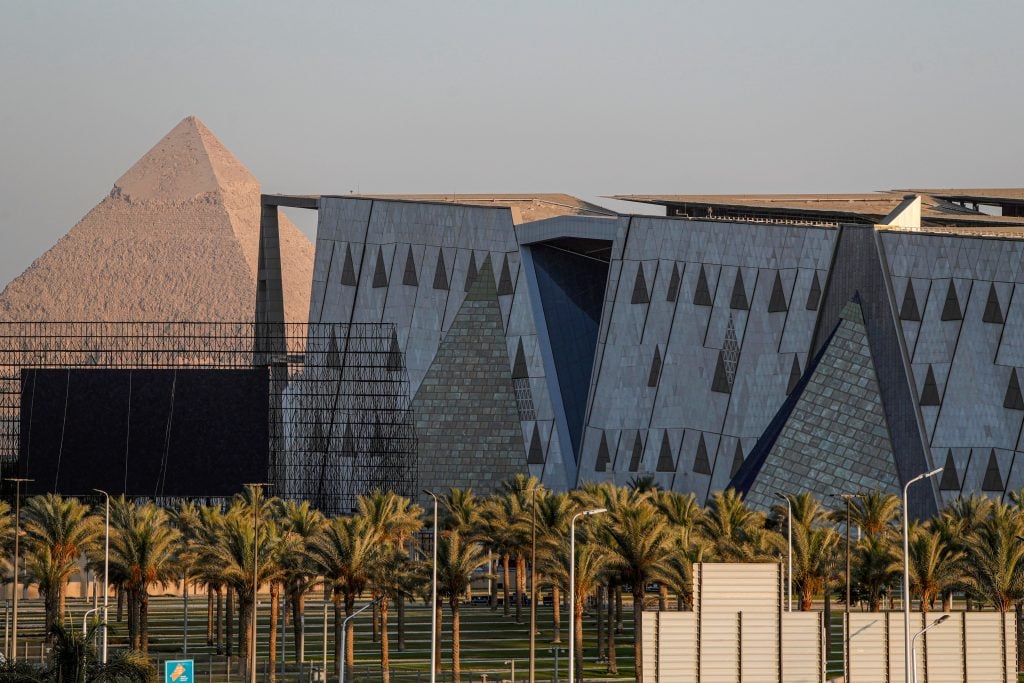
Designed by the Dublin-based practice Heneghan Peng Architects, the building employs a triangulated plan and a translucent stone facade referencing desert topography and pharaonic geometry without reproducing historic forms. A vast atrium and the Grand Staircase act as the primary interior organizing elements, connecting the entrance with the main exhibition halls and setting up axial views towards the pyramids.
Collections and Scope
The museum’s collection is estimated at over 100,000 artefacts, assembled from multiple Egyptian museums and storerooms and spanning from the Predynastic period through the Greco-Roman era, roughly from 3100 BCE to 400 CE. Objects have been transferred from institutions including the historic Egyptian Museum in Tahrir, regional museums in Luxor, Minya and Alexandria, and long-term storage depots.
Approximately half of the collection is intended for permanent display, with the remainder held in reserve or used in rotating and temporary exhibitions. The twelve main galleries together provide around 24,000 square metres of permanent exhibition space, organised by chronological phases and thematic sections such as kingship, religion, daily life and funerary culture.
Tutankhamun and Major Highlights
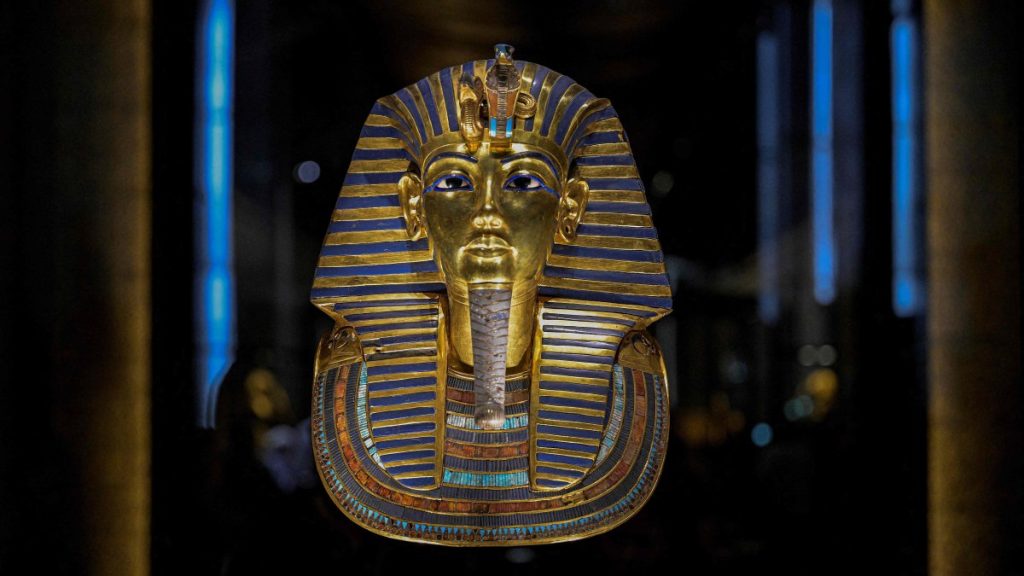
A central feature of the GEM is the comprehensive display of the funerary assemblage of Tutankhamun, presented in full for the first time since the tomb’s excavation in 1922. Around 5,398 objects from the tomb, including the gold funerary mask, golden throne, chariots, coffins, jewellery and domestic equipment, are planned to be shown in a dedicated suite of galleries of about 7,500 square metres.
Other major highlights include the 11-metre statue of Ramesses II installed in the Grand Hall, large-scale royal and divine sculpture lining the Grand Staircase, and the relocated Khufu solar boat displayed in a purpose-built gallery. The collection also encompasses sarcophagi, monumental stone architecture, reliefs, textiles and small finds, offering broad coverage of elite and non-elite material culture across millennia.
Visitor Experience and Facilities
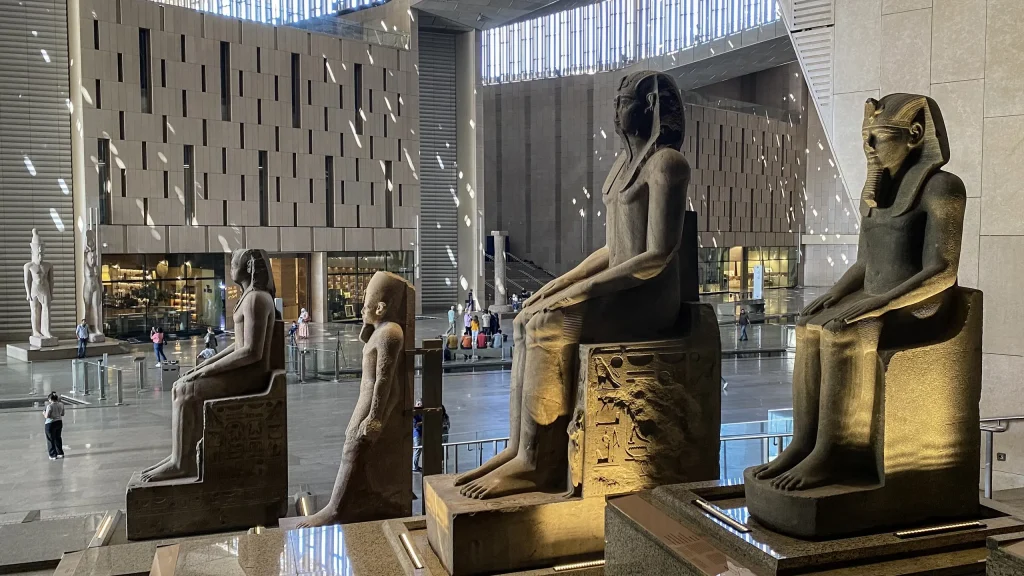
The visitor route begins in the Grand Hall, where the Ramesses II colossus and other large pieces form an introductory display before visitors ascend to the main galleries via the multi-level Grand Staircase. Tall glass walls at the southeast end of the building provide direct views to the Giza pyramids, while a bridge connection and electric shuttles are planned to link the museum with the plateau.
Beyond galleries, the complex includes conservation and restoration laboratories, a large conference centre, a 3D cinema, a children’s museum, retail areas, restaurants, a food court and landscaped exterior gardens. Visitor projections range from several million to up to seven million annually, positioning the GEM as a key instrument in Egypt’s tourism and cultural-economy strategy.
Opening Timeline and Strategic Role
Planning for the GEM began in the early 2000s, with construction starting in 2005 and experiencing multiple delays due to political upheavals, financial constraints and regional instability after 2011. Phased openings of selected galleries and public areas began prior to the full inauguration, with authorities positioning the museum as a cornerstone of Egypt’s broader heritage-led development and tourism diversification agenda.
The project budget has been reported at close to 1 billion US dollars, funded through a mix of Egyptian state resources, international loans and grants. As a result, the GEM is framed domestically as both a national prestige project and a major upgrade in the professional management, conservation and presentation of Egypt’s archaeological heritage.
Athmaja Biju is the Editor at Abir Pothi. She is a Translator and Writer working on Visual Culture.