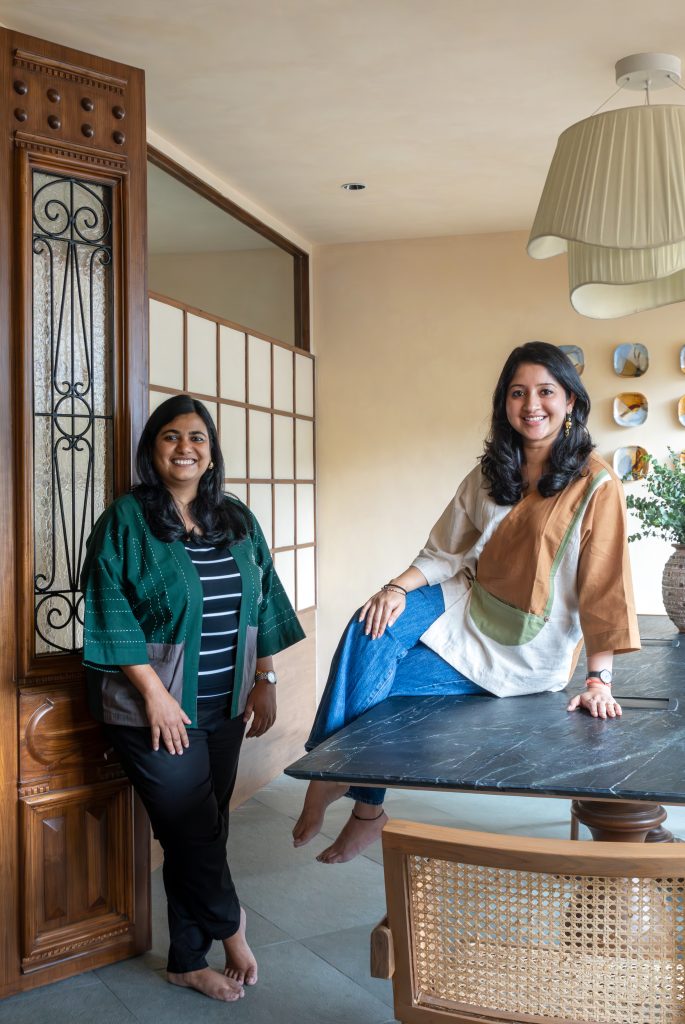
Based in Pune, Ninada Kashyap and Komal Mittal are the Principal Architects and co-founders of Alkove-Design, an architecture and interior design practice known for crafting spaces that feel deeply personal, intuitive, and emotionally resonant. Both architects hold degrees in Architecture—Ninada further pursued a Master’s in Advanced Architecture from Barcelona, while Komal completed her Master’s in Project Management from NICMAR.
Before establishing Alkove-Design, the duo honed their skills at leading firms in Pune and Bangalore, contributing to a wide spectrum of projects across education, residential, hospitality, and commercial typologies. Their shared vision led to the founding of Alkove-Design with a simple yet powerful belief: that architecture has the capacity to shape experiences and memories through thoughtful, context-driven design and the honest use of natural materials.
Over the years, Alkove-Design has grown into a celebrated name in the Indian design landscape, with their work featured in leading publications such as Architectural Digest, Elle Decor, ArchDaily, Buildofy, GoodHomes, and India Today Home. Ninada and Komal have also been invited to speak and showcase their projects on notable design platforms.
Their journey has been recognised with numerous national awards, including the Spaciux Design Golden Award (Small Living Spaces, 2024), Society Interiors & Design Young Design Talent Award (Residential Villa/Bungalow Architecture, 2024), Architect and Interiors India iGen Top 50 Architects and Designers Under 40 (2023 & 2024), Aces of Space – Living Room Design Project of the Year, the National Architecture & Interior Design Excellence Award (2024), and the Best of Houzz Service (2022).
In this insightful conversation with Abir Pothi as part of our renowned series DTalks, Ninada Kashyap and Komal Mittal open up about their Design process and philosophy.
Q1. How would you describe your architectural philosophy or signature design language, and how has it evolved through your practice in India?
Ninada Kashyap & Komal Mittal: Our philosophy has always been centered around human experience and memory . For us, design is not just about how a space looks but how a person feels in it, functions, and adapts to everyday life. We work with natural light, material honesty, and spatial clarity—creating spaces that are warm, rooted, and timeless rather than trend-driven.
Over the years, working in different parts of India has shaped our language to be more context-responsive. We’re currently working in around 12 cities all over india.We’re constantly learning to balance modern needs with regional character—whether it’s climate, craftsmanship, or cultural patterns of living, which is the most interesting part of our profession.
Q2. What influences and inspires your current work? Could you share specific architects, movements, or aspects of Indian culture and built traditions that have informed your approach to architecture?
Ninada Kashyap & Komal Mittal: Our work is deeply inspired by Indian craft traditions, vernacular building wisdom, and nature. A few years back,both of us had gone to Sri Lanka and we were highly inspired by the works of Geoffrey Bawa and a lot of his works resonated with us and the material palette used was something that was close to our hearts. We’re equally inspired by architects like B.V. Doshi, Geoffrey Bawa, Le corbusier who demonstrated how architecture can be both poetic and practical.
We also look at everyday Indian life—the courtyard homes in the Chettinad region- which is our favourite typology, the play of light in old havelis, local materials like lime and stone, and the way communities gather. These ideas constantly remind us that design is not only visual, but social and sensory.
Q3. Could you walk us through your design process? How do you develop a project from initial concept and site analysis to spatial planning and detailing?
Ninada Kashyap & Komal Mittal: Our process is mostly very intuitive and begins with listening—understanding a client’s lifestyle, aspirations, and the story behind their project. Next comes the site study, climate analysis, orientation, views, and context.
From there, we move into conceptual exploration—massing, spatial flow, early sketches, and functional zoning. We test multiple iterations before locking the idea. Then we develop material palettes, details, and drawings in parallel with technical coordination. For us, the most exciting part is seeing the design evolve on site, where details sharpen and character reveals itself.
Q4. Your projects often involve collaborations with engineers, artisans, and other creative professionals. What draws you to these partnerships, and how do they enhance your architectural vision?
Ninada Kashyap & Komal Mittal: We genuinely believe good architecture cannot be built in isolation. Collaborations bring depth and richness to a project. Working with artisans, for example, allows us to integrate handcrafted techniques that carry cultural value and uniqueness. Our partners help translate ideas into reality, and those interdisciplinary conversations always elevate the final outcome.
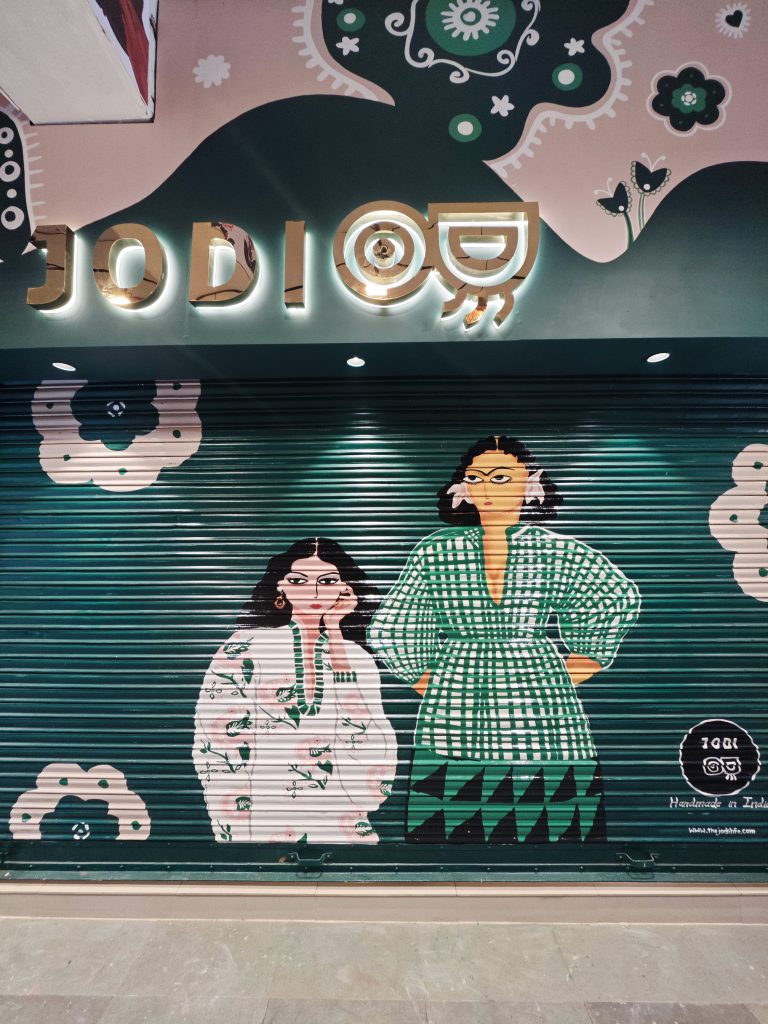
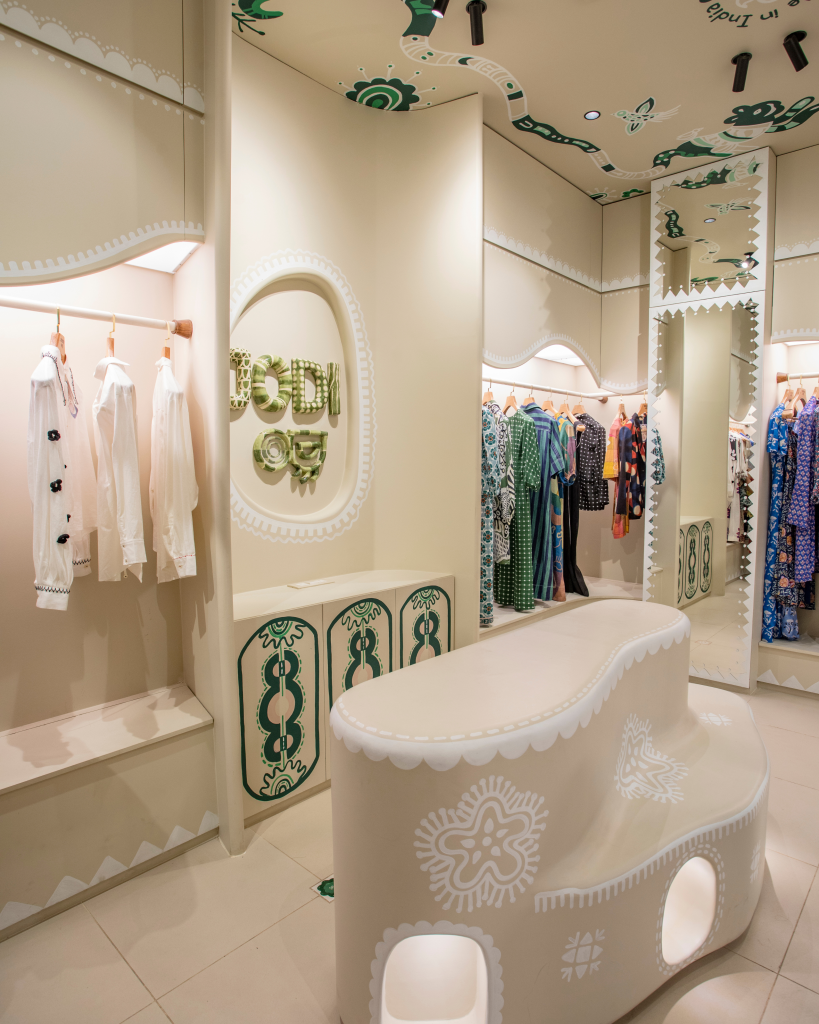
JODI Life Store. Image courtesy: Alkove Design
Q5. Looking back at your body of work, which project represents a significant turning point in your career, and among your recent projects, which one are you most proud of and why?
Ninada Kashyap & Komal Mittal: Courtyard House / Thotti Mane was a turning point for us. It allowed us to explore spatial layering, climate behavior, and the idea of a modern home rooted in tradition. It helped shape our voice.
Among recent projects, we’re proud of Gradients of Earth, where the house is a tactile narrative of earthy textures. It was a layered canvas of natural finishes- lime plaster, reclaimed wood, and veneers.What began as a quiet homage to the earth’s striated beauty has grown into a home where warmth and texture resonate in every corner.
Q6. As an architect working in India, what unique challenges and opportunities have you encountered—whether in materials, regulations, or client expectations—and how do you navigate them?
Ninada Kashyap & Komal Mittal: Every region in India comes with its own ecosystem—materials, regulations, climate cycles, labor skill, and client expectations vary widely. But these challenges also bring opportunities to innovate. We’ve learned to adapt, stay patient, and prioritize communication and education with clients. The biggest opportunity is access to rich craftsmanship and diverse material history, which is something the world admires.
Q7. How do you incorporate sustainability and climate-responsive design in your practice, especially in the context of India’s vernacular wisdom and evolving environmental realities?
Ninada Kashyap & Komal Mittal: For us, sustainability begins at the passive level—orientation, natural ventilation, daylight, thermal mass, and responsible material choices. We integrate landscape, reuse materials where possible, and design flexible spaces that age well rather than require frequent replacement. We learn constantly from vernacular wisdom—courtyards, jaalis, shared walls, rainwater logic—solutions that India has always known, so mostly tapping into that ancient wisdom.
Q8. What recent architectural idea, innovation, or discovery has most influenced your current thinking or practice?
Ninada Kashyap & Komal Mittal: The shift toward material circularity and responsible sourcing has changed the way we evaluate every design choice. We’re also excited about integrating digital tools and AI in early concept development and visualization, which helps optimize design time and communication without replacing intuition.
Q9. How do you grow visibility for your practice and connect with prospective clients or collaborators—what platforms, exhibitions, or publications have been most effective for you?
Ninada Kashyap & Komal Mittal: We focus on storytelling—sharing our process and work through platforms like Instagram and LinkedIn, exhibitions, talks, and collaborations with creators and craftsmen, which our communication partners Purple Boat help us with.Word of mouth remains our strongest medium. Projects published in popular platforms has also helped us connect with people who believe in thoughtful design.
Q10. Based on your experience, what are the key dos and don’ts for emerging architects trying to establish their practices in India, and are there professional communities or forums you recommend joining?
Ninada Kashyap & Komal Mittal:
Do:
• Build patience—good projects take years.
• Learn to communicate openly and handle site realities.
• Respect craft and collaborate generously.
• Stay curious—keep learning.
Don’t:
• Don’t chase trends or fast results.
• Don’t underestimate detailing and documentation.
• Don’t compromise on ethics.
Professional communities like IIA, IIID , AESA help in exposure and mentorship too
Q11. Looking ahead, what kinds of projects or directions are you most eager to explore in the coming years?
Ninada Kashyap & Komal Mittal: We’re interested in larger-scale residential, hospitality, cultural, and community-driven projects—work that engages landscape, context, and public experience. We hope to build spaces that contribute to cities in meaningful ways
Q12. Finally, what advice would you offer young architects aspiring to shape the future of India’s built environment?
Ninada Kashyap & Komal Mittal: Stay curious and grounded. Observe life—markets, craftspeople, streets, temples, everyday houses. Design is about people before anything else. Build slowly, learn deeply, and never lose empathy. That’s where the real work begins.
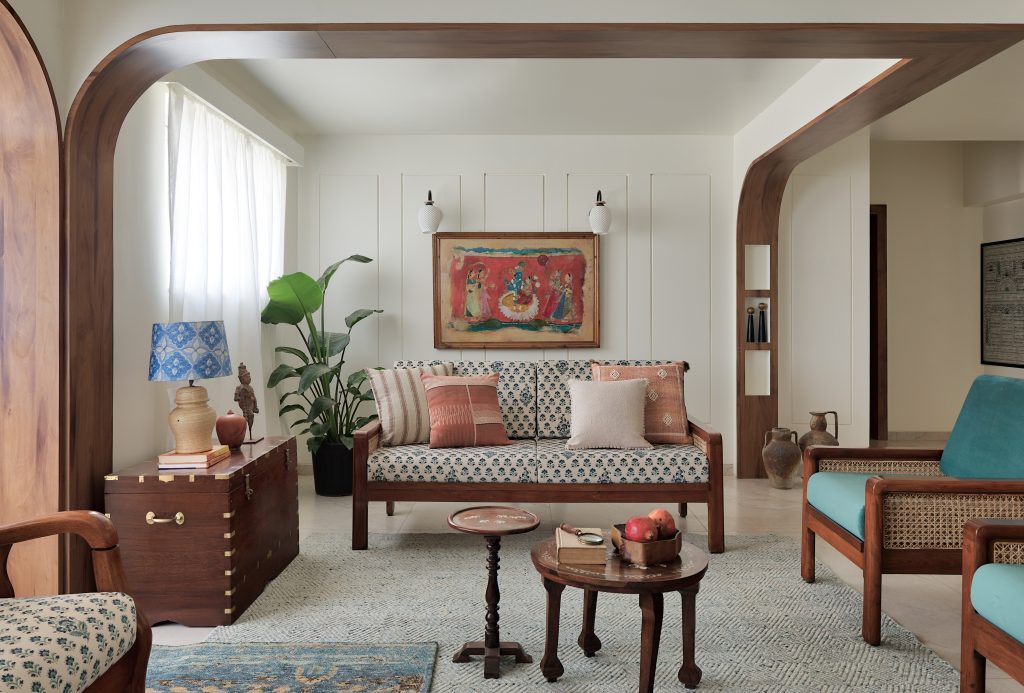
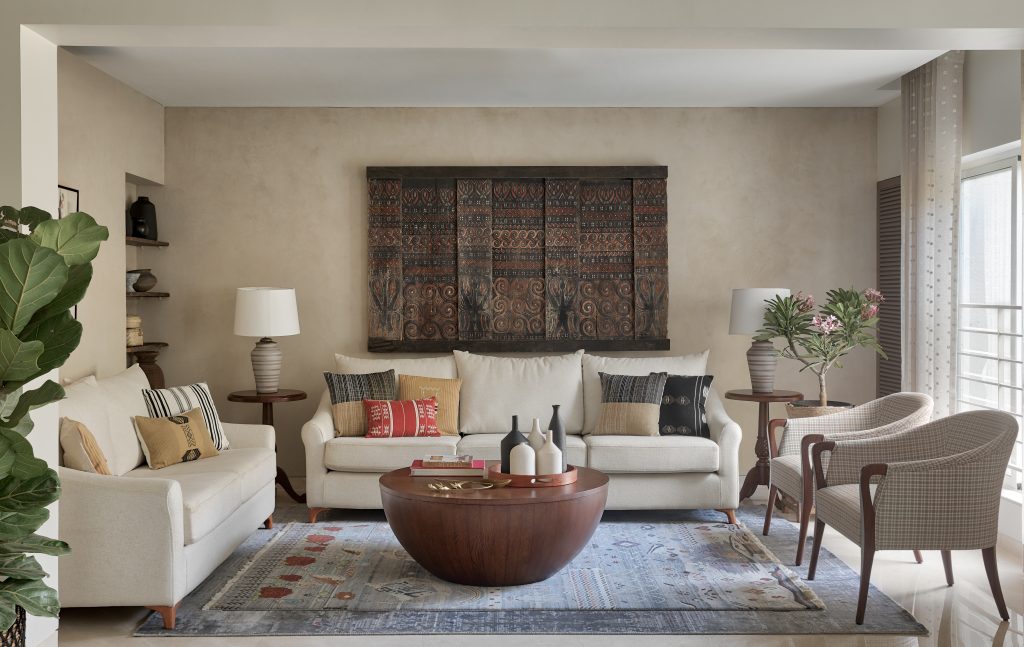
Cover image: The Indian Austere. Image courtesy: Alkove Design
Athmaja Biju is the Editor at Abir Pothi. She is a Translator and Writer working on Visual Culture.