Compartment S4
Architecture • Urban Design • Interior Design
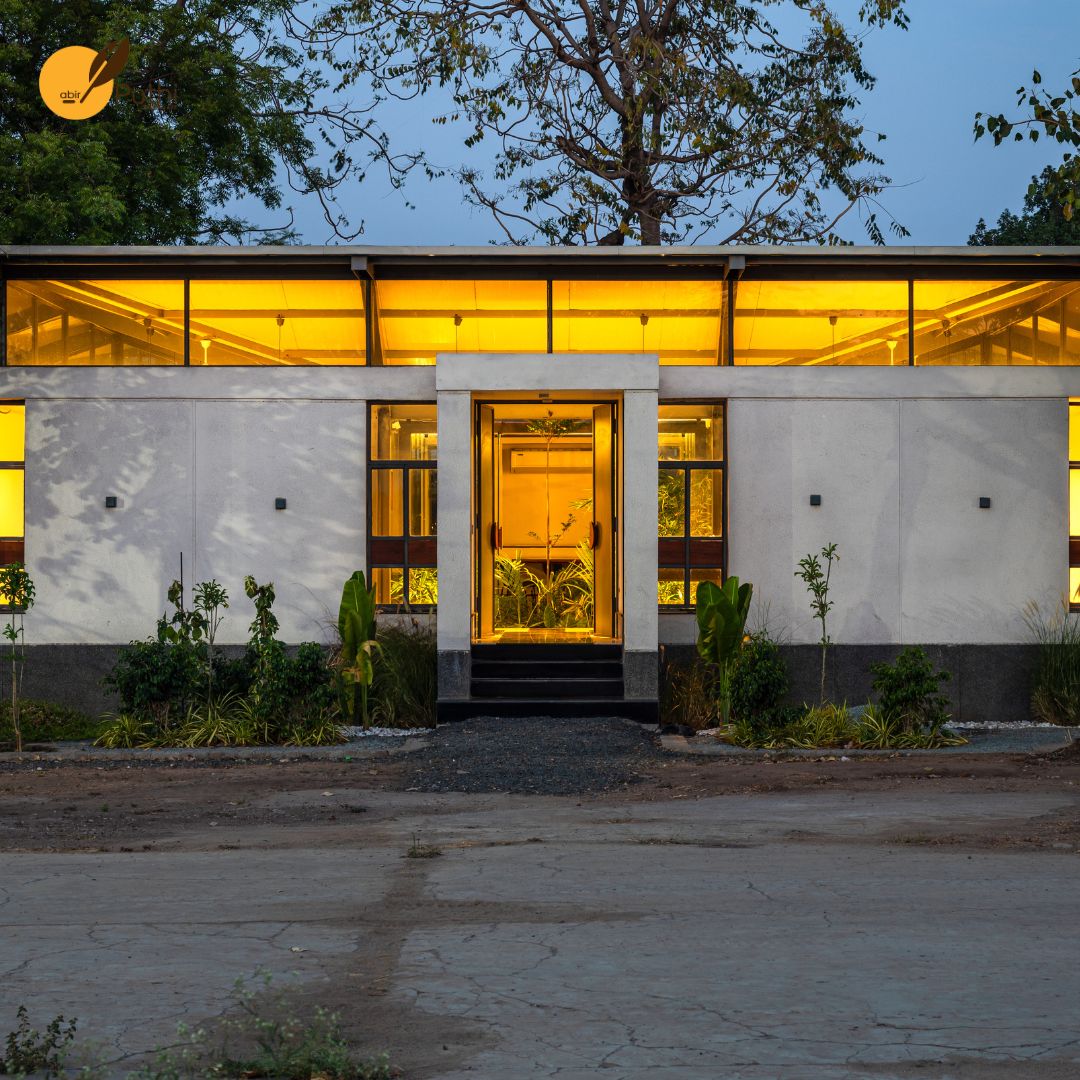
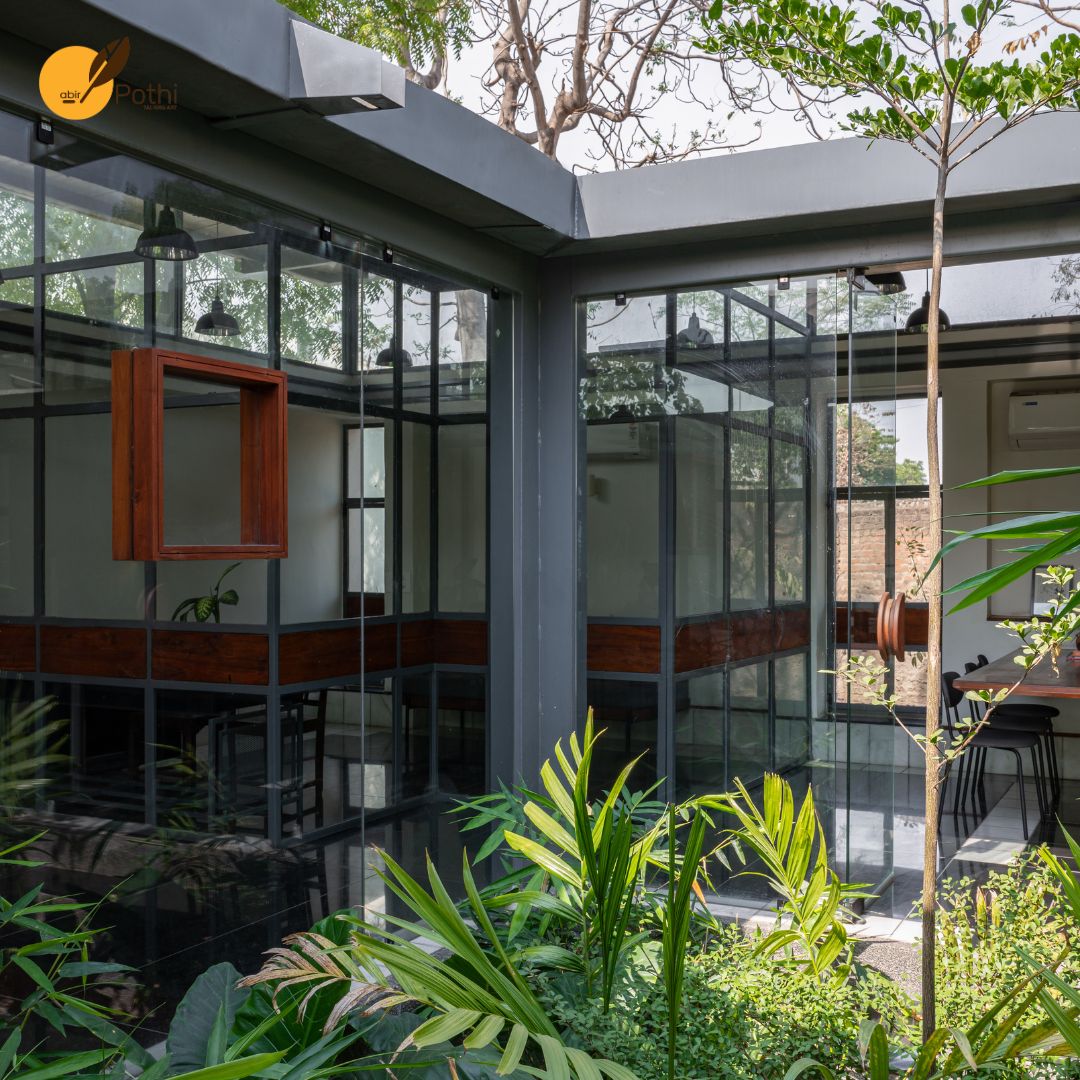
In Ahmedabad, where the industrial past still shapes the city’s identity, Compartment S4 has transformed a 1970s canteen block into a contemporary office that honors its modernist roots. Retaining the original concrete geometry and inverted beam roof, the design introduces reusability through a Mild Steel framework while reshaping the building for today’s needs. A key gesture—replacing the old kitchen with a lush courtyard—turns an obsolete space into a vibrant heart of the workplace, blending functionality with a tribute to the community that once gathered there.
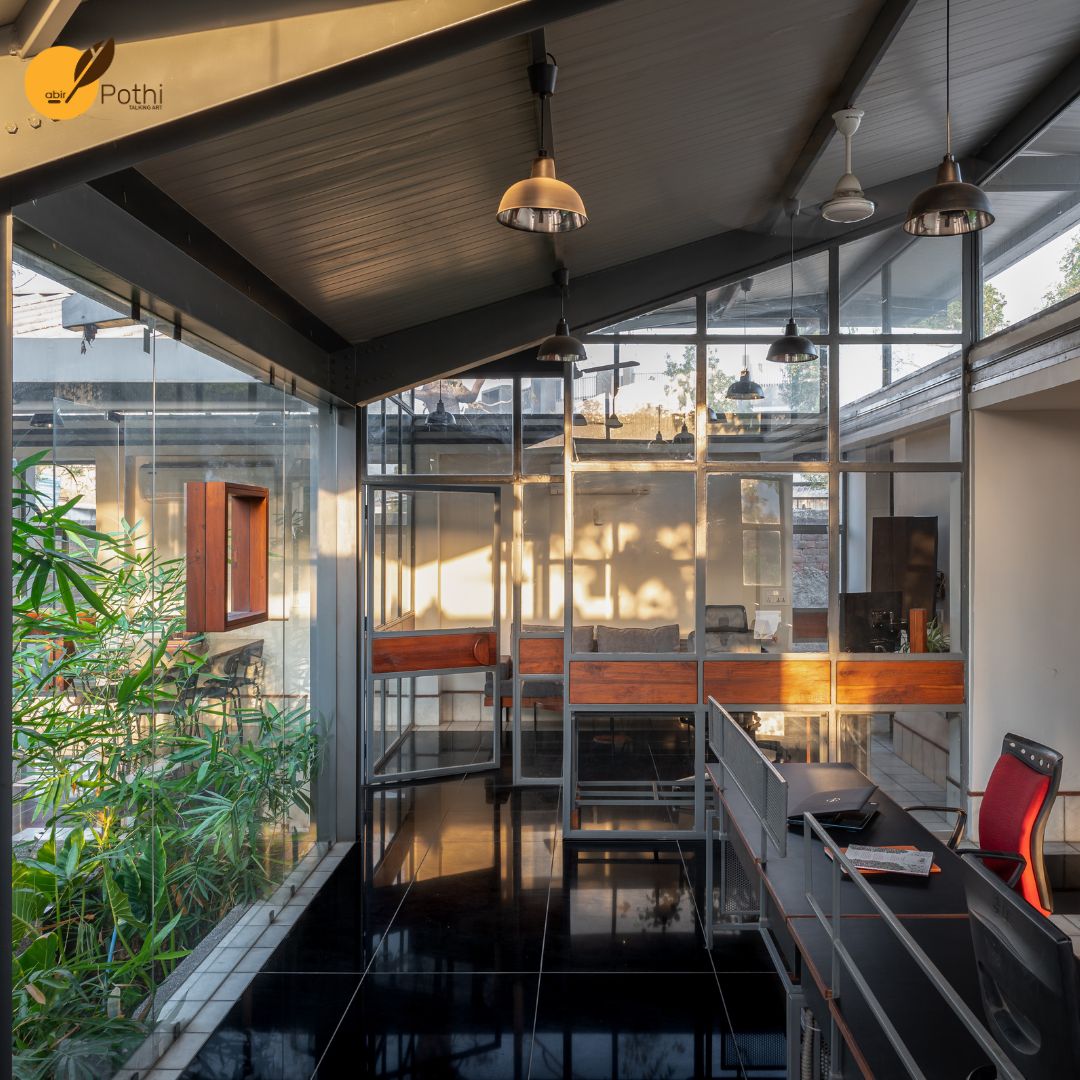
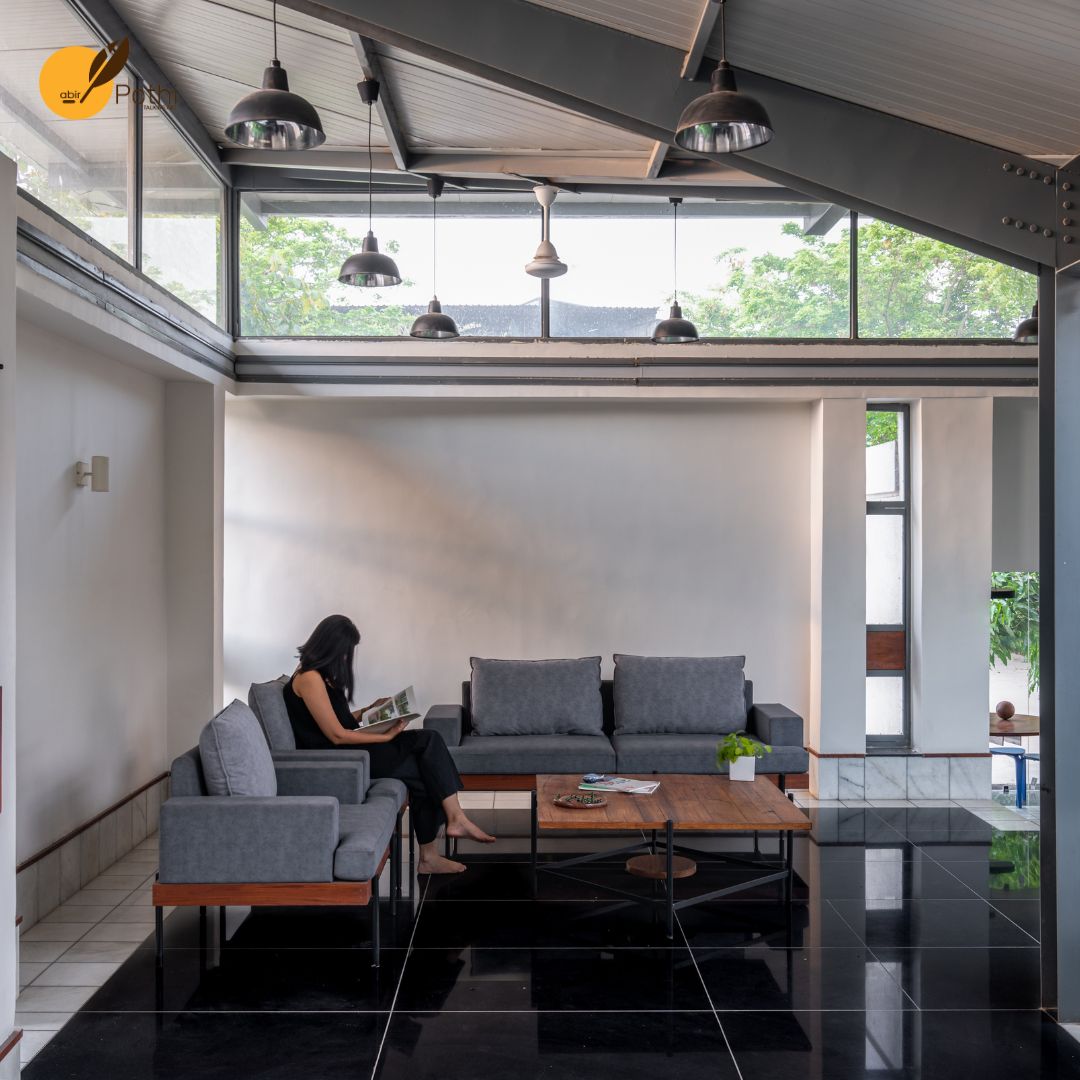
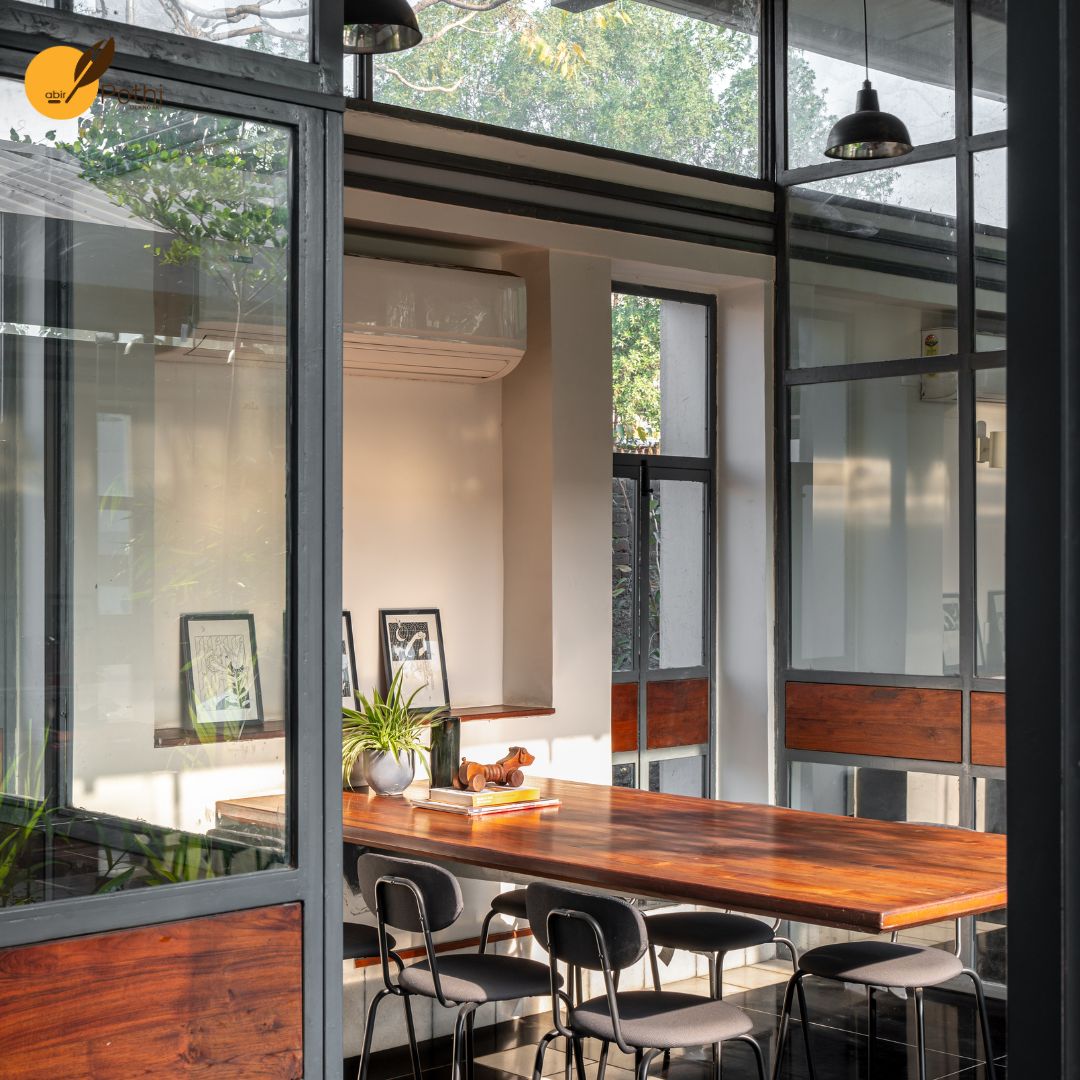
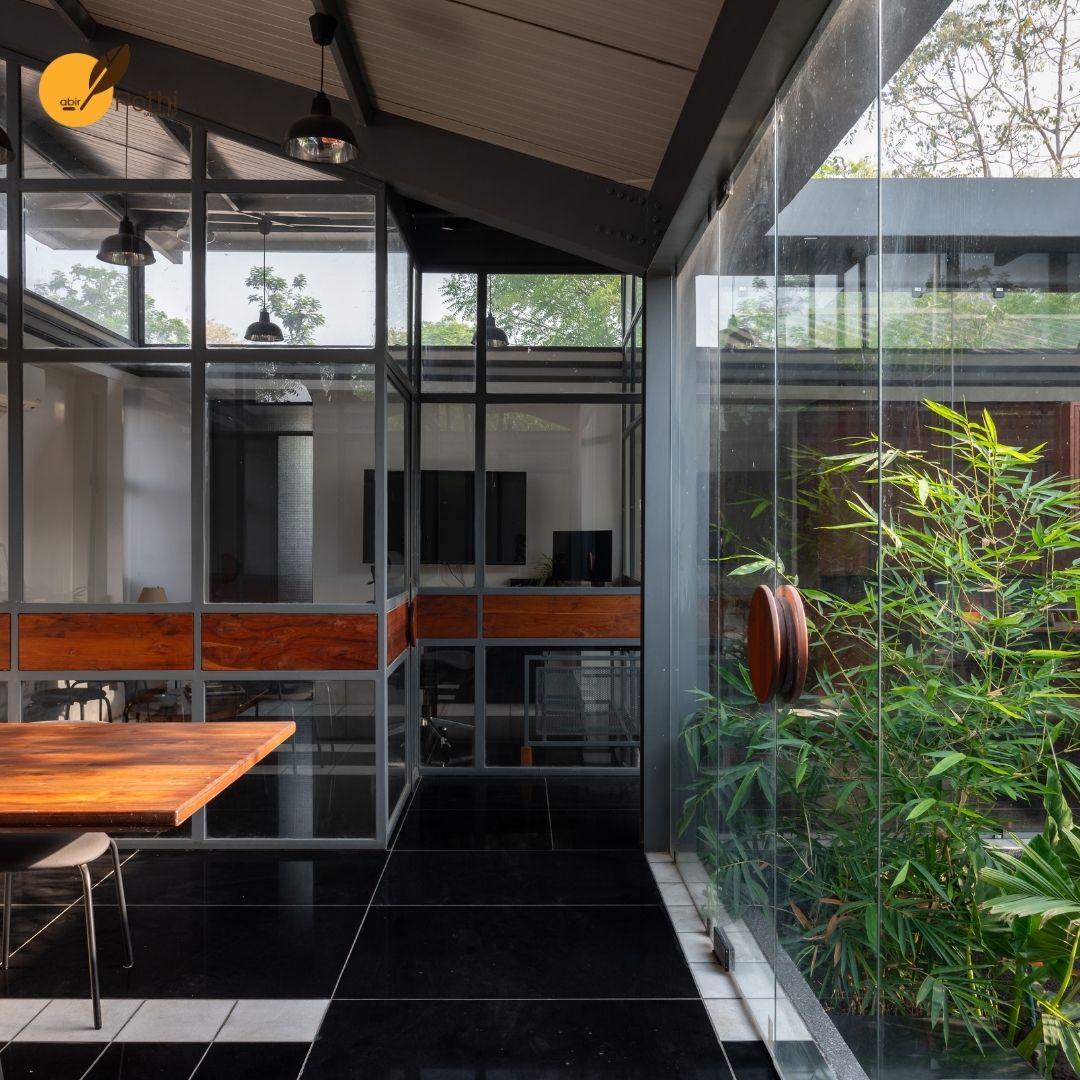
The courtyard now anchors the experience, framed by administrative spaces, directors’ cabins, and a meeting room that opens onto greenery. A new wing-like inverted hip roof, inspired by the original structure, draws daylight through ribbon windows, while stone chip plaster adds texture and protection. Inside, custom-made furniture, a minimal black-white-gray palette, warm wood accents, and playful flooring choices create an atmosphere that is refined yet industrial. Transparent partitions keep every space visually connected to the courtyard, fostering openness and a sense of belonging.
This adaptive reuse project is more than an architectural upgrade—it’s a case study in sustainable design, proving that reimagining the old can be as bold and meaningful as building anew.
Compartment S4
Architecture • Urban Design • Interior Design
In Ahmedabad, where the industrial past still shapes the city’s identity, Compartment S4 has transformed a 1970s canteen block into a contemporary office that honors its modernist roots. Retaining the original concrete geometry and inverted beam roof, the design introduces reusability through a Mild Steel framework while reshaping the building for today’s needs. A key gesture—replacing the old kitchen with a lush courtyard—turns an obsolete space into a vibrant heart of the workplace, blending functionality with a tribute to the community that once gathered there.
The courtyard now anchors the experience, framed by administrative spaces, directors’ cabins, and a meeting room that opens onto greenery. A new wing-like inverted hip roof, inspired by the original structure, draws daylight through ribbon windows, while stone chip plaster adds texture and protection. Inside, custom-made furniture, a minimal black-white-gray palette, warm wood accents, and playful flooring choices create an atmosphere that is refined yet industrial. Transparent partitions keep every space visually connected to the courtyard, fostering openness and a sense of belonging.
This adaptive reuse project is more than an architectural upgrade—it’s a case study in sustainable design, proving that reimagining the old can be as bold and meaningful as building anew.