Review of Paper Gardens: The Lives of Botanical Illustrations in India
Written by Os Tyagi
There is a flower shop on Fifth Avenue, near Union Square in New York. It is one of those high-end boutique flower shops with a cool black facade and a cafe somewhere in the back. Expensive orchids sit in the window. As a student in the city, I would often walk past it on my way to and from classes, never bothering to go inside.
One warm afternoon, my friend and I stopped in front of the shop to admire a thick display of magenta bougainvilleas against the black exterior. It looked convincing at first. Then we realized it was probably plastic.
My friend is from Greece. I am from India. Still, we both thought of home at the sight of it: our mothers, their gardens. The bougainvillea felt synonymous with both Athens and Delhi.
But the plant comes from elsewhere entirely. It is neither native to Greece nor India. Its origins lie in Brazil, Argentina, and Peru. It carries the name of the eighteenth-century French admiral Louis Antoine de Bougainville, who sailed around the world as France and Britain competed to map and claim the South Pacific. On his expedition was the naturalist Philibert Commerçon, who is said to have “discovered” the plant for Europe.
A year later, James Cook arrived in Brazil on the Endeavour expedition and returned to London with plant specimens and what is believed to be the first recorded watercolor sketch of a bougainvillea. The drawing now sits in the collection of the Natural History Museum. Later, cuttings travelled from the Royal Botanic Gardens, Kew, to India. A few centuries after that, bougainvillea became ordinary enough to grow in my mother’s garden.
The study and illustration of plants, along with the transport of cuttings across continents, formed part of the machinery of empire. Plants collected in India were sent to institutions like the Natural History Museum, the Royal Botanic Gardens, Kew, and the Royal Botanic Garden Edinburgh. For the British, cataloguing Indian plants was largely a commercial, medicinal, and horticultural project, with a secondary aesthetic life. Botanical illustration became a tool of identification.
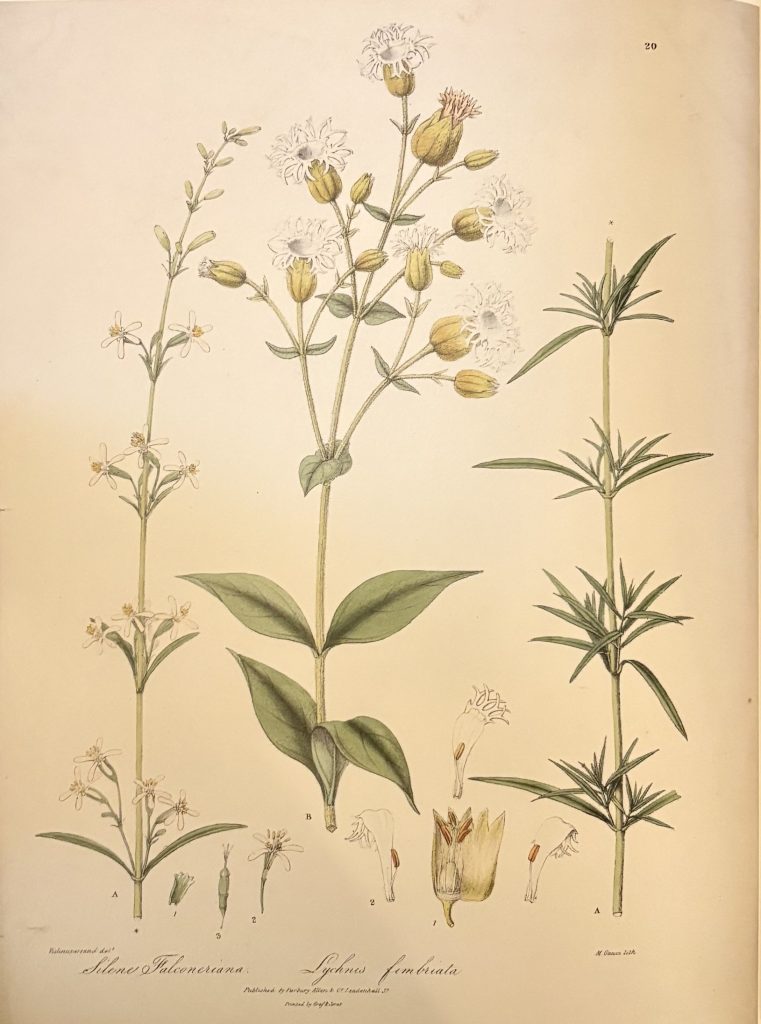
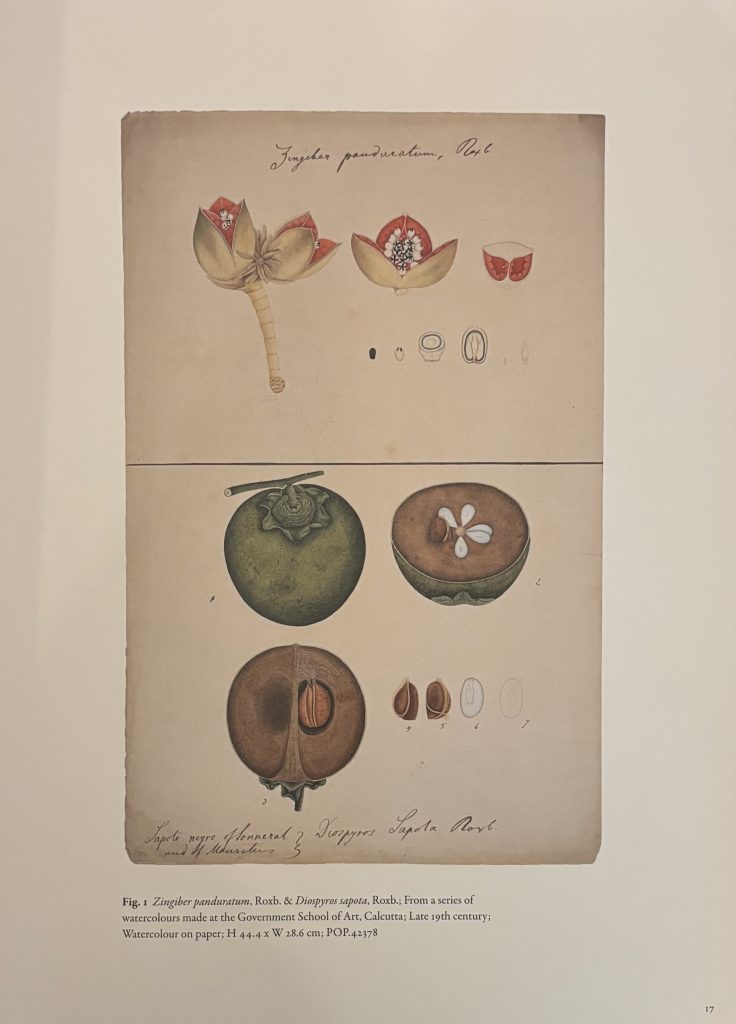
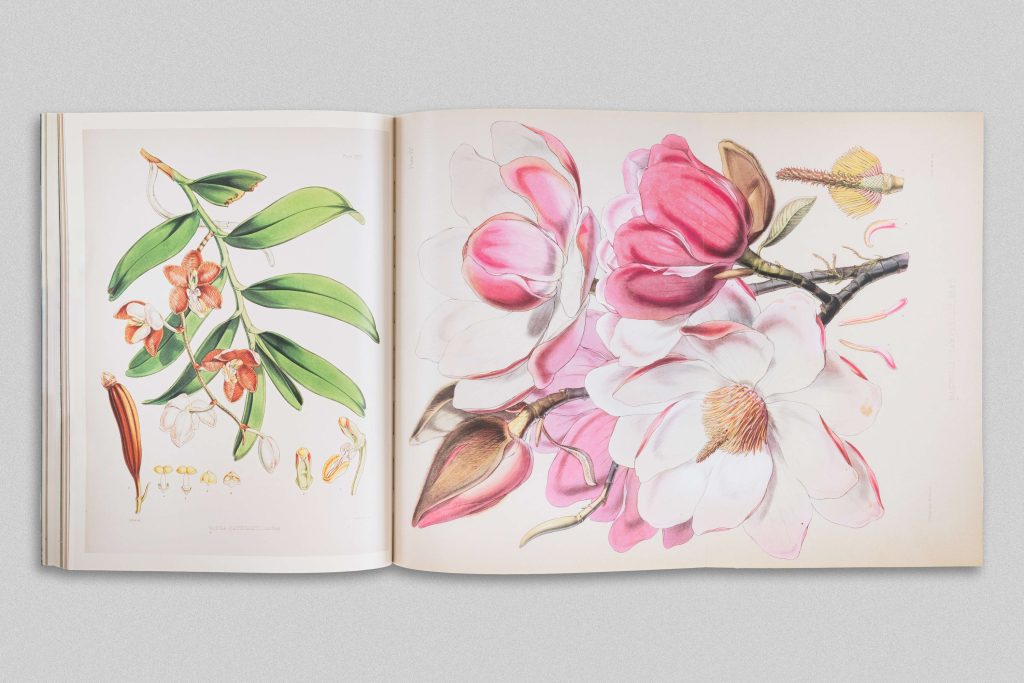
Indian artists, trained in regional painting traditions, were hired to produce these drawings. Many were done in watercolor: delicate, exacting studies that traced a plant from seed to shoot to flower to fruit on a single page.
These works are collected in Paper Gardens: The Lives of Botanical Illustrations in India published by the Museum of Art and Photography and Impart, which accompanies the ongoing exhibition in Bangalore (on view until July 5). The book and exhibition treat these drawings not as static records, but as documents of relationships: between artist and patron, empire and subject, people and plants.
This colonial project of identifying, illustrating, and transporting plants has shaped much of everyday life. Consider the humble marigold, which accompanies so many intimate moments in India, from festivals to weddings to death rituals. And yet the flower, too, was once a foreign arrival, brought from Latin America sometime in the sixteenth century.
One of the most striking sections of the book examines marigold illustrations as a study in contrast between colonial botanical drawings and Mughal painting traditions. Colonial botanical illustrations were standardized, with the plant isolated on the page, floating tether less and cut off from soil, weather, landscape, and people. Mughal paintings worked differently. They depicted cultivation, ritual, and use. In one painting, marigolds bloom across a field in the background while people celebrate Holi in the foreground, covered in yellow and orange dyes made from the same flower.
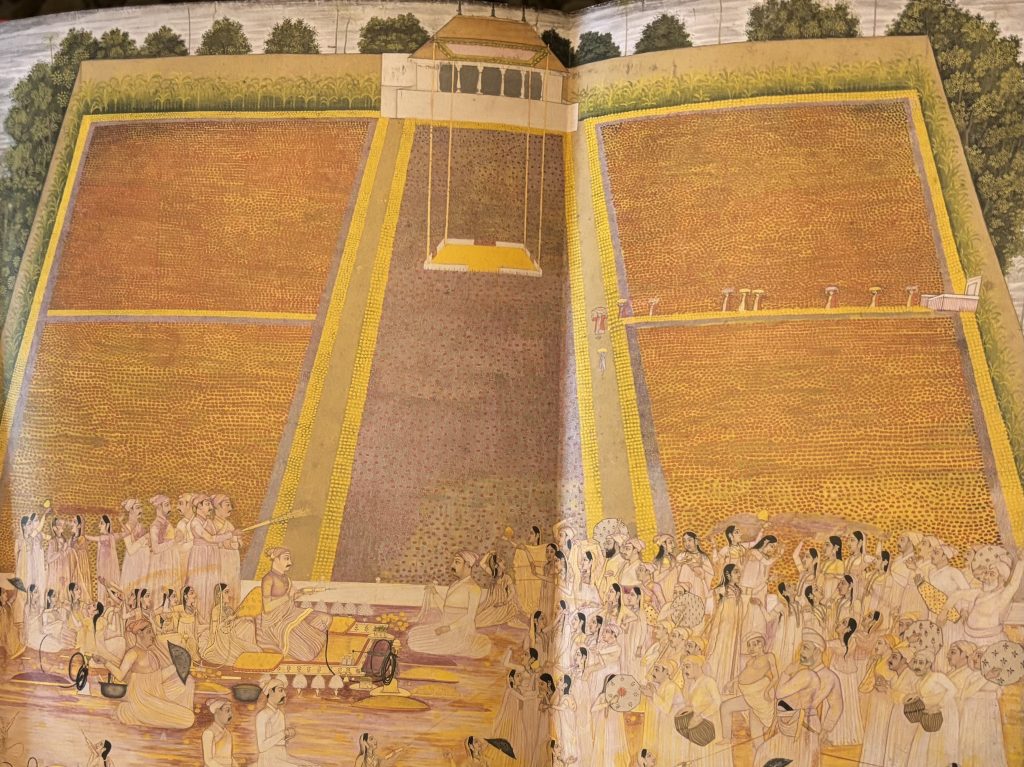
Holly Schaffer’s essay explores this contrast, arguing that despite the distinct visual language of scientific botanical illustration, these paintings also belonged to broader artistic lineages. They were shaped not only by scientific conventions and the demands of patrons, but also by the artists themselves and their grounding in both European and Mughal traditions.
Henry Noltie, who has spent much of his life working with botanical archives, reflects on both his own practice and the questions increasingly raised about archives themselves: what they reveal and obscure about origins, authorship, power, and knowledge production. His essay suggests that archives will always remain complex and contradictory, but that the role of the historian and scientist is to “tell the fullest possible stories and background,” and to make them accessible to wider audiences.
In her essay, Sumana Roy returns to Darjeeling and the rhododendrons of her childhood. From there, she moves outward, tracing the relationship between the flower and the botanist Joseph Dalton Hooker, one of the central figures of the colonial botanical enterprise. But her essay is also about intimacy: the plants we grow up beside, the ones folded into memory, and what it means to really know them. What emerges is less a history of the flower than an anatomy of attachment, of how certain landscapes become inseparable from the self.
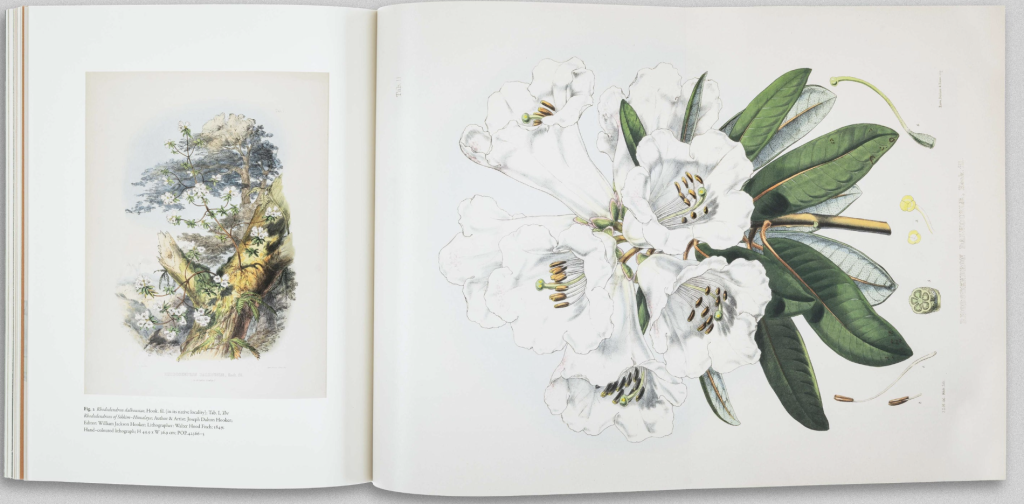
Taken together, the essays create a prism through which to understand the many stories these botanical illustrations contain. They become stories about empire, beauty, memory, labour, and the strange journeys through which certain plants come to feel native.
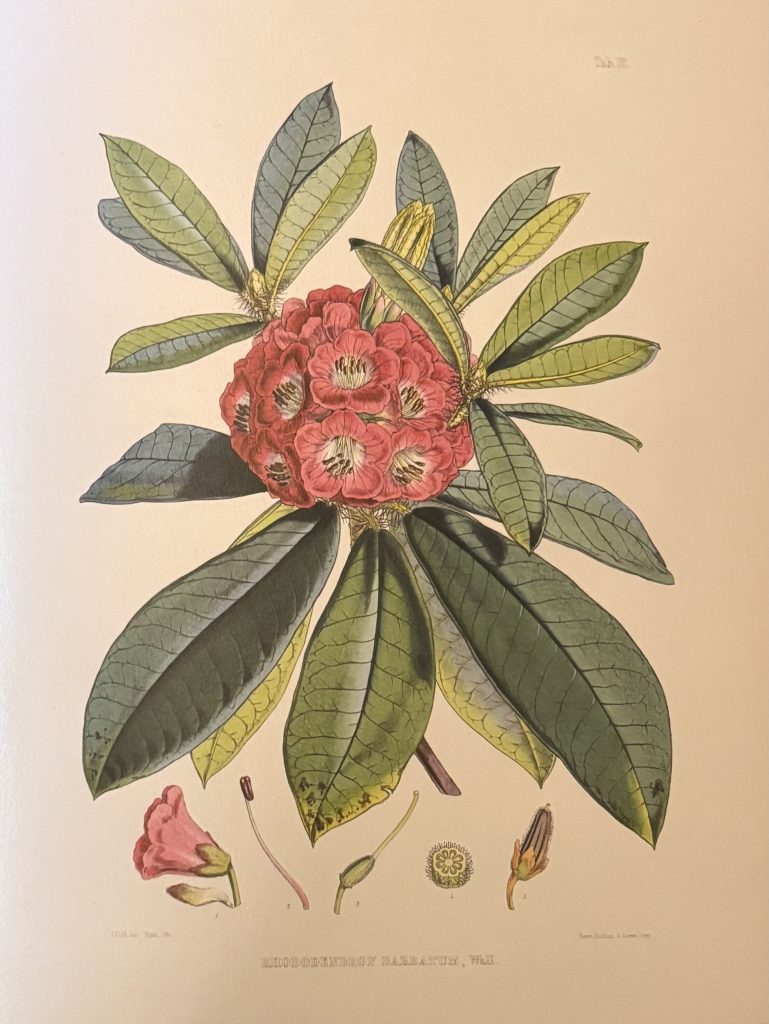
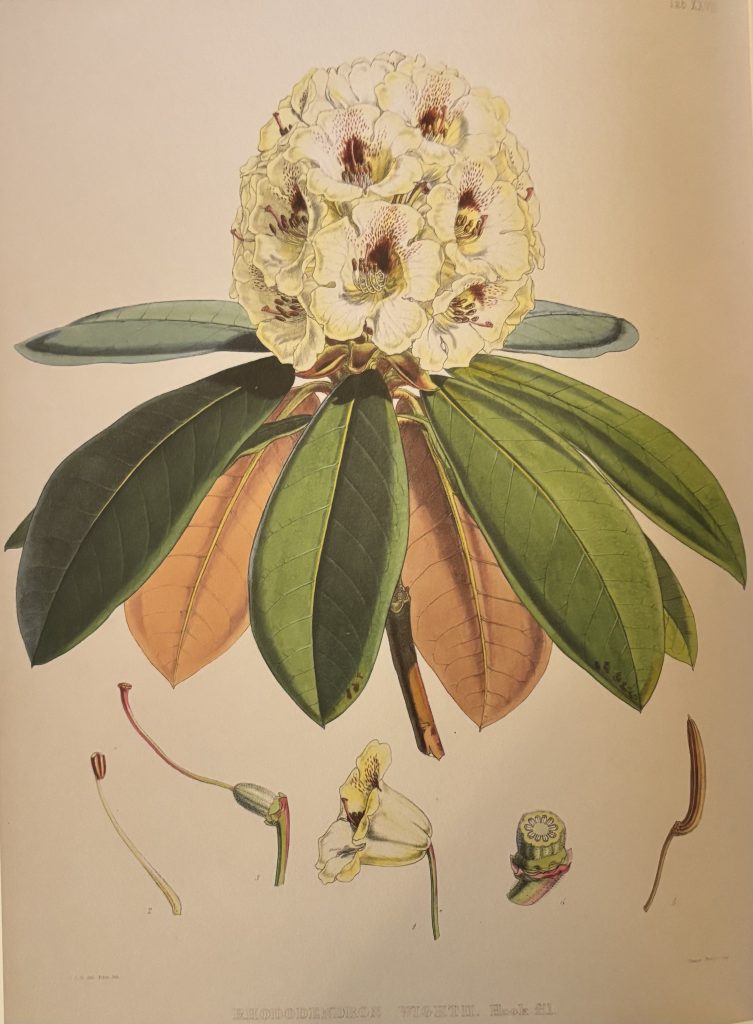
The book is beautiful simply as an object. But it also changes the way one looks at ordinary things: the flowers and foods that seem inseparable from home, until one begins tracing how they arrived there, and what histories travelled with them.
Os Tyagi is a researcher and writer based out of New Delhi, India. She is an art enthusiast interested in the intersection of art, politics and history.
All image courtesy: Museum of Art and Photography

Contributor