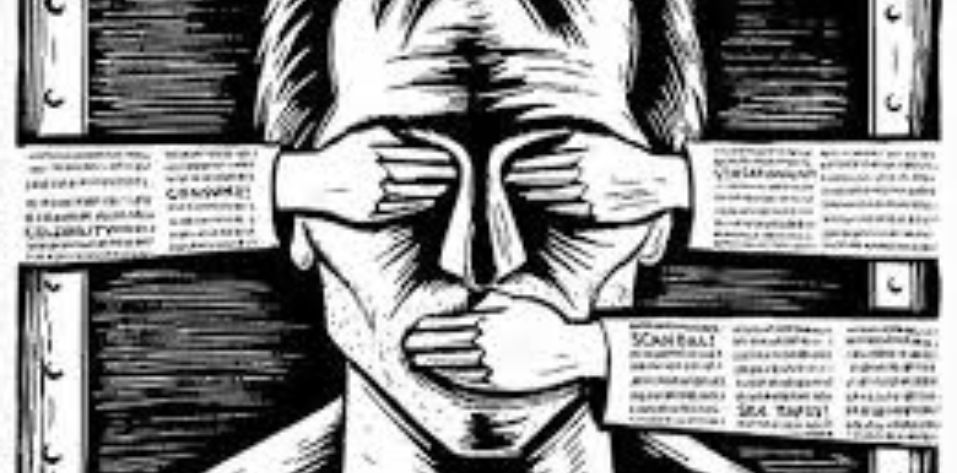
Word of the day: censorship. Art is and always has been, provocative. It is the job of an artist to invoke feelings in people, good or bad. Oftentimes, art questions authority, unsettles dominant narratives, and gives voice to perspectives that institutions might prefer to keep quiet. The recent controversy surrounding the film Voice of Hind Rajab once again raises an old question in India: who gets to decide what people are allowed to see, hear, or think?
What is art? Or for that matter, what is literature? Reading books to sleep is nice, and seeing a painting or two with beautiful colours is even better for the eyes. But is it necessary to be that way? Are there not books that keep you awake for nights and paintings which might not be so pretty and divine. And is art not just another language? A medium of expression, stories of lived realities.
Perhaps, art is what is true.
There is an infamous quote by Manto about it, he simply said:
“Zamane ke jis daur se hum guzar rahe hain, agar aap usse waaqif nahin hain to mere afsaane padhiye, aur agar aap in afsaanon ko bardasht nahin kar sakte, to iska matlab hai ki zamana naqaabil-e-bardasht hai.”
(If you are not familiar with the times we are going through, then read my stories. And if you cannot bear these stories, it means that the times themselves are unbearable.)
We question art, we often question artists, when we should have been questioning the truth, our realities.
The debates around the film Voice of Hind Rajab echo a long history in India where works of art—films, books, paintings, and documentaries—have been restricted, banned, or removed from public view because they were considered offensive, politically sensitive, or socially disruptive.
The Mechanics of Censorship in India
The art of censorship is not a relatively new concept, nor is censorship in art.
The ban on theatrical release of The Voice of Hind Rajab
The Voice of Hind Rajab written and directed by Kaouther Ben Hania is a 2025 docudrama. It follows the Red Crescent, a helpline for humanitarian organization, responding to the call of a six-year-old Palestinian girl, Hind Rajab. Hind Rajab is later captured and killed by the Israel Defense Forces during the Israeli invasion of the Gaza Strip. The film featured real audio of Hind’s voice, which brought authenticity to the ongoing crisis in addressing the humanitarian crises, the loss of children in war, and the psychological impact of being trapped in a combat zone. The movie went on to gain huge audience around the world, also being nominated for the Oscars.
Where in India, the film was scheduled for release on March 6, 2026. India’s Central Board of Film Certification (CBFC) has blocked the theatrical release of this movie, putting forth the argument that the film’s depiction of Israeli forces could strain India-Israel relations.
Now, obviously this is not the first movie to be banned from release in India. The CBFC is infact notorious also known as the censorship board in India.
How Censorship works when it comes to paintings
Where in terms censorship in movies and music, which gathers a lot of interest from the public, the art world remains a little isolated. Unlike the Central Board of Film Certification (CBFC), which plays a crucial role in determining what reaches audiences, the Art world has no such governing body. One would like to think oh then, what is stopping us. How art censors operate is that, the offensive work of art is consequently seized, banned from release or exhibition or at times, physically attacked and vandalised. what is offensive or obscene and intolerant? Well no one has a definition for it.
Censorship in art was enforced through the Press Act of 1910 by the British in the pre colonial era. In addition to the Rowlatt Act of 1919, which was limited to curb the possibility of the free articulation of political organisation by Indians in both visual and verbal form. Today, artists can be booked, and their art banned on the charges of Obscenity (Section 292 of IPC), Hurt Religious Sentiments (Section 295A of IPC), Threat to Public Order/National Integrity or Customs Act, 1962.
When a work touches upon religion, caste, politics, or sexuality it takes no time to become the target of protests, legal complaints, or political pressure.
Banning, or discourse annihilation
From Hussain to Souza, there have been a number of artists who have been on the radar of censorship and controversy. They are often drawings of deities, sometimes, questionable pictures showcasing famines or nudes or nudes of people in the famine. One can trace them, club them together, or atleast find common connections, censorship rarely happens in isolation. Somewhere in the four-fold paths of politics, religion, morality, and public pressure, censorship is the cross road, connecting them all.
Authorities justify this as a means to prevent violence or maintain public order. Then why do such decisions often reward those who threaten unrest rather than protecting artistic freedom?
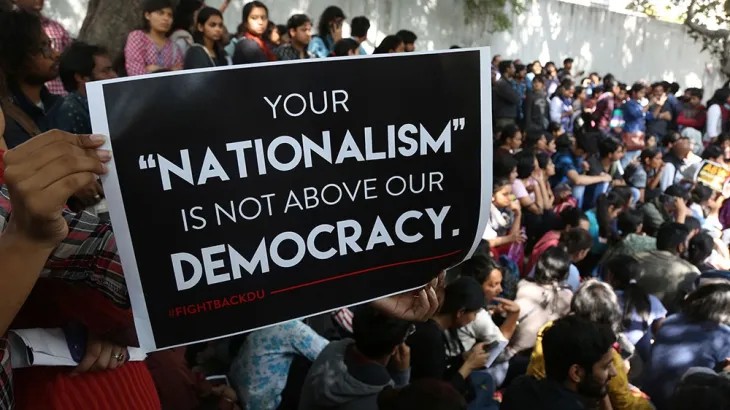
With the growing resistance among people and as after effects of cancel culture, it is anyways becoming difficult for artists to put on paper what actually might be on their minds. With the fear of rejection still lurking around the corner, if they still hold up the brush and start to create, the government on their backs and the numerous FIR’s is the last thing an artist would want to go though. Moreover, blurred guidelines about what may be appropriate and what not provides little to no restrictions to the creator of a piece which would later go on to be politicized and banned to display.
In such times when voices matter and when art and related fields are the most subtle and yet powerful tools to speak of the unspoken, removing these art, curbs the dialogue. It is an establishment that says, the only voices to be heard, songs to be sung, art to be created is what belongs to the dominant narrative, anything new, might not be welcomed so easily.
White chalk on black board
The controversy surrounding Voice of Hind Rajab is not just about one film. It reflects a broader discomfort with dissent, reinterpretation, and artistic risk.
The fact that people still make movies which makes one wonder, question and to feel. And the fact that art is still created not to be seen but to be felt says a lot about the spirit of artists. India has always been a land of layered narratives—mythological, political, personal. Its art has thrived precisely because it has been able to hold contradictions. And our artists have not let censorship, whether imposed by the state or society, narrows this space.
“ Main kaali takhti par safed chaak istemaal karta hoon taaki kaali takhti aur numaya (spasht) ho jaaye.”
(I use white chalk on a blackboard so that the blackboard becomes even more visible)
-Saadat Hasan Manto.
The question remains, will the blackboard be facing the audience, the stake holder or the policy makers.
Aditi Shah Kunjam. An aspiring psychologist, storyteller and poet from the Gond tribal community. Exploring emotion, identity, and culture through a creative lens. I write about art as experience—where aesthetics meet feeling, feminism, and everyday life. Observing deeply, creating thoughtfully, and finding meaning in the details.