
Government of Ukraine has approved a sweeping new resolution that makes the evacuation of museum collections from active conflict zones mandatory. It is in a bid to shield millions of cultural objects from intensifying Russian attacks.
Resolution and key provisions
The Cabinet of Ministers of Ukraine adopted the new procedure on 17–18 February. How cultural property is moved and safeguarded under martial law has been updated. The Ministry of Culture says the measure creates a more systematic and secure framework for protecting museum holdings. Especially during wartime by clarifying responsibilities and cutting red tape.
Under the resolution, territories within 50 km of the front line, as well as areas officially listed as combat zones or under temporary Russian occupation, are now subject to mandatory evacuation of museum items. Evacuated collections must be relocated to storage sites at least 75 km from the line of contact. It is a distance officials say is intended to reduce exposure to shelling and missile strikes.
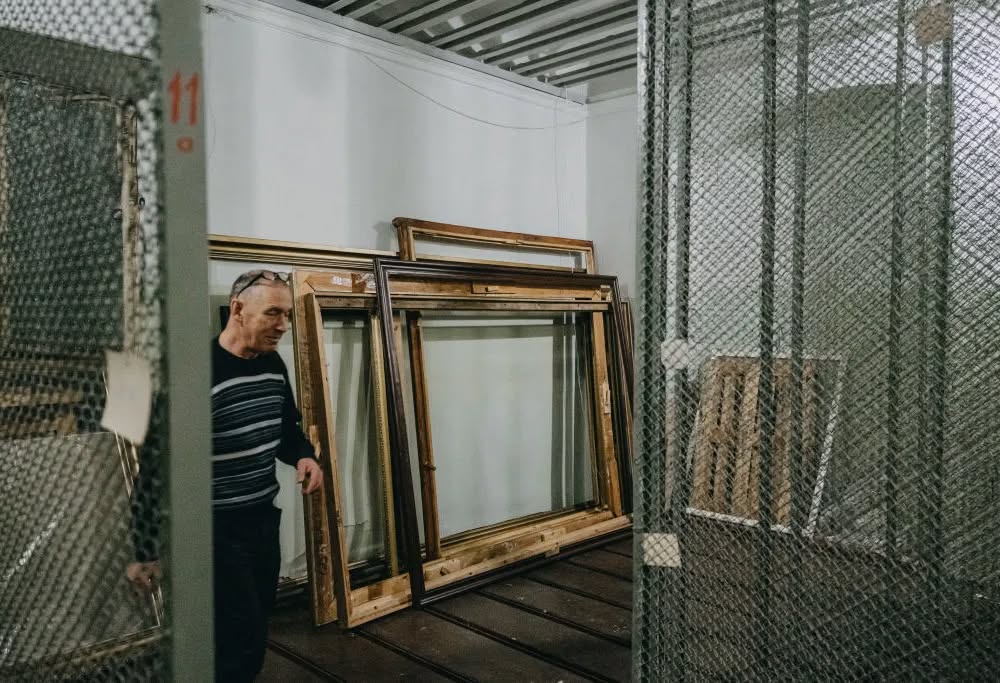
New evacuation rules in practice in Ukraine
The document introduces a three-stage evacuation system that differentiates procedures according to an item’s value and the degree of risk. Regional military administrations, in coordination with military command, are empowered to order mandatory evacuations. While the Ministry of Culture takes decisions for state institutions and local authorities oversee municipal museums.
Crucially, museum directors are now allowed to act independently if they deem there is an immediate threat, without waiting for formal approval, a change aimed at avoiding bureaucratic delays that previously stalled rescue efforts. The ministry says prior experience and input from civil society groups were used to streamline the process. But after earlier attempts to move collections were bogged down by complex paperwork and security restrictions, change was needed.
Scale of the cultural risk for Ukraine
Ukraine estimates that more than three million museum objects remain in frontline regions and high-risk areas. Even as the full-scale invasion enters its fourth year. Cultural activists say at least 90 museums and about 1.7 million artefacts are still in territories occupied by Russia, where items from cities like Kherson have been removed and folded into Russian museum funds.
The Ministry of Culture reported that by late 2025 over 670,000 museum items had been evacuated from frontline regions, including nearly 100,000 that were moved that year alone, but warned that the current pace is insufficient to secure all collections under threat. Recent incidents, such as attacks on regional art museums, have reinforced concerns that cultural institutions remain directly in the line of fire despite ongoing dispersal efforts.
International and domestic context
Ukraine’s new rules sit alongside its obligations under international humanitarian law, including the 1954 Hague Convention on the Protection of Cultural Property in the Event of Armed Conflict and its Second Protocol. UNESCO and other international bodies have repeatedly urged Kyiv to take “all possible measures” to protect heritage sites and collections, while also condemning Russian strikes that have damaged museums, historic centers and religious buildings.
The resolution also dovetails with the activities of the Ukrainian Cultural Heritage Fund, which operates from Brussels and is tasked with helping museums evacuate and preserve collections, improve storage, stabilize damaged monuments and digitize heritage. Ukrainian officials and cultural workers frame the latest changes as part of a broader struggle to safeguard not only physical objects but also the historical memory and identity they embody.
What happens next
Authorities in several frontline oblasts have already begun implementing the new protocol, with collections in the highest risk categories prioritized for removal. Officials acknowledge, however, that evacuating and rehousing millions of items will require additional funding, secure storage facilities and continued cooperation with international partners.
For museum workers, the resolution offers clearer legal backing for decisions they have often had to make under fire, but it also formalizes the painful prospect that many institutions near the front may stand empty for as long as the war continues.

Athmaja Biju is the Editor at Abir Pothi. She is a Translator and Writer working on Visual Culture.


