An art exhibition by Savita Dwivedi ‘Jiji’ at Sukriti Art Gallery, JKK, Jaipur

The first encounter with Savita Dwivedi. otherwise known as Jiji and her art was almost incidental while scrolling through the posts of the eminent artist and her son Hemant Dwivedi from Udaipur. Amid discussions of technique, theory and contemporary debates on Facebook, her images would appear quietly since so many years. Yet they lingered. There was something disarming about them- an unaffected honesty that did not try to impress, only to express. In a time when much of contemporary art seems consciously layered with conceptual density and deliberate complexity, Jiji’s simplicity felt radical. Her lines did not argue; they breathed. Her colours did not shout; they hummed softly like an old memory resurfacing. I would pause at each post, wondering how such unassuming compositions could hold so much presence. They seemed to emerge not from the anxiety to be ‘relevant’ but from an inner necessity- as if the images had insisted on being born.
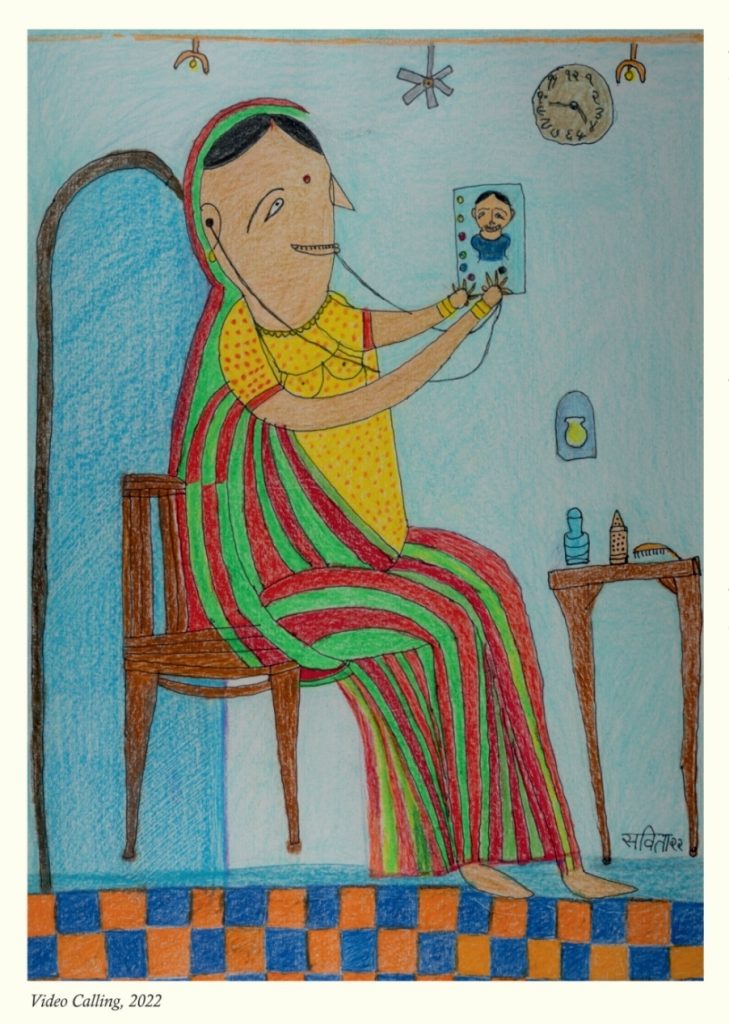
Then one day, the digital catalogue of the exhibition of 87 year old Savita Dwivedi ‘Jiji’ being held at Sukriti Art Gallery, Jawahar Kala Kendra, Jaipur arrived. Opening it felt like stepping into her world fully for the first time. Page after page unfolded like a gentle conversation. The body of work revealed continuity- recurring motifs, tender distortions, figures unconcerned with academic correctness yet brimming with emotional truth. The proportions were sometimes playful, sometimes naïve, but always sincere. It was as though the heart had guided the hand without interference from the rigid rules of formal instruction. What struck most was the freshness. There was no burden of over-intellectualization, no visible strain to construct meaning. Instead, meaning seemed to rise naturally from lived experience- domestic rhythms, silent observations, fragments of memory translated into colour and form. The experience was a treat to the eyes, yes, but more than that, it was stimulating and invigorating.
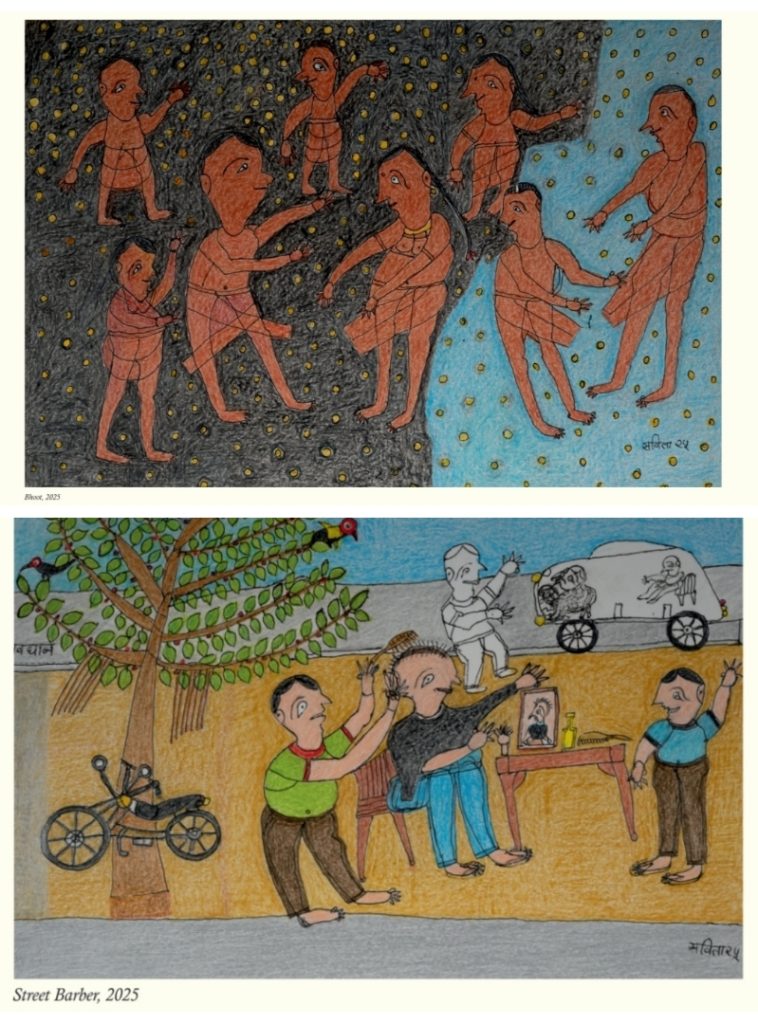
In Jiji’s art, one can sense a return to something essential: the courage to create without pretence, to trust instinct over trend, and to allow simplicity to speak with quiet authority. It’s a reminder that sometimes the most profound art does not come from mastering complexity, but from honouring the uncomplicated truth of one’s inner world. As the text in the catalogue says, “Jiji”—literally an ‘elder sister’ is a mother to four, a grandmother to many. But she is also more than the names that gather around her like bangles on her wrist.” Beyond these roles of being a quiet anchor to all, lives an artist whose imagination waited patiently for its own season.
Art Born in Stillness
During the stillness of the Covid years, when the world retreated indoors, Jiji’s inner world began to expand. What may have once been simple gestures of drawing in water, tracing lines on walls with coal, discovering figures in drifting clouds finally found their way onto paper. These instinctive acts were not guided by manuals of proportion or perspective; they were guided by memory and feeling. Her art does not emerge from the chapters of how art ‘should’ be taught. It rises from the heart, from a lifetime of observing, absorbing, and silently archiving the world around her. In her drawings, proportions bend gently to emotion. A mother may appear larger than the room that contains her, not because of anatomical error but because her presence is immense. Face is direct with linear features just placed over it; bodies are elongated or compacted; spatial depth flattens into intimacy. Perspective is intuitive, not constructed. Objects float into importance regardless of scale. These distortions are not flaws—they are declaration of freedom. They remind us that expression often precedes technique, and that sincerity can override convention.
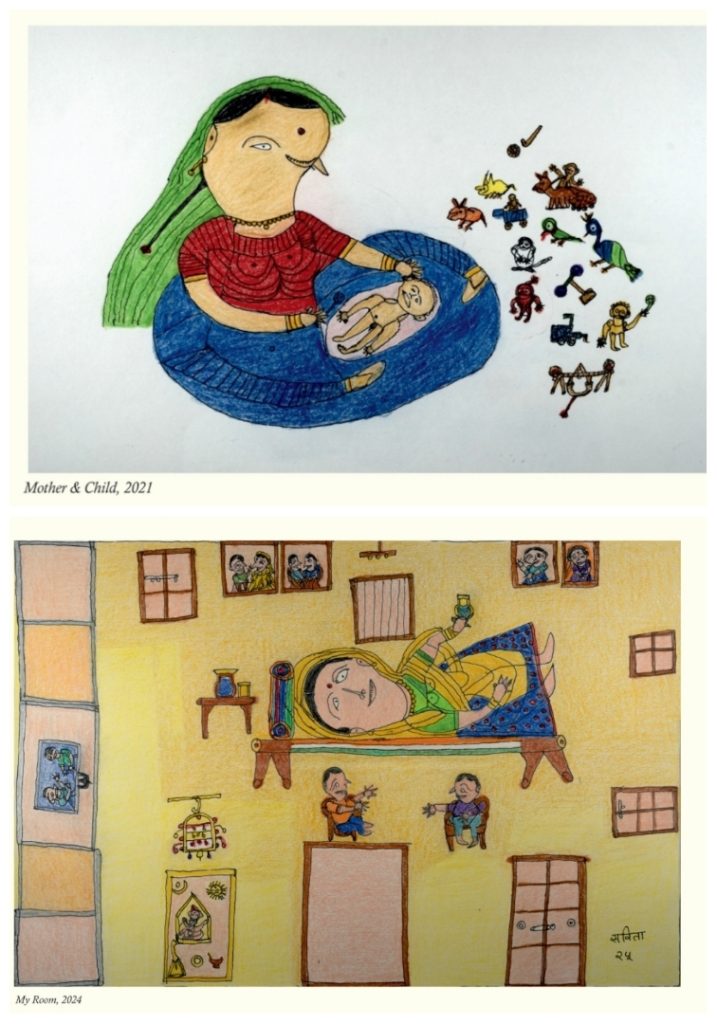
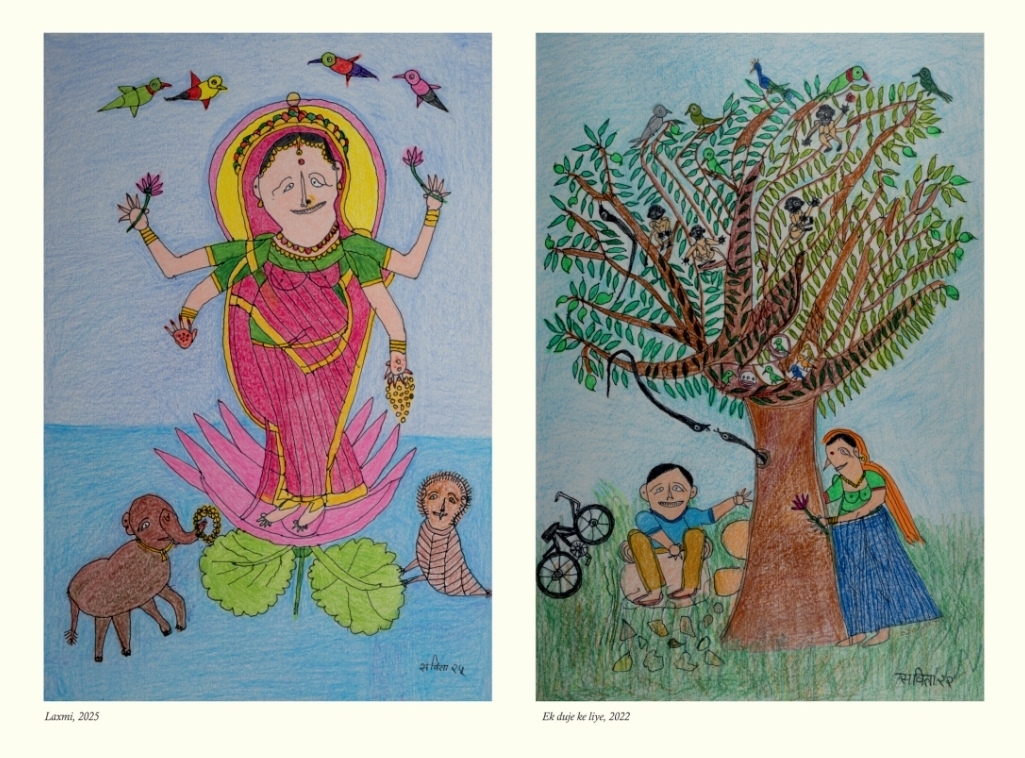
Each drawing unfolds like a lived memory rather than a studied composition. A mother rests with her child in her elongated lap, toys scattered in tender disarray. A family portrait stands quietly dignified. A beer bar hums with anonymous stories; a musical school vibrates with imagined rhythm. Ghosts ‘bhoot’ appear as playful echoes of folklore rather than fearsome forms. In “Ek Duje Ke Liye,” companionship is simplified into two figures around a tree with bicycle adding another story in a story, disproportionate perhaps, yet emotionally exact. A wedding scene radiates collective joy; playful pranks carry the exaggeration of childhood memory; a street barber bends in ritualistic concentration. Even the reference to the Ahmedabad plane crash becomes part of her visual archive—history filtered through personal feeling rather than journalistic detail. And in a tender nod to the present, she is also on a video call, technology drawn with the same innocence as a clay pot or wooden chair.
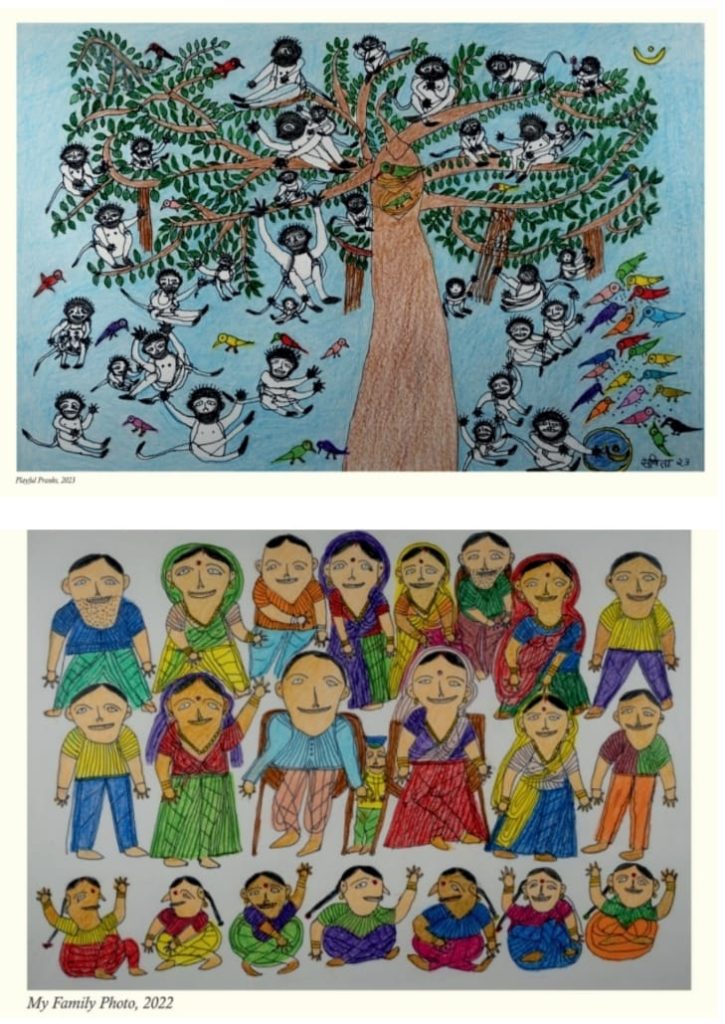
The interiors of her works are as compelling as her characters. Walls hold tiny fan, photo frames and alcoves with bottles, calendars marking time, doors and windows opening into imagined continuities. Scale shifts unexpectedly- small objects may command equal presence with human figures because in lived experience, everything holds an emotional weight. The domestic space becomes both stage and memory-keeper. Her religious compositions follow the same heartfelt logic. In Vastraharan, Krishna plays the flute atop a tree while the Gopis bathe below, arranged in a flat yet patterned world where symbolism matters more than realism. Lakshmi Ma, with her owl, elephants and birds flying around, appears alive with tiny motifs. Lakshmi Narayan radiates serenity without concern for academic modelling or shadow. The backgrounds remain plain, echoing folk sensibilities, yet what truly defines them is devotion translated directly into line.
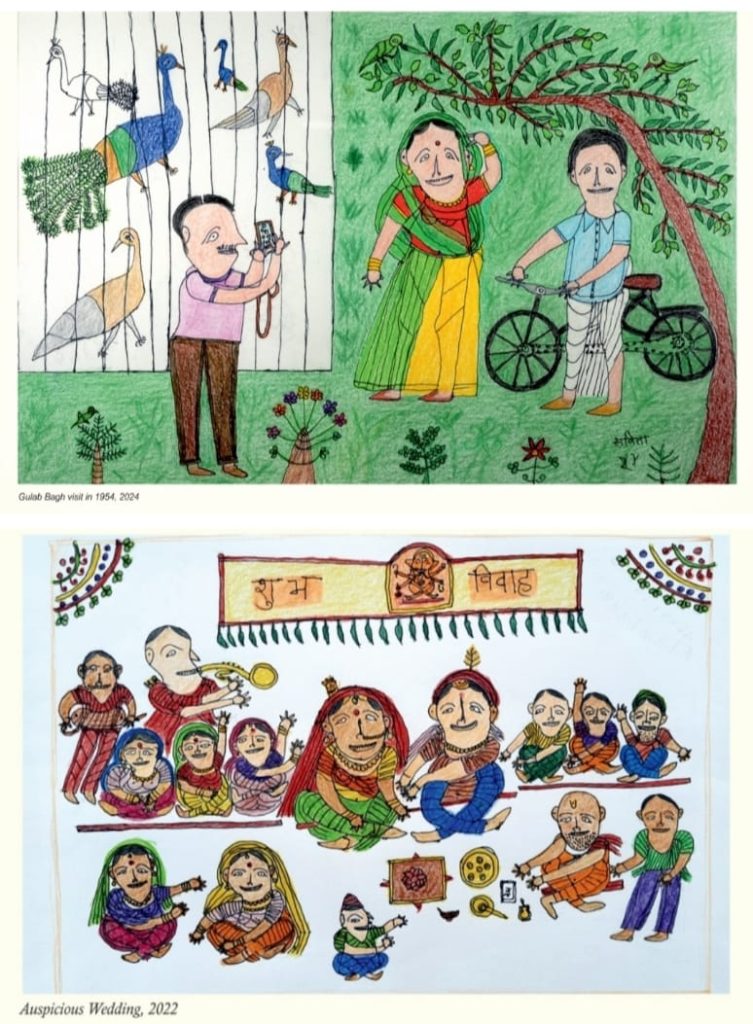
What makes Jiji’s exhibition so moving is precisely this independence from formal doctrine. She does not measure; she feels. She does not construct space; she remembers it. In her hands, distortion becomes authenticity and simplicity becomes strength. Her art reminds us that creativity does not retire with age but ripens, softens and becomes fearless. Through her untrained yet unwavering lines, Jiji communicates that the truest art often comes not from learning the rules but from lovingly forgetting them. Her art lingers in memory untrained in method, untamed in spirit and utterly unforgettable.
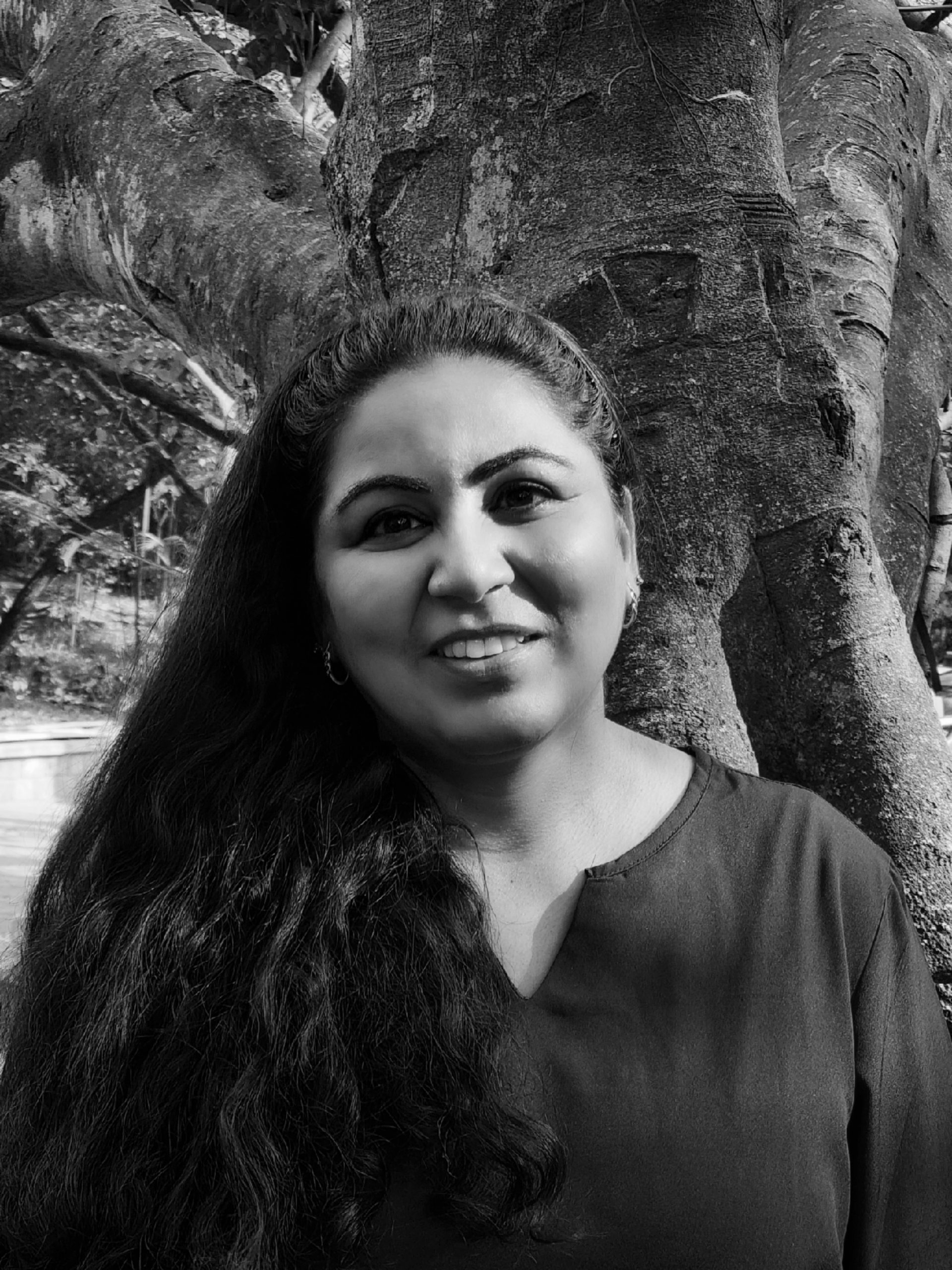
Alka is an artist and art writer with a diverse career spanning teaching, e-learning projects with the Ministry of Human Resource Development (MHRD), and editorial work. An alum of the Government College of Art, Chandigarh (BFA) and Banaras Hindu University, Varanasi (MFA, PhD), she has been recognised with numerous prestigious awards and honours.