Art is multiplicity; it is multidisciplinary, interdisciplinary, and intersubjective; therefore, it is impossible to define what art is. Art implies many things, and so is the artist. When the contemporary world suggests that art is a product of capitalism, the art life of Shilpi Rajan testifies that art is also ‘socialism,’ or at least an undercurrent of that. ‘Shilpi’ is a title that remains attached to the name, and the retrospective of Shilpi Rajan is organised by Uru and Aazhi archive in parallel with the Biennale, offering an introspection into the parallel artistic activities in Kerala, featuring the artist and his engagement with socio-political and intellectual life.

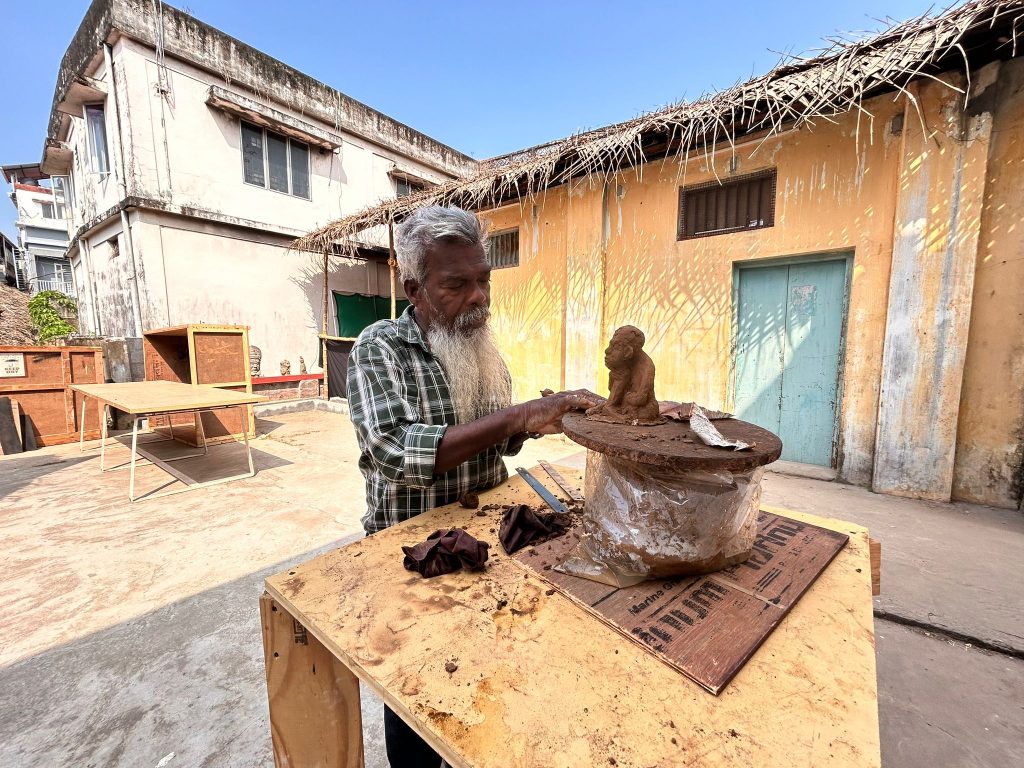
Shilpi Rajan is an active figure among practitioners of literature, cinema, theatre, music, and art, primarily based in Thrissur, Kerala, for at least the past five decades. In places where like-minded people gather, such as theatre festivals and film festivals, he is actively involved, even in set design for plays. When he is labelled as an artist, Shilpi Rajan is often seen as a popular artist. He is an artist whose work can be categorised in a genre that could be described as quasi-naive-abstract realism.
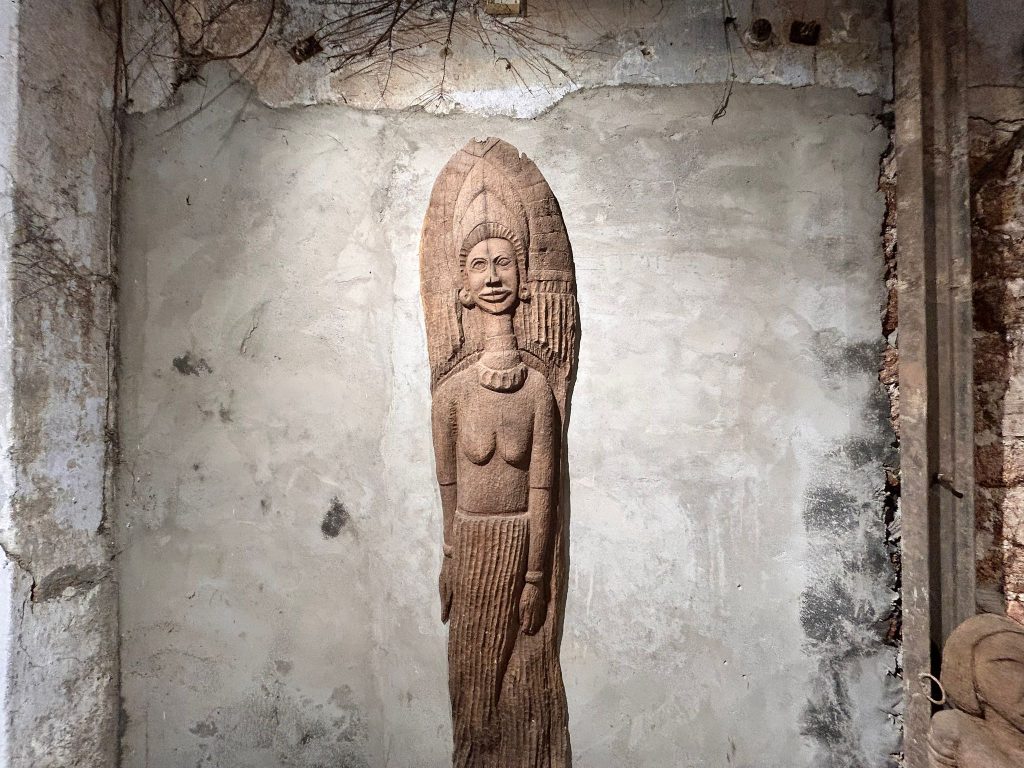
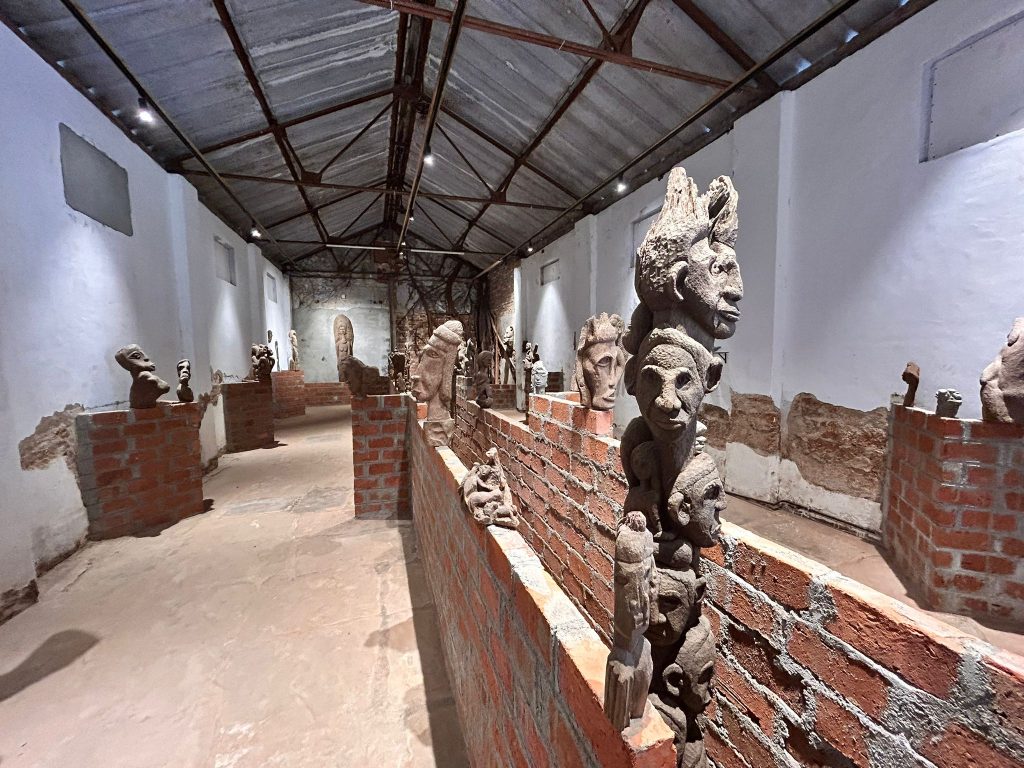
The rise of the self-taught artist Shilpi Rajan coincided with a period of significant transformations in the Kerala public sphere. On one side, there was the strong presence of communism, along with its associated activities in theatre, cinema, and literature, and in parallel, a category of artists emerged alongside it. In the initial phase, it was as a distinct category (which remains active to this day) that the emergence and existence of a group of artists, including Shilpi Rajan, became evident. They worked in collaboration with people from other fields. Hence, they were skilled across various domains and experimented with different material natures. Continuing the active theatre activities that were once vibrant, and aside from the magazine’s artistic work as an offshoot of literary activities, in Shilpi Rajan’s generation, in the Kerala artistic community, the presence of Shantiniketan and Baroda University became stronger, and there was an impact of the creative activities led by KPS Panicker. However, beyond those impacts, Shilpi Rajan was a deeply nurtured giant; Kerala’s strong yet subtle leftist mindset was the support behind it.
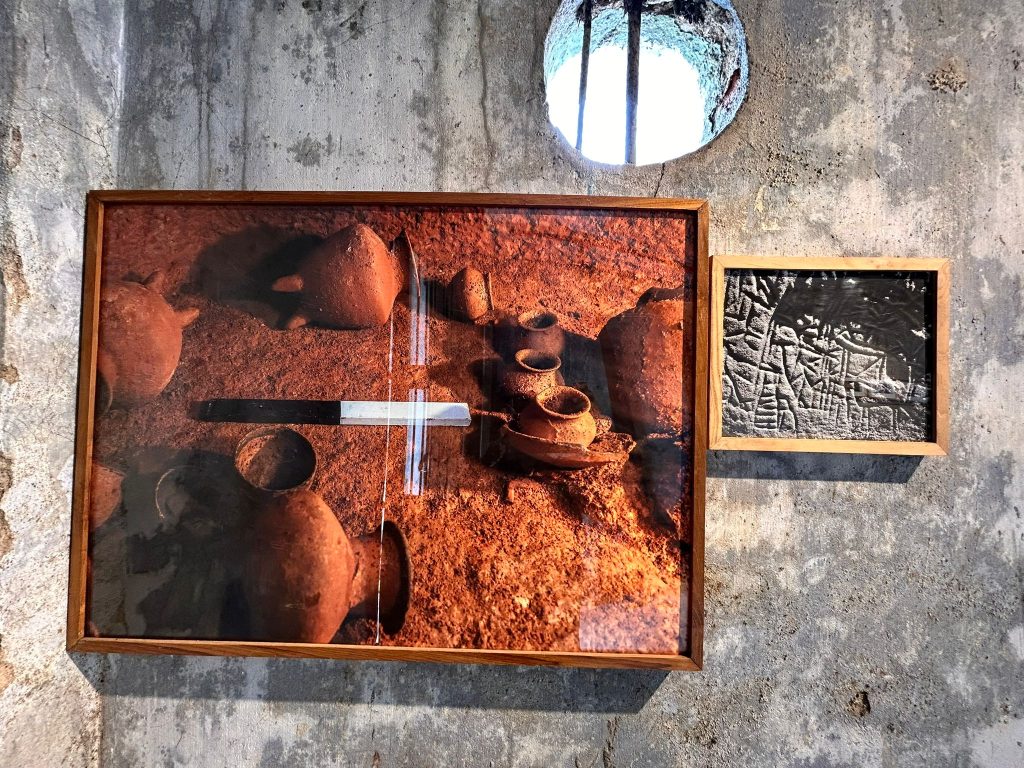
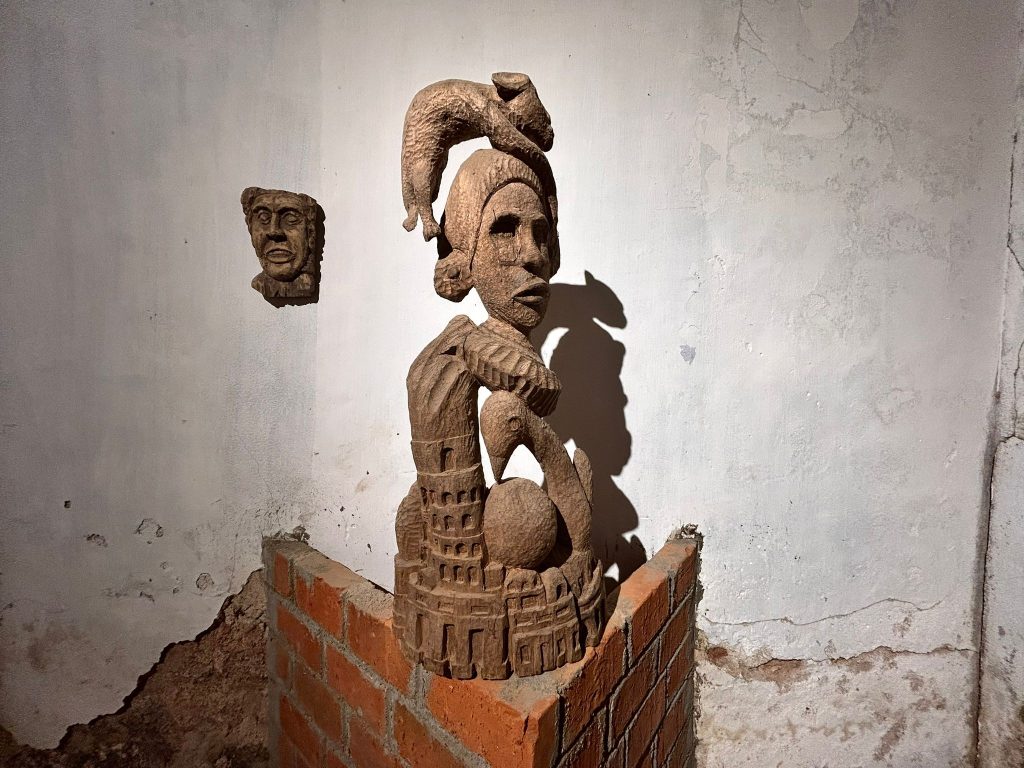
Various factors can influence the formation of an artist as driving forces. Viewed in this way, behind the formation of the artist Shilpi Rajan, many changes that occurred in the Kerala social sphere may have played a role. One cannot overlook the fact that a space of subaltern thoughts, a powerful space, also influences Shilpi Rajan’s creative methods, themes, and even the choice of materials. The art community in Kerala can be divided into two: the community of artists who can be called academic artists, and a group that does not study art academically but actively engages in artistic activities. Shilpi Rajan falls into the category of someone who has learned on their own and is continuously involved in art practice. However, there are significant differences between these two layers of artists. This becomes apparent when one visits Shilpi Rajan’s exhibition. There, we can see Shilpi Rajan engaging in sculpting outside the exhibition hall. Academic artists may consider an exhibition merely as a show, but someone like Shilpi Rajan sees it as a living ecosystem of art practice. That is why the exhibition is seen as a space where one can stay and work, right from the venue itself, it becomes something.
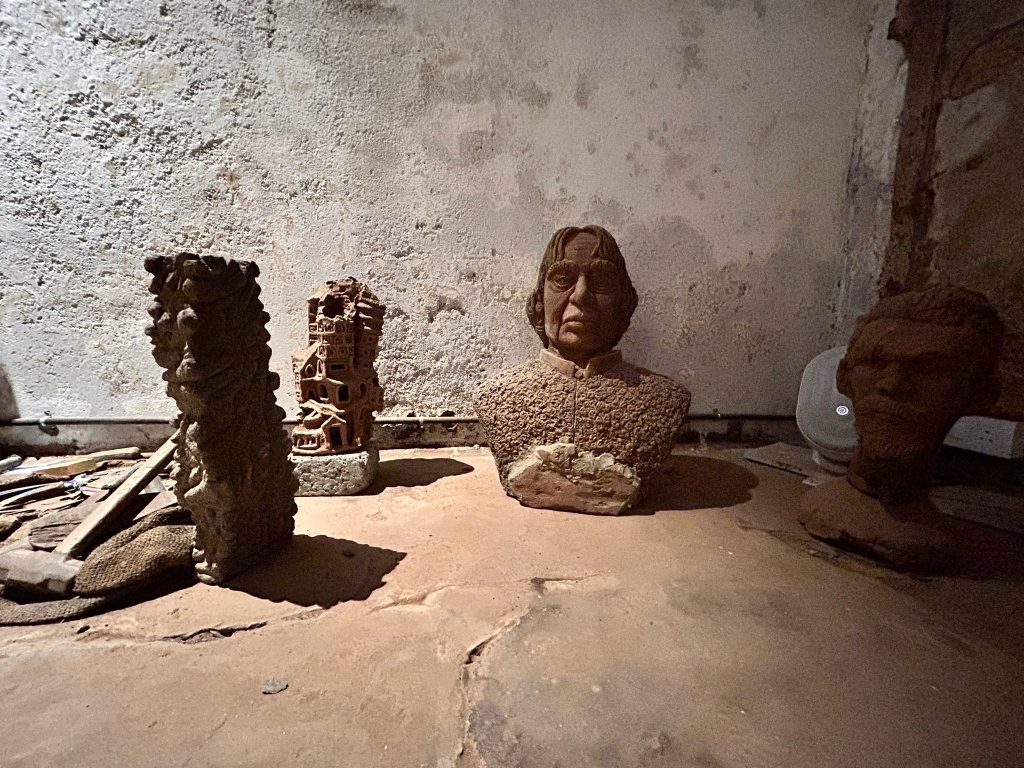
The exhibition may feature a few selected works (or even hundreds) from the thousands of pieces completed during sculptor Rajan’s artistic life, primarily those directly connected to the artist, made in various materials and of different character. The title ‘retrospective’ expands the scope and depth of the show; moreover, this ‘retro’ air offers clarity about an artist’s movements beyond predetermined structures and his deep engagement with materials. A sculptor’s journey is a journey through material. He travels through various types of materials. The process of this journey, in a way, forms a material culture. It is a journey shaped only by materials and visible only through them. It is here that one can see the world of Sculptor Rajan’s art and observe the layering of its various contemporariness. ‘A genre is a sort of world or possibility space,’ says Timothy Morton in his book Being Ecological. That is, in the case of the artist Rajan, the genre he represents is formed not from an abstract notion, but from a thoroughly Keralite background in which he lives. Yet, it also develops within the internal energies of various transcultural interactions occurring within that land itself. That genre, although it can be called Keralite, is also profoundly Rajan’s own.
German thinker Georg Simmel primarily considered the weak creature called human beings and the potent entity called society. In the midst of this weak-strong duality, art is the primary medium that humans, the weak beings, use for their survival. This is the dramatic twist of the entire episode. Yes, humans can create art. That is a twist! The birth of the movie dialogue ‘One can defeat, but cannot kill’ should be traced back to there. Through art, some humans can align with their times, resist them, or mark them; whatever you call it, in such a way that artistic action is engraved on the wings of time, becoming an accurate depiction of time itself.
Once WB Yeats said that art is a social action performed by a solitary man. That is, we can see that the material is converted into an art by the artist, here, the Shilpi Rajan, through his craft, via a personal/social action of artistic practice. As far as the sculptor is concerned, there is the same resistance in the material itself. The material becomes an art creation before the artist’s craft is applied. This change is conceptual and artistic, and in the midst of it all, it takes shape as a formless yet formed image shaped by the passage of time. The material turns into something that summons that. That craft advances the possibility of its own lack of craftsmanship. Even in the sculpture, one may not say everything, but give only a hint of what is to be said, and only a hint about the hint, so on and so forth, is how one can engage in these entanglements.
The artworks of sculptor Rajan have a distinctive folk-realistic character compared to the worlds created by craft and complexities of art. They belong to worlds that emphasise the constructed object’s materiality and its linearity, and they concern the creative worlds of that creation, as well as the impulses behind its birth. The artist Rajan’s individuality exists in a mysterious atmosphere full of many such aspects—its otherworldliness, the changes that occurred within and outside him, and the ways they reflect in his creations—thus, both the artist Rajan and his creations transform through all these facets.
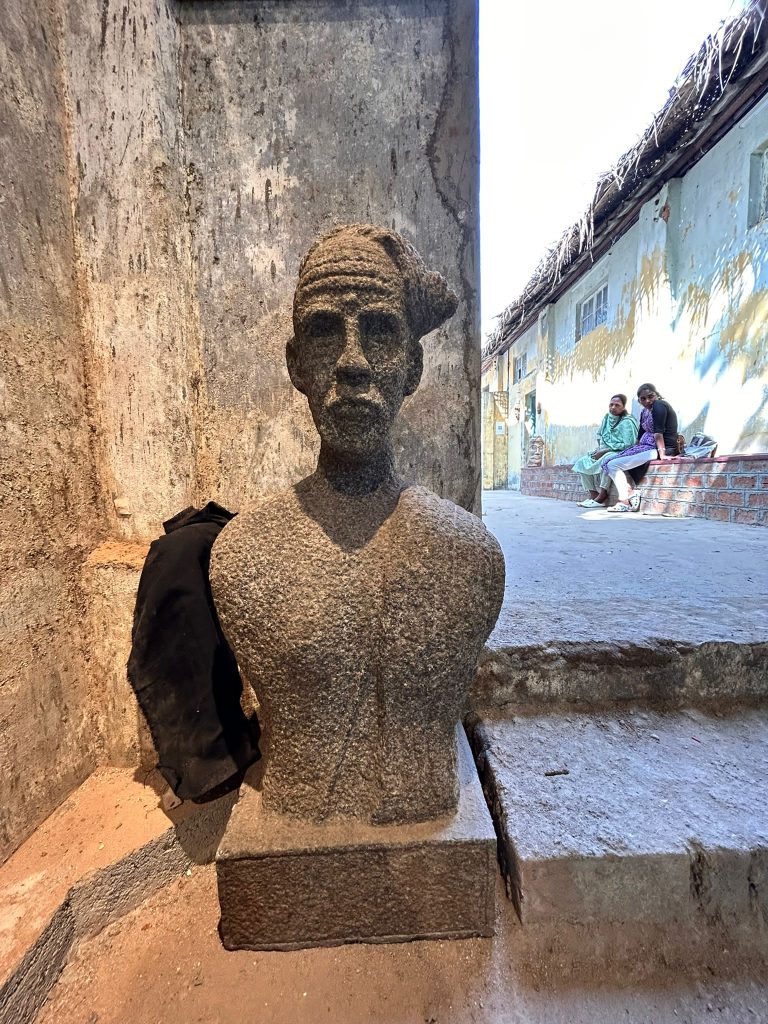
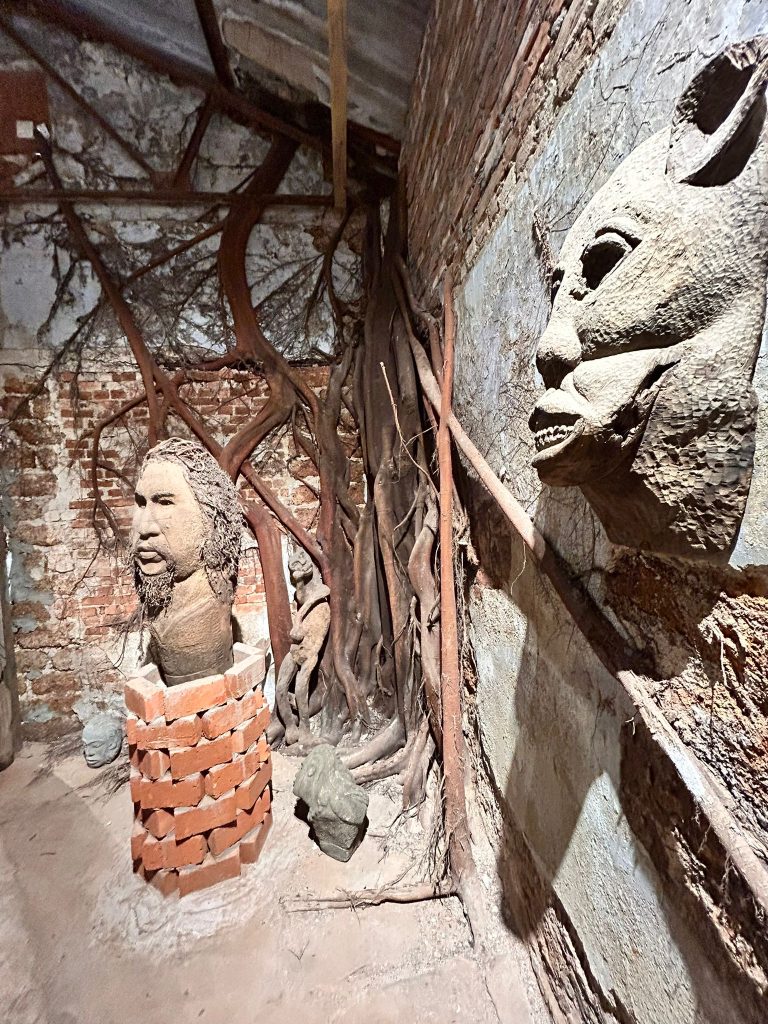
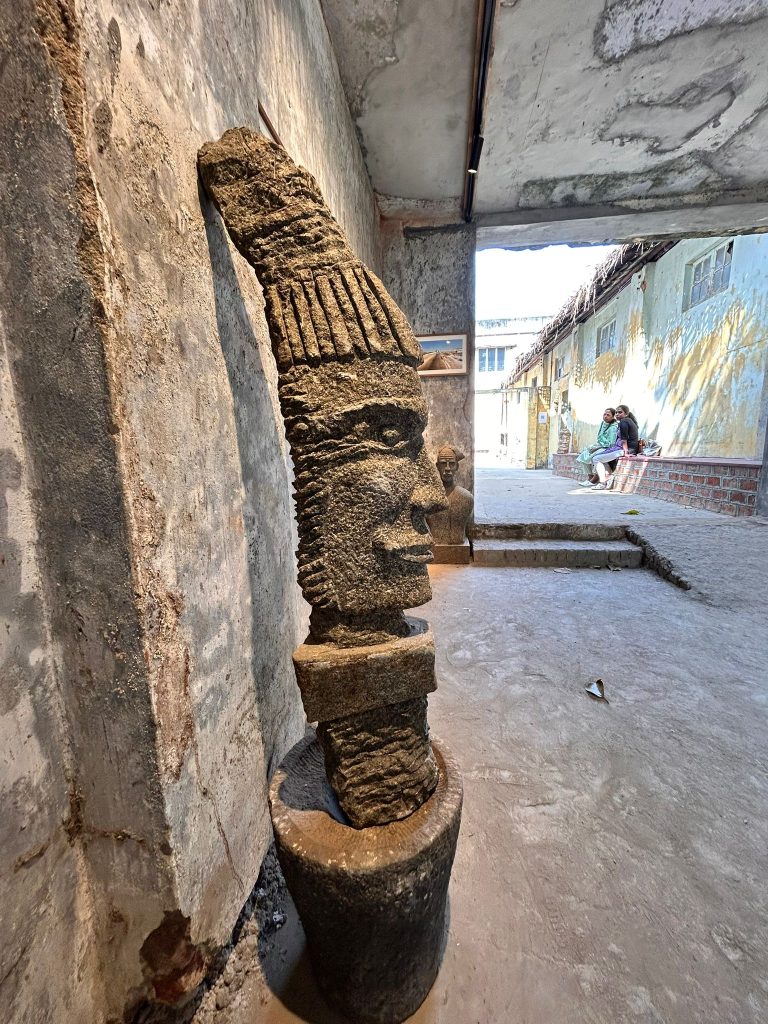
What I am thinking is something else. That is, on a tree, in a floor, in a stone, or in soil, many forms, including abstracts, may be hidden or remain unrecovered, waiting to be retrieved. It is the duty of an artist of some era to retrieve one from the unlimited possibilities hidden in the materials. That could mean freeing an object from ‘limitless,’ that is, converting from the limitless to the limited. It could be the end of that object. However, finding art within the object is a challenging task. That retrieval is the crucial matter. It is simultaneously practice and representation, hope and memory, manipulation. This is where artist Rajan presents a parallel view to the Biennale with his ‘naive’, not exactly linear creations, which are entirely Keralite, national, and international in scope. In that sense, Rajan is a person from Thrissur, a Malayali, an Indian, and beyond that, a South American or European. It is a reflection of an art world that can be described as a place where many elements converge, expanding, becoming more complex, and more mysterious. When it is of the time, of the era, it is also individual; in that sense, he becomes a part of a nation, a region, and a language.
W.B. Yeats said that art has a daughter named Hope and a father named Memory. When Hope and Memory come together, art is created, but this raises the question of how it can become political. Hope is not something that happens in the light of the political landscape. Hope is formed within politics itself, and to some extent, Hope is inherently political. It is Memory that lies behind, and there is nothing more political than Memory. Memory is what politicises a person. From that perspective, Hope and Memory themselves are the parents suitable for art. Since both occur in a single time and space, the imprint of those periods and the names will be the same for the person living in that era and the art they create. To think is not the opposite of to hope, nor of to love. It is a place where all of this comes together, the very place that the sculptor Rajan crafted with his life and lived in.
That is why Shilpi Rajan’s retrospective is a cornerstone of a parallel life. While Shilpi Rajan’s works stand as a strong confluence of Kerala’s parallel art practices (all art being, in itself, a parallel practice), through the lens of indigenous art practices, one can understand how it flows with a force even more potent than Mother River, its depths, its undercurrents, all reminiscent of winding paths and trees with thick fruits and broad leaves. From the human head carved on a coconut to transforming the shape of a rod into abstract or real art forms, it cannot be said that this mission exists only in craft. It is something that must be examined more deeply and from a broader perspective, encompassing both the depth and breadth of an artist’s work and his philosophy. The uniqueness of sculptor Rajan’s retrospective lies in the fact that one can directly experience its breadth and depth.

Krispin Joseph PX, a poet and journalist, completed an MFA in art history and visual studies at the University of Hyderabad and an MA in sociology and cultural anthropology from the Central European University, Vienna.