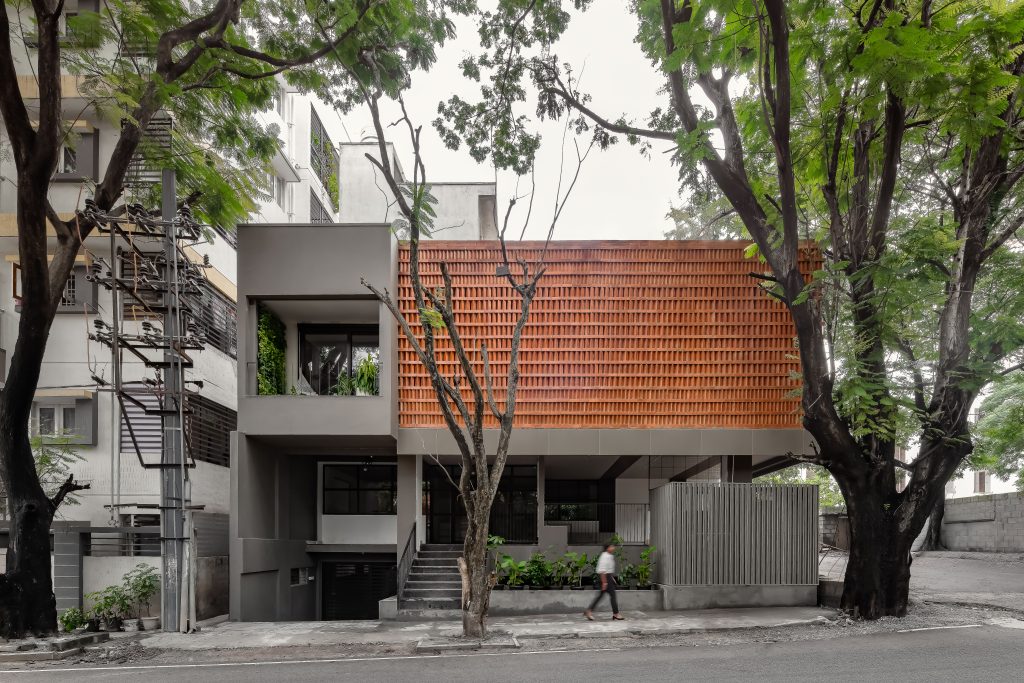
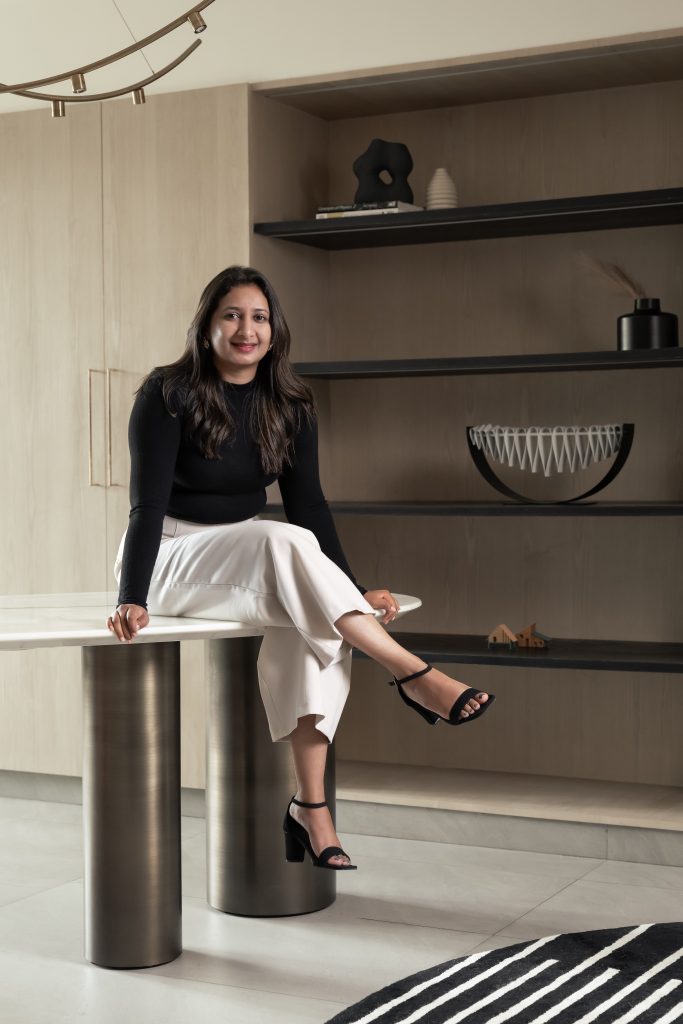
Apoorva Lekha (B.Arch, Acharya College) is the founder of AD Studio9, a Bangalore-based design practice rooted in creating thoughtful, nature-connected spaces. Her journey into architecture began long before formal education, shaped by an early sensitivity to light, materials, and spatial balance. This intuitive foundation continues to guide her design philosophy today.

At AD Studio9, Apoorva focuses on crafting homes and hospitality spaces that go beyond aesthetics—spaces that breathe, feel grounded, and respond to their context. Working extensively within India, particularly on compact urban sites, she has developed an approach that balances clarity, functionality, and warmth, while integrating natural light, ventilation, and greenery into every project.
Her work reflects a belief in simple, practical solutions and a deep respect for user experience. Recognized for her growing impact, she has been shortlisted for the WADE Asia Award – Young Architect of the Year 2025 and FOAID 2025, among others.
Through a blend of creative exploration and structured execution, Apoorva continues to shape spaces that are both contemporary and deeply human.
As part of Abir Pothi’s DTalks series, Apoorva Lekha opens up about her creative process, projects and design philosophy.
Q. How would you describe your signature design aesthetic, and how has it evolved while working in India?
Apoorva Lekha: My signature design aesthetic is rooted in context, clarity, and a deep respect for nature.
I have worked only in India and I have worked in both large scale projects and compact spaces – especially on compact sites like 30×40 plots has shaped my approach to be highly mindful and adaptive. I focus on creating spaces that breathe, bringing natural light, ventilation, and greenery into even the tightest urban layouts.
My aesthetic leans toward practical contemporary design: clean lines, balanced proportions, and thoughtful material choices that feel modern yet warm. But beyond visual appeal, my priority is human comfort. Every space must work for the people who live in it emotionally, functionally, and experientially.
Over time, designing has taught me to embrace constraints as creative opportunities. It has pushed me to innovate, stay grounded in context, and craft homes that are not just beautiful, but truly livable.
Q. What influences and inspires your current work? Could you share some movements, designers, or elements of Indian culture that have shaped your practice?
Apoorva Lekha: My work is influenced most deeply by nature.
I believe that our experiences and everyday observations give us the best solutions—sometimes I get inspired by a single detail just while walking down the road. Inspiration doesn’t have to come from grand moments; often, the smallest elements in nature spark the strongest ideas. Light, shadows, textures, patterns, and natural rhythms constantly shape the way I think about space.
Indian culture is another major influence.
Our country’s diversity has produced countless architectural styles and responses to climate and community. I admire how Indian homes historically evolved with purpose and sensitivity. While I don’t believe in recreating the past, I value understanding its essence and interpreting it through a modern, relevant approach.
A significant source of inspiration is also my father.
He always taught me that solutions should be simple. His belief that even complex challenges can be resolved in the simplest, most grounded way has shaped my design thinking and attitude toward life. His clarity and practicality continue to inspire the way I approach both creativity and problem-solving.
Q. Could you walk us through your creative process? How do you move from initial concept to final execution?
Apoorva Lekha: There’s no fixed formula for creativity, but I do need time and mental clarity to begin the process.
As an entrepreneur, I’m constantly juggling multiple responsibilities, yet the best ideas come when I’m in a calm, focused space. That clarity helps me think freely, explore possibilities, and arrive at concepts that genuinely align with the client’s lifestyle and the site’s context.
Once the concept is shaped, the transition from design to execution follows a structured process at AD Studio9.
We work through a detailed SOP that ensures consistency and quality. This includes:
- Finalizing material palettes and design language
- Preparing comprehensive drawings and technical details
- Creating a clear procurement and timeline plan
- Beginning site work in a phased, coordinated manner
- Conducting frequent site visits to ensure accuracy and maintain design integrity
This balance of creative freedom and systematic execution allows us to turn ideas into built spaces with precision and intent.
Q. Your work often involves collaborations with artisans and other creatives. What draws you to these partnerships, and how do these collaborations enrich your design practice?
Apoorva Lekha: When I first started my firm, I wanted to do everything myself and be present everywhere. But very quickly, I realized that meaningful architecture isn’t created in isolation. That’s when I truly understood the value of working with artisans, craftsmen, and other creative professionals.
Collaborations bring in diverse skills, deeper cultural understanding, and a richness that one person alone can’t achieve. Artisans, especially, carry generations of knowledge—whether it’s in material, technique, or craftsmanship. Their perspective elevates the project beyond just design; it adds soul and authenticity.
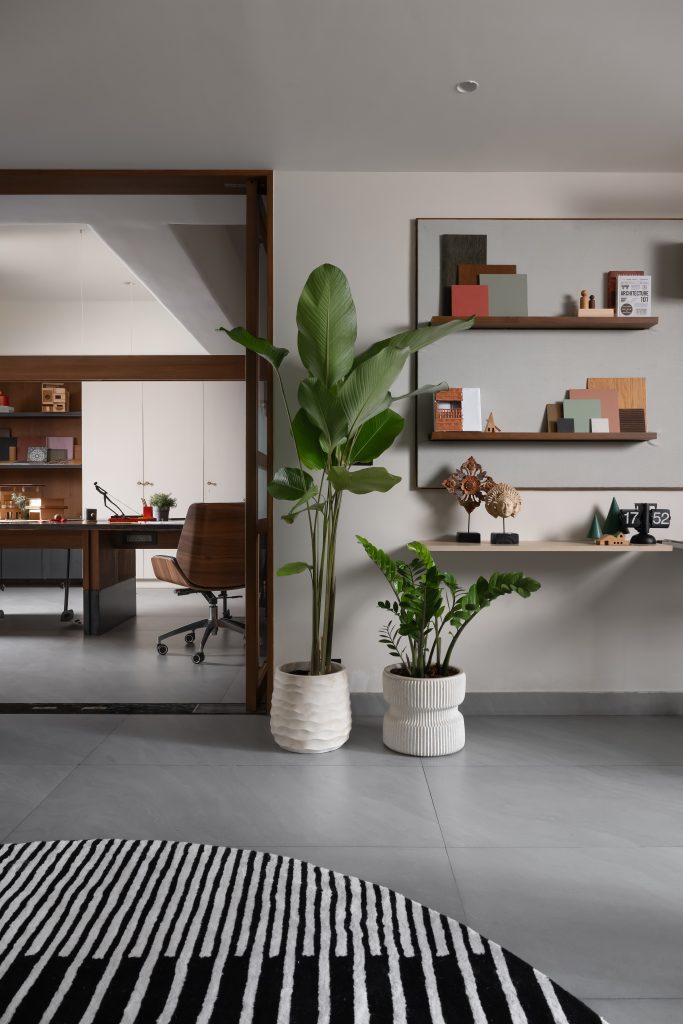
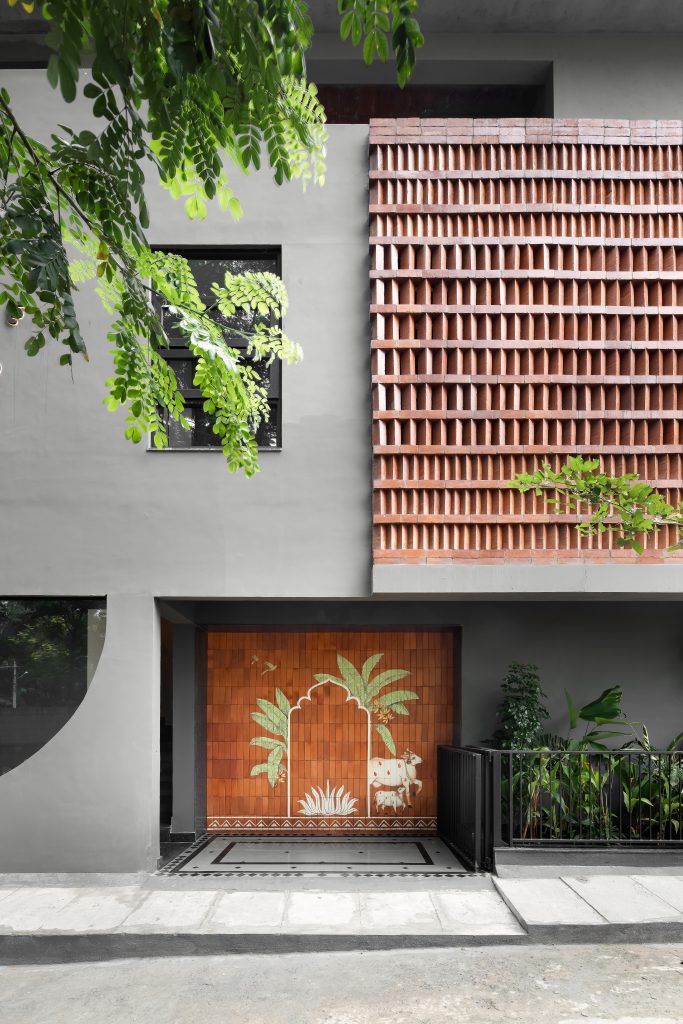
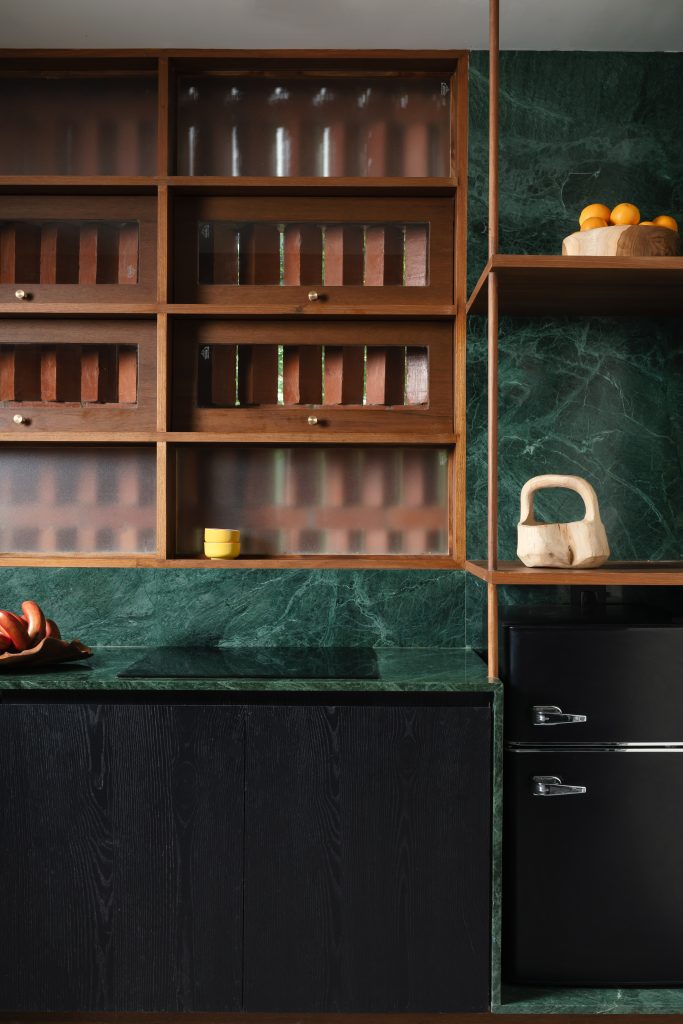
Akshara Vinyasa | ADStudio9
What makes these partnerships work beautifully is having an open mind. When we combine ideas, respect each other’s expertise, and trust the process, the project becomes far more layered, expressive, and impactful than anything we could have created individually.
For me, collaborations not only enrich the design but also make the entire journey more meaningful.
Q. Looking back at your portfolio, which project represents a significant turning point in your career, and among your recent works, what project are you most proud of and why?
Apoorva Lekha: The first major turning point in my career came with my very first prominent project.
It opened the doors to more F&B assignments, and that momentum completely shaped the trajectory of my practice. Once we entered the F&B space, there was no looking back—we’ve continued to work on diverse hospitality projects, each one pushing our creativity and understanding of user experience, space planning, and ambience.
Choosing a single project I’m proud of is difficult, but our recent work—SUKA—is definitely a milestone.
SUKA is an 85,000 sq. ft. restobar, recently completed and launched, and it stands out for its scale, detailing, and the immersive design experience we were able to create. It demanded strong conceptual clarity, precise execution, and seamless collaboration across teams. Seeing it come to life has been incredibly rewarding for our entire studio.
It represents not just a project, but a benchmark for what AD Studio9 can achieve—creatively, technically, and collaboratively.
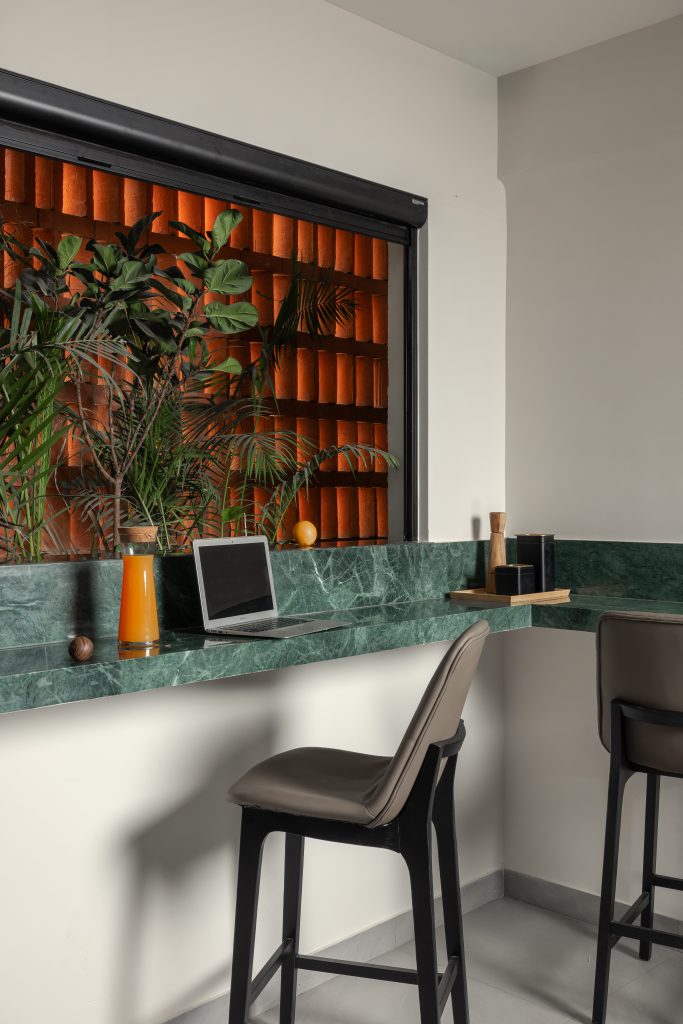
Akshara Vinyasa | ADStudio9
Q. What unique challenges and opportunities have you encountered as an emerging designer in the Indian design industry, and how are you working to overcome these obstacles?
Apoorva Lekha: In architecture, obstacles come from every direction—coordinating with vendors, managing client expectations, addressing technical or budget-driven concerns, and navigating the many unpredictable situations that arise on site. But honestly, where is there a path without challenges?
What has helped us at AD Studio9 is our mindset.
My partner and I genuinely enjoy solving problems. We don’t see challenges as roadblocks but as opportunities to refine our process and strengthen our principles. At every stage, we focus on finding simple, practical solutions that allow us to stay true to our design philosophy without compromising on quality. Our motto is – Let’s make new mistakes but not repeat any.
This approach embracing obstacles, simplifying solutions, and consistently moving forward has shaped not just our practice, but also our identity as emerging designers in the Indian design industry.
Q. How do you approach sustainability and eco-friendly practices in your designs, particularly considering India’s traditional wisdom and contemporary environmental challenges?
Apoorva Lekha: Sustainability is a vast subject, but I prefer to approach it in a simple, grounded, and practical way.
For me, being eco-friendly starts with making conscious choices—sourcing materials locally, using techniques that are efficient and uncomplicated, and designing spaces that naturally stay comfortable without excessive dependence on artificial systems.
I also believe India’s traditional wisdom holds valuable lessons.
Our older practices were deeply rooted in climate response and resourcefulness. I find it important to understand why they worked—not to replicate their forms or aesthetics, but to reinterpret their logic for today’s needs. It’s about learning from the past without mimicking it.
By combining mindful material choices, climate-sensitive planning, and modern technology, we aim to create designs that feel responsible, relevant, and truly sustainable in the long run.
Q. What’s your most exciting recent design or art discovery that’s influencing your current thinking?
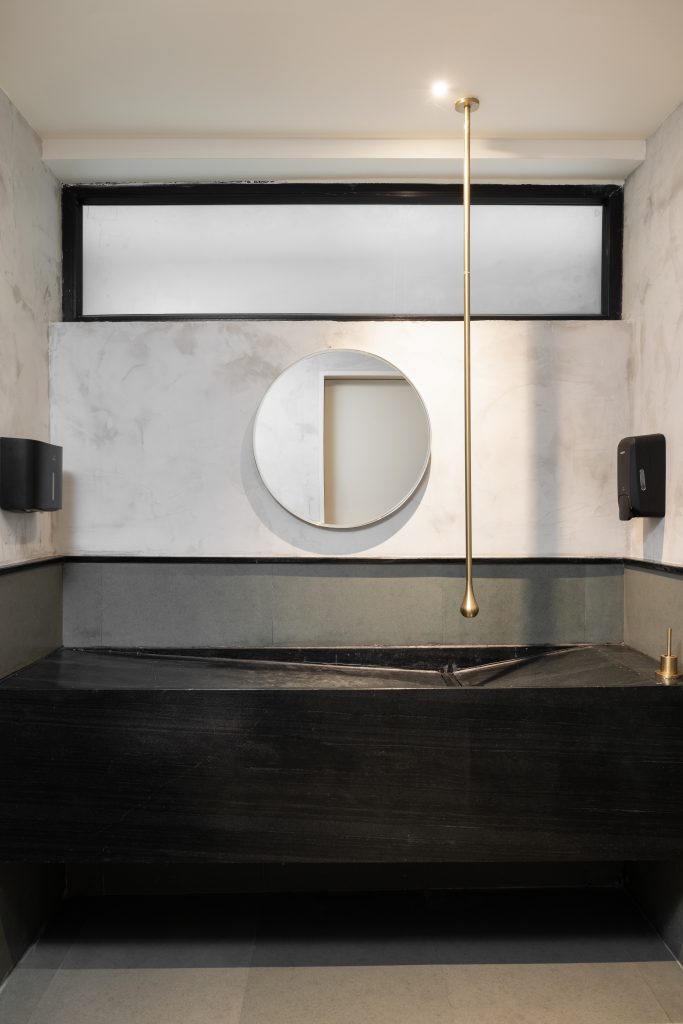
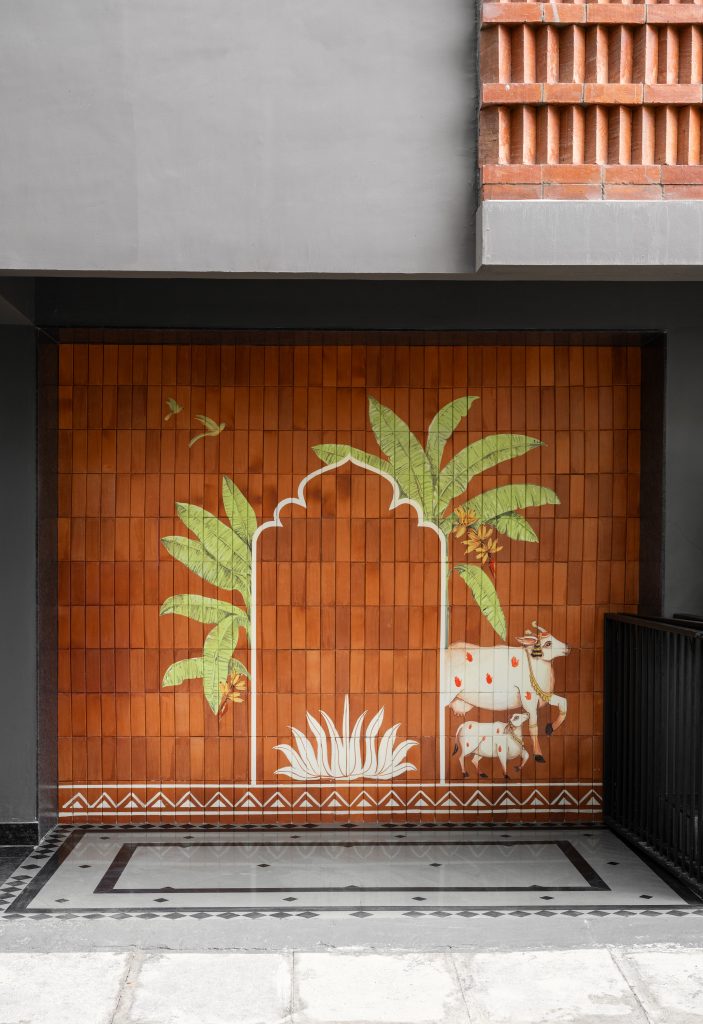
Apoorva Lekha: Recently, I’ve been drawn to the idea of exploring materials and forms in a more experimental, almost artistic way. I love experimenting in both materials and form, and I’m discovering how raw, imperfect textures—like unfinished stone, natural lime, or handcrafted surfaces—can completely shift the atmosphere of a space. This appreciation for natural irregularity has been influencing my current thinking a lot.
I’ve also been exploring modular forms and fluid geometries. It’s fascinating how simple shapes, when repeated or layered, can create dynamic spatial experiences—whether in layouts, lighting, or even furniture details.
Overall, I’m enjoying this phase where design feels less rigid and more expressive—where materials, textures, and small artistic interventions elevate a space in unexpected ways. It’s pushing me to think beyond pure function and bring more emotion and storytelling into my work.
Q. How do you build visibility and reach out to potential clients – what platforms and strategies have worked best for you?
Apoorva Lekha: For us, visibility begins with the work itself.
We believe that if we give 100% to every project, the quality naturally speaks for us. Many of our clients come through word of mouth, and we value that organic growth more than anything else.
In terms of platforms, Instagram has worked best for us.
We keep it simple—consistent updates, honest documentation, and sharing the progress of every project. This helps people understand our process, not just our final outcomes. Over time, this steady presence has helped us build a genuine following and reach the right audience.
However, we don’t approach social media with the intention of “getting clients.” Our focus is always on doing our best work, staying authentic, and letting the right opportunities come from that.
Q. From your experience, what are the crucial dos and don’ts for young designers trying to establish themselves in India, and what professional forums or communities would you recommend they join?
Apoorva Lekha: Today, many young designers feel the pressure to start something of their own quickly. While that ambition is good, it’s equally important to understand that growth can also happen by being part of the right team and learning from the right mentors. Entrepreneurship is not the only path to success.
In India, architectural practice is still evolving and not fully structured, so understanding the basics before starting out on your own is crucial.
Young designers should focus on learning as much as possible—site work, detailing, client communication, vendor coordination, costing—because these real-world skills matter just as much as design talent.
Q. As you look ahead, what kind of projects or directions would you like to explore?
Apoorva Lekha: I enjoy spaces that allow for deeper thinking, context-driven solutions, and a bit of experimentation.
I’m also very keen to explore interior retail design. Retail has its own energy and demand for storytelling, visual identity, and user engagement—and it’s a direction I’ve been looking forward to working on more.
Overall, I want to continue expanding into projects that push creativity and allow me to blend functionality, emotion, and strong spatial narratives.
Q. For aspiring designers looking to make their mark in India’s design landscape, what wisdom would you share from your journey?
Apoorva Lekha: In school, I was never known for academics or for being outgoing. I was extremely shy—never the center of attention, rarely talking to people, always keeping my head down. I didn’t observe much, I didn’t network, and I certainly didn’t imagine I would one day run my own design firm.
When I started AD Studio9, I didn’t come with years of F&B experience, and I didn’t have a godfather in the industry. Architecture itself is such a vast, constantly evolving field that no one enters fully prepared.
Everything I know today is a result of self-learning—reading, observing, experimenting, failing, and learning again.
Practical experience became my biggest teacher.
Over the years, I had to step out of my comfort zone—manage clients, lead a team, run a business, make decisions, and represent my work confidently. These were things I never imagined doing as a shy schoolgirl. But growth happens when you don’t give up.
Today, when I look back at getting nominated for national awards, winning recognition for our own studio, and building a strong portfolio—it reminds me how far consistent effort can take you.

Contributor