Melvin Edwards (1937–2026), who died last week at 88, was a Houston-born sculptor and activist who was raised during segregation and portrayed Afro-American lives in abstract terms. He first studied painting at the University of Southern California before turning to welding in 1959. Building on this distinctive artistic foundation, Edwards crafted intricate, abstract assemblages from chains, barbed wire, and industrial scraps.

His long-running Lynch Fragments series (1963–2026), known for wall-mounted reliefs that confront histories of racial brutality with formal restraint, brought him widespread acclaim. Drawing inspiration from jazz, his welded steel style culminated in a solo show at the Santa Barbara Museum of Art in 1965.
Along with creating artistic works, Melvin Edwards aimed at the comprehensive development of the African people. Edwards was a dedicated educator, teaching for decades at institutions including Rutgers University, where he mentored generations of artists. His kinetic ‘Rocker’ sculptures of the 1970s introduced movement and play, underscoring his belief in sculpture as a communal form. In any way one looks at it, Edwards’s artworks, both inseparable and immense, persist as a powerful enunciation of memory, resistance, and abstraction.
Art and Life
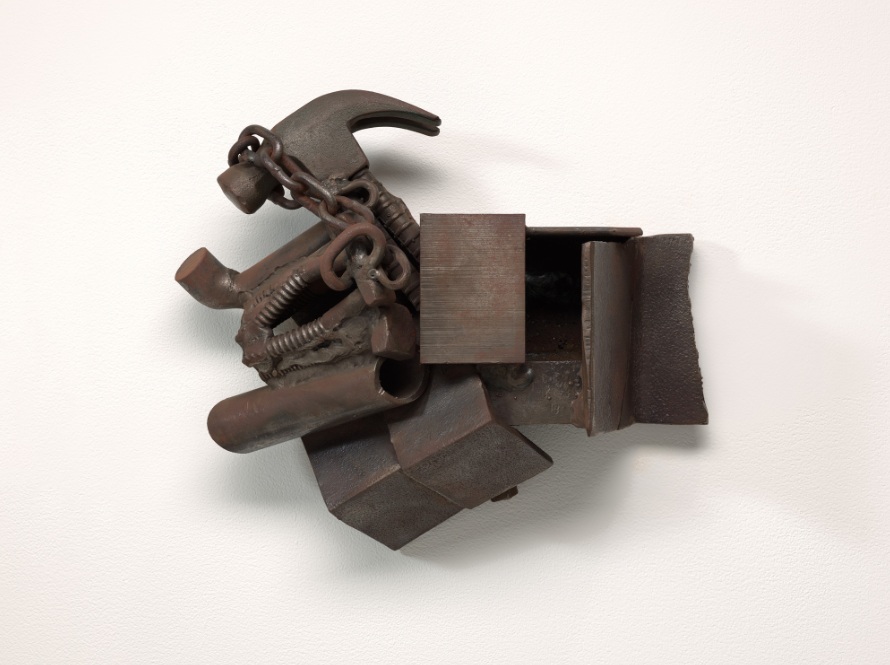
The primary lesson of Melvin Edwards‘ artworks is that they encompass political, social, and historical connotations when the word ‘Fragments’ accompanies the word ‘Lynch,’ which means to beat to death, kill by assault, hang without legal trial for alleged crimes, punish violently without following the law, or carry out punishment by mob action. “Lynch Fragments” is a series of tiny, wall-mounted sculptures in which he welded together recycled and found steel to create barbed wire, chains, sharp tools, and other metal objects.
The “Lynch Fragments” series comprises over 300 artworks. It is primarily inspired by a wide range of worlds, such as racial violence during the civil rights movement, the Vietnam War, his personal relationship with Africa, and people in his own community and across the African diaspora. Edward’s artistic worlds are layered, encompassing human problems, the neglect and repression they face, and much more.
In his works, periodic materials had multiple connotations. The material itself connects the actual and abstract levels to a variety of problems simultaneously. Agriculture, cultivation, and survival are examples of other hidden surfaces and issues, much as barbed wire was a sign of oppression and brutality.
One could argue that Melvin Edwards’ life shifted when he encountered the Hungarian painter Francis de Erdely while studying on a football scholarship at USC. From that point forward, he focused on expressing his heritage and the struggles his people endured, with the aim of sharing these experiences with future generations. After moving to New York City in 1967, Edwards became the first African American sculptor to have a solo exhibition at the Whitney Museum of American Art in 1970. Throughout his career, he remained committed to public art, producing sculptures for museums, public housing developments, and academic institutions worldwide. Edwards’s practice bridged private collectors and public domains, turning his art into a catalyst for broader historical discourse.
The legacy of Atlantic slavery deeply informs Melvin Edwards’s artworks. Reflecting on the discrimination he and his community endured, Edwards noted, “You could say God is important, but you had to be rational about it.”
During art studies in Los Angeles on a scholarship, he began to see the works of Picasso, Klee, Rembrandt, Goya, Michelangelo, and Donatello, and started to find his own place between abstraction and realism. Edwards examined both the formalist urge to protect aesthetics from the social and the activist requirement that political art be representational after realising that welding is an appropriate medium for storytelling in his artwork. Before being sold into slavery and transported to the United States, Edwards’s great-grandfather was employed as a blacksmith in West Africa. This transoceanic echo reverberated across generations affected by slavery.
It is when one sees that Melvin Edwards described the chain and barbed wire he chose as “already loaded with poetic and political and other realities” that one realises what kind of politics the artist had infused in the material selection. He made it clear that both what is being said and the medium used for it are equally important. Against the backdrop of issues including slavery and the various oppressions faced by African-Global South peoples around the world, Edwards’ artworks lie in their global scenario. Speaking about the Lynch Fragments, which he started creating at the very beginning of his artistic career, critic John Yau said, ‘More than half a century later, the early ‘Lynch Fragments’ have lost none of their power.’ “In fact, they have gained in resonance over time because they point to the physical pain and constraints that humans have had to endure throughout history. The power of Edwards’ sculpture is consummately sensual, not in the erotic sense, but one that suggests deep, wrenching pain”, he added.
The Poetics of the Blacksmith
The article ‘The Poetics of the Blacksmith’ describes Lydie Diakhaté’s engagement with Edwards’s artworks and her visit to Diamniadio, Senegal, where her studio was located. The name Diamniadio means ‘return in peace.’ It also describes the kind of memory Edwards’s artwork with the same name evokes, suggesting that the world it creates is a continuation of older worlds and the many unsettling events that occurred there. Diakhaté argues, ‘Melvin Edwards’s steel sculptures fuse the political with the abstract to address his African American heritage.’
As a black internationalist, a pan-Africanist, and a prime witness to Modernist innovations in the New York art scene, Melvin Edwards has become a prominent and undeniable presence of his generation, Diakhaté says. Edwards’ artistic life can be considered ‘between’ abstract expressionism and the current wave of conceptual art.
Edwards explained his ‘Lynch Fragments series’ as ‘where they became a vehicle to honour individuals, explore nostalgia and investigate his interest in African culture.’ That is, through the artworks in that series, he is not only sculpting the injustices faced by his people but also giving them some new meanings. He is highlighting the fragmented, marginalised, immobilised, and displaced cultures of African culture. Scissors, pieces of railway, knives, chains, padlocks, nails, locks, shoemakers’ hammers, trowels, interiors of motor vehicles and agricultural or carpentry tools – these are numerous objects, often found in many places (found materials) that Edward uses to give new attire to his artworks. When abandoned items are found and combined with other things, a new meaning emerges.
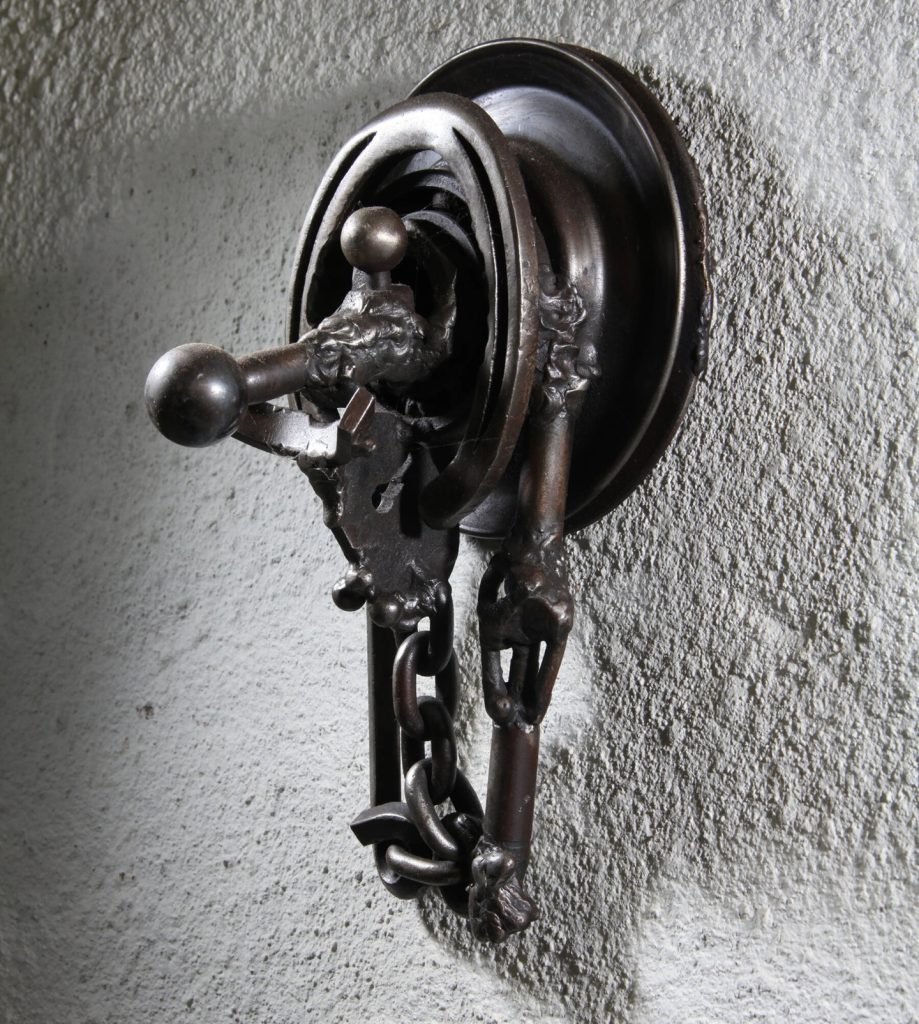
In the article ‘Bright Mornings: Researching History and Violence Through the Sculptures of Melvin Edwards,’ co-written by Jungerberg, Smith, Borsh, and Wilbur, the materials used by the artist are described as potentially dangerous, repurposed objects. They also note that these carry symbolic weight. Beyond the various types of injustices faced collectively by African society, Edwards turns to contemporary events and the resistance of people in many places as subjects, alludes to the sculptures’ origins, and offers clues for interpreting them without limiting their meaning.
The array of meanings contained in abandoned objects consistently drew Edwards’s artistic attention. Through assembling these materials, he enabled his works to invite broad interpretation and response. The sculptures Nam and Iraq were shaped by reflection on global conflict and those affected by the Vietnam and Iraq wars. Nancy Morejón noted, “One of the merits I find in the work of Melvin Edwards is the precise balance he achieves between cultures and pictorial craft.” Edwards built layered worlds emphasising rhythm and musicality—particularly jazz—within abstract domains. The world formed from wires and steel that Lynch Fragments uses is described as “so tender, so moving.”
‘Though it is true that the police brutality that ravaged that city in the early sixties inspired the birth of this series, it is just as true that the artist always remained faithful to the language of art, never to the language of posters,’ says Nancy Morejón. In a contemporary world where police brutality continues to snare headlines with no end in sight, the artist has created ‘formless forms’ in his sculptures that transcend the limits of form. In ‘Lynch Fragments’, according to Morejón, there is the utmost indescribable truth and beauty.
Sharon Patton raises some other arguments. When she says ‘Edwards’ unfinished imagery and laissez-faire technique defy traditional sculptural method,’ Patton considers the artist’s effort to liberate the artwork from forms, treating it as symbolism, with industrialised materials, ‘found’ objects, and spontaneity. ‘And that language is a ‘private conversation’ clearly expressed in a visual African-American vernacular’ is understood not merely as a reference to Edwards’ works, but as an effort to discover and document the creations of artists of that era.
In the study ‘In Defence of Interiority: Melvin Edwards’ Early Work,’ Elise Archias states, ‘he held on formally to a modern notion of “interiority” in his Lynch Fragments series, which provides us with an underexamined aesthetic position in contemporary art.’ Explaining it, Archias says, Edwards offered nuanced relationships between interior and exterior at a moment when concepts of ‘interiority’ and ‘self’ were under the most strain in contemporary art practice. Interiority does not belong only to the artist; rather, it also belongs to that time. The time inhabits the artist, and is created through art to communicate with the outside world. It can be seen as a magical work in which time itself becomes art, and the artist, perhaps to some extent, becomes a revolutionary as well.
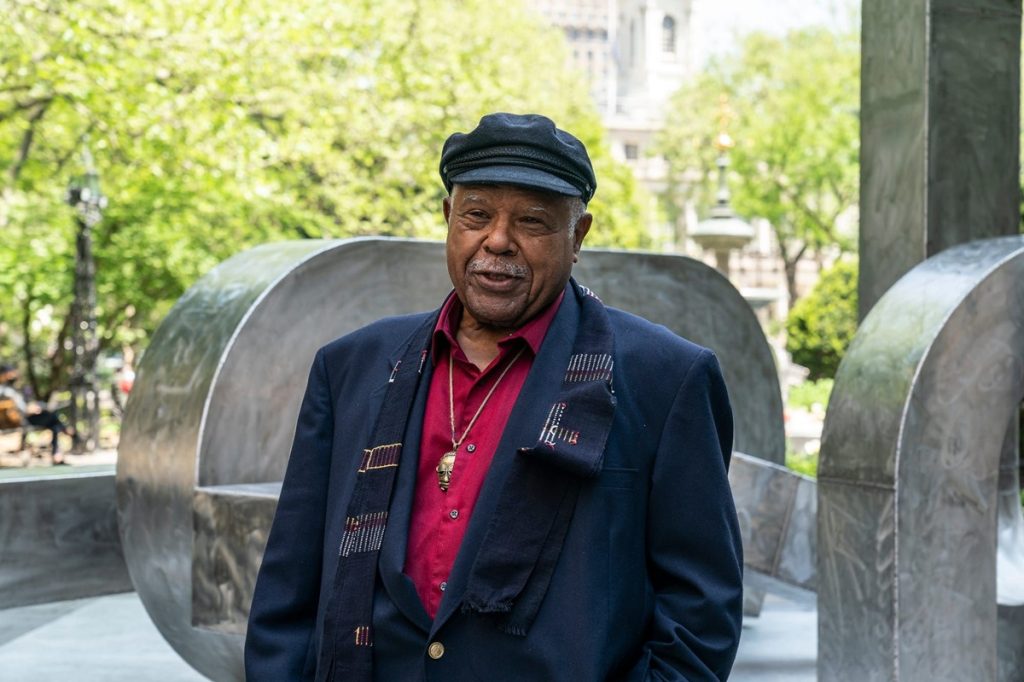
Feature image: Artist Melvin Edwards at the unveiling of “Brighter Days” at City Hall Park in 2021 (photo by Lev Radin/Pacific Press/LightRocket via Getty Images)
Krispin Joseph PX, a poet and journalist, completed an MFA in art history and visual studies at the University of Hyderabad and an MA in sociology and cultural anthropology from the Central European University, Vienna.