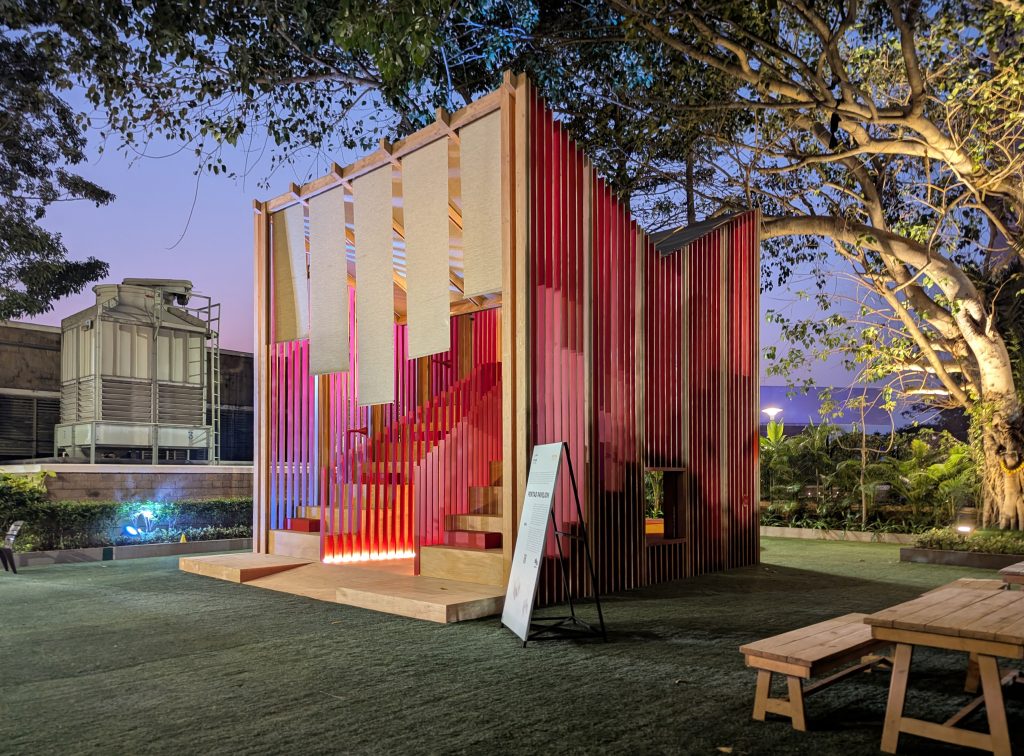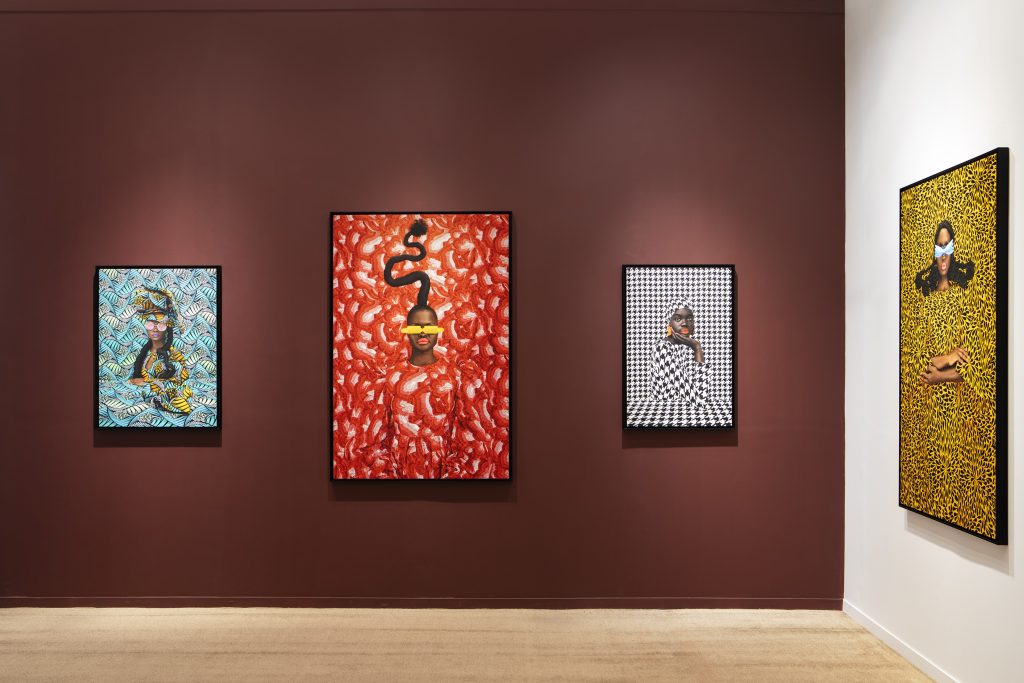
The India Art Fair 2026 redefines the visitor experience with an impressive line-up of outdoor installations, turning the grounds into an open-air art museum. This year’s edition invites visitors to engage with modern innovation well beyond the boundaries of conventional gallery spaces by emphasising public art that is ambitious in scale, experimental in substance, and immersive in experience.

A Landscape Reimagined Through Art
Art works that dynamically respond to light, weather, and movement, the outdoor program presents some of the fair’s most dramatic visual moments. In addition to preserving the fair’s aesthetic character, these imposing pieces broaden its narrative focus, allowing artists to go deeper into topics such as memory, environment, urbanism, identity, and spiritual symbolism.
The outdoor zone is one of the most photographed and talked-about parts of the fair since each piece is meant to be viewed outdoors, encouraging people to stop, stroll through, touch (if permitted), and think.
Paresh Maity’s Monumental Vision
Renowned artist Paresh Maity makes a triumphant return to the exhibition with a sculpture installation that perfectly captures his signature emotional vigour and vitality. The piece, large and bold in shape, blends dazzling colours with flowing forms to create a mood that is both joyous and reflective.
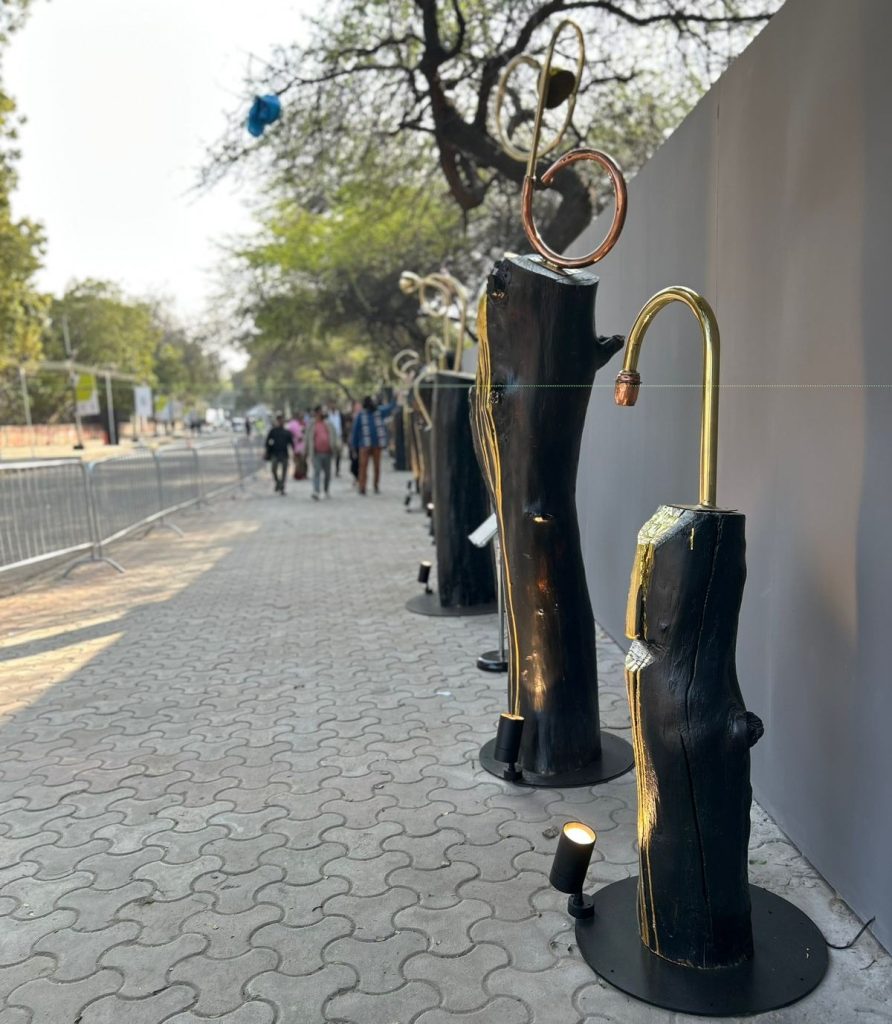
India’s natural and cultural landscapes serve as inspiration for Maity’s installation, which evokes festival rhythms, flowing rivers, and temple outlines. Indicating the event’s dedication to presenting the finest of modern Indian expression, its location at the fair’s entry (or centre courtyard, depending on site) sets the tone for the immersive experience that lies beyond.
Deepak Kumar’s Contemporary Monument
Deepak Kumar’s outdoor project emphasises rough textures, repurposed materials, and architectural features in contrast to Maity’s vibrant colour scheme. Kumar, well-known for his interest in ephemeral environments, human behaviour, and urban deterioration, develops a sculptural setting that challenges spectators to consider how cities and the people who inhabit them change over time.
Exhibit 320 supports his installation, which questions the notion of permanence. To depict the changing realities of modern life, metal, concrete, and found objects are combined to create a complex structure that seems both substantial and delicate. The piece encourages slow viewing, enabling viewers to circle it and uncover new perspectives and meanings.
What If Women Ruled the World?
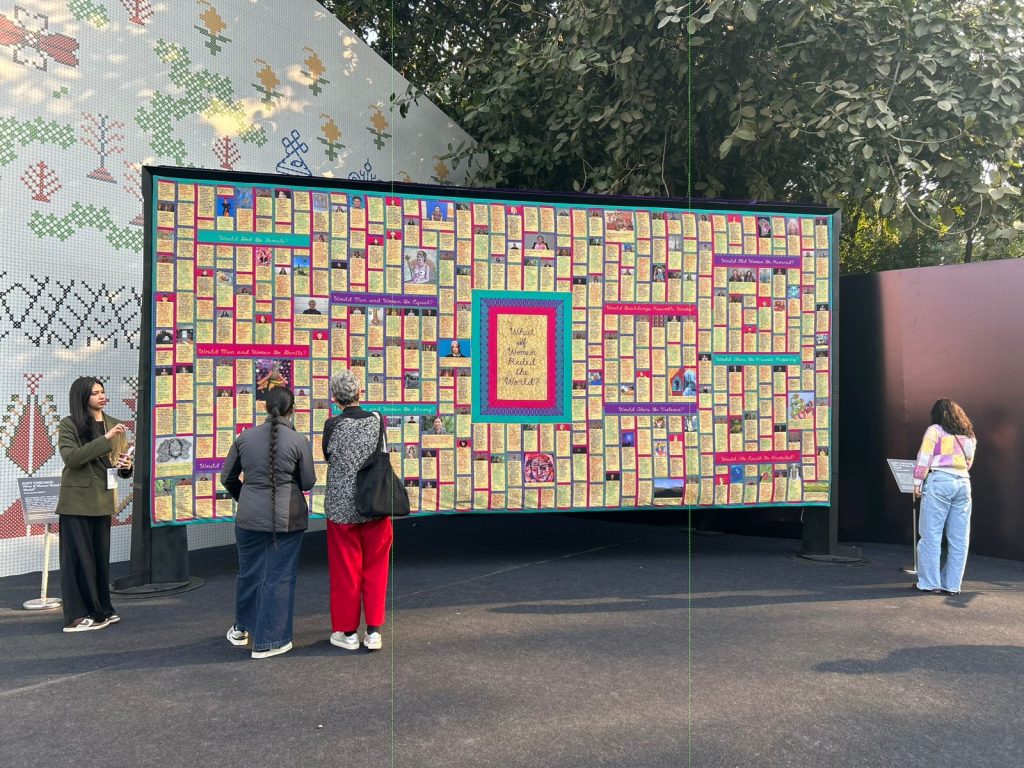
Judy Chicago’s ‘What If Women Ruled the World?’ keeps Fair Ground vibrant through its perspective and the engagement of people. Presented as a physical quilt in an open-air setting, the evolving work invites visitors to participate in the revival of the quilt-making tradition by reusing fabrics, transforming the craft into a powerful artistic medium and aligning with Chicago’s lifelong commitment to social and environmental justice. Chicago invites visitors to respond to its questions on video and to be part of this project in its future iterations.
Dumiduni Illangasinghe’s Soft Armours
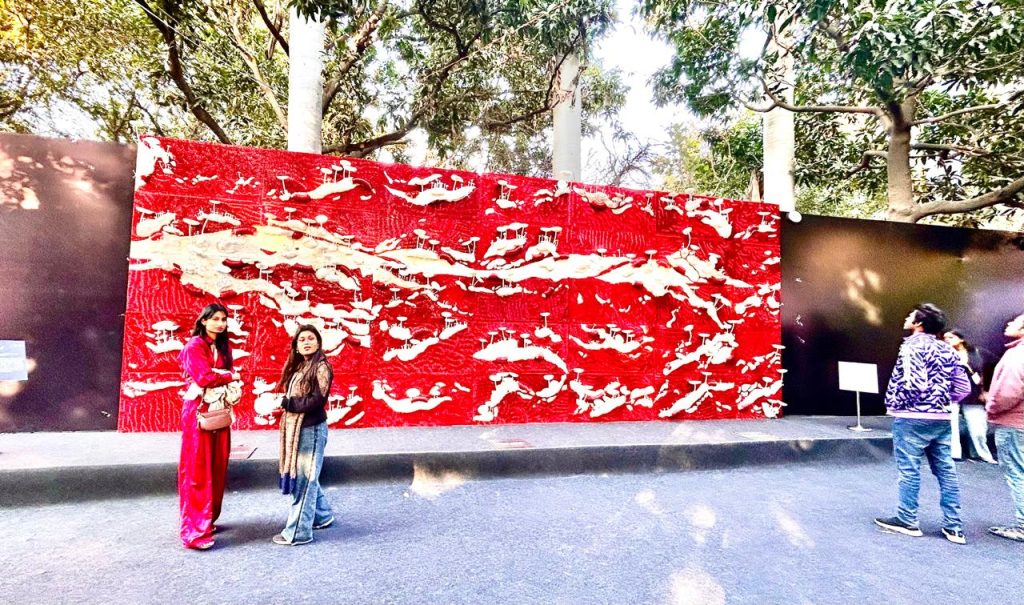
Dumiduni Illangasinghe’s installation ‘Soft Armours’ is designed as a panel mural. Developed as part of the India Art Fair Artist-in-Residence program, this project incorporates fragmented bangles, wool, and mushrooms. By including contrasting materials and symbols, the project places the potential of deep red on the fairgrounds. The red bagnels, which address South Asian femininity and rituals, present their fragmented reality.
Art That Engages With Environment
The outdoor program focuses on cooperation, experimentation, and sustainability. The artworks react to their surroundings, providing dynamic hallways for guests to explore, altering with natural light, and producing stunning shadows against the background of Delhi’s winter sky. Many of the pieces are intentionally made with recyclable materials or low-energy lighting, a step toward creating more environmentally responsible artwork for important public gatherings.
The accessibility of the outdoor exhibits is what really sets them apart. These outdoor pieces expand the fair’s reach to a broader, more informal audience, including school groups, first-time art viewers, families, and those just strolling through the grounds, even if many people come to see the gallery booths. The fair promotes a democratic experience—one in which art is not just observed but also lived—by putting colossal art in an open environment.

Contributor