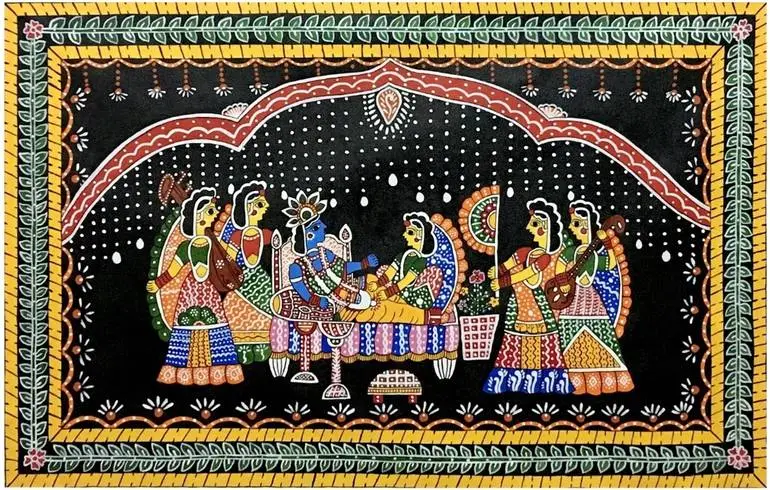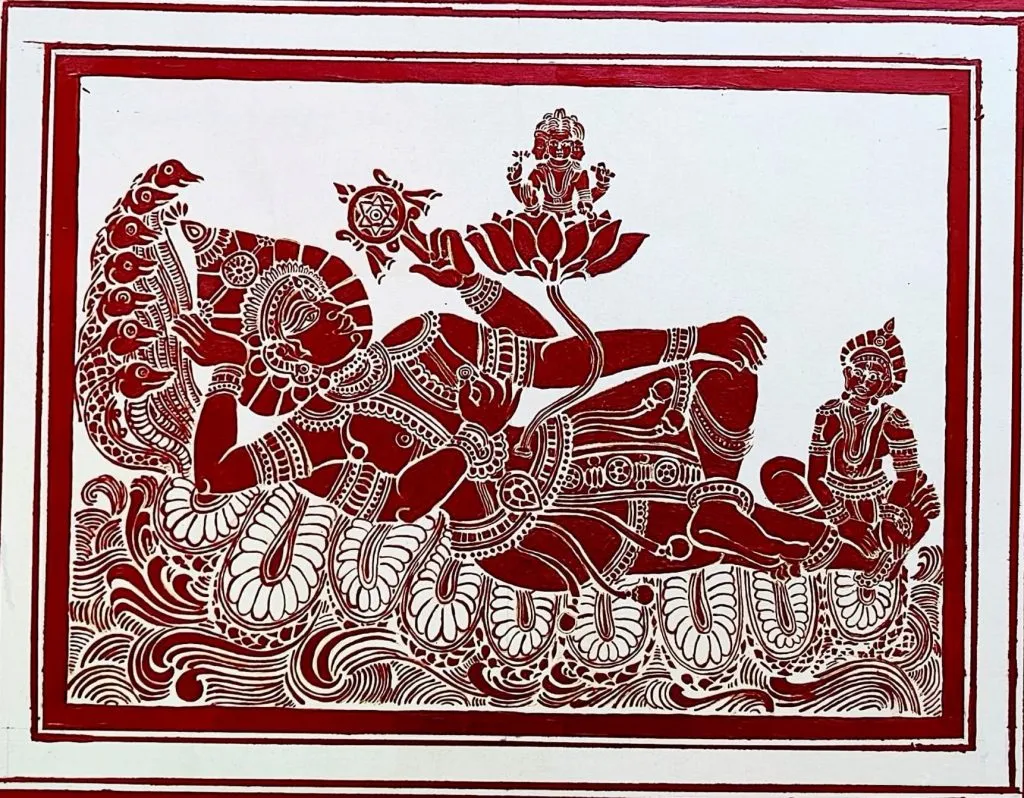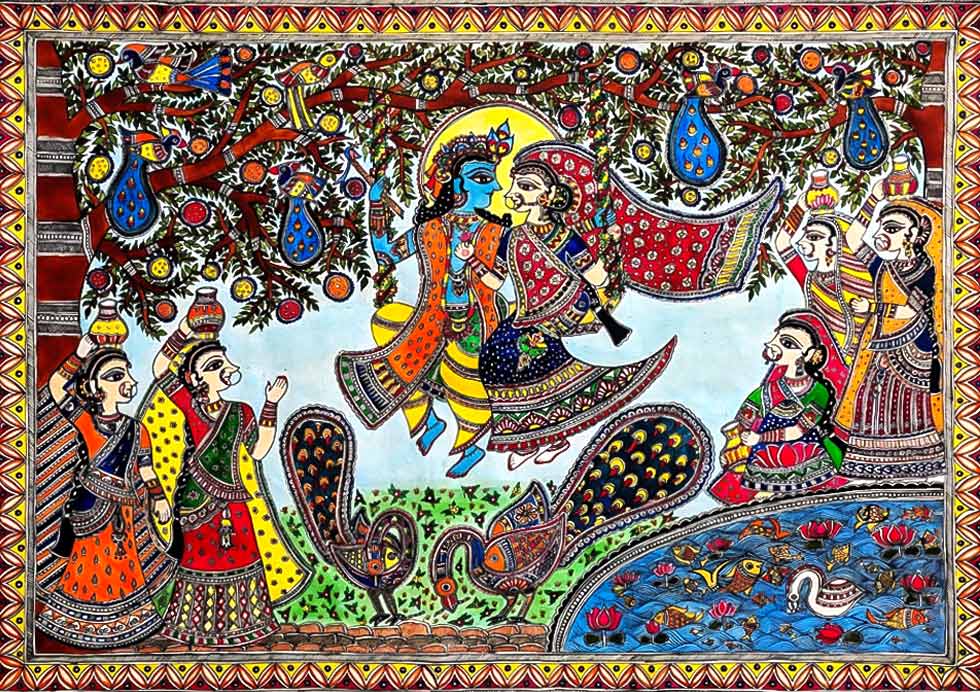
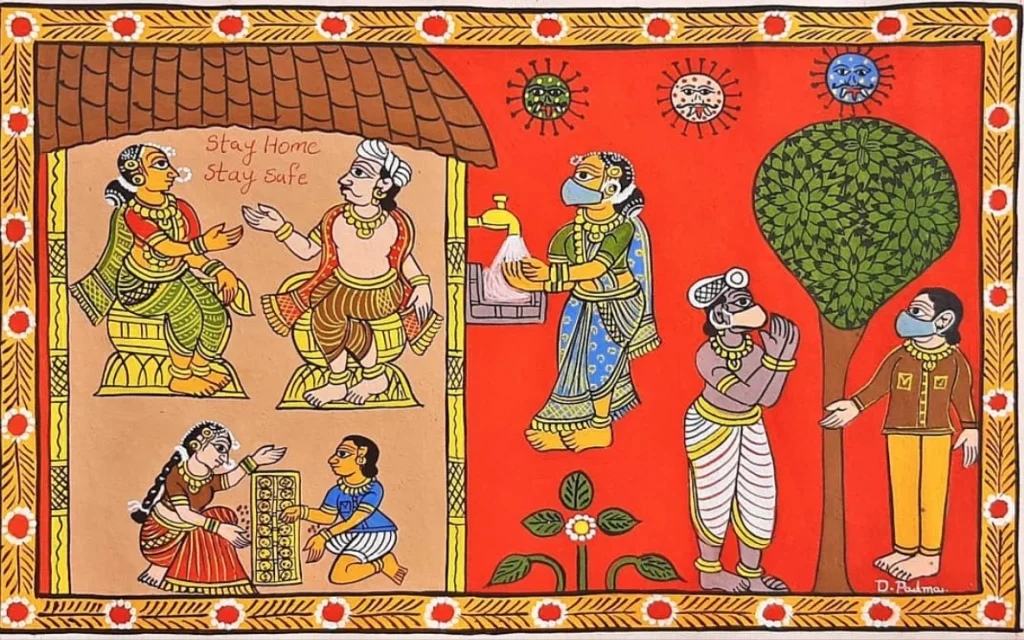
Cheriyal scroll painting, part of the broader Nakashi tradition, developed in Telangana as a narrative cloth painting used by travelling bards.
The practice took shape in and around Cheriyal village in the present Siddipet district and in urban centres near Hyderabad. Families of Nakashi artists supplied scrolls and related props to communities such as the Kaki Padagollu and other caste‑based performers who narrated epic and local stories.
Artisans still prepare their own canvas by layering cotton cloth with a mixture of rice starch, tamarind‑seed paste and white mud before polishing it to a smooth surface. They then use squirrel‑hair brushes and mineral or vegetable colours to paint horizontal scrolls that sometimes reach lengths of 30 to 50 feet. A red ground dominates many compositions, with bold black outlines and flat fills of blue, yellow and white that recall other Deccan painting idioms.
Cheriyal scrolls present episodes from the Ramayana, Mahabharata, Puranas and regional legends as well as caste‑specific origin myths and occupational stories. Performers once unrolled the scroll panel by panel in village squares and courtyards while singing ballads that extended over several nights. The scrolls thus served as portable pictorial scripts and as teaching tools for communities with limited access to written texts.
In recent decades, television, cinema and mobile media have reduced demand for full scroll performances, and only a few Nakashi families continue to produce large narrative works. However, a Geographical Indication tag for Cheriyal scroll painting and renewed interest in folk arts have led to new formats such as smaller panels, masks and framed scenes for home décor. Contemporary artists like Vinay Kumar experiment with Khadi supports and new storylines while still drawing on the inherited visual vocabulary and performance history.

Contributor