The 17th edition of the India Art Fair draws attention to the tight relationship between the artist and the artisan, alongside highlighting the need to fill the recesses between the privileged and the underrepresented.

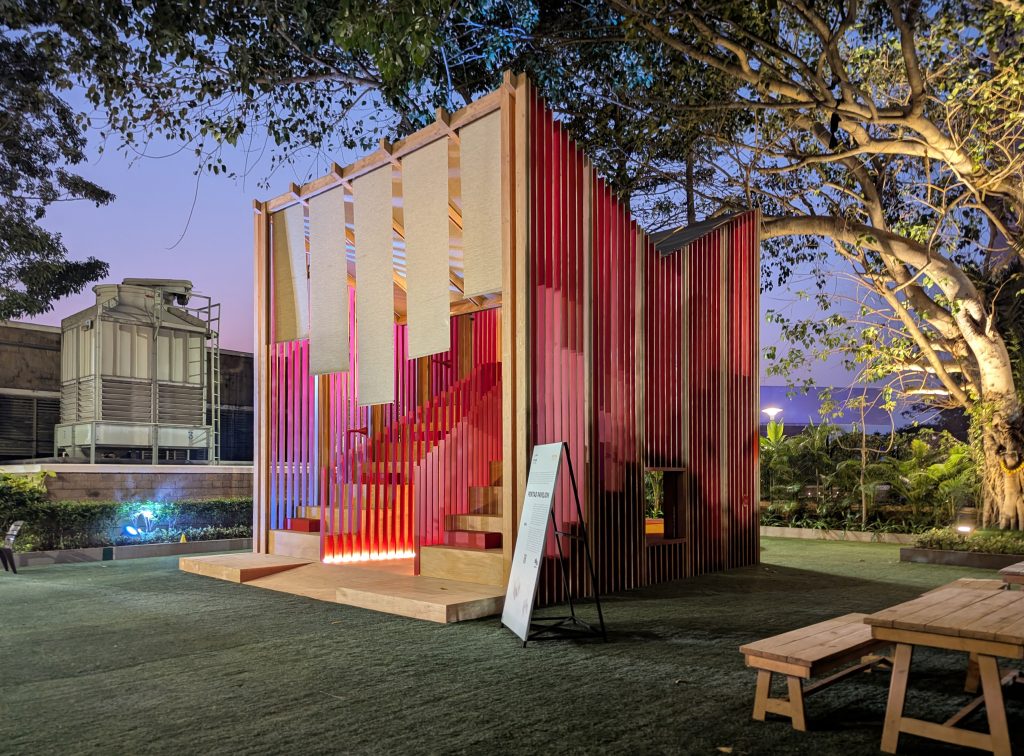
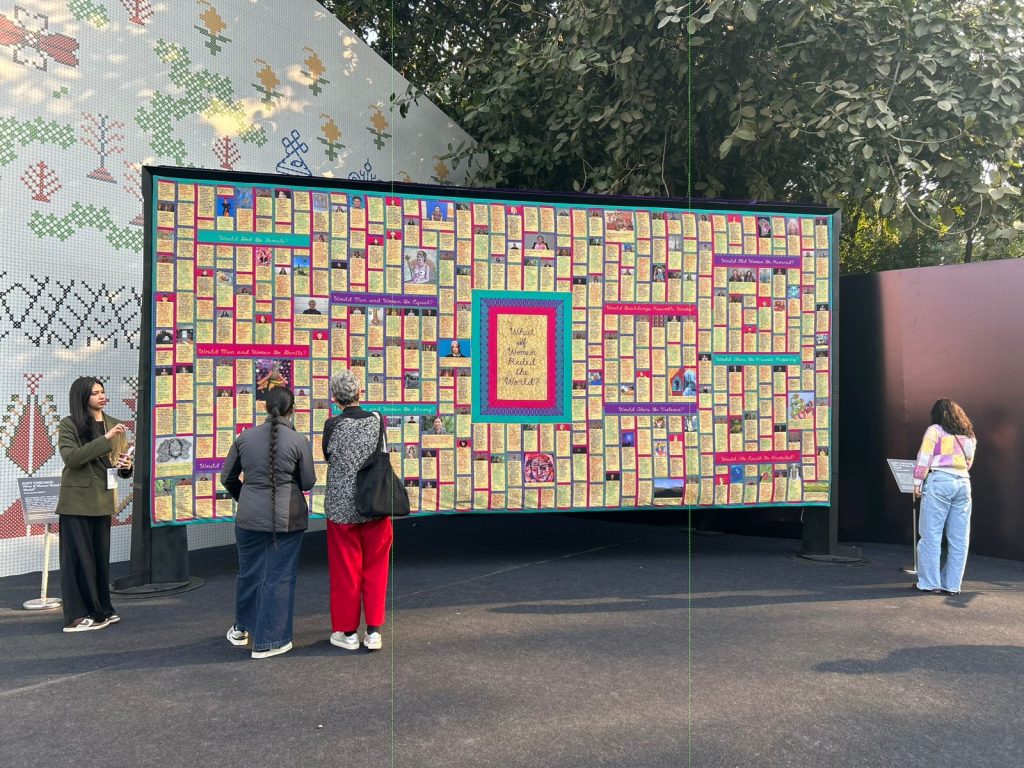
Walking into the India Art Fair, one is greeted by major outdoor art projects, before one even enters the pavilions. A site-specific installation commissioned by the Learning Space, presented by the Kiran Nadar Museum of Art. There was also projects by Kulpreet Singh, the Pentad Pavilion by Upton-Hansen Architects, supported by STIR; a living ‘pocket forest’ by Raki Nikahetiya, presented by Max Estates; and Huh Tu Vessels by Aku Zeliang, presented by Public Arts Trust of India (PATI).
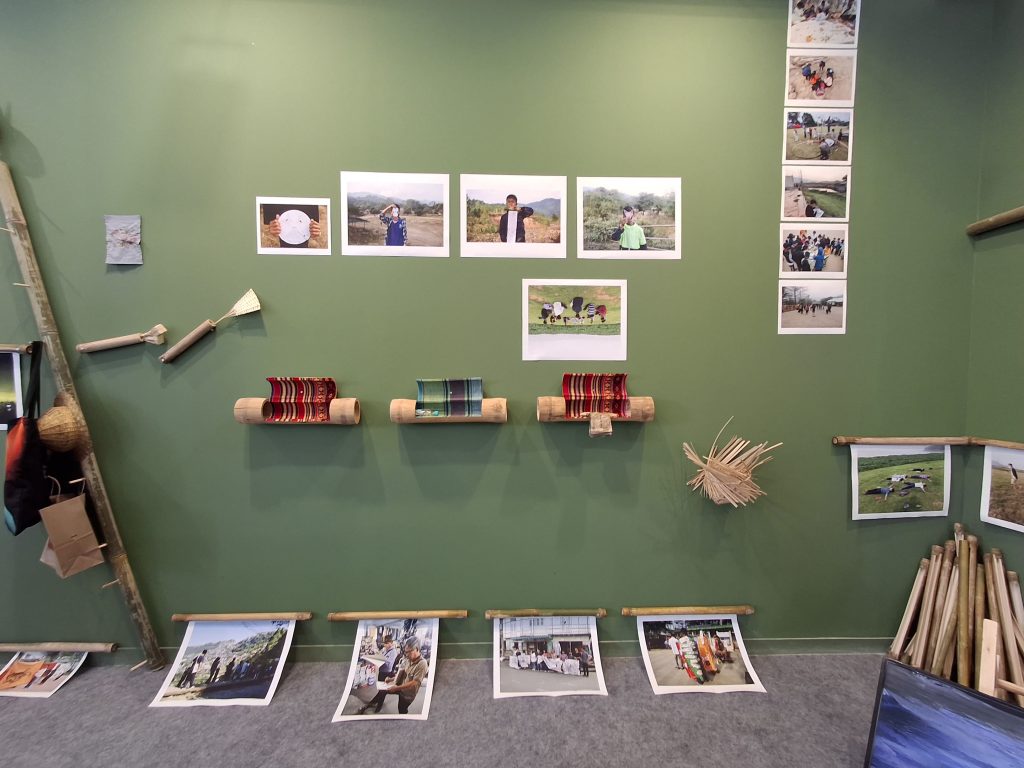
What stood out at the KNMA was the presence of artisans, weaving out of bamboo, baskets, placemats and other decorative pieces for the home. There were also some strongly present canvases, mounted on bamboo and painted with elephant dung that captured the environs of Assam-Arunachal, from where the artisans are. Crafts Future was and the installation and workshop facilitated by Jagen Das and Dharmendra Prasad, who is part of the Anga Art Collective.
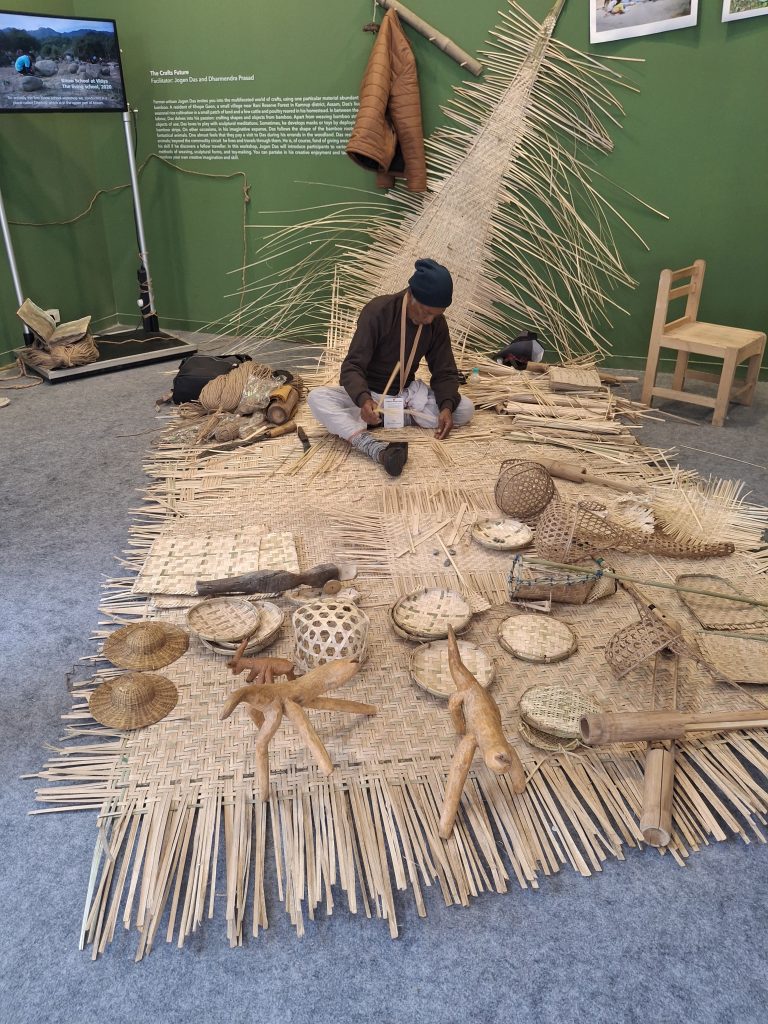
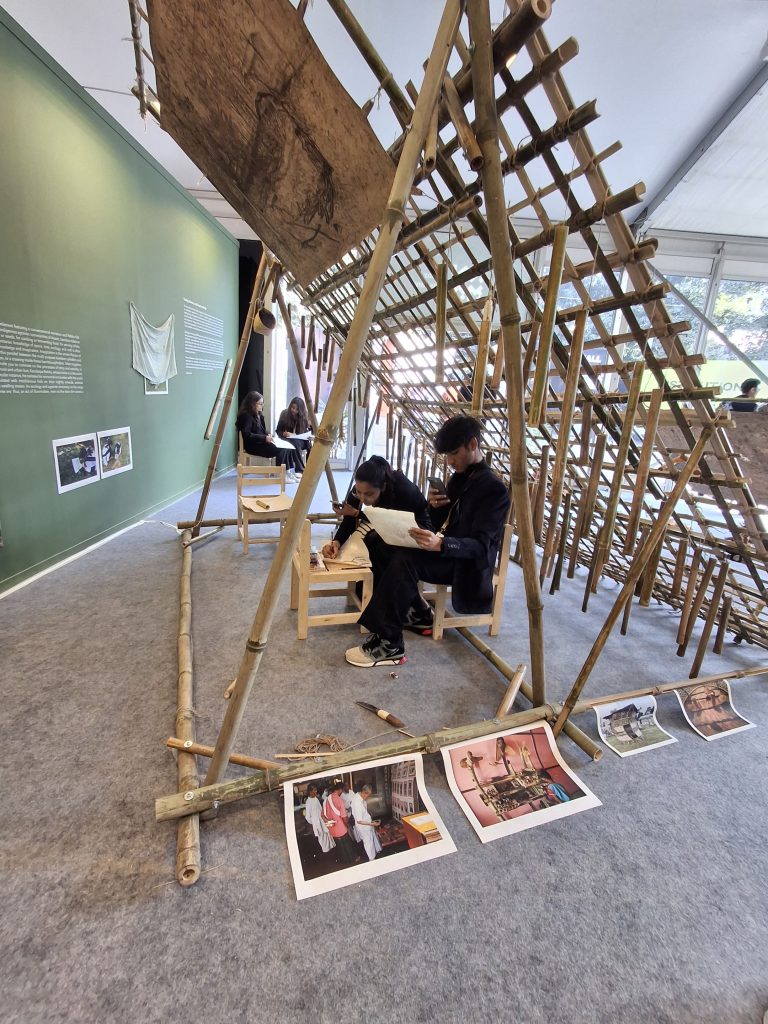
Crafts Future installation by KNMA
“Assam-based collective dedicated to the enrichment of the dialogue between artists and local residents through critical, visual and material experiments, and artist-led pedagogical explorations based on the geographical and social landscape of the region of North Eastern India,” says Prasad. The installation and workshop were designated to bring viewers attention to artistic practices of the Assam born artisans.
One of its signature projects is the “Granary”, a bamboo structure inspired by the region’s material culture and addressing human-elephant conflict. This space hosts storytelling, film screenings, and immersive community interactions, enriching the dialogue between artists and local residents. Another pivotal initiative, the “kNOw School”, focuses on post-disciplinary education, inviting adventurous, artist-led pedagogical explorations.
Close to the outdoor projects was also Grace Lillian Lee presented in the Institutions pavilion. Lee is an Australian First Nations artist from Torres Strait Islands. She is also a designer and cultural advocate for the indigenous art practiced by her ancestors. Her whose The Winds of Guardians at the India Art Fair, constituted a body of soft sculptures comprising four structural forms constructed using cotton webbing, cotton twine, cane, mirror work, acrylic, and electrical rubber shrink tubing.
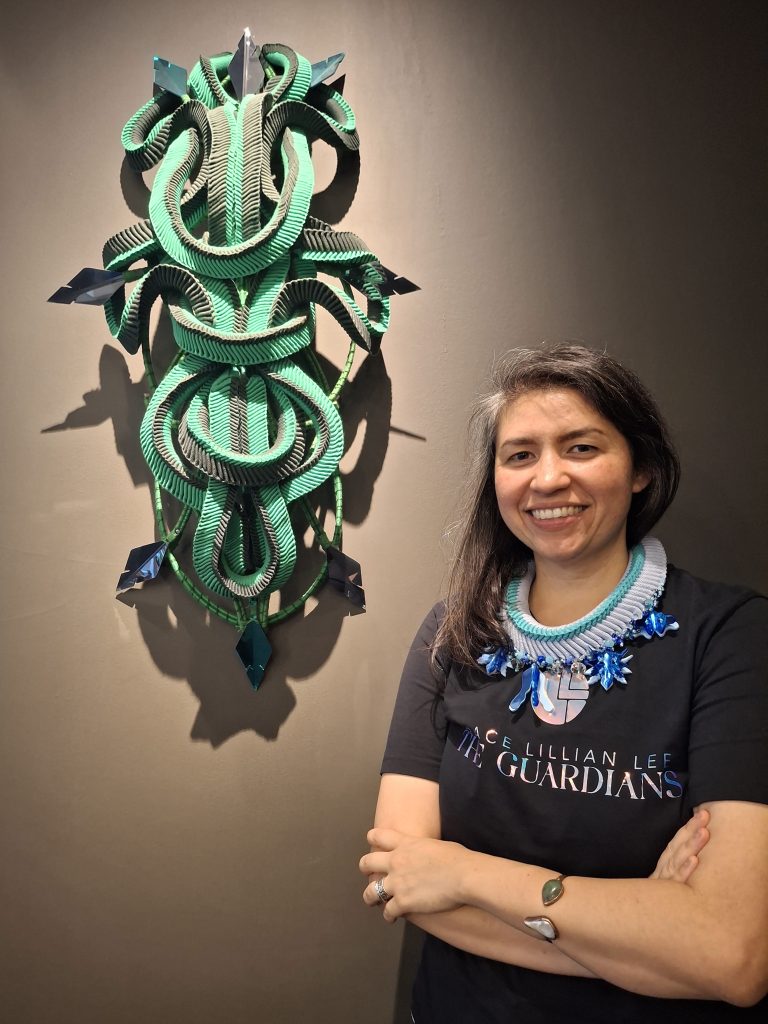
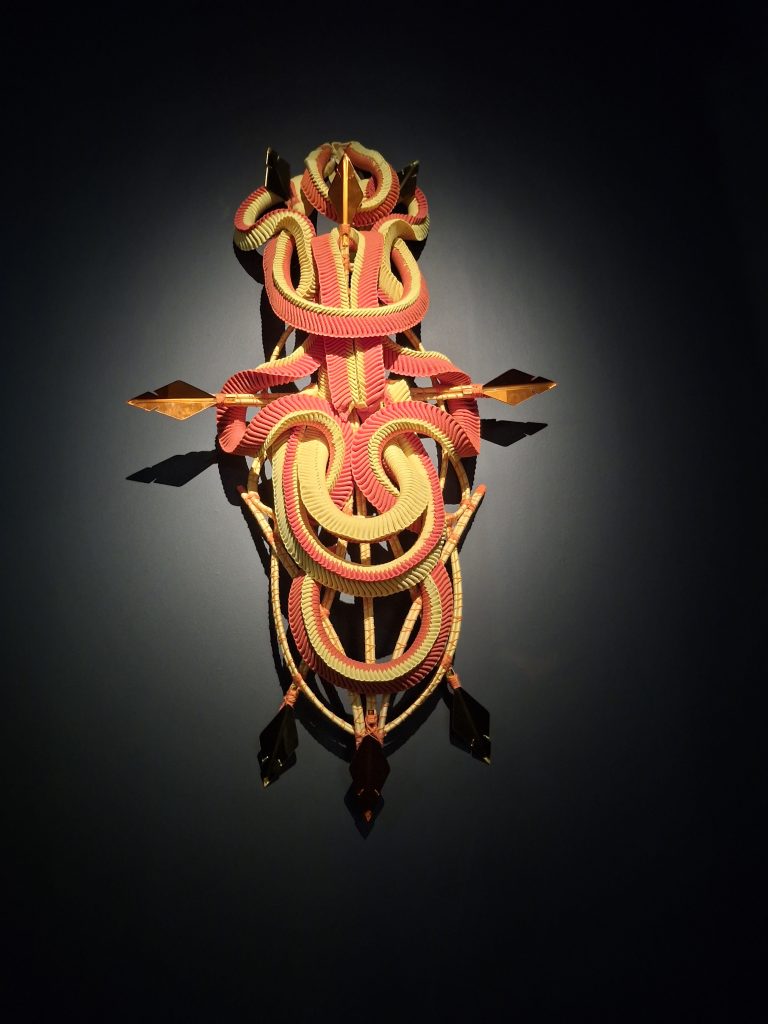
Grace Lillian Lee with her artworks
Lee’s works are derived from the indigenous beliefs that the winds are a metaphor of movement, memory, and transmission. Together the North Winds, South Winds, East Winds, and West Winds – along with a ceremonial Dreamweaver mask. These works address wind as both material force and metaphor. Lee’s work is deeply rooted in Lee’s belief of ancestors and wind- spirits from Torres Strait Islands. The sculptural display also included a projection featuring a video-work of her uncle performing while wearing the ceremonial dream-weavers mask, bringing the work to life. “I have been weaving for 15 years, it was a process taught to me bymy uncle, and is usually done with coconut palm fronds. Children are taught it for creating designs based on the belly of the grasshoppers that used for decoration and ceremonies. Different fabrication and on the body that is where body sculpture was formed 16 years ago, I explored fashion and art this is what has come out of that exploration,” says Lee. “We live by the sea and a lot of what we do is inspired by that. There is repetition and fluidity in my work and I wanted to celebrate my cultural identity using contemporary aspects of futurism,” she adds.
As one enters the Fair pavilions one does spy quite a few works that are either collaborations between artist and artisans or they are primarily by artisans. One such project is the Chanakya School a Mumbai based NGO that collaborates with women who work on the loom and embroider with hand to create artworks and installations with thread. “Trace (the exhibition) is an enquiry into layered cultural history and how the art and crat have always been a container of our culture and collective identities. Women have long carried textile knowledge through the crafts of weaving, embroidery and making. Trace is about returning to the act of making,” says Karishma Swali the founder member of the organization.
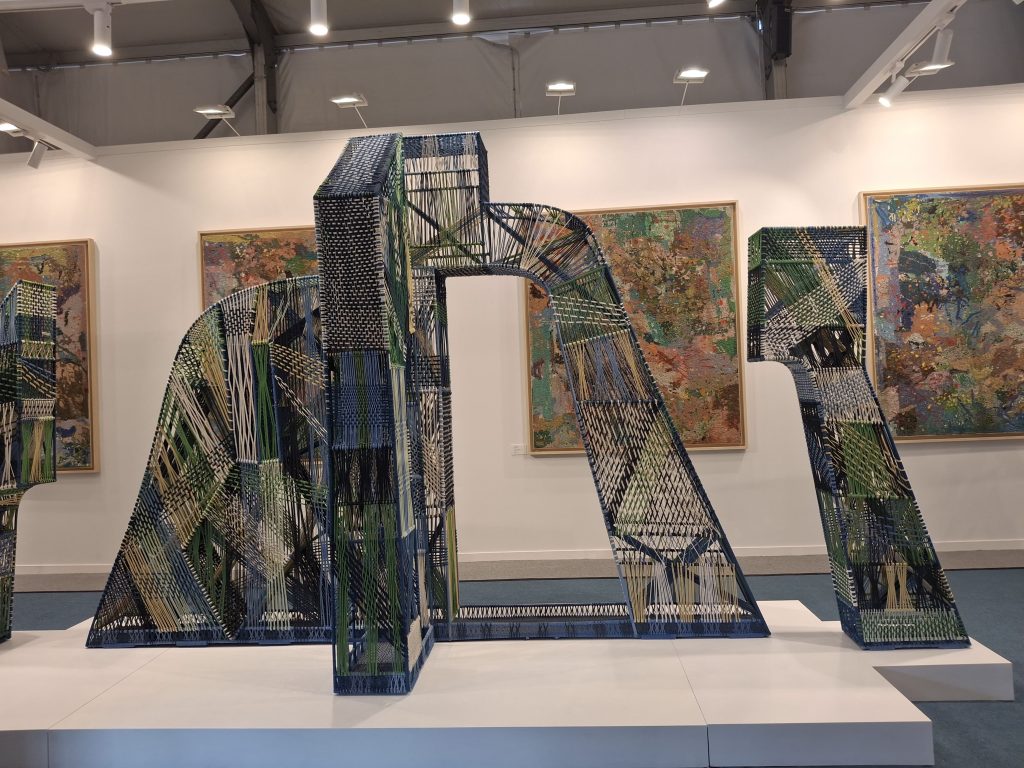
The foundation has an unwavering mission to empower women from underserved communities through exceptional education in hand embroidery, enabling them to unlock their full potential and elevate their quality of life.
Meanwhile in another booth the message is not so positive as it comments on the rather dismal conditions of the agrarian farmer, while using performance as a medium. Sidhant Kumar, a multidisciplinary artist originally from Siwan district in Bihar showcases this grim vision through his research and artwork. The booth where he presents the project, Studies from a Quiet Harvest, is supported by PRAF (Prameya Art Foundation) and curated by Anushka Rajendran at the IAF.
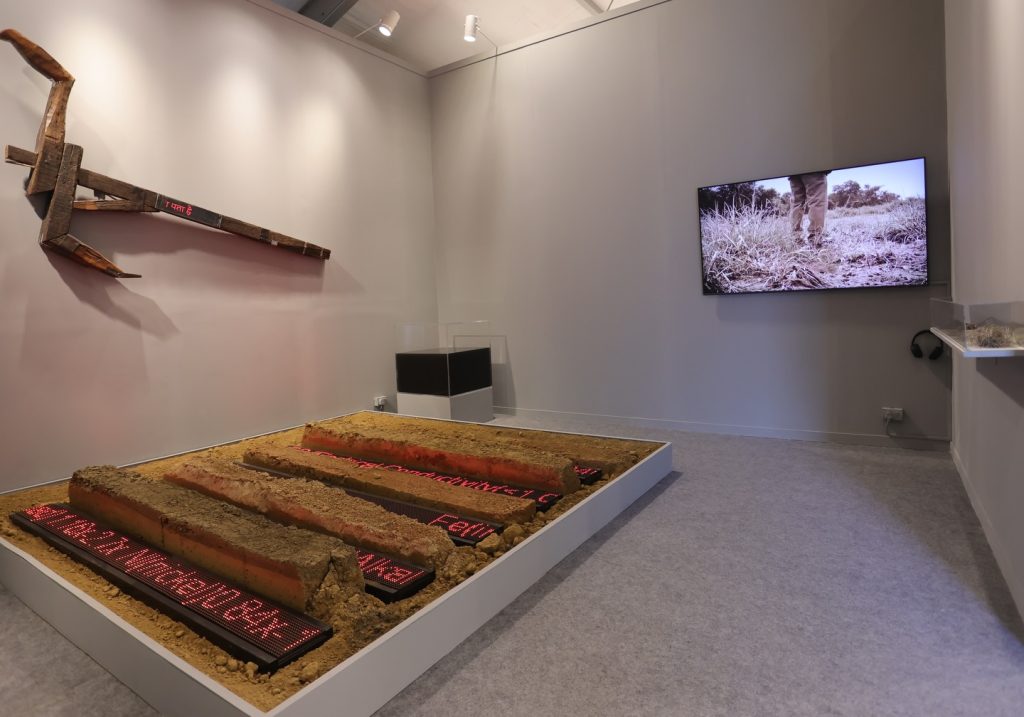
Using tickertape text that runs across a plough used to dig the soil and a simile of a small agrarian field, the installation draws one’s attention to the Najafargh drain that runs adjacent to the farm plots of Ranholla in West Delhi. The fragmented plots grow fast growing food crops like spinach and brinjal that aid the demand of the growing Delhi population. The drain, that carries industrial effluents of unauthorized factors is the only source of water in the area, and this contaminated water seeps into the soil posing dire challenges to the health of the farmers and consumers alike. In an adjoining video-work, one witnesses performance artists playing the famers wearing hemp sacks over their heads and rolling in the fields in agony and helplessness. The situation is indeed dire and brings one to the edge of art that is also activist in its message.
Georgina is an independent critic-curator with 18 years of experience in the field of Indian art and culture. She blurs the lines of documentation, theory and praxis by involving herself in visual art projects. Besides writing on immersive art for STIRworld, she is a regular contributor for The Hindu, MASH Mag and Architectural Digest.