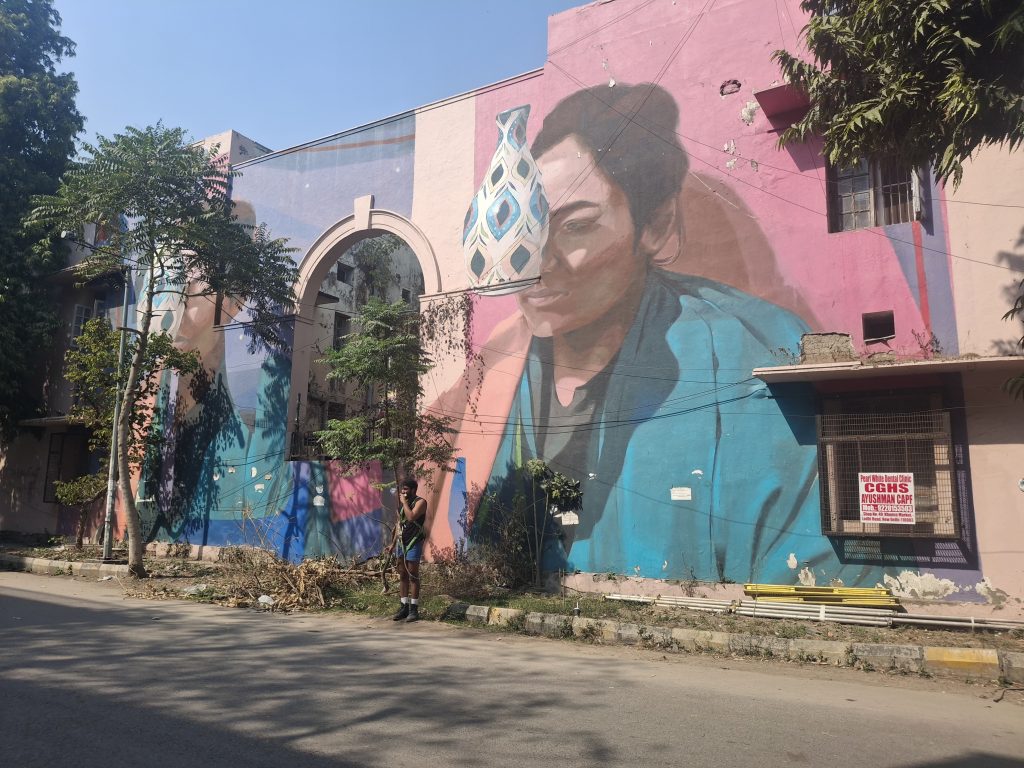
To mark ten years of India’s first public art district, the Lodhi Art Festival returns from 1–28 February 2026, by St+art India Foundation and Asian Paints, celebrating a sustained vision of public art that brings colour, creativity, and engagement into the heart of everyday urban life.
It’s a warm sunny day as graffiti artist from Spain, Suso 33, a queer artist, called Ishaan Bharat and woman artist Tarani Sethi, (both from India) scurry up ladders and aerial work-platforms to complete their collaborative mural in the Lodhi Art District. Green is the overarching colour that Suso employs to create a rich garden of colourful vegetation with abstract squiggles and squirts that resemble people.
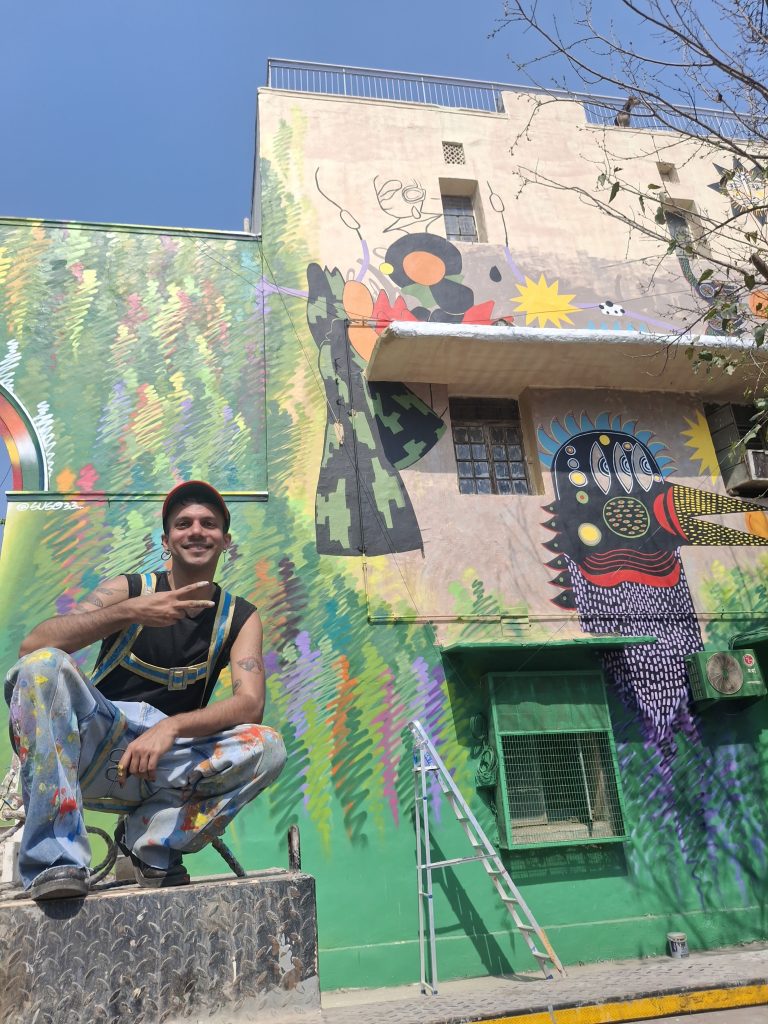
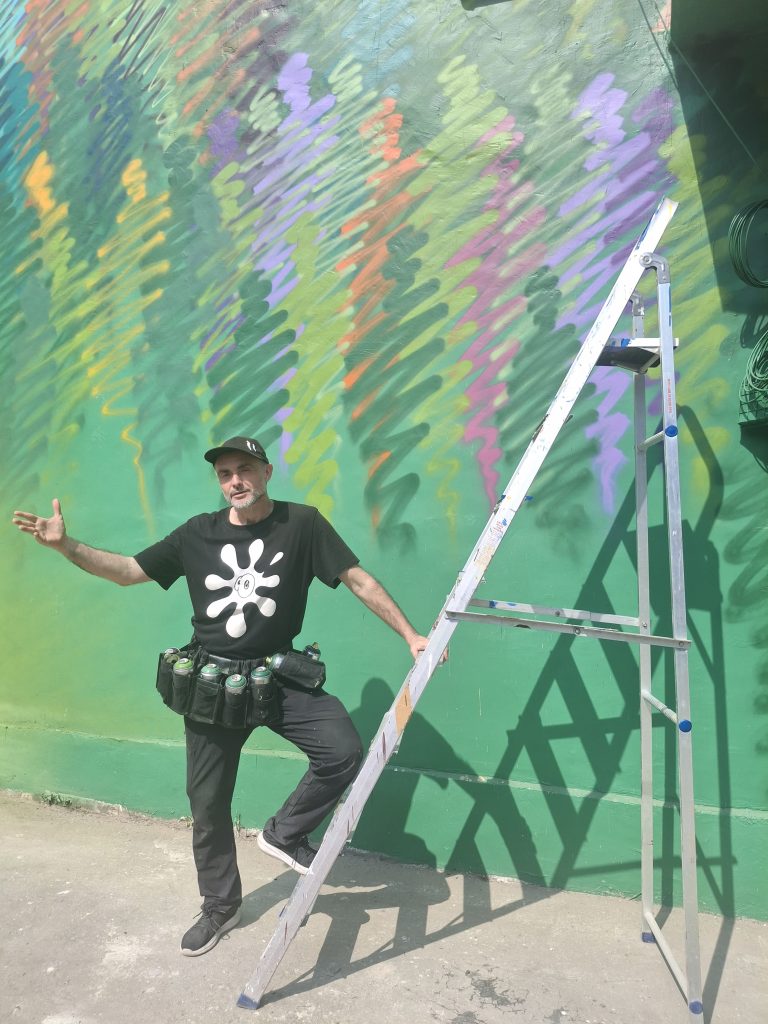
Meanwhile Bharat is led by his training in graphic design to create his mannequin like figures derived also from Channapatna lacquer toys, in the upper register of the composition. Painted in bright reds, yellows and greens, they spread their body across the building doing splits and leaning on the ledges under windows and giving off a playful vibe.
Tarini’s figures are a mix of traditional Gond art and contemporary painting, as their profiles adorn the ‘Garden of Encounters’, with metal piercings, tattoos, funky hairstyles and other ornaments that lend them an otherworldly air. “The garden acts as a portal between the old and new world,” says Bharat. “I have really enjoyed working with the Indian artists, and brining my vision of the garden to life,” adds the Spanish artist and Tarini confirms that working thirty feet off the ground has been, “heady, exhausting but worth all the effort.”
The other artists working on murals are JuMu (Germany), Pener (Poland), Elian Chali (Argentina), Raissa Pardini (UK) in collaboration with the late Hanif Kureshi (India), Svabhu Kohli (India) with Ram Sangchoju (India). It’s a hive of activity and the excitement is tangible. “Working with Ram was really something I found so enlightening and I thoroughly enjoyed his contribution,” says Kohli who worked with Sangchoju, a specially-abled artist from Pakke, Arunachal Pradesh. He rose to the occasion despite the hurdles of being wheelchair-bound. “Nature is a starting point of imagination for him and it is so for me too so we blended really well together,” says Kohli.
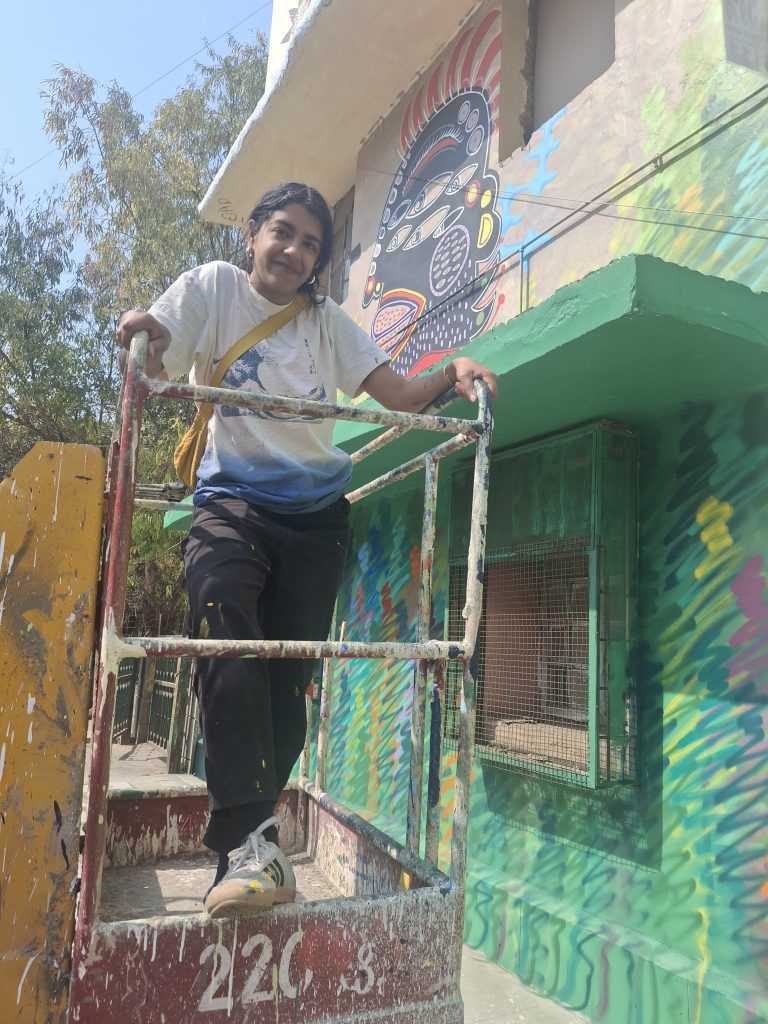
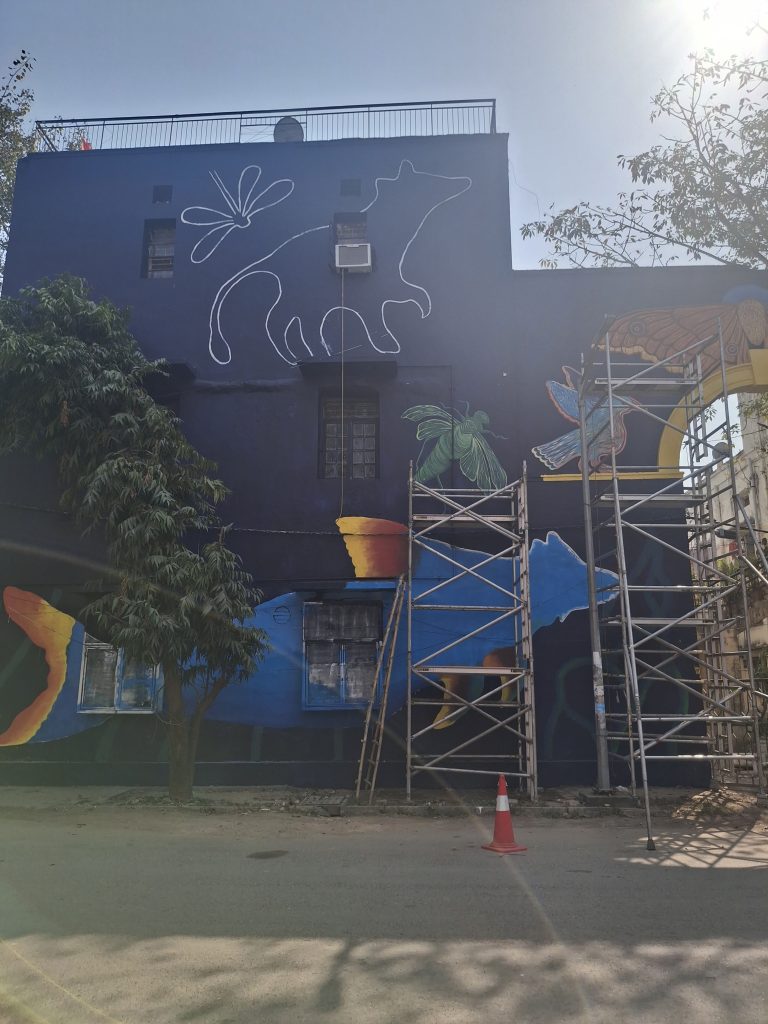
The 2026 edition introduces six new murals by Indian and international artists, each shaped by distinct practices while collectively engaging with Lodhi Art District as a shared public canvas. These works reflect the district’s continued commitment to dialogue, collaboration, and long-term presence in the city.
In 2015 Lodhi Colony became the site of an experiment to create India’s first open-air art museum. Here works by leading Indian and International artists would exist in direct dialogue with the city and its people,” writes Hanif Kureshi the late founder of the Lodhi Art District who along with Gulia Amborgi, Arjun Bahl and Thanish Thomas founded the group that spear-headed the art movement.
The journey has been sustained through collaboration with Asian Paints that recognized the role of colour is shaping public art is huge and instrumental to all the colourful facades that we are witnessing today through-out the district.
Today, the district is home to over 65 murals and draws a diverse range of audiences, from photographers, students, and local residents to international dignitaries including Brigitte Macron, Sophie Grégoire Trudeau, and Tim Cook. Guided by the ethos of #Art for All, this approach has enabled six art districts across India—Mumbai, Chennai, Hyderabad, Goa, and Coimbatore, through ongoing institutional and partner collaboration.
“Lodhi Art District represents what can happen when art is allowed to grow patiently within a city. Over the last decade, this neighbourhood has shown how colour, creativity, and everyday life can come together in ways that feel open, inclusive, and deeply human. For Asian Paints, our association with Lodhi and with St+art India Foundation has always been rooted in the belief that art in public spaces does more than beautify walls,” says Mr. Amit Syngle, MD & CEO, Asian Paints Ltd. “It creates connection, invites dialogue, and becomes part of how people experience their city,” he adds.
As we are taken around the district on cycle rickshaws we are gladdened by the fact that art is touching many aspects of the area. Ten active cycle rickshaws are transformed into mobile artworks, each designed in pairs by five of the district’s most widely recognised and representative artists from the past ten years.
Georgina is an independent critic-curator with 18 years of experience in the field of Indian art and culture. She blurs the lines of documentation, theory and praxis by involving herself in visual art projects. Besides writing on immersive art for STIRworld, she is a regular contributor for The Hindu, MASH Mag and Architectural Digest.