Across India’s creative landscape, artists are reimagining expression through an organic lens—turning to recyclable and natural materials as both medium and message. This growing movement reflects a deeper commitment to sustainability, where art not only tells stories but also responds thoughtfully to environmental responsibility.
As residents of Delhi gasp for air, the urgency to address rising air pollution, climate change, and the need for sustainability has inevitably become part of the ‘new normal’.
It is not surprising, perhaps even desirable that artists, especially those in India, are turning their expressions organic with a preference for recyclable materials. Some materials are also encoded with complex socio-political pasts, and artists often evoke multiple aspects of materiality when they work with what most would term as ‘waste’ materials.
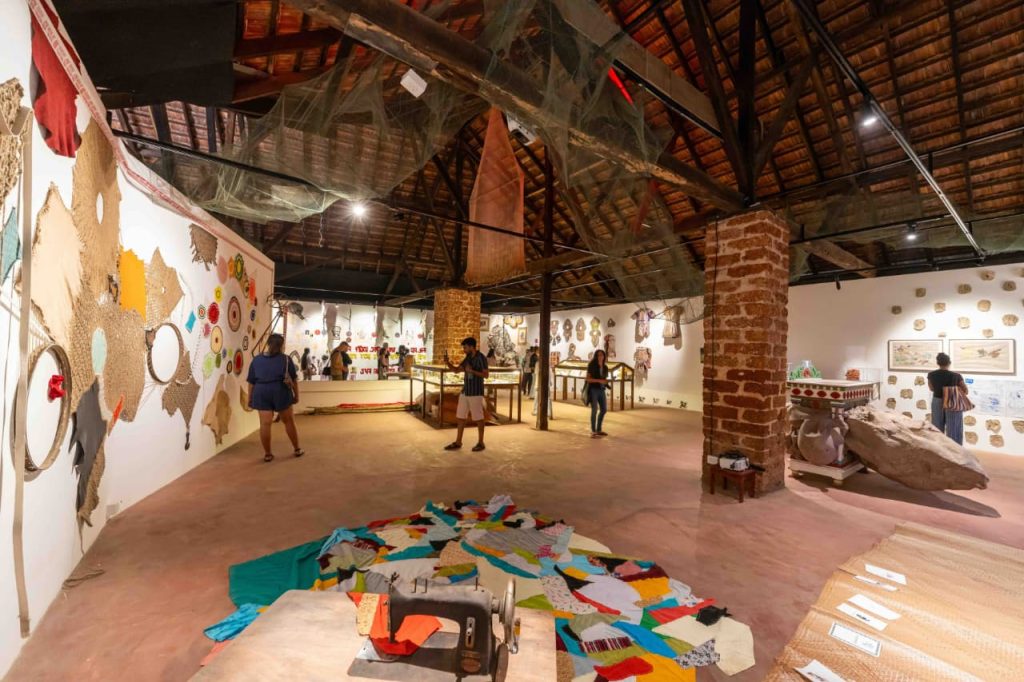
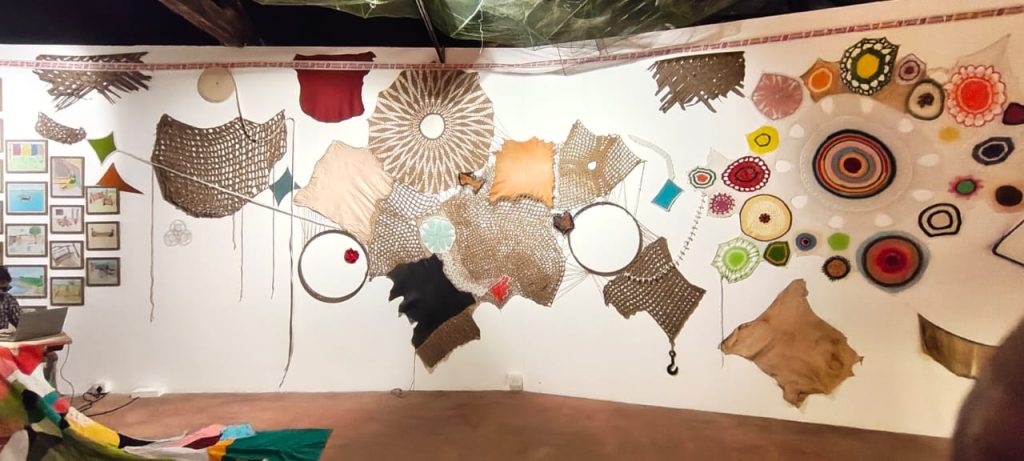
For instance, at the recently launched Kochi Biennale (12-12-25 to 31-03-26), the artworks by the Panjeri Union are exhibited at the Coir Godown in Fort Kochi’s Aspinwall House. This four-year-old art collective, founded in February 2022 in Banipur near Kolkata, comprises 14 artists drawn from diverse fields including visual art, design, literature, cinema, photography, and music.
Jute is the primary raw material used in their artworks. “For centuries, jute cultivation was the main source of livelihood for the people of the region,” says Bhaskar Hazarika, a member of the collective. Industrialisation began in the mid-19th century — first under the British Empire and later with the arrival of modern products in the market. Eventually, globalisation since the 1990s dealt a “severe blow” to the jute industry, according to the collective. “These lived hardships have deeply influenced our artworks,” says Bhaskar. “Net-like grids recur frequently in the works, symbolising an unstable and uncertain life,” adds Hazarika.
Organic materials are increasingly appealing to Indian artists for reasons of sustainability, a return to tradition (as seen in the use of natural pigments from plants and minerals in Madhubani), and the rise of eco-art practices. Artists are using everything from mud and cow dung (Nischay Thakur, Subodh Gupta, and Sheela Gowda) to invasive weeds and recycled materials (Nalini Malani, Anju Dodiya) to address environmental concerns while creating unique, natural aesthetics.
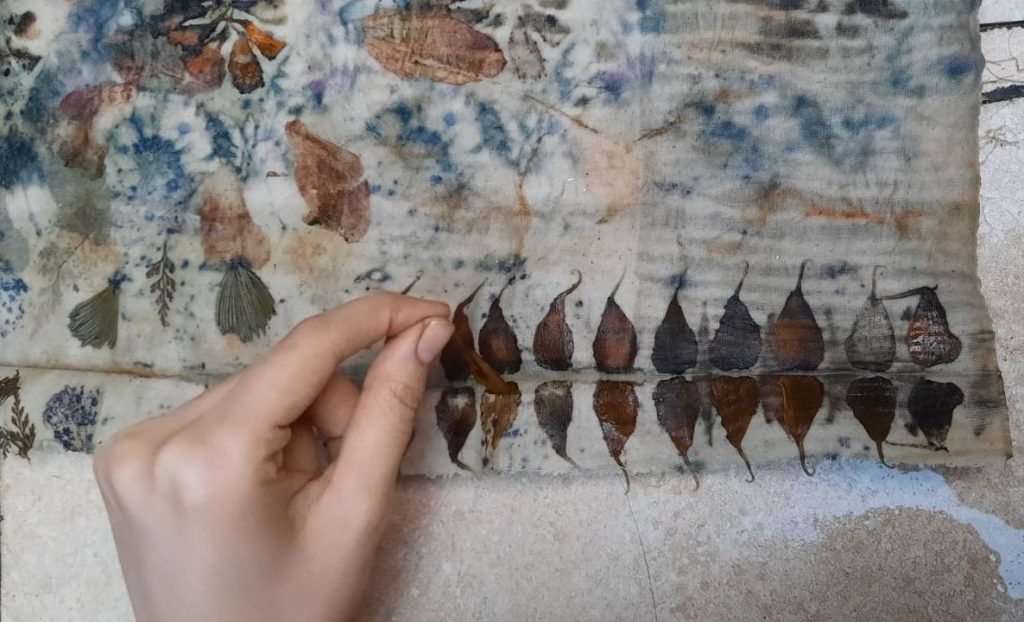
Another exhibition opening on January 6 at the IIC Annex Art Gallery, New Delhi, titled “Remembering the Forest”, features an unusual art offering created using natural pigment paints derived from rocks, earth, ash, pollen, and other organic matter. The art implements and brushes are sourced from the forest, while plant-based dyes in black, ochre, green, pink, and brown hues infuse the botanical prints and shibori on calico.
The only purchased materials used in producing these artworks are paper and fabric. The exhibition presents a curated selection of works produced by 16 women artists during the residential Natural Art Courses held at Mountainwind (MW) Himalayan Ecoversity in 2024–25 (Bhuira village, Himachal Pradesh). These courses were facilitated by Bettina (Bina) Van Haeften, a Wild Art artist from Australia. Some of the participating artists include Anupama Bhat, Gurmeet Kaur, Jasmeet Khurana, Mehzabeen Mize, Pooja Hada, Ritu Aggarwal, Ritu Ngapnon Varuni, Shalinee Ghosh, and Tejal Shah, among others.
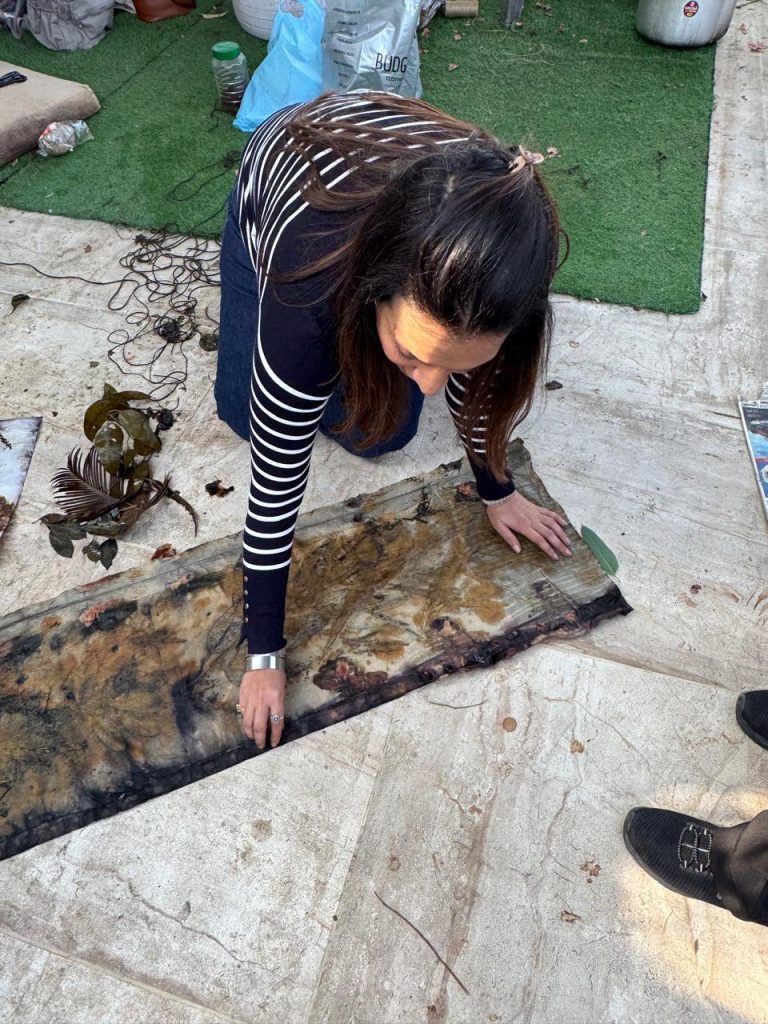
Pooja Hada at work
The logic behind the camp was that when an artist looks at the forest and the land, searching for colours and brushes to paint her canvas, she forges a deeper connection; she grows new eyes, and her hands move in unseen ways , and something inside her comes alive.
“We are touched and transformed by the magic of the fallen autumn leaf caught in a spider’s web, the butterfly’s blue wing against yellow petals, the dew drop shimmer held in the palm of a leaf. The practice of natural art is slow and unpredictable. It invites curiosity, experimentation, and surrender,” says Van Haeften.
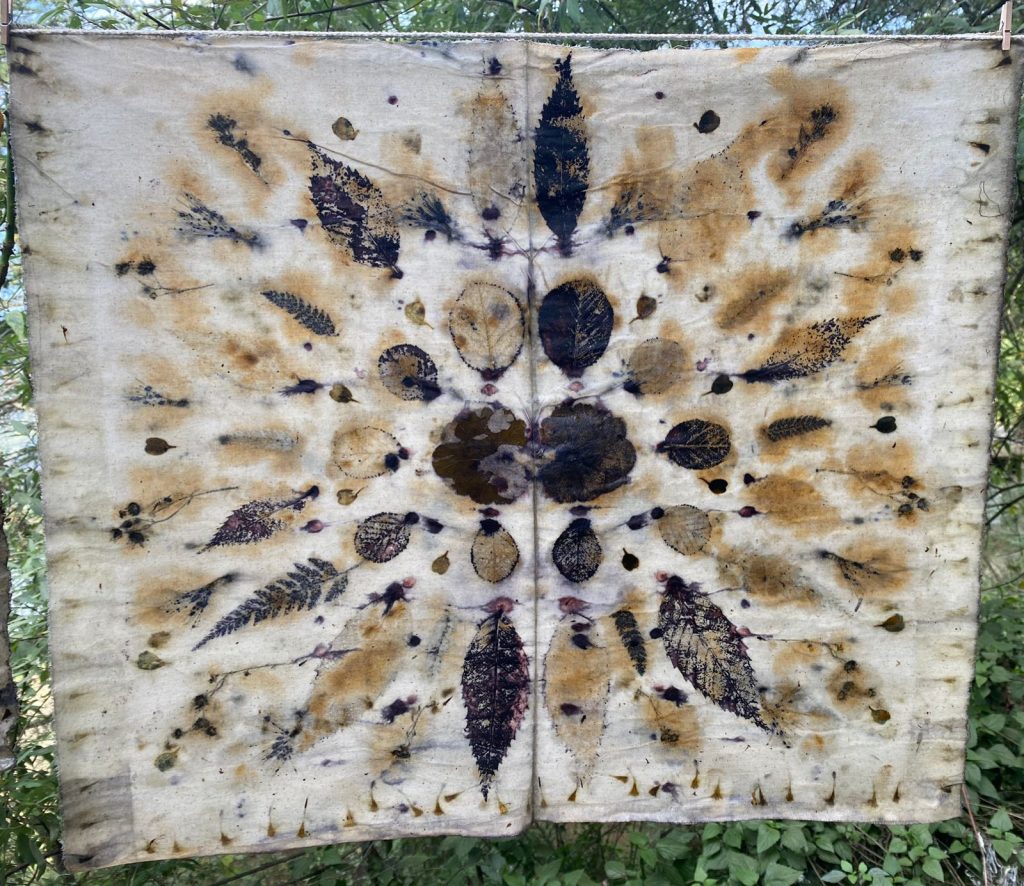
A sceptic may ask: does it really make a difference when artists use organic materials? The answer is yes. Practising a more organic and environmentally conscious art form raises awareness of sustainability and eco-consciousness. It encourages a desire to reduce environmental impact and create art that is less toxic.
It also engenders a ‘cultural revival’, where artists are reconnecting with indigenous Indian folk art forms such as Madhubani, Gond, and Warli — traditions that inherently used natural dyes like turmeric, indigo, flowers, and materials such as cow dung and rice powder.
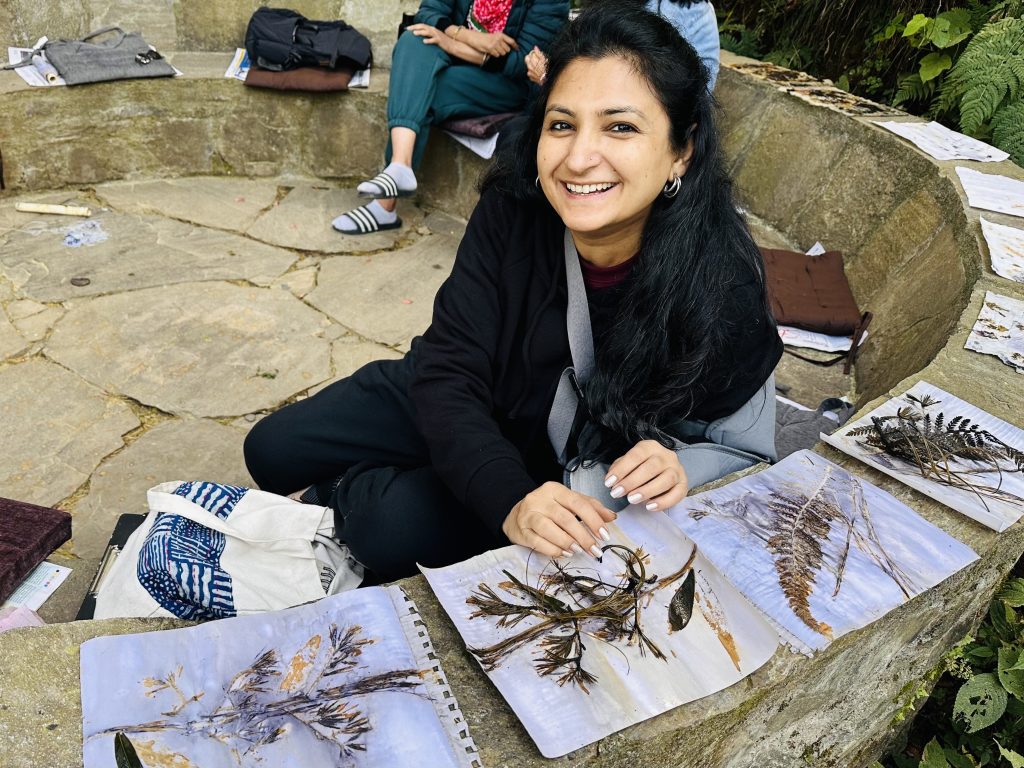
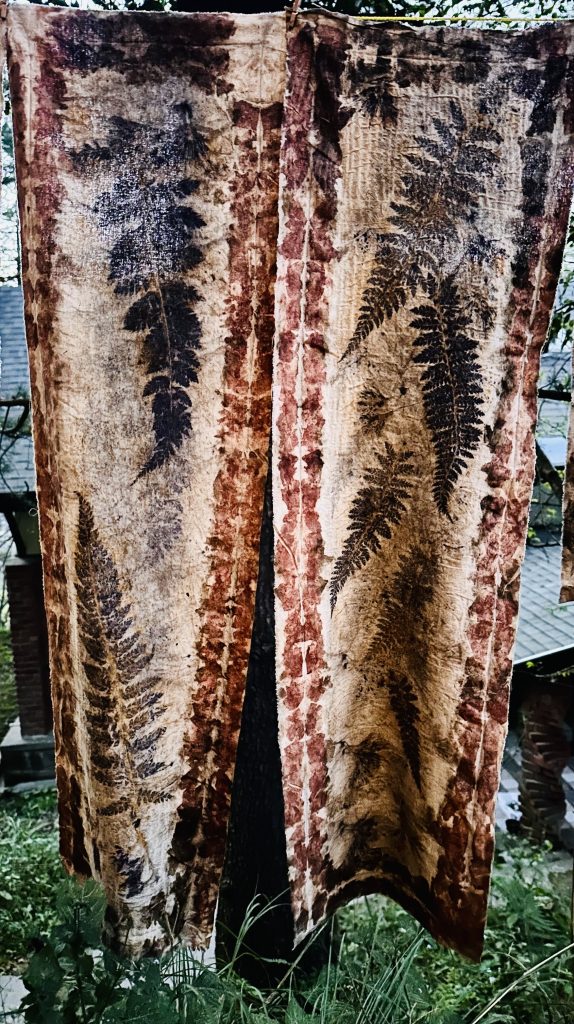
Image 1: Artist Jasmeet Khurana at work & Image 2:Whispers of the Wild Fern – l & Whispers of the Wild Fern – ll | Courtesy of the artist
Besides, it offers artists and viewers a unique aesthetic experience, as natural pigments and materials provide varied textures, earthy tones, and a tangible connection to nature. This process fosters innovation, encouraging experimentation with unconventional organic materials like mycelium, invasive plants, and repurposed waste for contemporary installations.
These artists are creating work that reflects a deep connection to the land and symbolises environmental responsibility. This movement blends traditional craft with modern art, making heritage practices relevant and sustainable for younger generations.
Cover image: Artworks by Panjeri Artists Union of Bengal at the Coir Godown of Aspinwall House | Image courtesy: Kochi Biennale Foundation
Georgina is an independent critic-curator with 18 years of experience in the field of Indian art and culture. She blurs the lines of documentation, theory and praxis by involving herself in visual art projects. Besides writing on immersive art for STIRworld, she is a regular contributor for The Hindu, MASH Mag and Architectural Digest.