Mario Miranda’s world is a 100 years old, and everyone is still as fresh as a daisy
Written by Santanu Borah
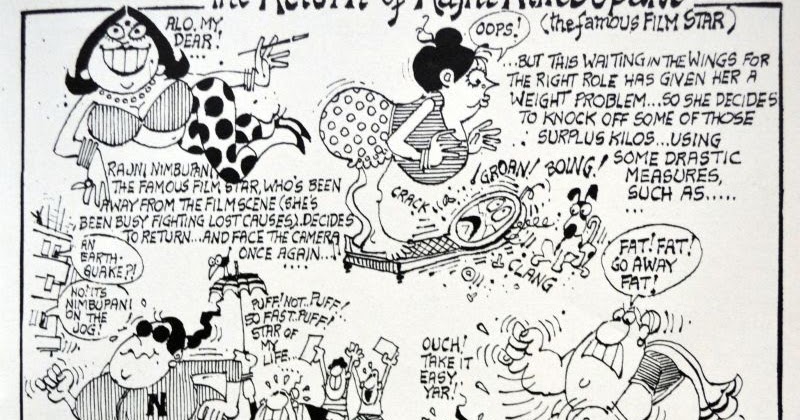
Miss Nimbupani is 100 years old. And she hasn’t aged a day. She is as glam as she was, and she still gives the side-eye when ignored. Obviously, you cannot ignore her. She can only be loved and laughed with. So is Miss Fonseca, that smart Goan secretary who lived through office jokes with flair. She dodged every double entendre like Trinity dodged bullets in the Matrix, and she came out unscathed and stronger. And yes, if she doesn’t want to do something, she doesn’t, and you don’t look for reasons besides the ones she did not give. The Boss is still bossing around like bosses do, while Bundaldass, the portly minister, can be heard live even today making empty promises, turning out prime ministerial histrionics on every media platform. And laughing like a clown with foreign dignitaries, even as we queue up for LPG cylinders.
The stray dogs are still lolling about, looking for cooler areas to counter the muggy heat of a Goan summer. Mario’s beloved pariahs are, arguably, India’s national animal despite the grandness of the tiger and the lion. They are definitely more interesting than the peacock. I would even say that they deserve a postage stamp of their own.
The party that Mario started, with the loud and gaudy cabaret singer on stage, is still going on and the jazz musicians are still swinging with full-toothed smiles the size of piano keys.
That is what I want to believe. However, times change. Ideas change. Most of all, people change. At 100, the world of Mario Miranda we GenXers loved and grew up in, isn’t easy to find any more. If he would have been alive (he died in his sleep in 2011), he would have definitely had a few things to say about the rut and hypocrisy of the woke culture, the predatory nature of the cancel culture, and the utter drudgery of our political life that thrives on misinformation and optics. And freedom of expression is now in a weird soup of political correctness. In fact, freedom of expression is differently-abled. For Mario, censorship in any form would have been the death of art. The directness of his caricatures and cartoons would have offended the snowflakes, those that are professional offence-takers. The voluptuous women he drew would most likely be diluted into the ‘right look’ because they sexualise women, even as thousands of influencers on Instagram objectify themselves for a few likes and call it independence.
Mario’s world was a freer place. The office jokes were the kind that wouldn’t pass for banter any more, and the HR would take you to task. He was unique because he made the debauchery of a rock/jazz concert come alive with as much keenness as problems like inflation. Those who get offended would probably cancel cartoons where a wife tells her husband “not to fiddle with the knobs” of the TV while a starlet is on screen most suggestively. There is another memorable one where a buxom young lady is telling a man sitting across from her: “Don’t just sit there. Grab something!” He also made a “wordless” drawing of a single girls’ dwelling, and it is a tribute to detail. Bras lying in chairs, lipsticks, make-up, towels, cotton balls, negligees etc… a quotidian day captured with a witty sensuality that is rare.
His keen eye also saw through the shallowness of high society. Foreign-returned people with accents, high society women talking about stuff they know little about, the glitzy emptiness of the Bombay film industry… nothing escaped his sharp pen. It was truly a sword in his hand.
Though Mario came from privilege, he was at heart a left-leaning man. His cartoons are proof of it. Despite their innate “funny” look, cartoons where an obese family eats at a roadside stall while poor scrawny children look on, are heartbreaking. It tells the story of India with greater clarity than a thousand news stories out there. I will never forget the doctor who tells his patient: “Can I feel your purse, I mean pulse, first?” He knew the travails of the ordinary man.
However, Mario is best in his elaborate drawings that have no words. The picture speaks more than a thousand words. While he was a lover of red wine (in moderation apparently), he was a great lover of the Goan tavern. He often visited these watering holes to document its patrons. He did it with such a witty brilliance that you don’t have to be told what is going on. His caricatures of restaurants are so multi-layered and relatable that it is funny in a way that stays with you. Every Irani restaurant I have been to in Pune and Mumbai seem to be a work of Mario. He even drew eateries in malls with excellent insight. In fact, he is a master of the “busy” picture, where a lot of people are squished into a space doing a thousand different things, and each person in this jamboree of humanity has a certain quality or character to them. Everyone is unique in his sea of people. The hilarity of a Mumbai local train seen via Mario’s pen is a thousand sweaty stories woven into one big unknowable chaos.
While his cartoons, in celebrated magazines like The Illustrated Weekly, made him famous, his drawings of Goan houses and the trees that surround it, are simply impeccable. His lines are precise, and that guitar player in a Goan balcao is unforgettable. His pictures of Goa were done with such authenticity that when many of us think about Goa, a Mario picture comes to mind. The poi-wala on a bicycle, the vegetable seller, the fisher woman, the lovers, the hippie… everyone has a place in his art. He is truly the saint of wit, joy and satire.
The story of modern Goa will be incomplete without Mario, for he made the spirit of this beautiful state visible to the world. His view of Goa is so ubiquitous that it has even become a cliche because you see so many fake Mario-style works in so many places. Well you can imitate him, but the force and precise quality of his lines and his passion for all that is human – that is inimitable.
Former Editor at Abir Pothi